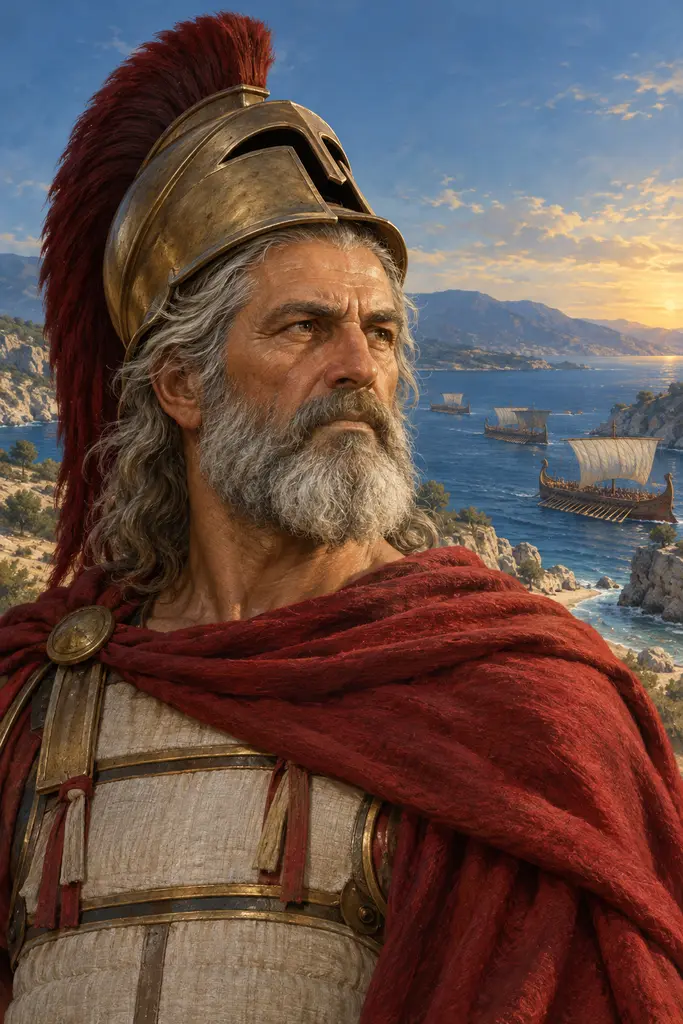
Leotychides
Eurypontid king of Sparta, about 491-469 BCE, Greek commander at Mycale in 479
Leotychides (Leotychidas II) was a Eurypontid king of Sparta who came to the throne about 491 after helping Cleomenes depose Demaratus. In 479 he commanded the Greek fleet that crossed the Aegean, landed at Mycale and destroyed the Persian ships beached there. That defeat opened the way for the Ionian cities to break from the King.
In the game: The chronicle names him as the Spartan king who led the Greek fleet in 479, called on the Ionians to change sides and won at Mycale. Its reign dates, about 491-469, follow one modern reckoning; the end date is uncertain.
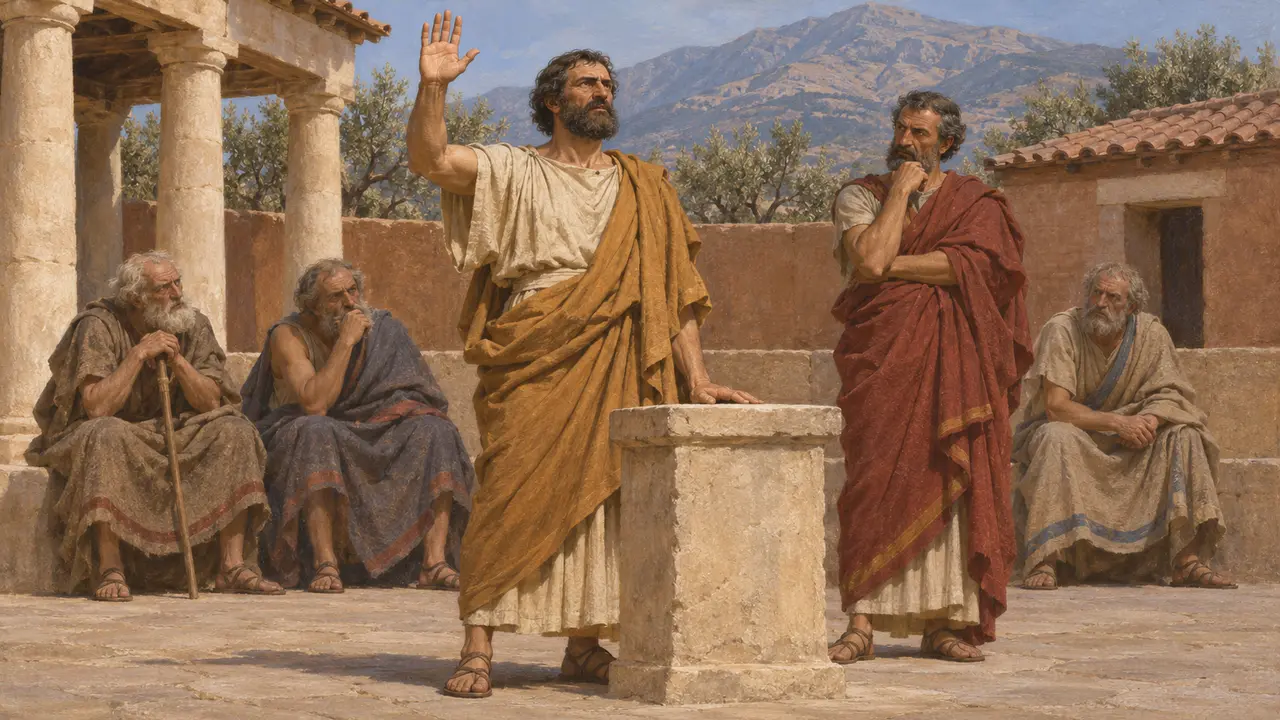
Made king against Demaratus
Ancient accountHerodotus says Cleomenes, the other Spartan king, wanted to be rid of Demaratus. He made a bargain with Leotychides, a kinsman of Demaratus who resented him for taking the bride he had been promised. Leotychides swore that Demaratus was not the true son of King Ariston. The question went to Delphi, where a go-between had won over the priestess. Demaratus was deposed, Leotychides took his place, and Demaratus later fled to Darius.
Herodotus 6.61-70
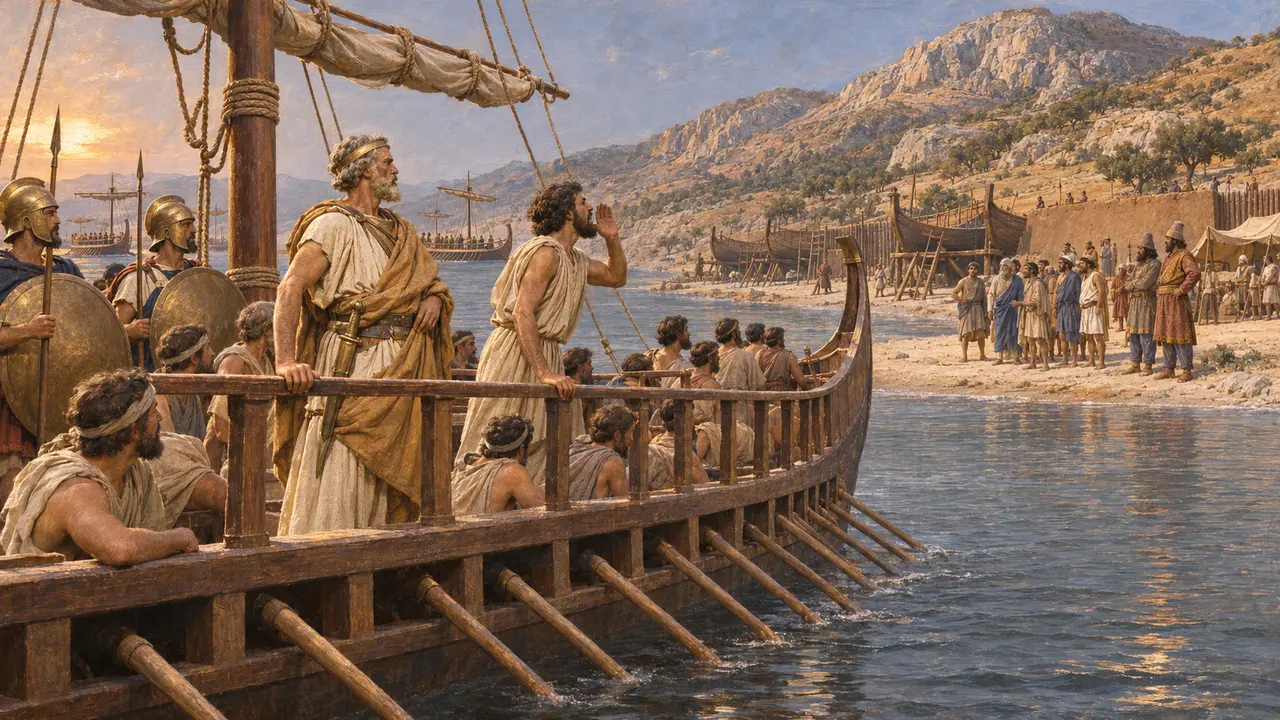
Commander of the Greek fleet in 479
Ancient accountHerodotus says that early in spring 479 a Greek fleet of 110 ships gathered at Aegina under Leotychides, and he traces the king's descent back to Heracles. At Delos, envoys from Samos urged him to sail east, promising that the Ionians would revolt. He found the Persian ships beached at Mycale behind a wall. He then sailed close along the shore and had a herald call on the Ionians to remember their freedom.
Herodotus 8.131-132; 9.90-98
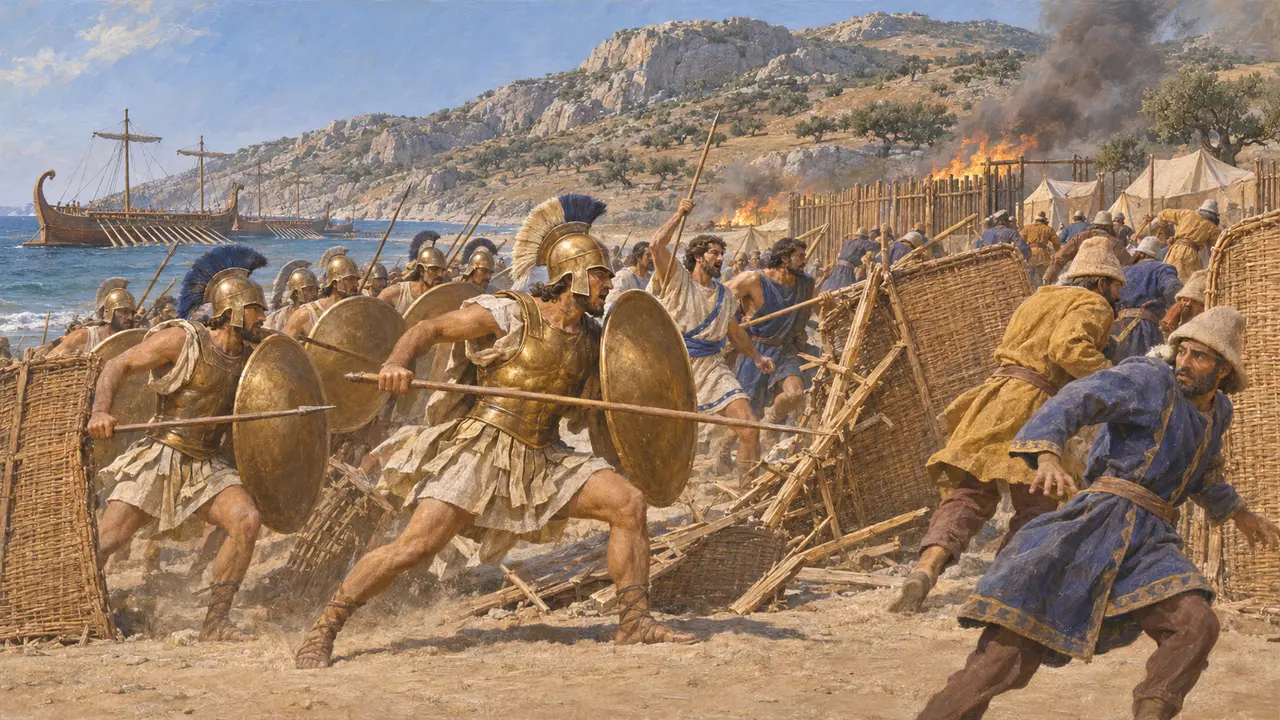
The battle at Mycale
Ancient accountHerodotus says the Persians distrusted the Samians, so they disarmed them and sent the Milesians away to guard the mountain paths. The Athenians and the allies beside them attacked along the beach and broke through a wall of shields before the Spartans arrived by a harder route. The Persian general Tigranes was killed. The Ionians turned on the Persians, and the Greeks burned the ships and the camp.
Herodotus 9.99-106
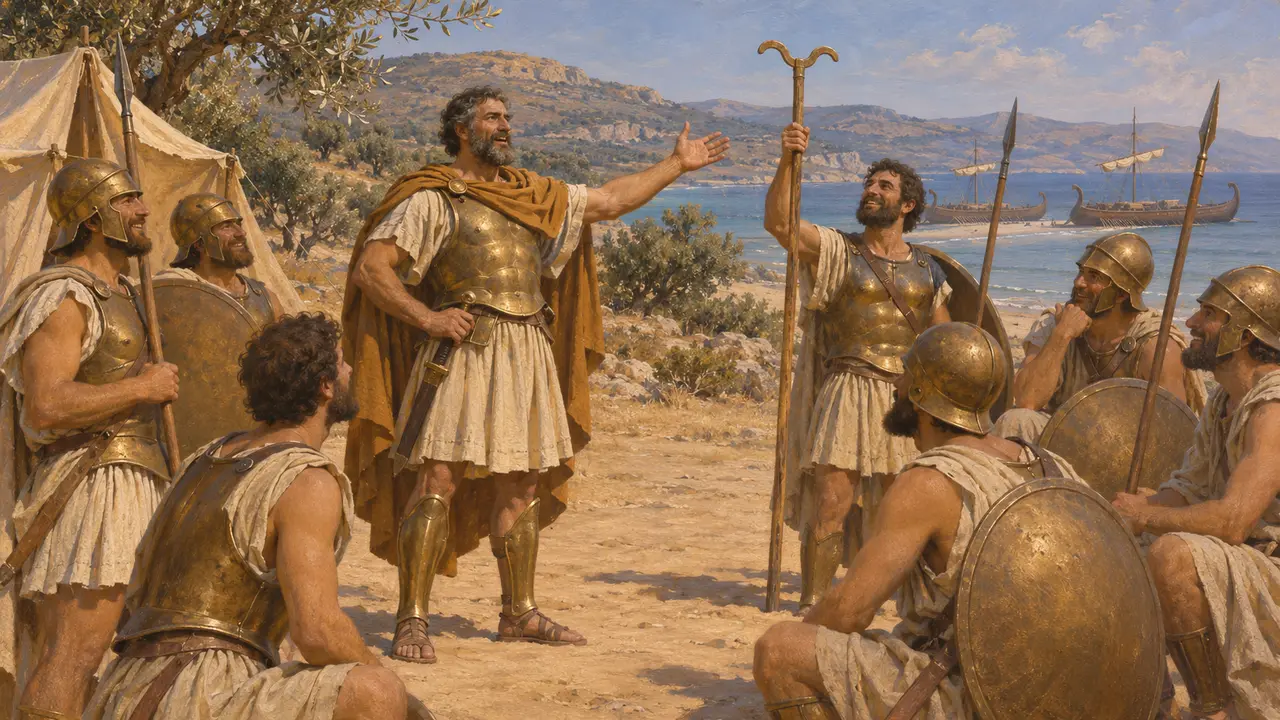
On the same day as Plataea
DisputedHerodotus says Mycale was fought on the same day as Plataea. A rumour of that victory reached the Greek camp and a herald's staff was found on the beach, which he took as signs from the gods. Diodorus says instead that Leotychides spread the report himself to hearten his men. Many historians doubt the exact coincidence and his figure of 60,000 men under Tigranes. No Persian text records the battle.
Herodotus 9.96, 9.100-101; Diodorus 11.35
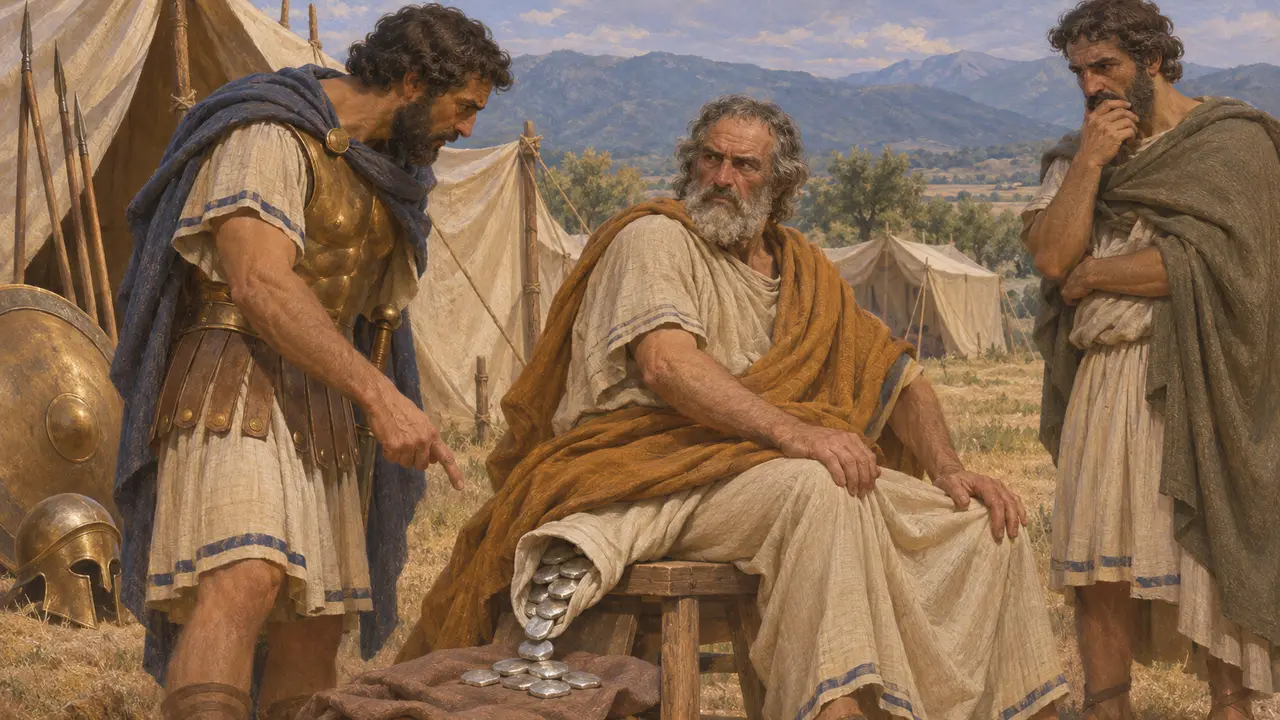
Bribery in Thessaly and exile
DisputedHerodotus says Leotychides later led an army into Thessaly and could have conquered it. Instead he took bribes and was caught in camp sitting on a sleeve full of silver. He was tried, fled to Tegea, and his house in Sparta was pulled down. The dates are argued: the campaign is usually placed about 478-476, and Diodorus puts his death in 476/5, while others prefer about 469.
Herodotus 6.71-72; Diodorus 11.48
Sources
- Herodotus, Histories 6.61-86, 8.131-132, 9.90-106
- Diodorus Siculus, Library 11.34-37, 11.48
- P. Cartledge, Sparta and Lakonia, 1979
- J. F. Lazenby, The Defence of Greece 490-479 BC, 1993
- P. Briant, From Cyrus to Alexander, 2002