Delphi
Sanctuary and oracle of Apollo below Mount Parnassus, in Phocis, central Greece
In the game: Level 11: The Finale
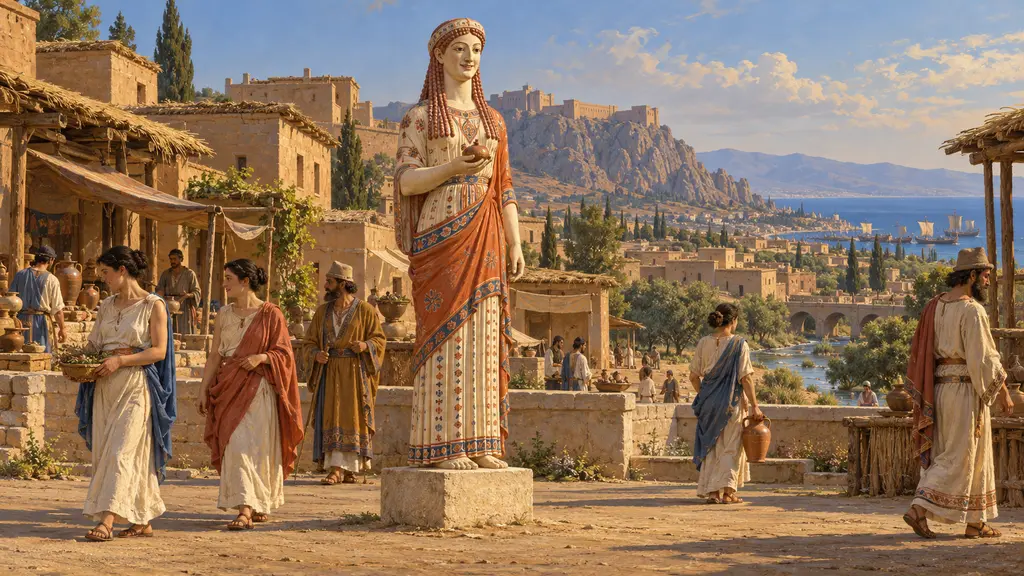
Delphi was the most famous oracle of the Greek world, where a priestess of Apollo, the Pythia, answered the questions of cities and kings. Croesus of Lydia asked it whether to fight Cyrus, and Athens and other Greek cities asked it how to face Xerxes' coming invasion. No Persian text names Delphi, so its dealings with Lydia and Persia are known from Greek writers, above all Herodotus, and from the remains of the sanctuary.
In the game: The game describes Delphi as the oracle the Greeks and Lydians consulted. That is accurate, though it gives only the Greek side: no Persian document mentions Delphi or any Persian consultation of it.
The sanctuary of Apollo
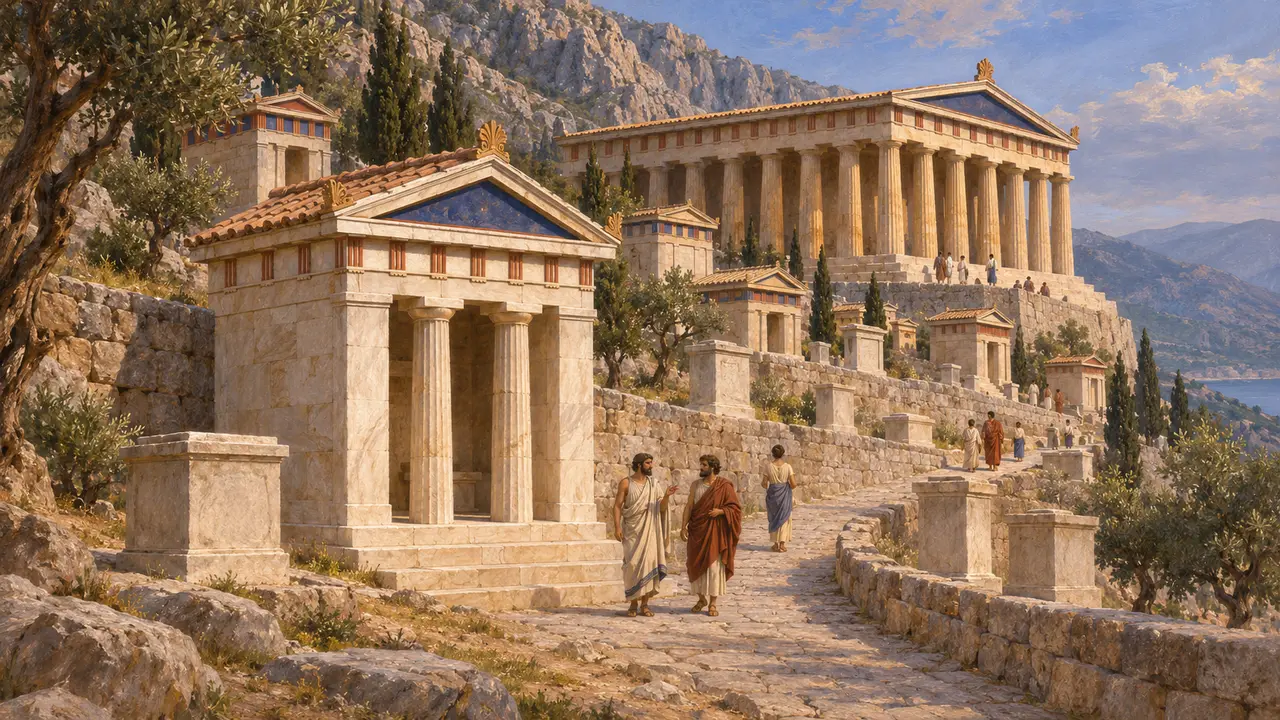
In the recordDelphi lay on the steep slopes of Mount Parnassus above the Gulf of Corinth. French excavations since 1892 have uncovered the terraced precinct of Apollo. It contains the temple, the treasuries built by Greek cities to hold their offerings, and many bases for dedications. The Athenian Treasury, rebuilt from its original marble blocks in the early twentieth century, still stands beside the Sacred Way.
École française d'Athènes, Fouilles de Delphes; M. Scott, Delphi, 2014
Croesus tests the oracle
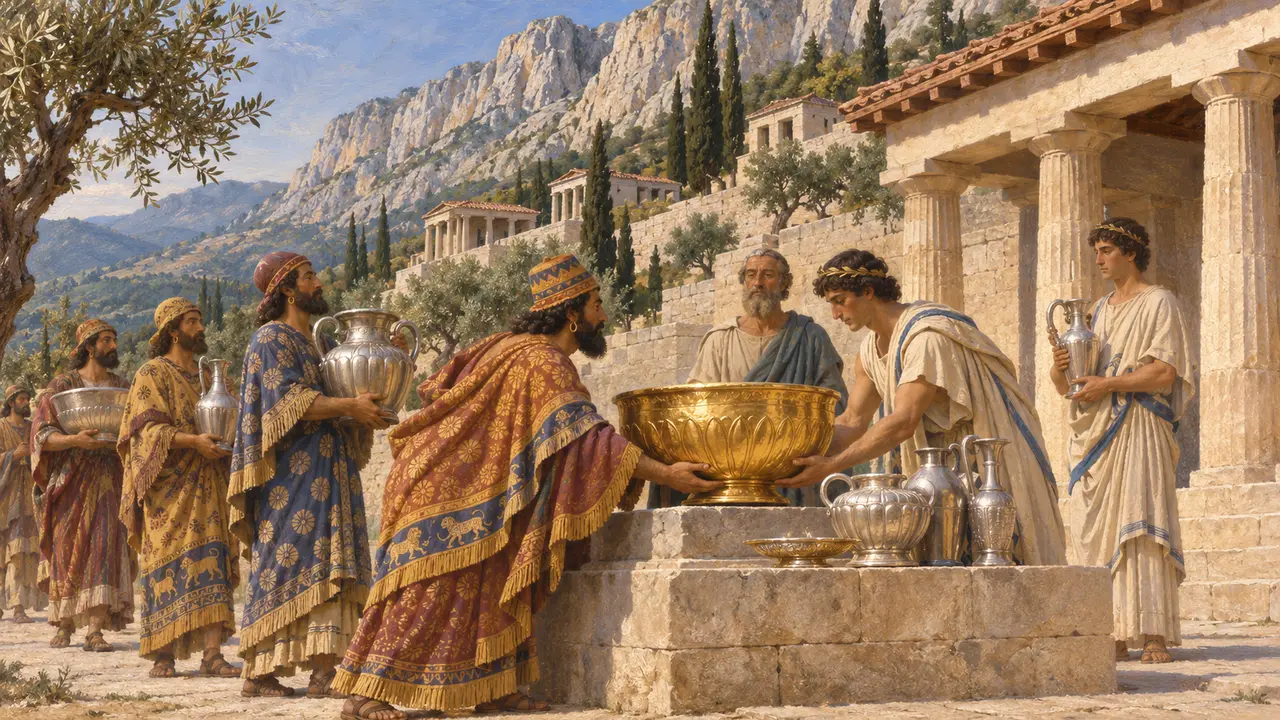
Ancient accountHerodotus says Croesus of Lydia tested several oracles by asking what he was doing on a set day, and Delphi answered correctly. He then sent rich gifts of gold and silver, some of which Herodotus saw there. Told that if he made war on the Persians he would destroy a great empire, Croesus attacked Cyrus in the 540s and lost his own. Herodotus adds that the god later said the answer had been his to misread.
Herodotus 1.46-56; Herodotus 1.90-91
The oracles before Xerxes' invasion
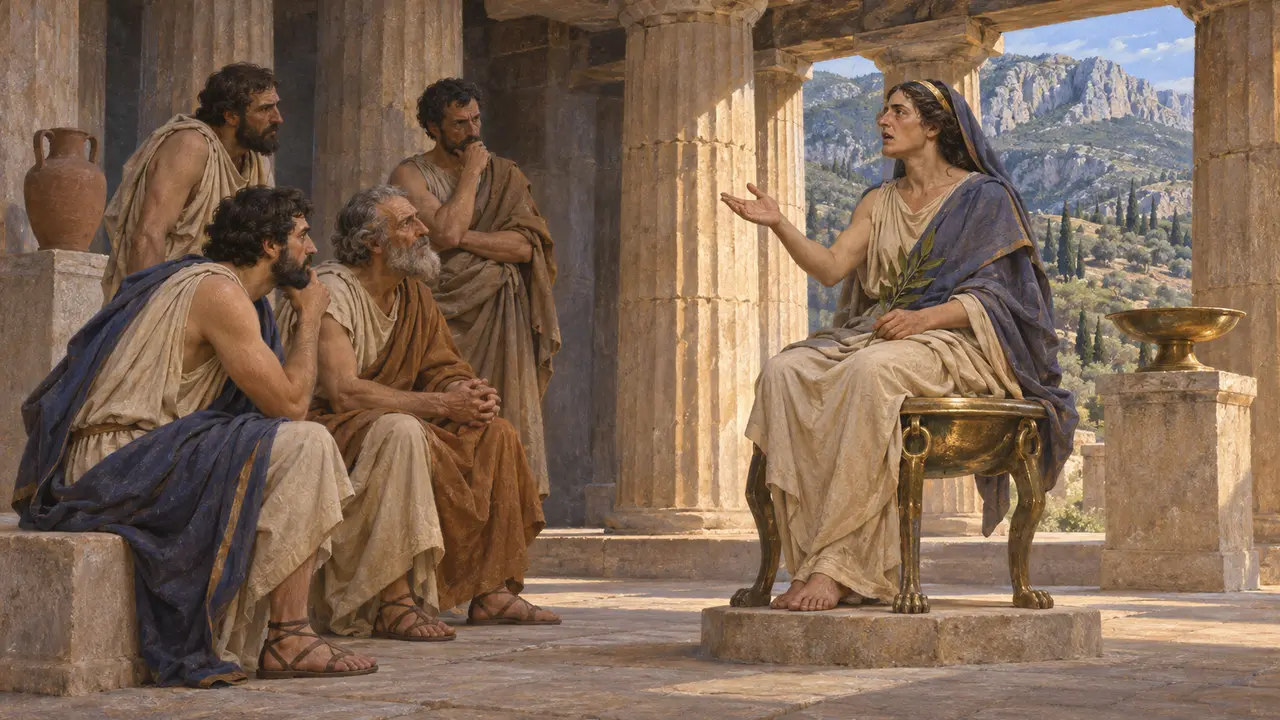
DisputedHerodotus says the Pythia first told the Athenians to flee to the ends of the earth, then spoke of a wooden wall that would save them and of divine Salamis. Themistocles argued that the wall meant the fleet. Delphi also discouraged Argos and Crete from joining the defence. Historians debate when these oracles were given, perhaps 481 or earlier. They also debate whether the verses were polished after the victory, and whether Delphi's caution shows it expected the King to win.
Herodotus 7.140-143; Herodotus 7.148; Herodotus 7.169
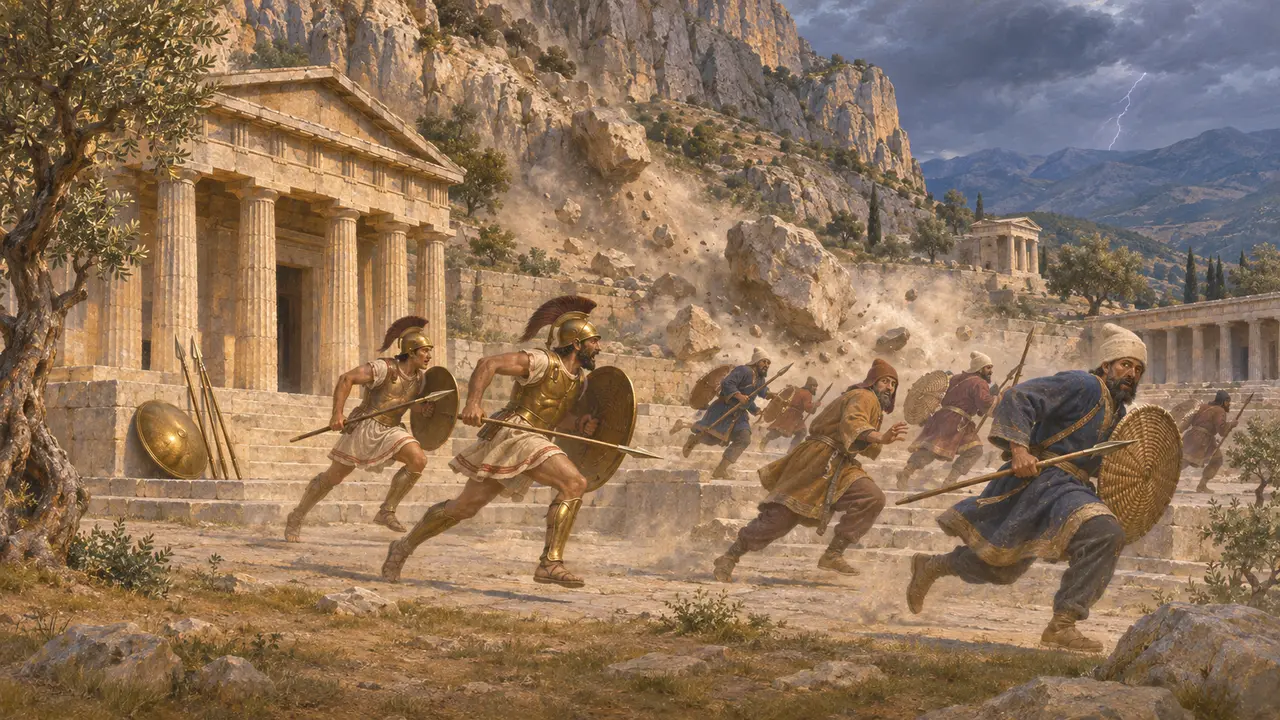
The attack on Delphi
Later legendHerodotus tells that Xerxes sent troops to plunder Delphi. Sacred weapons moved out of the temple by themselves, thunderbolts fell, rocks crashed down from Parnassus and two local heroes chased the Persians away. The story reads as proof of the god's protection, and many historians doubt that a serious attack was ever made. Elsewhere Herodotus has Mardonius say that an oracle foretold ruin for Persians who plundered Delphi, so they would not go there.
Herodotus 8.35-39; Herodotus 9.42
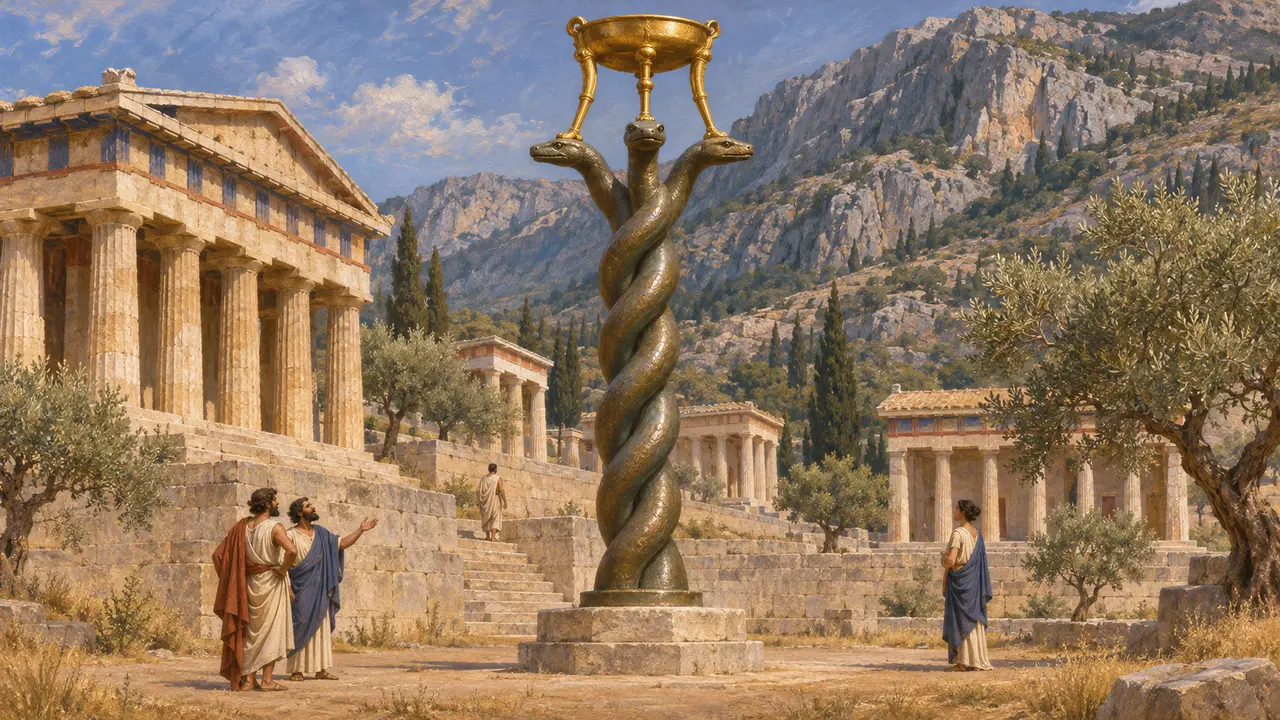
The Serpent Column
In the recordAfter Plataea in 479 the Greeks set up a gold tripod at Delphi on a bronze column of three twisted snakes. Thucydides says Pausanias of Sparta first had a verse naming himself inscribed, and the Spartans replaced it with a list of the cities that had fought. The column was later taken to Constantinople. Its lower part, with 31 city names on the coils, still stands in Istanbul.
R. Meiggs and D. Lewis, Greek Historical Inscriptions, 1969, no. 27; Herodotus 9.81; Thucydides 1.132
Sources
- Herodotus, Histories, books 1, 7, 8 and 9
- Thucydides 1.132
- R. Meiggs and D. Lewis, Greek Historical Inscriptions, 1969
- M. Scott, Delphi: A History of the Center of the Ancient World, 2014
- H. W. Parke and D. E. W. Wormell, The Delphic Oracle, 1956