Miletus
Ionian Greek city at the mouth of the Maeander, taken by the Persians in 494 BCE
In the game: Level 6: The Bridge of Boats, Level 7: Sardis Burns
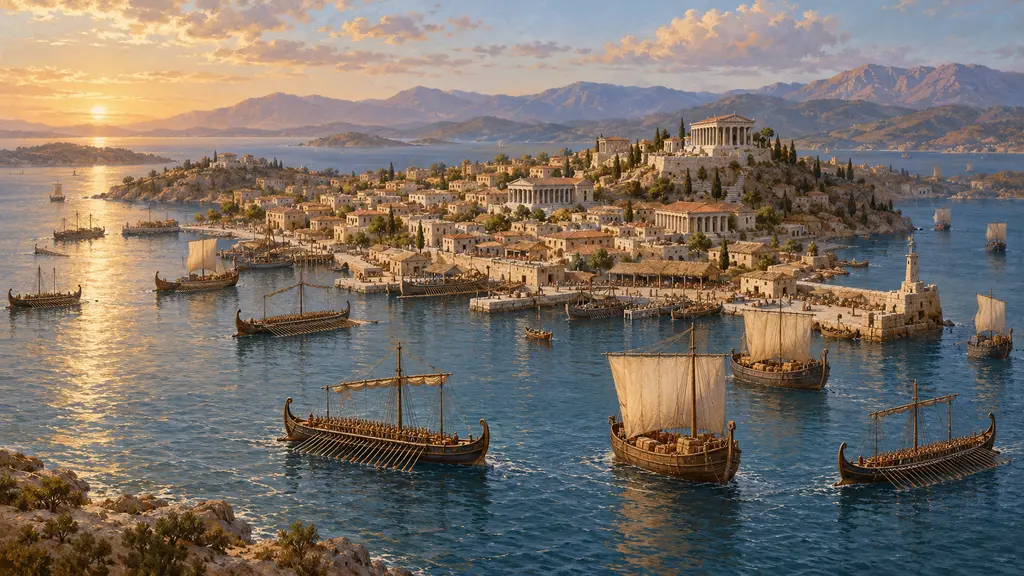
Miletus was a Greek city on the coast of Caria near the mouth of the Maeander, and Herodotus calls it the ornament of Ionia at its height around 500. Under Persian rule its tyrants Histiaeus and Aristagoras won the King's trust, until Aristagoras led the Ionians into revolt in 499. The Persians took the city in 494, and its fall shocked the Greek world.
In the game: Miletus is not one of the game's levels. The chronicle calls it the greatest of the Ionian cities and dates its capture by siege and mining to 494, as Herodotus does.
A harbour city on the Maeander
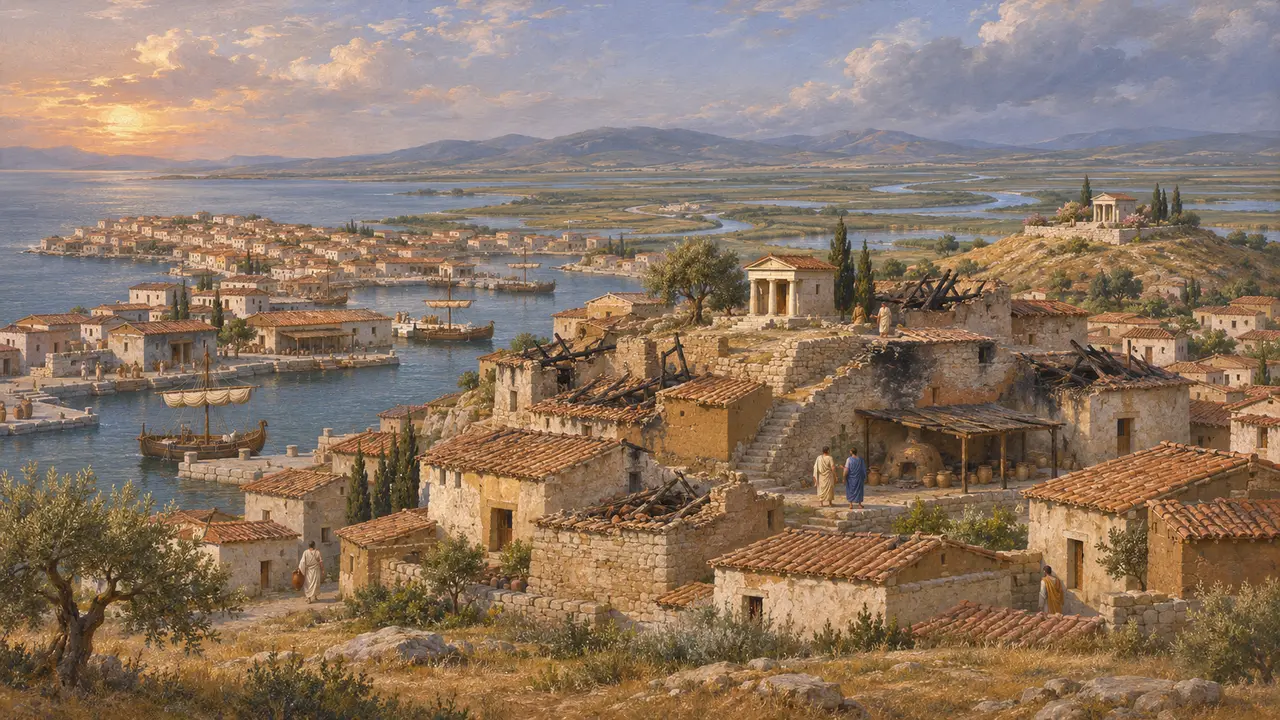
In the recordGerman teams have excavated Miletus since 1899, uncovering a city on a peninsula with several harbours that are now silted up and lie inland. Archaic houses, shrines and workshops have been found on Kalabaktepe hill and in the sanctuary of Aphrodite on Zeytintepe. Both areas show burning and destruction that excavators date to about 494. The oracle of Apollo at Didyma, the city's great sanctuary, lay about 16 kilometres to the south.
A. Greaves, Miletos: A History, 2002
From client of Persia to revolt
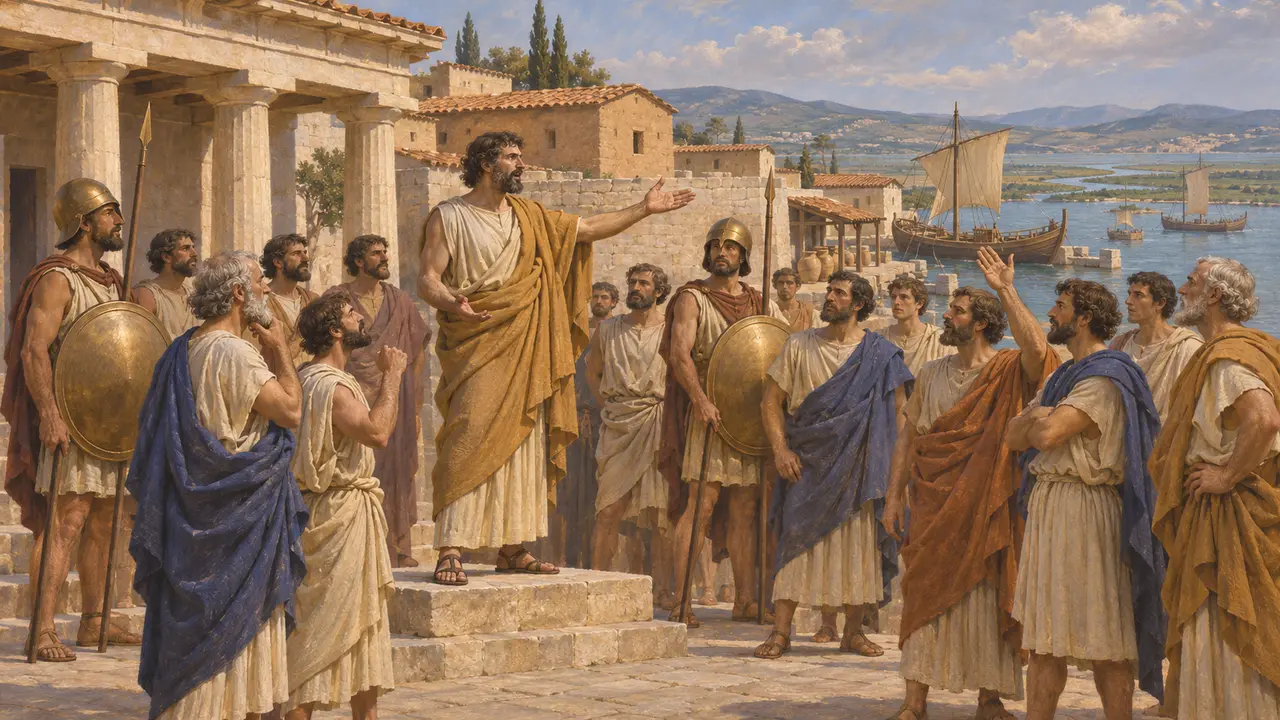
Ancient accountHerodotus says that when Cyrus took Lydia, Miletus kept the terms it had held under Croesus. Its tyrant Histiaeus helped guard Darius's bridge on the Ister and was rewarded with land in Thrace, but he was later kept at the King's side in Susa. His deputy Aristagoras failed to take Naxos with Persian help in about 500. To save himself, Aristagoras gave up the tyranny and raised Ionia against the King.
Herodotus 1.141; 4.137; 5.11; 5.23-25; 5.30-38
The siege and fall of 494
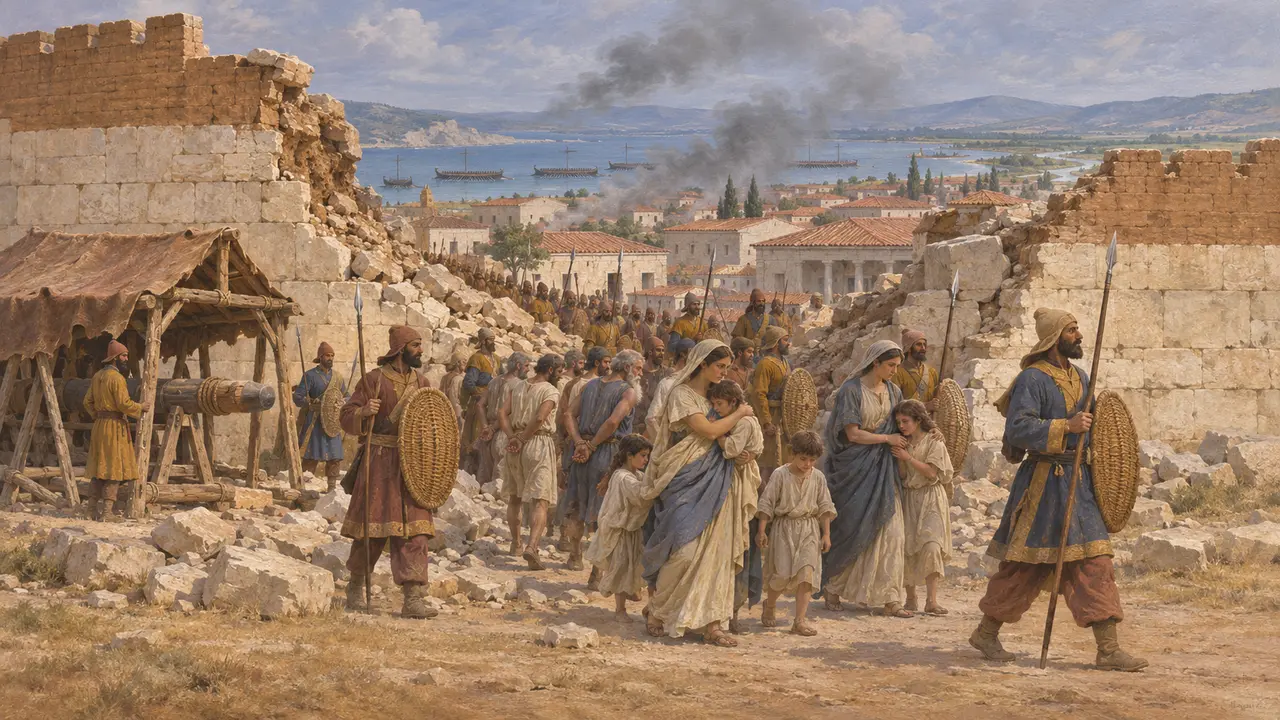
Ancient accountHerodotus says that after the Ionian fleet broke at Lade, the Persians besieged Miletus by land and sea, undermined the walls, brought up engines of every kind and took the city in the sixth year of the revolt. Most of the men were killed and the women and children enslaved. The captives were taken to Susa, and Darius settled them at Ampe near the mouth of the Tigris. The sanctuary at Didyma was plundered and burnt.
Herodotus 6.7-17 (Lade); 6.18-20
How empty Miletus really was
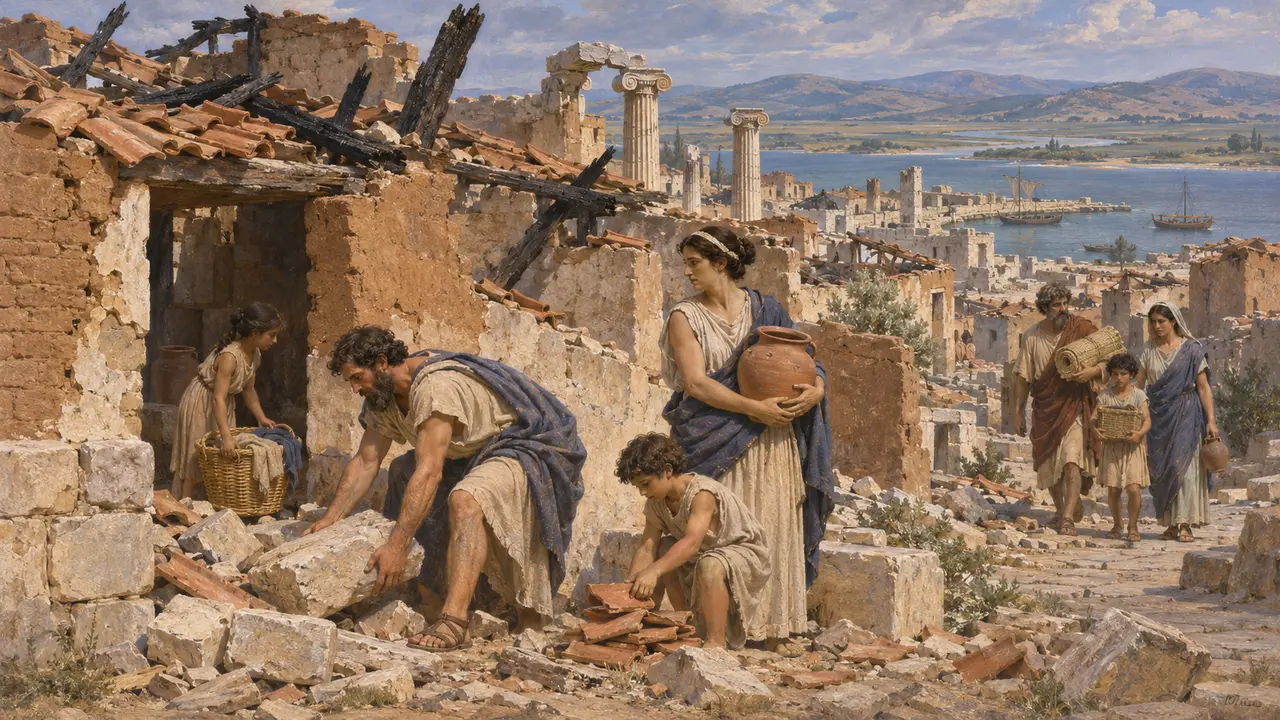
DisputedHerodotus says Miletus was emptied of Milesians, and adds that Athens fined the poet Phrynichus for staging a play called The Capture of Miletus. Yet Milesians served with the Persian army at Mycale in 479, where they misled it and then attacked it. The city was rebuilt on a regular grid after 479. Many historians think Herodotus overstated the loss of people, though the excavated destruction confirms a heavy blow.
Herodotus 6.21-22; 9.104; V. B. Gorman, Miletos, the Ornament of Ionia, 2001
The Branchidae and their fate
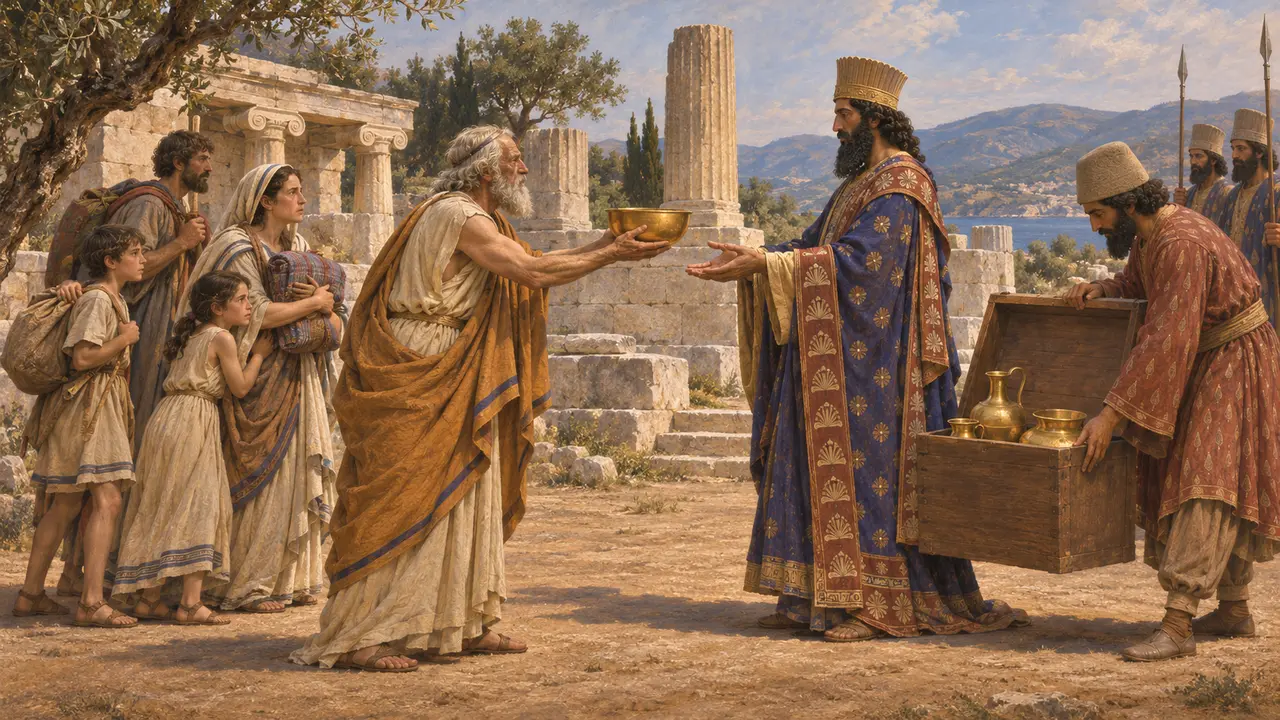
Later legendLater writers told a different story about Didyma. In their version, its priestly family, the Branchidae, handed the temple treasure to Xerxes and went east with him for fear of punishment. Strabo and Curtius say that Alexander found their descendants beyond the Oxus and destroyed them as heirs of traitors. The tale clashes with Herodotus, who places the burning of Didyma in 494, and it reads as a moral story of betrayal repaid.
Strabo 14.1.5; 11.11.4; Curtius Rufus, Histories of Alexander 7.5
Sources
- Herodotus, Histories 1.141, 4.137, 5.11, 5.23-38, 6.7-22, 9.104
- A. Greaves, Miletos: A History, 2002
- V. B. Gorman, Miletos, the Ornament of Ionia, 2001
- P. Briant, From Cyrus to Alexander, 2002
- Strabo, Geography 11.11.4, 14.1.5
- Curtius Rufus, Histories of Alexander 7.5