Level 9: The Canal · Athos · 483–480 BCE
The Canal
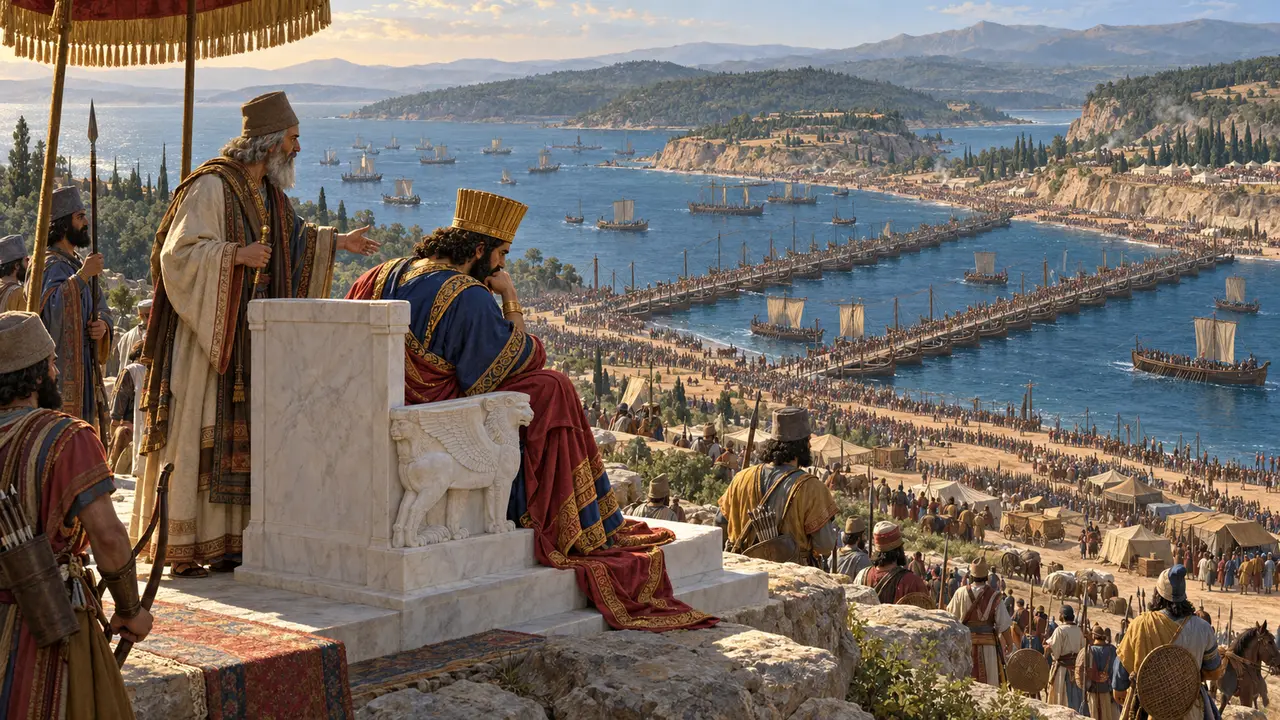
Xerxes watches his army cross from Abydos, spring 480 BCE.
Encyclopedia › The History
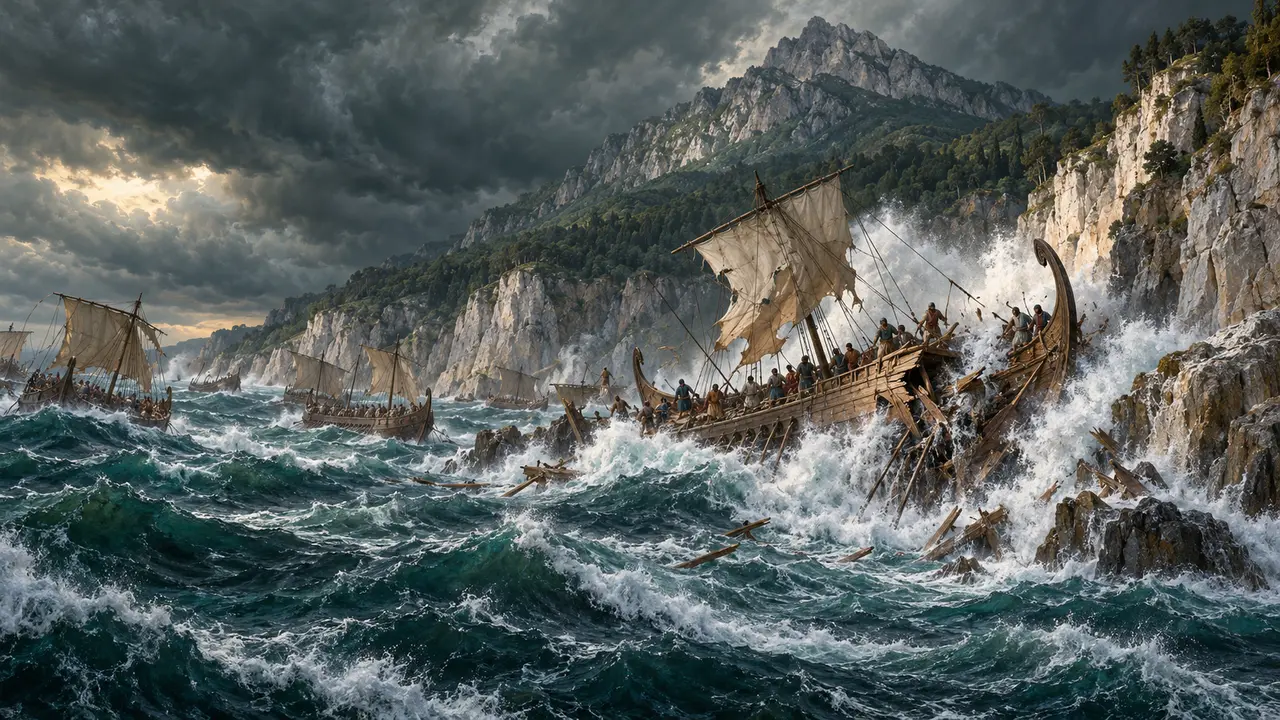
After Marathon Darius planned a greater war, but Egypt rose and he died in 486. Xerxes took up the plan. For three years his men dug a canal across the neck of Mount Athos, where a fleet had been wrecked, and bridged the Hellespont.
- 492 BCE Wreck off Athos
- 486 BCE Darius dies
- 484 BCE Egypt retaken
- 483 BCE The canal begun
- 481 BCE Bridges broken
- 480 BCE The crossing
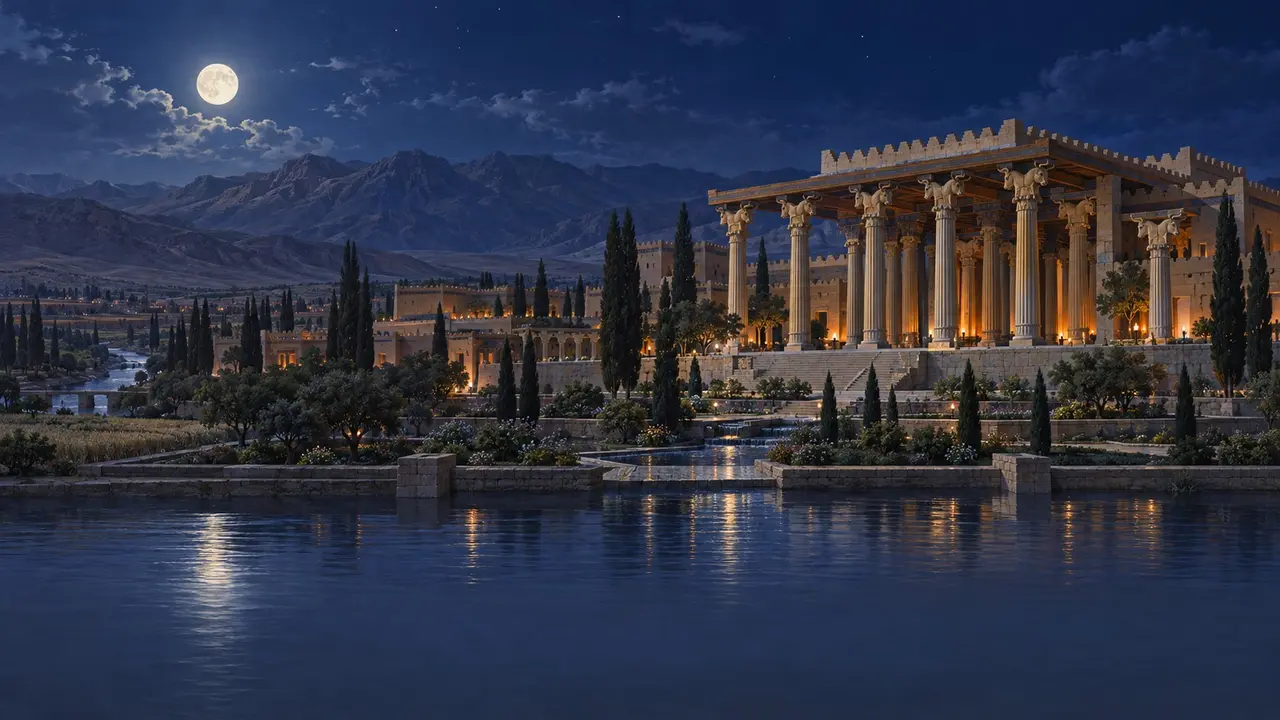
The Brygi by night
Ancient accountOn the same march in 492 the Brygi, a Thracian people, fell on Mardonius's camp by night, killed many of his men and wounded him. He would not leave the land until he had subdued them. Herodotus records no fighting at the canal itself.
In the game: The level's great battle is the Brygi's night attack, set on the canal's ground.
Herodotus 6.45
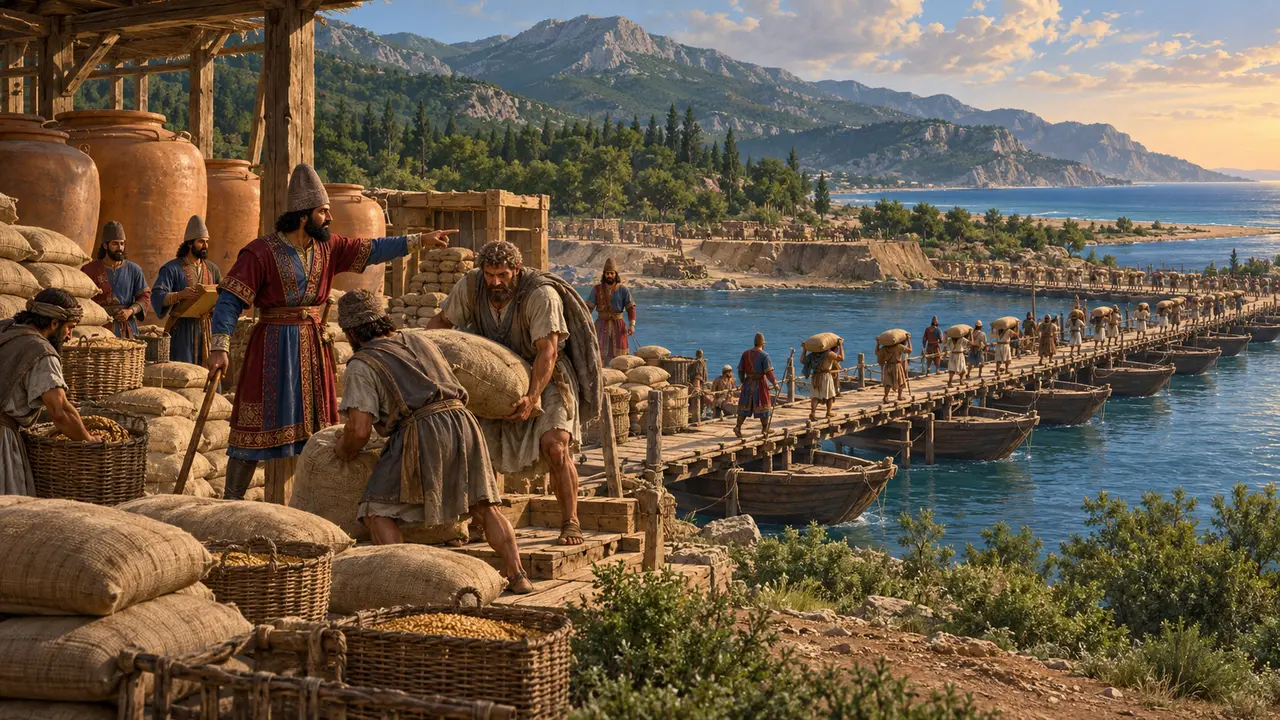
The bridges over the Strymon
Ancient accountThe men who dug the canal were also set to bridge the river Strymon, where grain was stored at Eion. The king of the Bisaltae, a Thracian people near the river, would not serve Xerxes and fled to Mount Rhodope. When his six sons marched with the King anyway, he had their eyes put out on their return.
In the game: The Bisaltae's raid on the bridge works is a dramatization.
Herodotus 7.24-25, 8.116
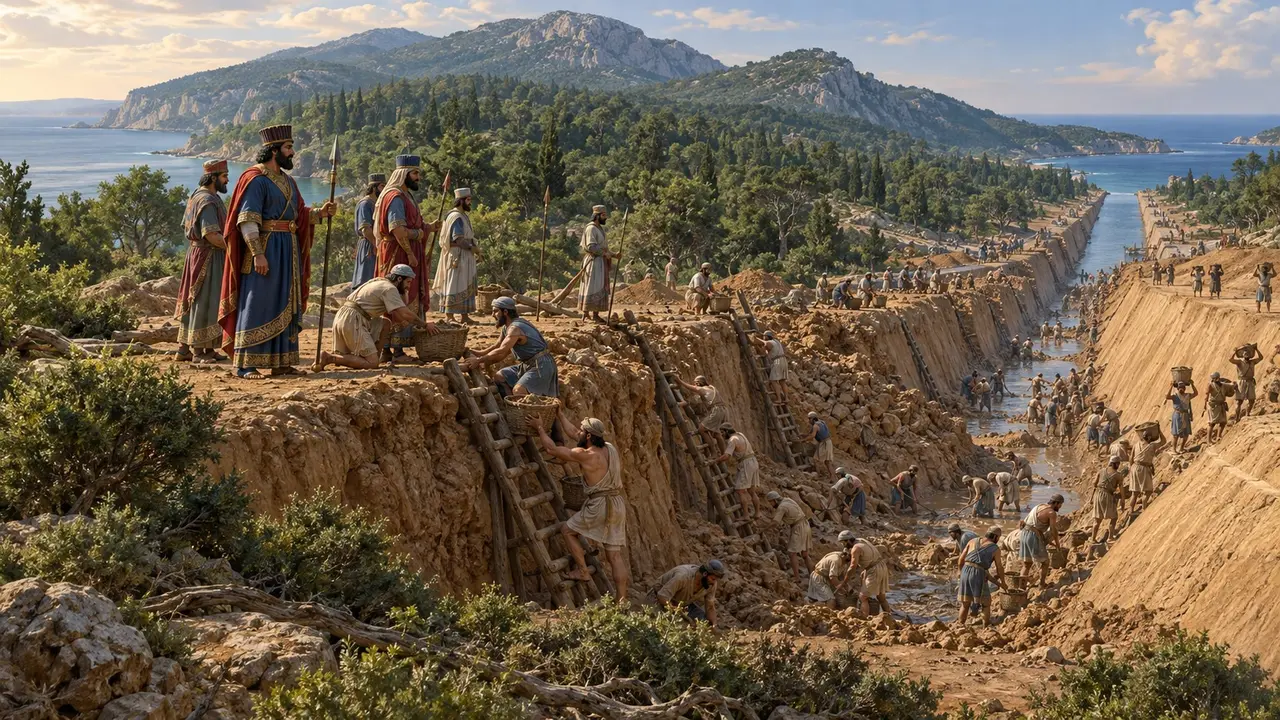
The canal
In the recordHerodotus says the canal was wide enough for two triremes rowed abreast, and that only the Phoenicians dug its sides sloping, so they did not collapse. Surveys since the 1990s found its line, about two kilometres long, under the fields.
In the game: The canal is the level's great work.
Herodotus 7.22-24; B. Isserlin and others, Annual of the British School at Athens (1994-2003)
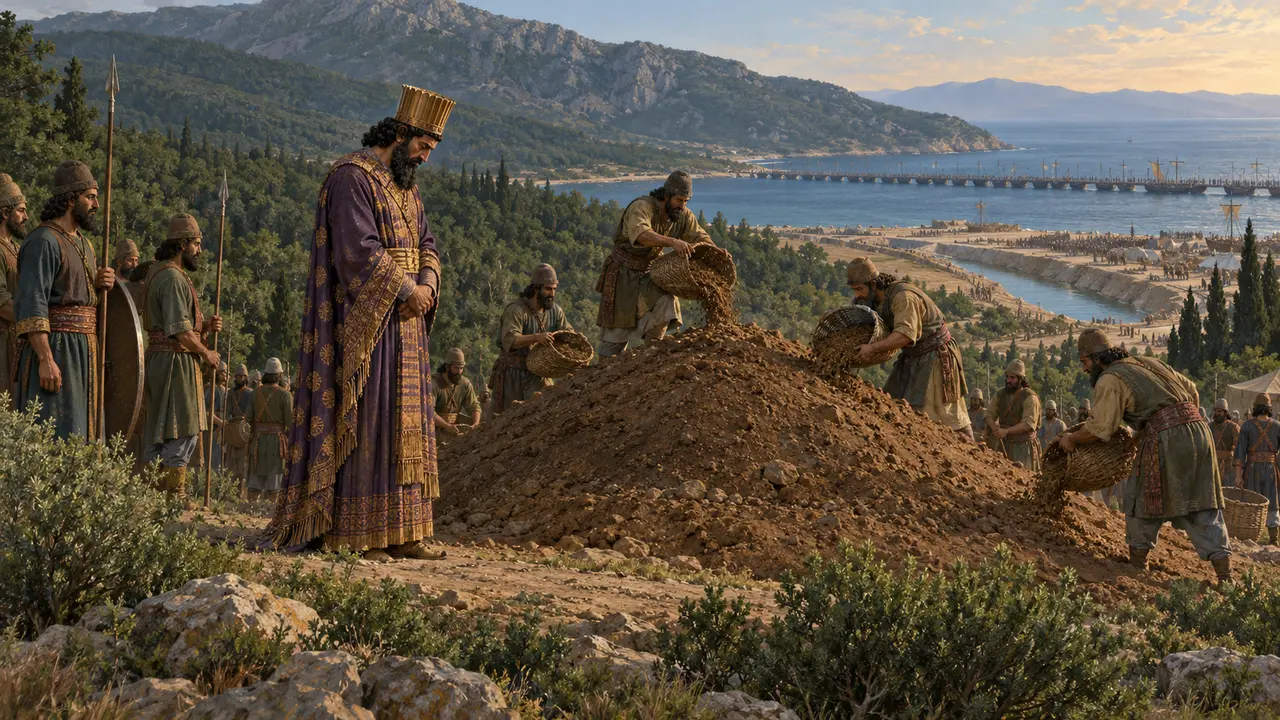
Artachaees
Ancient accountThe canal's overseer, Artachaees, was the tallest man in the army, says Herodotus, and had the loudest voice. He died at Acanthus, and the Greeks of the town honoured him as a hero.
Herodotus 7.117
Depots on the road
Ancient accountFood for the march was laid up in advance at stores along the Thracian coast, at White Cape, Tyrodiza, Doriscus, Eion and in Macedonia.
In the game: Supply Depots on the King's road fill with barley for the host.
Herodotus 7.25
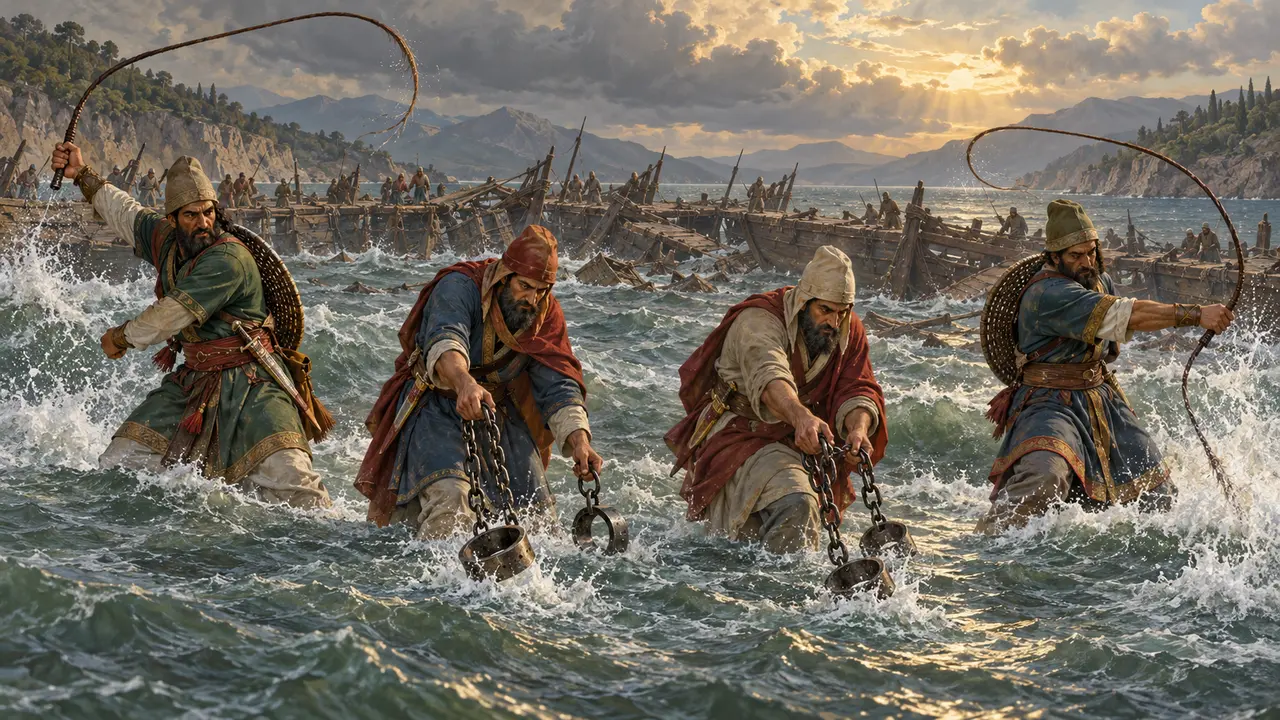
The sea whipped
DisputedA storm broke the first bridges. Herodotus says Xerxes had the Hellespont given three hundred lashes and fetters thrown in, and beheaded the builders. Herodotus tells it to show pride; some historians see a ritual punishment of a river.
Herodotus 7.34-35
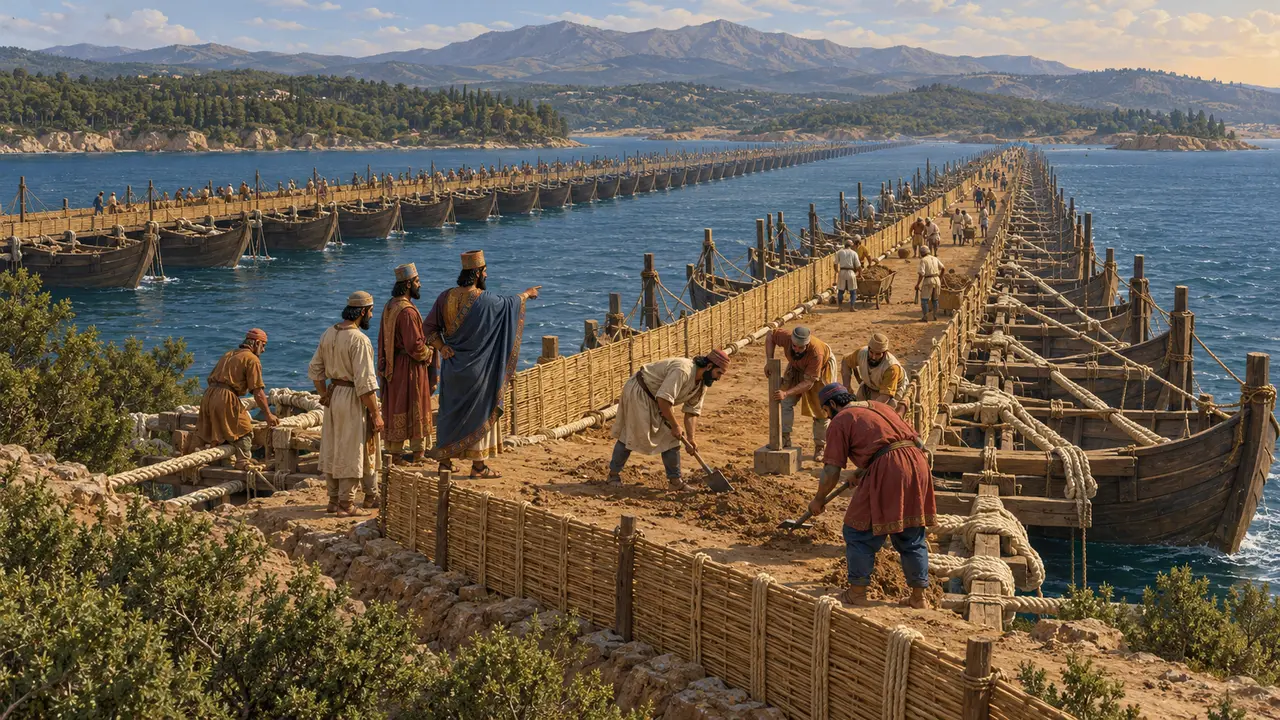
The new bridges
Ancient accountTwo new bridges were laid on 360 and 314 ships, held by cables of flax and papyrus, then decked with planks and earth, with screens so the horses would not see the sea.
Herodotus 7.36
Abydos
Ancient accountFrom a white marble throne at Abydos Xerxes watched his army and fleet fill the shores and the sea, and wept: in a hundred years none of them would be alive. Herodotus gives him a long talk with his uncle Artabanus.
Herodotus 7.44-52
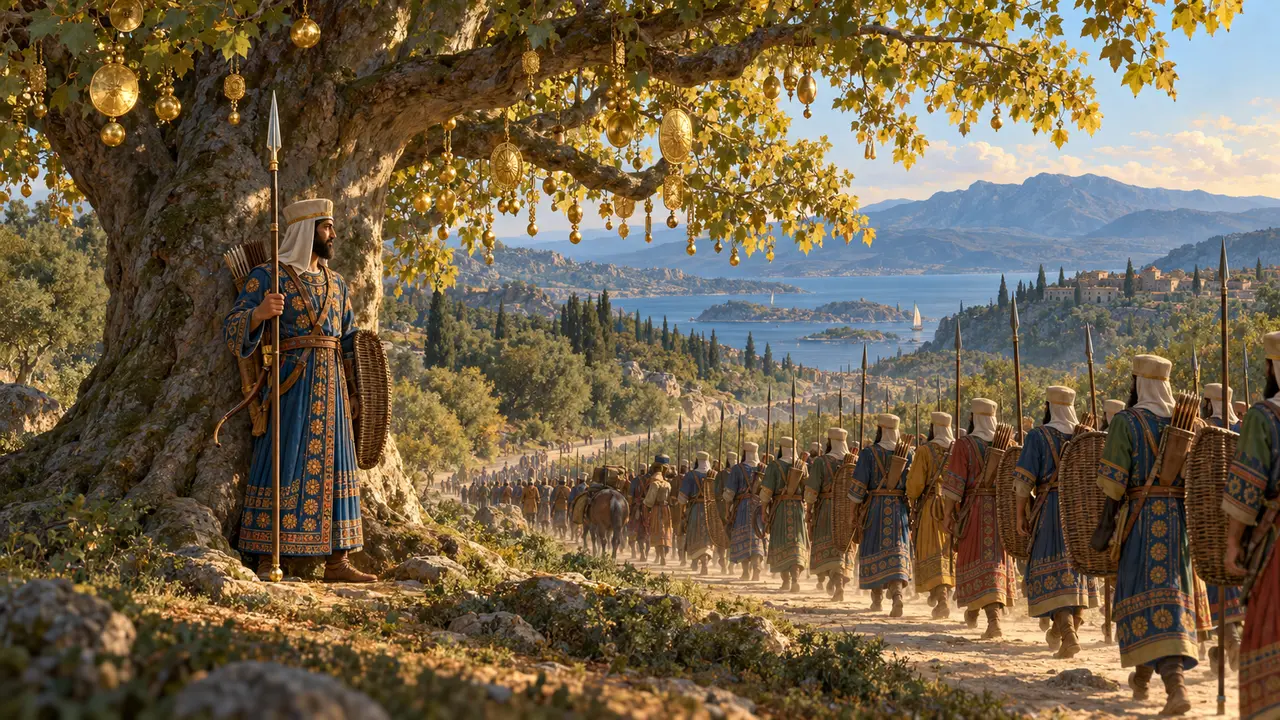
The plane tree
Ancient accountOn the march through Lydia, Xerxes found a plane tree so beautiful that he adorned it with gold and left one of his Immortals to guard it.
Herodotus 7.31
Read next: the topics of The Canal
Battles and events
Mardonius's expedition and the wreck off Athos · The digging of the Athos canal · Xerxes' bridges over the Hellespont · The crossing of the Hellespont
Buildings
Flax Field · Ropewalk · Xerxes' Canal · Royal Mint · Supply Depot
Soldiers and ships
People
Peoples
The Persians · The Thracians · The Macedonians · The Thasians
Places
The Hellespont · Athos · Marathon · Abydos · Doriscus · Eion and the Strymon · Egypt · Acanthus
Wildlife and weather
Deer · The wild boar · The white stork · The hare · The fox · The wolf · The lion · Wild ducks · The aurochs · The kite · The griffon vulture · The rock dove · The jackdaw · The crane · The swallow · Gulls · Bats · The little owl · The hooded crow · Morning mist