Encyclopedia › Wildlife and weather

The little owl
Athene noctua, Athena's bird on Athenian silver coins, about 500-479 BCE
In the game: Level 1: The Founder's Tomb, Level 2: The Spear-bearer, Level 3: The Lie, Level 4: The Terrace, Level 5: The Charter, Level 6: The Bridge of Boats, Level 7: Sardis Burns, Level 8: The Bay of Marathon, Level 9: The Canal, Level 10: The Hot Gates, Level 11: The Finale
The little owl is a small, round-headed bird that hunts at dusk over fields, rocky ground and ruins around the Mediterranean and across the Near East. Its best-documented ancient role is Greek: it was the emblem on Athenian silver coins and was linked with Athena. No Persian source known to this entry gives it a meaning, so any Persian view of the bird is unknown.
In the game: The game shows the owl as scenery among birds overhead on eleven levels, from Pasargadae to Plataea, and in the battle sounds. No rule reads it. Its placing in the Susa lowlands is a design choice, not a documented habit.
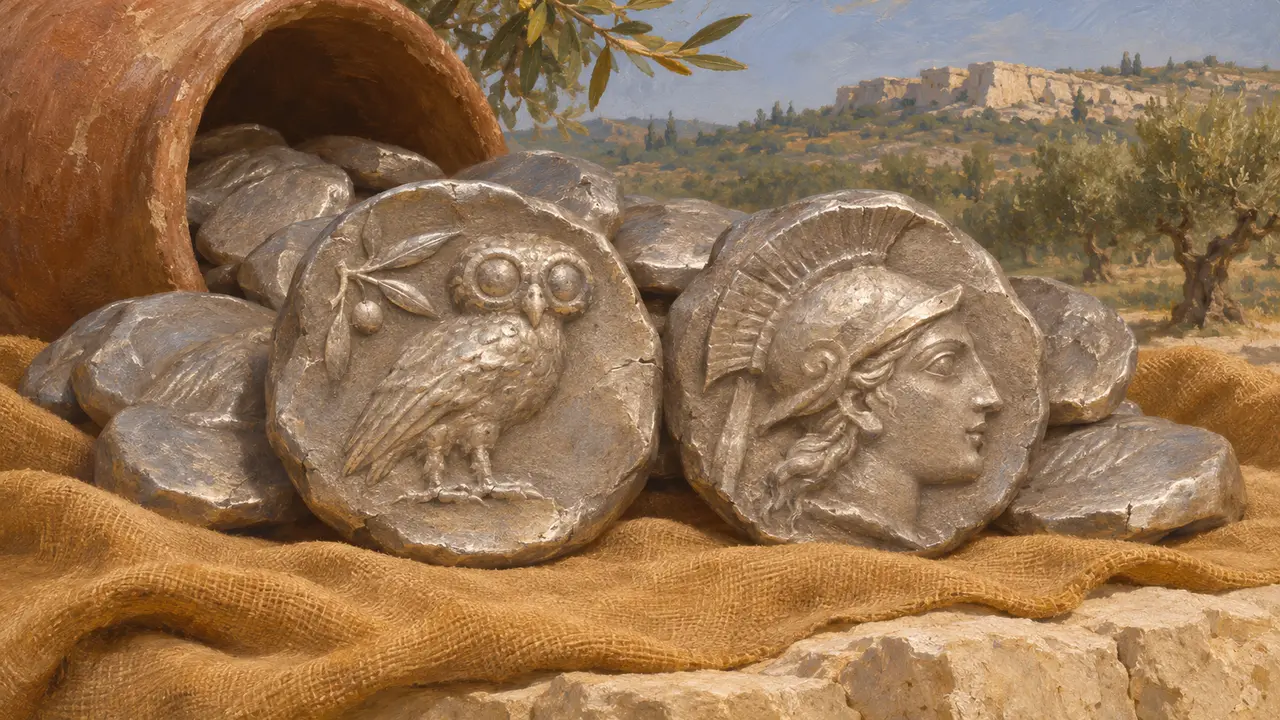
Athena's owl on Athenian coins
In the recordAthenian silver tetradrachms carried the head of Athena on one side and an owl on the other, with the first letters of the city's name. Scholars date the start of the owl coinage to the late sixth century, but argue over the exact decade. The type was in wide use by the time of Marathon. The coins survive in large numbers, including in hoards found far from Greece.
C. Kraay, Archaic and Classical Greek Coins, 1976
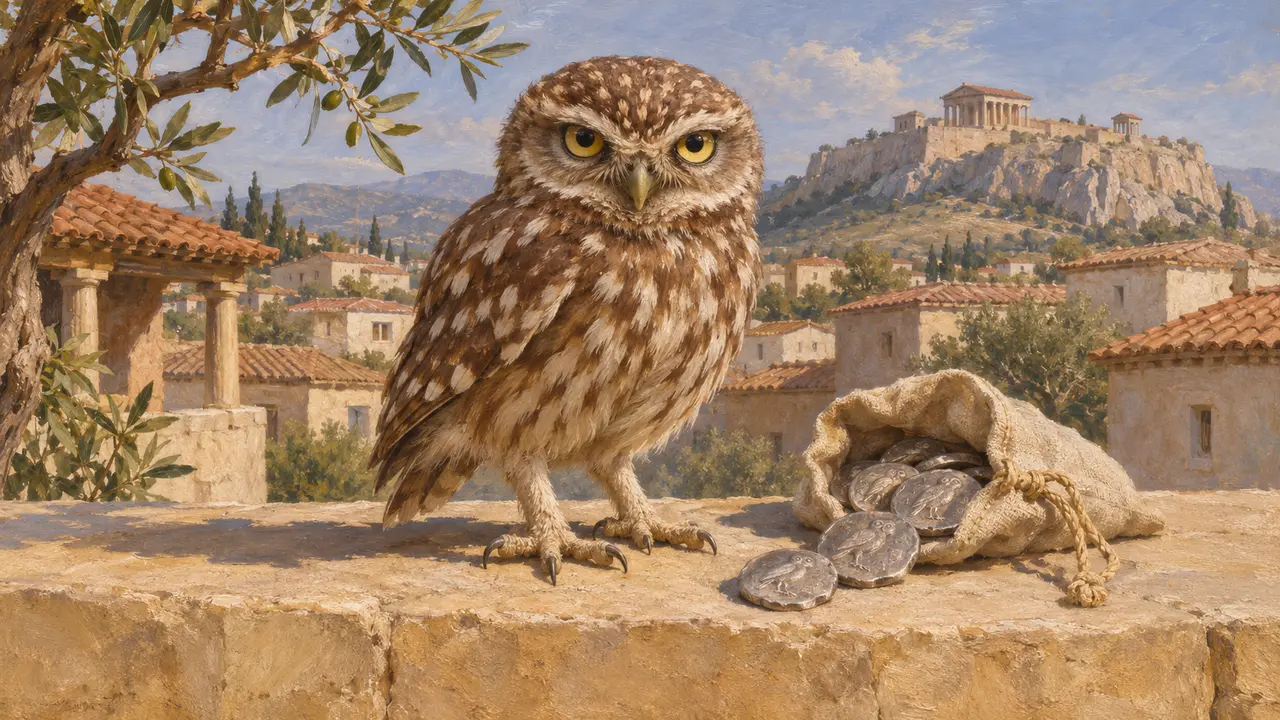
What the Greek writers say
Ancient accountAristophanes, writing in the late fifth century, joked about owls being carried to Athens, meaning the coins, and treated the bird as Athena's companion. His remarks describe Athenian habit after the war, not Persian belief. No passage in Herodotus on the Persian wars is known to the checker that makes the owl an omen for either side.
Aristophanes, Birds
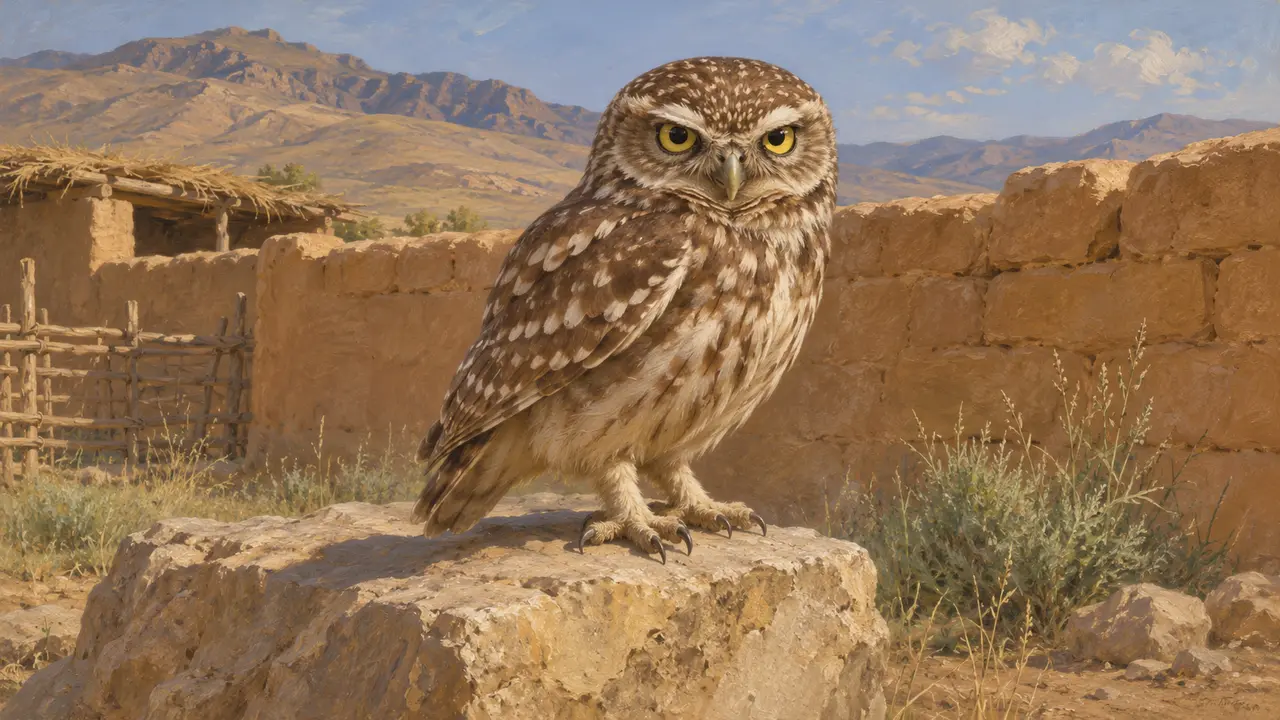
The absence of Persian evidence
DisputedNo royal inscription, relief or Persepolis tablet known to this entry gives the little owl a religious or political meaning for the Achaemenids. Historians therefore cannot say how Persians in the field regarded the bird, and any claim about it is inference from Greek material.
P. Briant, From Cyrus to Alexander, 2002
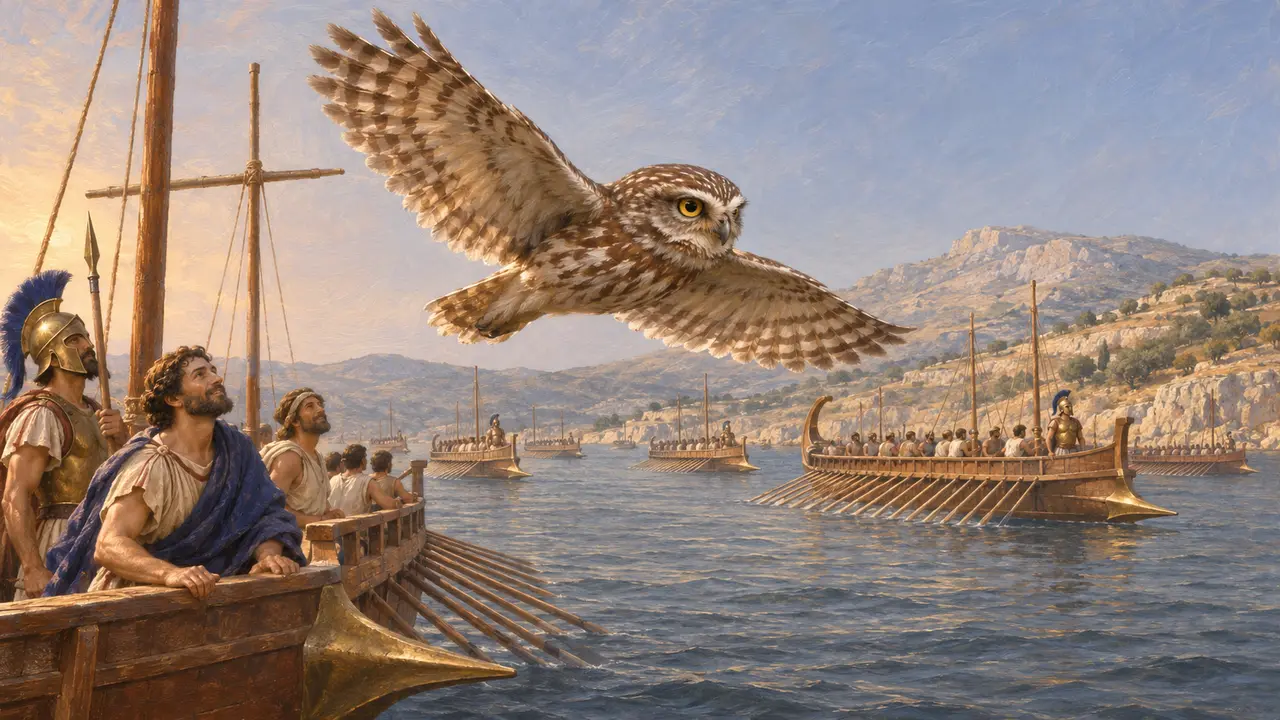
The owl as an omen at Salamis
Later legendPlutarch, writing centuries after the war, says an owl was seen flying along the Greek fleet before Salamis and was taken as a sign of victory. The story fits the Athenian emblem and has the shape of a patriotic tale. Herodotus's account of the battle is the earlier source, and the owl is not part of it as far as is known.
Plutarch, Themistocles
Sources
- C. Kraay, Archaic and Classical Greek Coins, 1976
- Aristophanes, Birds
- Plutarch, Themistocles
- Herodotus, Histories
- P. Briant, From Cyrus to Alexander, 2002