Encyclopedia › Wildlife and weather
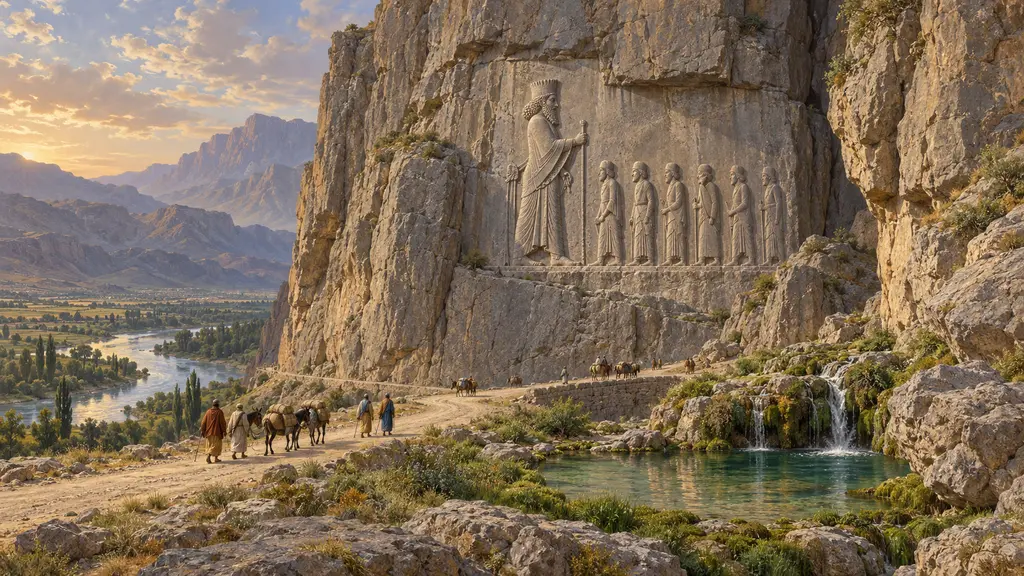
The griffon vulture
Large scavenging bird of cliffs and open country; Greece and the Persian lands, 6th-5th century BCE
In the game: Level 1: The Founder's Tomb, Level 3: The Lie, Level 4: The Terrace, Level 6: The Bridge of Boats, Level 9: The Canal, Level 10: The Hot Gates, Level 11: The Finale
The griffon vulture (Gyps fulvus) is a large soaring scavenger that nests on cliffs and feeds on carcasses. It lives today in mountain country from Greece and Turkey to Iran, and it probably did so in the Achaemenid period. Ancient writers do not name it in connection with Persian burial, so the link to the dead rests on Herodotus's mention of birds.
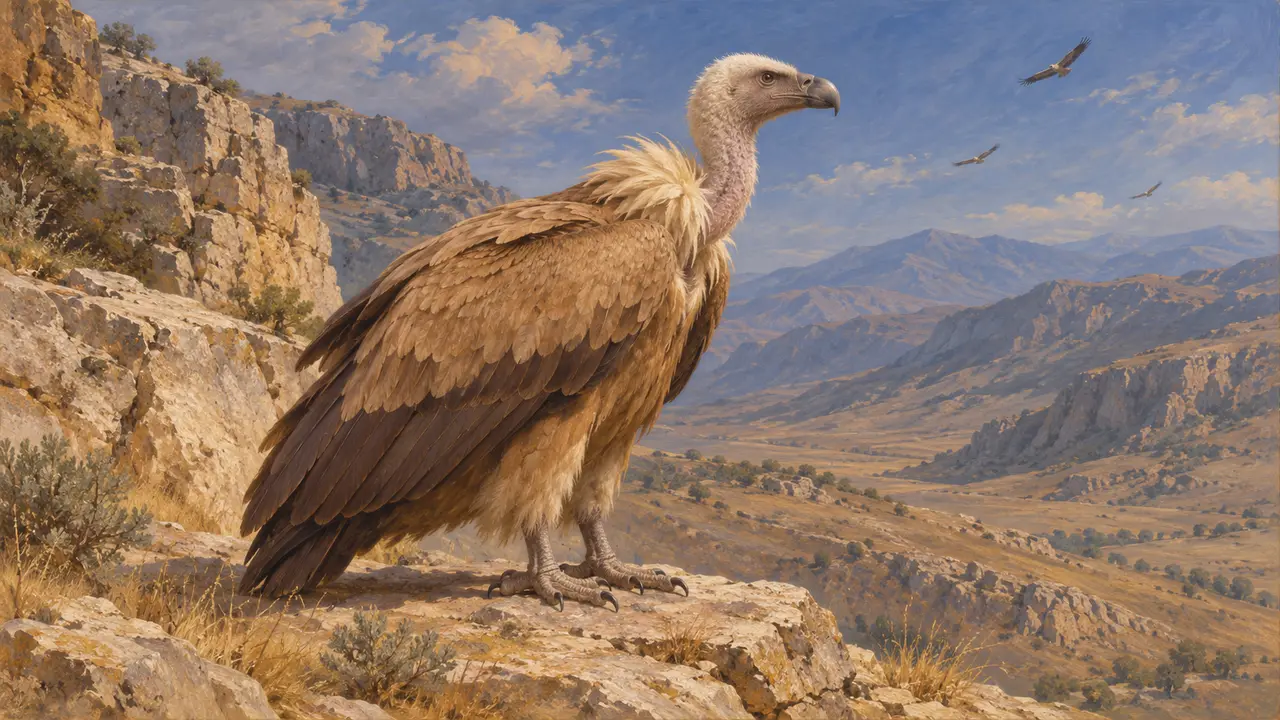
In the game: The game draws griffon vultures as birds overhead on the Athos, Bagastana, Ister, Parsa, Pasargadae, Plataea and Thermopylae levels. They are scenery only and no rule reads them.
Birds and the dead in Herodotus
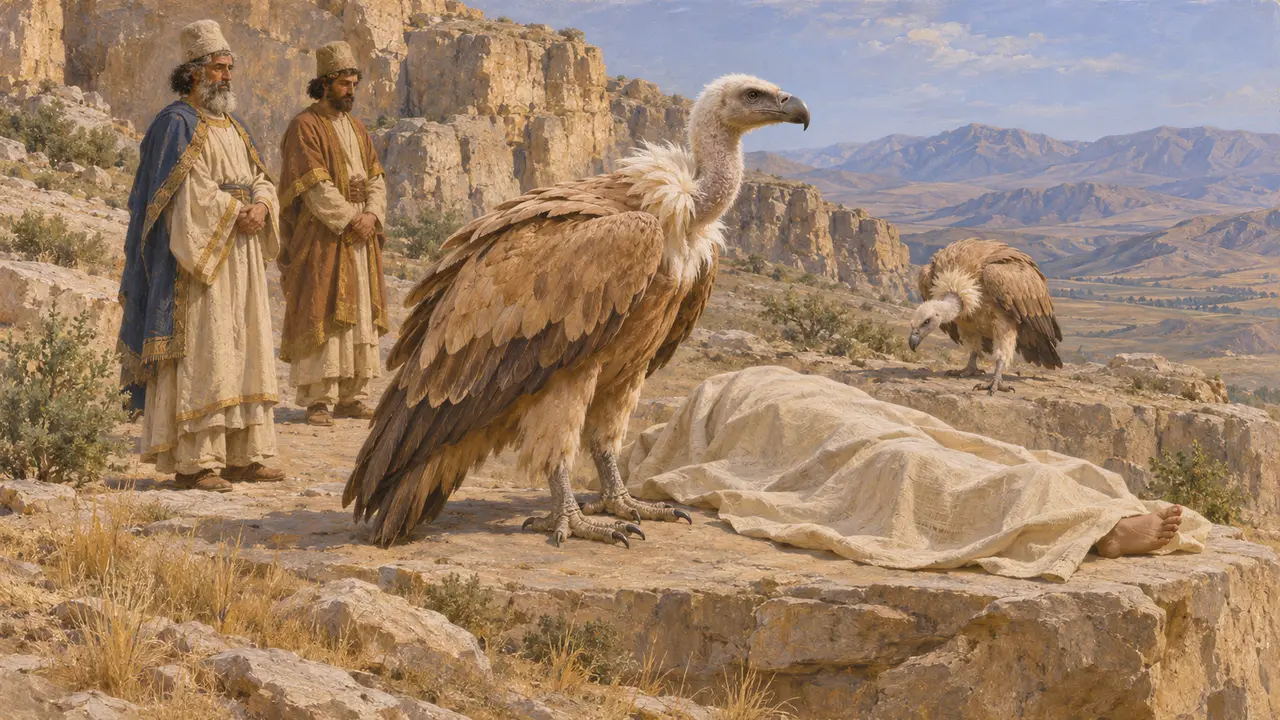
Ancient accountHerodotus says the Persians kept their burial customs quiet, but that he knew for certain that the magi exposed bodies to be torn by dogs or birds. He adds that the Persians generally coated a body in wax before burying it. He does not name the birds as vultures.
Herodotus 1.140
How far exposure was practised
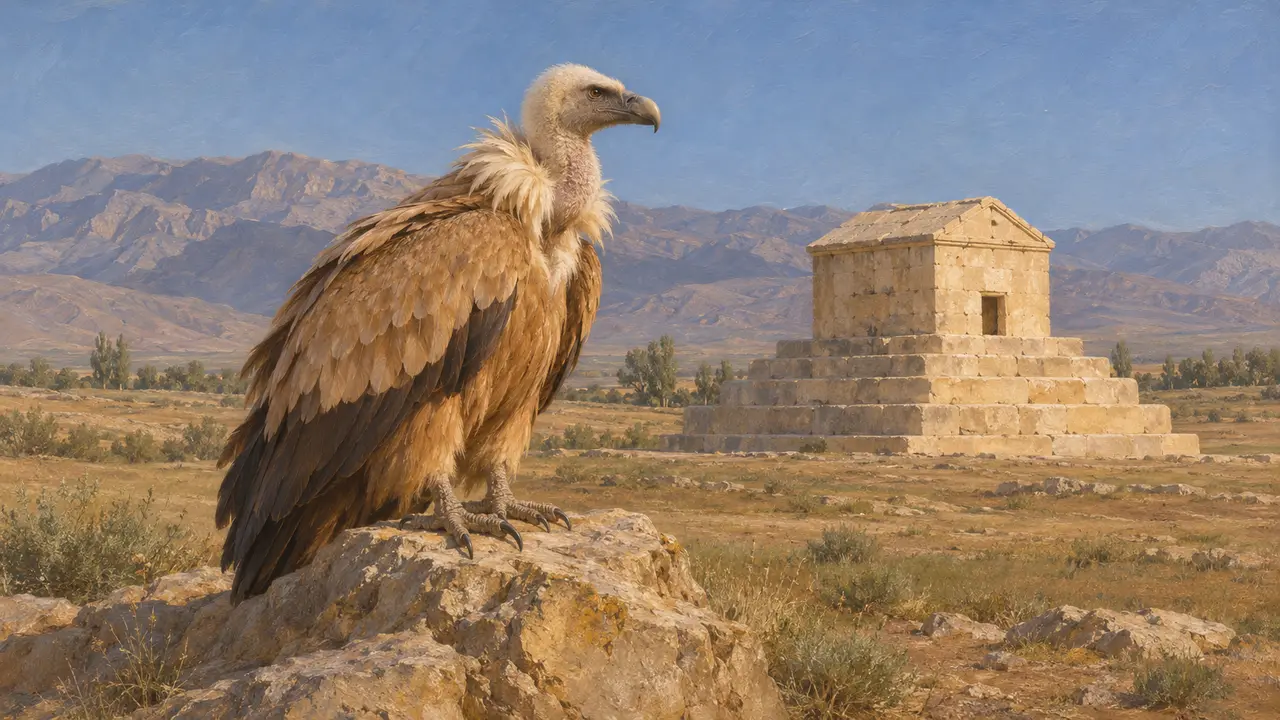
DisputedHistorians disagree about how widely exposure was practised in the Achaemenid period and by whom. The rock-cut and built royal tombs at Naqsh-e Rostam and Pasargadae show that kings were entombed, not exposed. The later Zoroastrian tower of silence is not attested for this period and should not be read back into the empire of Cyrus or Darius.
P. Briant, From Cyrus to Alexander, 2002
Vultures in the game's landscapes
Ancient accountNo surviving source from the time describes vultures over Behistun, Pasargadae or the Greek battlefields. Their place in the game is an atmospheric choice, reasonable for mountain and open country where carrion lay, but it is not drawn from an ancient report.
Herodotus 1.140
Sources
- Herodotus 1.140
- P. Briant, From Cyrus to Alexander, 2002