Encyclopedia › Wildlife and weather

The hooded crow
A grey and black scavenging bird of farmland and towns, seen in the lands of the empire, 559-479 BCE
In the game: Level 1: The Founder's Tomb, Level 2: The Spear-bearer, Level 3: The Lie, Level 4: The Terrace, Level 5: The Charter, Level 6: The Bridge of Boats, Level 7: Sardis Burns, Level 8: The Bay of Marathon, Level 9: The Canal, Level 10: The Hot Gates, Level 11: The Finale
The hooded crow is a grey-bodied, black-headed crow that lives in open country, farmland and settlements across much of Europe and western Asia. It is likely to have been a familiar bird beside the farms, roads and towns of the Persian empire. No Persian text known to this encyclopedia describes it, and Greek writers mention crows mainly as signs of weather and in tales.
In the game: The game draws the hooded crow as wildlife flying overhead on all eleven levels, from Pasargadae to Plataea. It is scenery only, and no rule reads it.
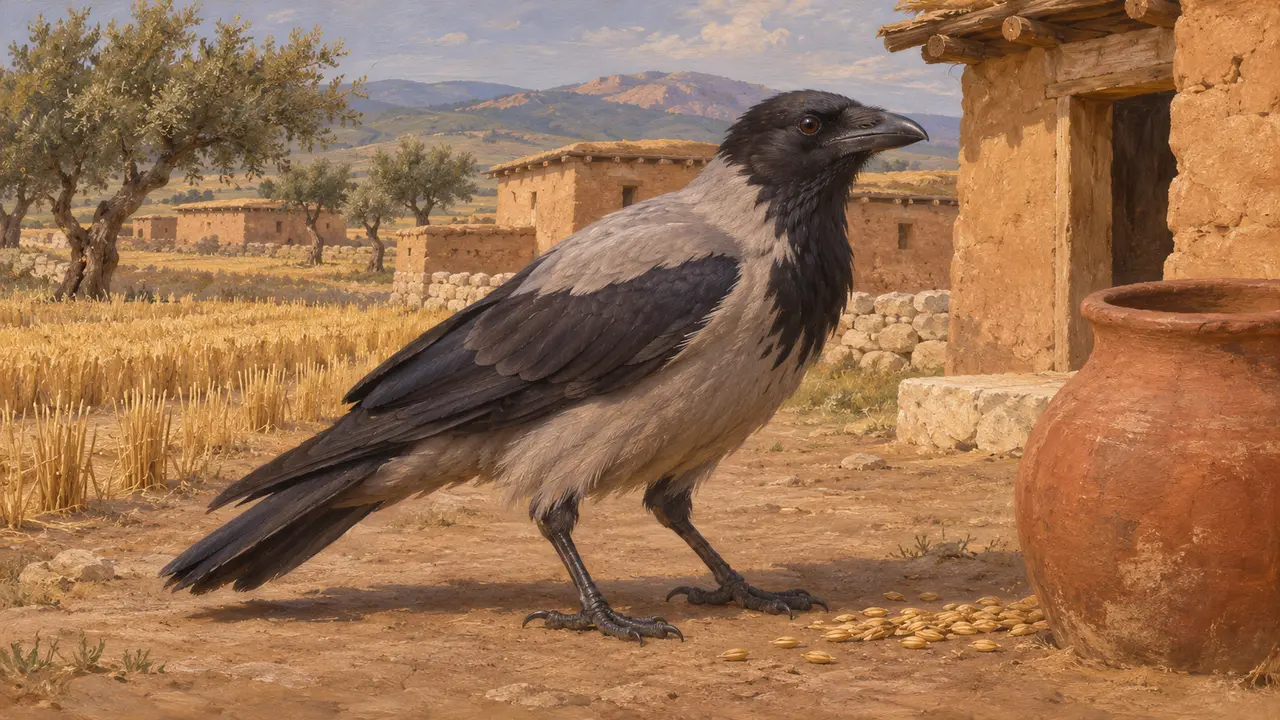
A bird of farms and towns
DisputedNo text from the Persian world describes the hooded crow, so its presence is inferred from the bird's modern range and habits, not from evidence of the time. Modern ornithologists describe it as a bird of open country, farmland and settlements that feeds on grain, carrion and refuse. It is therefore probable, though not documented, that crows of this kind lived near the places the game depicts.
Cramp (ed.), Handbook of the Birds of Europe, the Middle East and North Africa, vol. 8, 1994
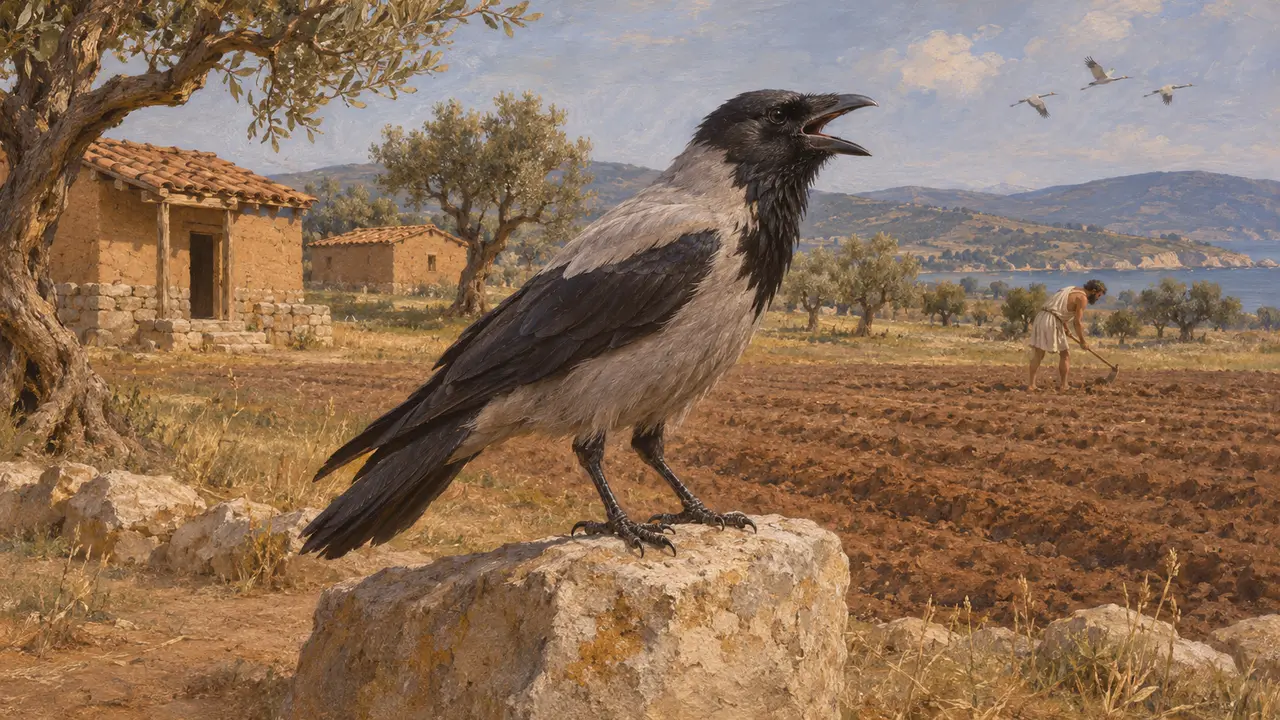
Crows in Greek writing
Ancient accountGreek authors knew the crow well. Hesiod, writing long before the Persian wars, treats the crane's cry and the crow's cry as signs for the farmer's year. Aristotle, writing in the fourth century, discusses crows among the birds in his natural history. These passages show how Greeks saw the bird and say little about Persian attitudes.
Hesiod, Works and Days
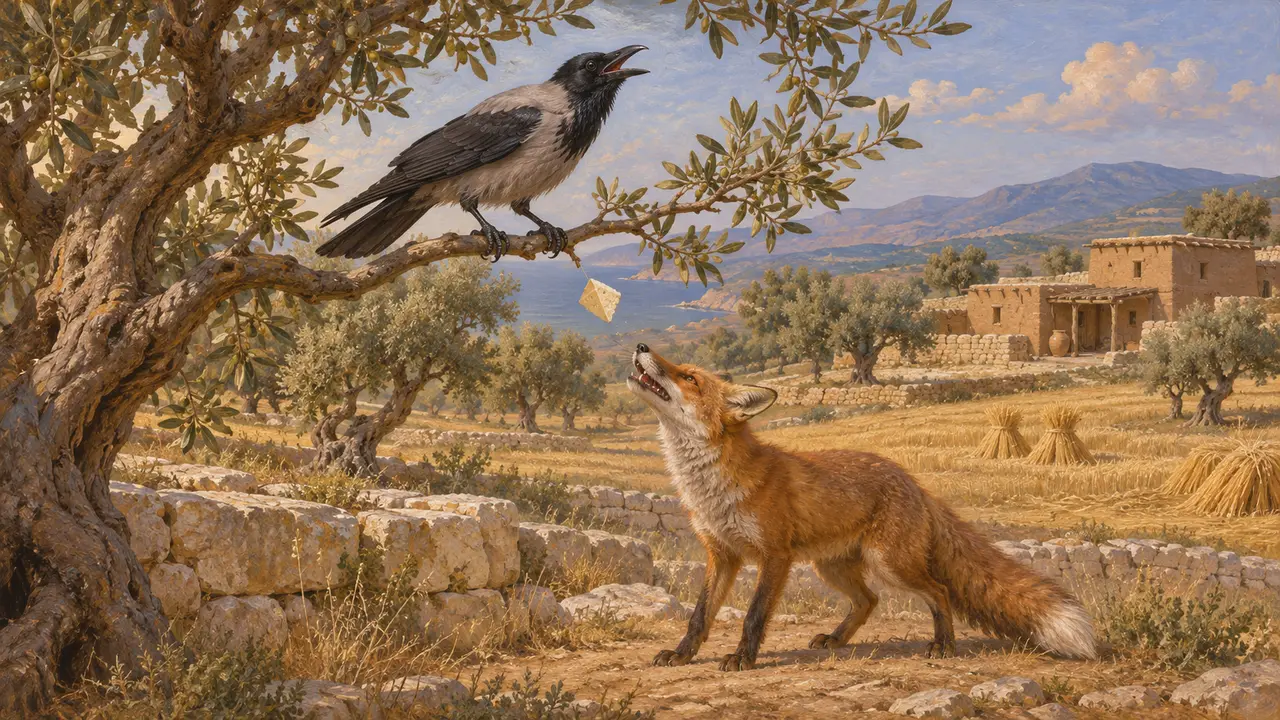
The crow in fable
Later legendCrows appear in the animal tales credited to Aesop, a name attached to fables collected long after the Persian wars. These stories are moral tales about cunning and vanity. They say nothing about how crows behaved in 490 or 480 and should not be read as observation.
Aesop, Fables
Sources
- Cramp (ed.), Handbook of the Birds of Europe, the Middle East and North Africa, vol. 8, 1994
- Hesiod, Works and Days
- Aristotle, History of Animals
- Aesop, Fables