Encyclopedia › Wildlife and weather

The jackdaw
A small, sociable crow of Persia and the Greek lands, 559-479 BCE
In the game: Level 1: The Founder's Tomb, Level 3: The Lie, Level 4: The Terrace, Level 5: The Charter, Level 6: The Bridge of Boats, Level 7: Sardis Burns, Level 8: The Bay of Marathon, Level 9: The Canal, Level 10: The Hot Gates, Level 11: The Finale
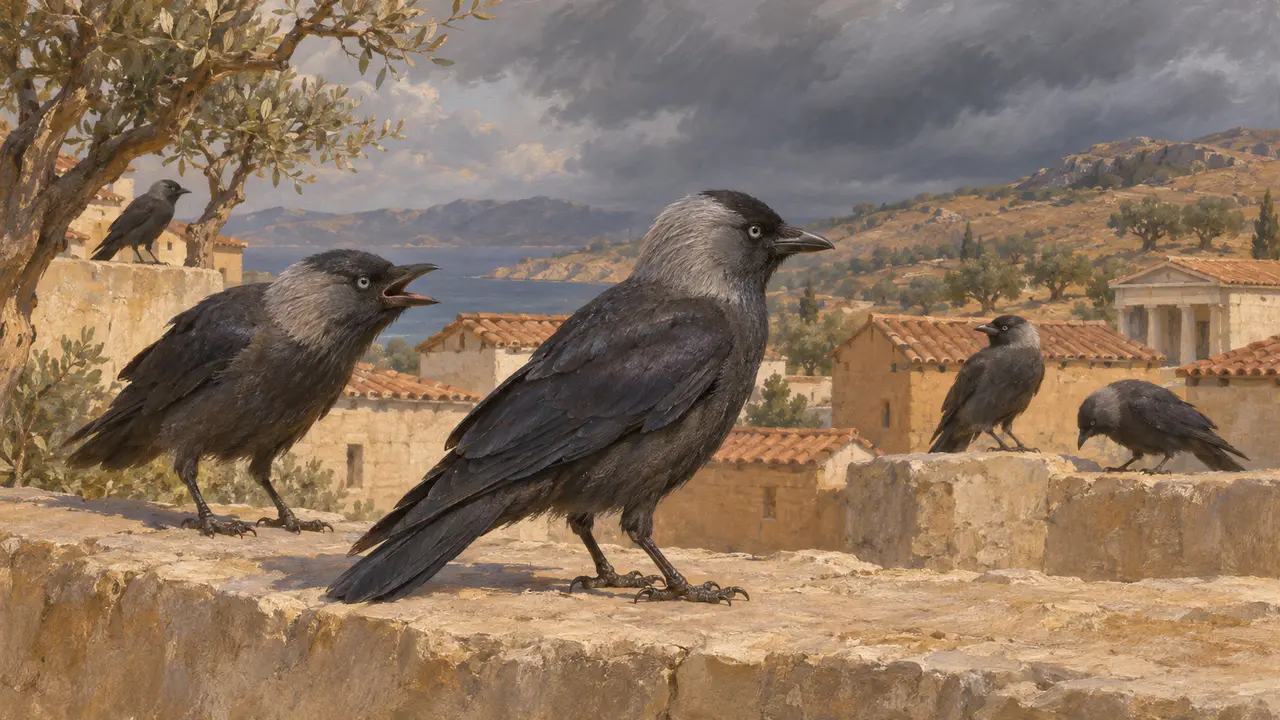
The jackdaw (Corvus monedula) is a small crow with a grey nape that nests in cliffs, ruins and old buildings. It lives across western Asia and Europe, and it probably lived beside the towns, forts and terraces of the Persian empire. No Persian text is known to describe it, so what can be said rests on the bird's habits as observed today and on later Greek natural history.
In the game: The game draws jackdaws as birds overhead on ten levels: Pasargadae, Bagastana, Parsa, Susa, the Ister, Sardis, Marathon, Athos, Thermopylae and Plataea. They are scenery only, and no rule reads them.
What the bird is
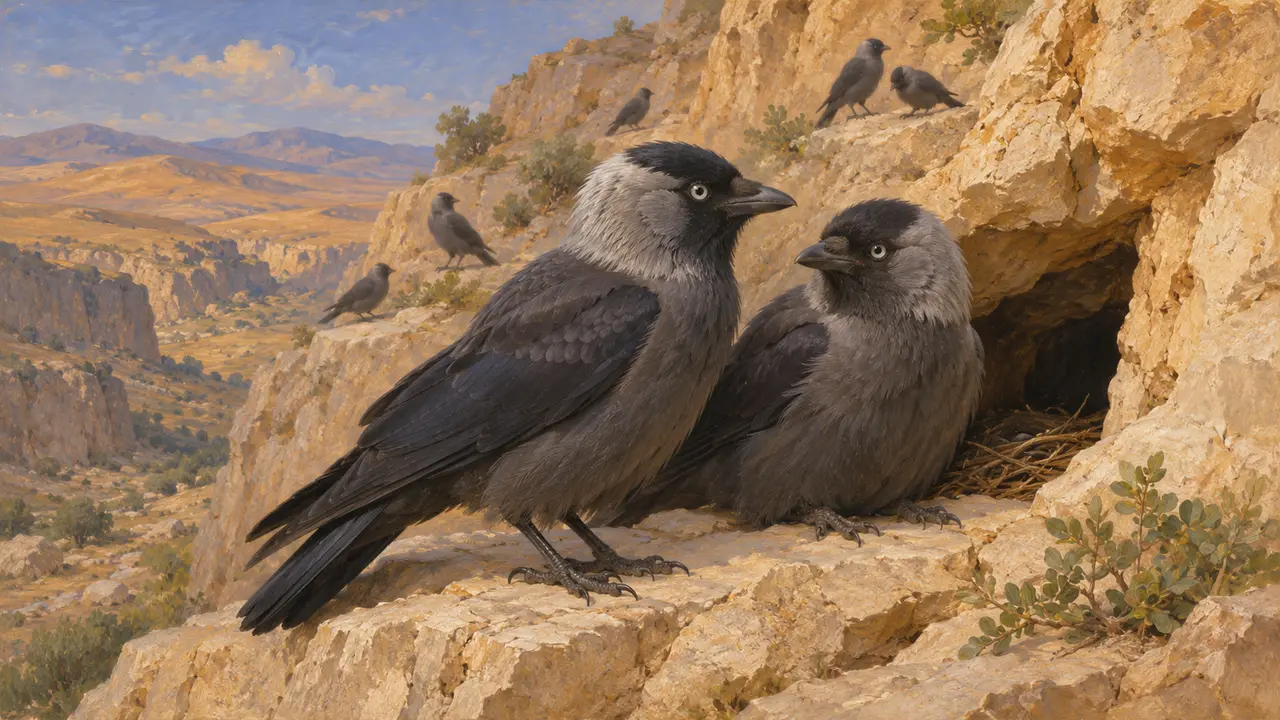
Ancient accountThe jackdaw is about 33 centimetres long, black with a grey nape and pale eyes. It lives in flocks and pairs are thought to hold together over years. It nests in holes in cliffs, rocky gorges, tree hollows and the crevices of buildings. Its range today covers Europe, North Africa and western Asia, including the Iranian plateau. This is modern observation, not evidence from the period.
Modern ornithological handbooks
Living beside buildings
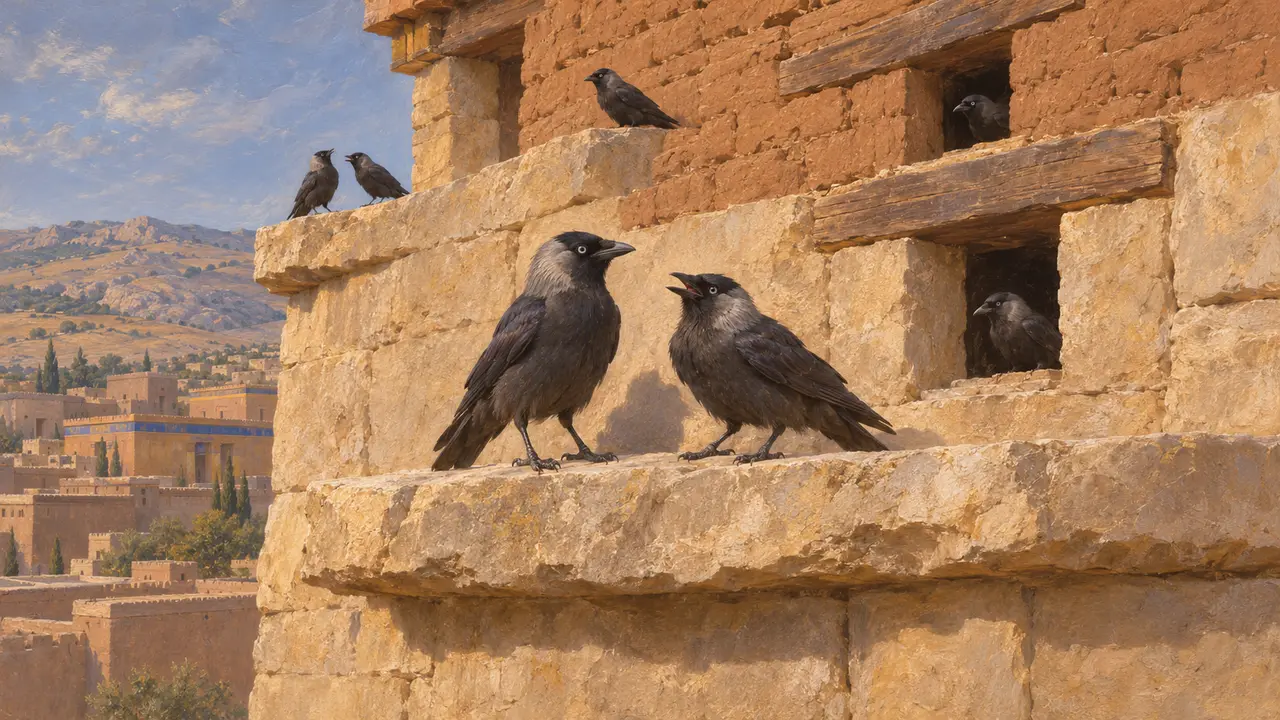
DisputedJackdaws favour tall stone and brick structures with ledges and gaps, so terraces, towers and ruins would probably have suited them. No excavation report for the sites in this game is known to the author to record jackdaw remains from the period. Their presence at these places is therefore an inference from habits, not a finding.
Inference from habitat; no site-specific record cited
Birds in Persian life
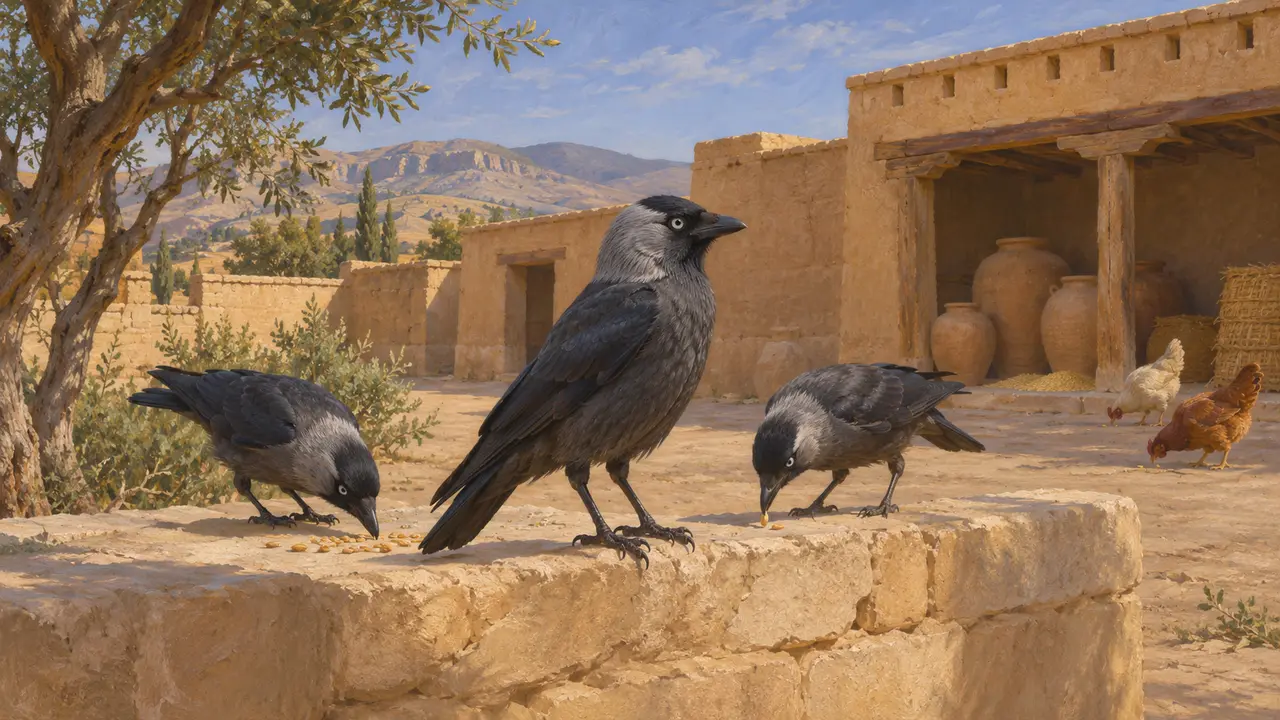
In the recordThe Persepolis Fortification tablets record poultry and other supplies issued on the royal estates in Persis. Nothing in them is known to the author to name the jackdaw, so Persian documents give no direct evidence about it.
Persepolis Fortification tablets, general survey in Briant, From Cyrus to Alexander, 2002
Greek writers on crows
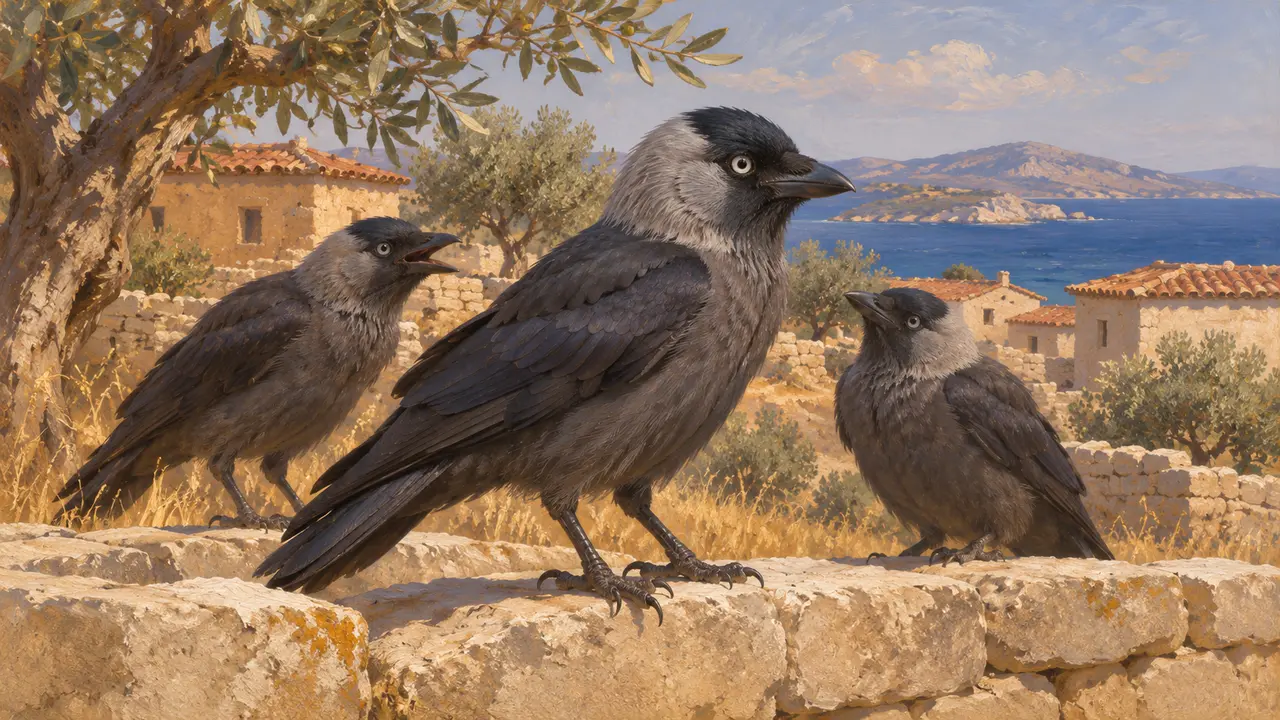
Ancient accountGreek natural history treated the jackdaw as a bird of the crow kind. Aristotle, writing in the fourth century, described birds of this sort in his natural history. Such works show how the bird was seen in the Greek world, not in Persia, and they were written after the events of this game.
Aristotle, Historia Animalium
Omens and fables
Later legendCrows and their relatives appear in later Greek fable and omen lore as talkative birds and as signs of weather or fortune. These stories were written down well after 479 and say nothing certain about how Persians or Greeks of the war years regarded jackdaws.
Later Greek fable and omen traditions
Sources
- Aristotle, Historia Animalium
- Modern ornithological handbooks
- P. Briant, From Cyrus to Alexander, 2002
- Persepolis Fortification tablets