Encyclopedia › Wildlife and weather
The crane
A migratory bird seen across the Persian empire and Greece, 6th to 5th century BCE
In the game: Level 1: The Founder's Tomb, Level 2: The Spear-bearer, Level 3: The Lie, Level 4: The Terrace, Level 5: The Charter, Level 6: The Bridge of Boats, Level 7: Sardis Burns, Level 8: The Bay of Marathon, Level 9: The Canal, Level 10: The Hot Gates, Level 11: The Finale
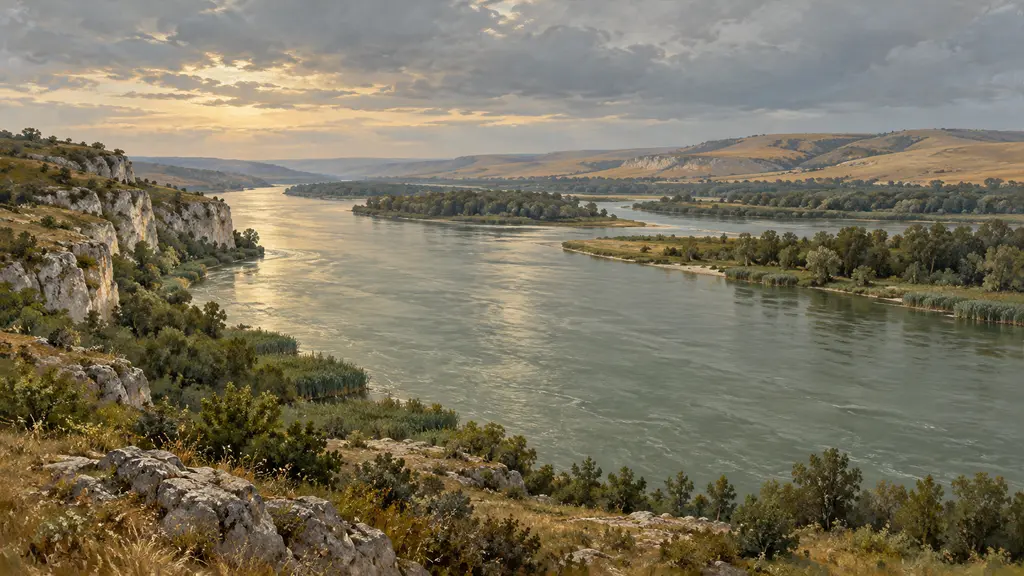
Cranes cross the lands of the Persian empire twice a year, flying between northern breeding grounds and winter quarters in the south. Greek writers noticed them as signs of the seasons and as birds that wintered in Egypt. Direct evidence of how Persians regarded cranes is thin, so most of what is said below comes from Greek sources.
In the game: The game draws cranes as birds overhead on the Athos, Bagastana, Ister, Marathon, Memphis, Parsa, Pasargadae, Plataea, Sardis, Susa and Thermopylae levels. They are scenery only, and no rule reads them.
A bird of the seasons
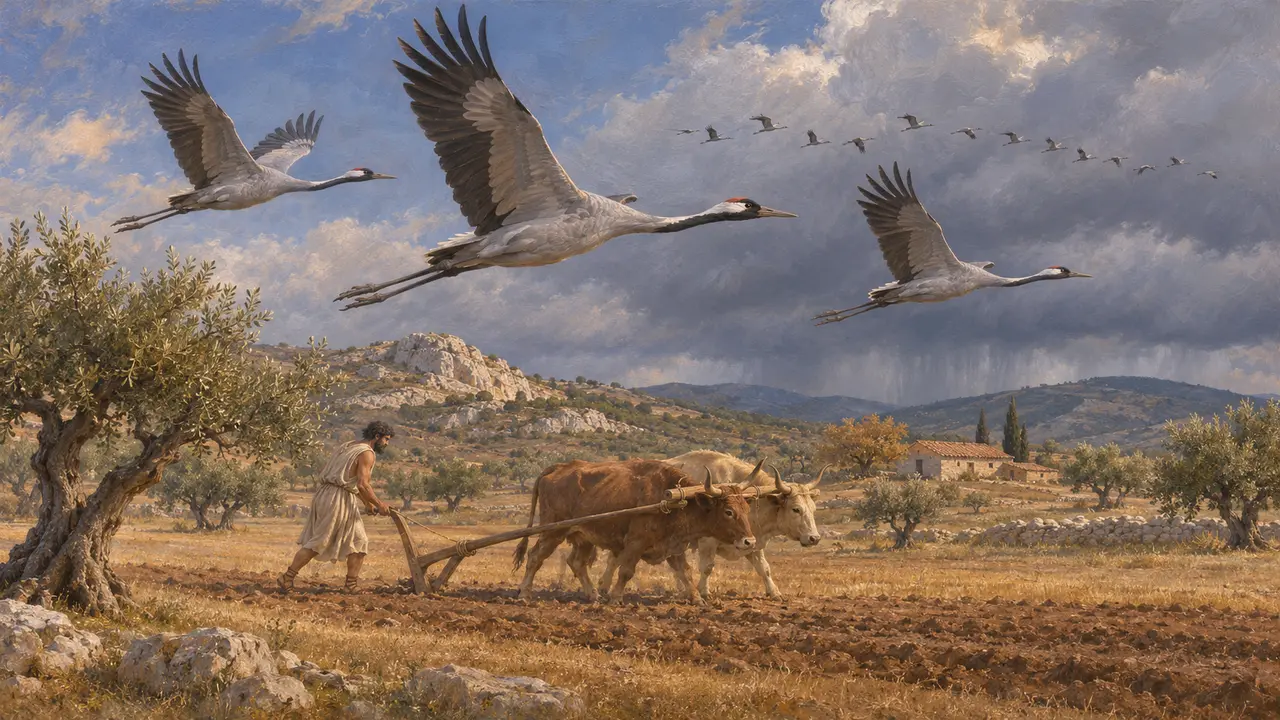
Ancient accountHesiod, in Works and Days, treats the cry of cranes passing overhead as a signal for ploughing and for the coming of winter rains. He wrote well before the Persian wars, but the poem shows that Greek farmers knew the crane as a calendar bird. Aristotle later described the migration of cranes in his work on animals.
Hesiod, Works and Days
Winter in the south
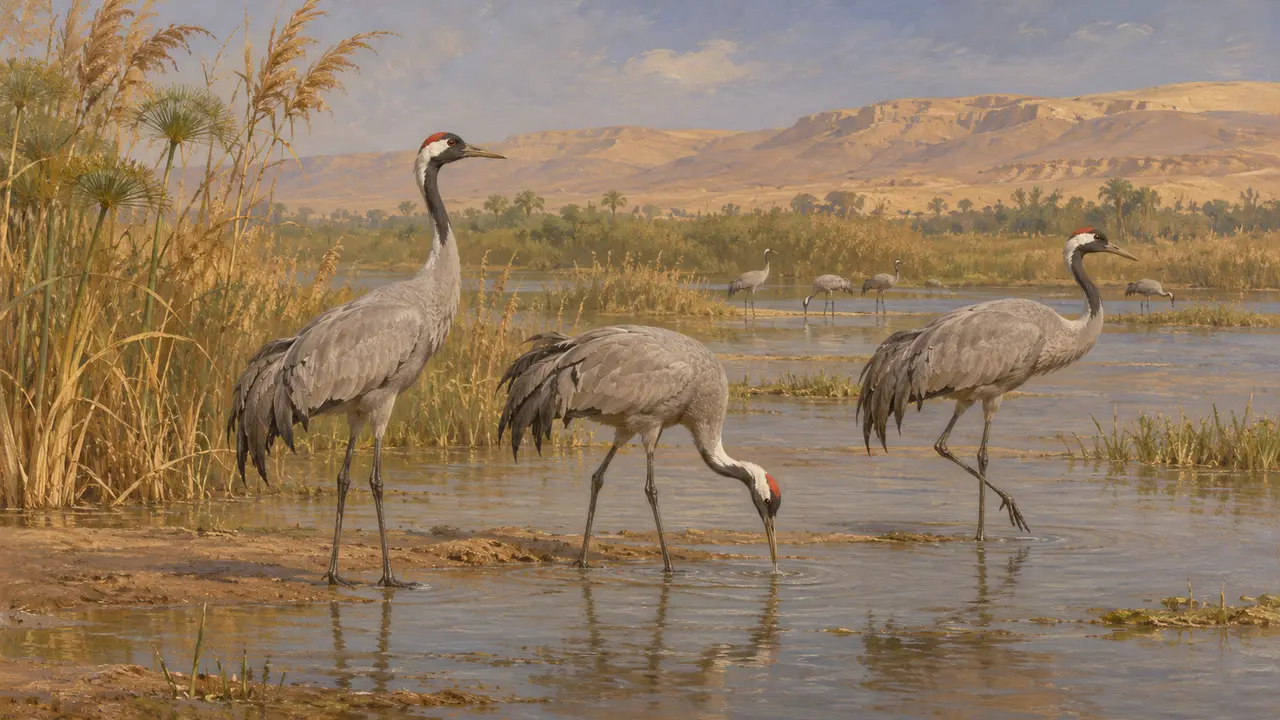
Ancient accountHerodotus says that cranes leave the cold lands of Scythia to spend the winter in Egypt and the upper Nile country. This is reported knowledge, not something he set out to test, though the broad pattern of migration to the south is correct.
Herodotus 2.22
Cranes and the Persians
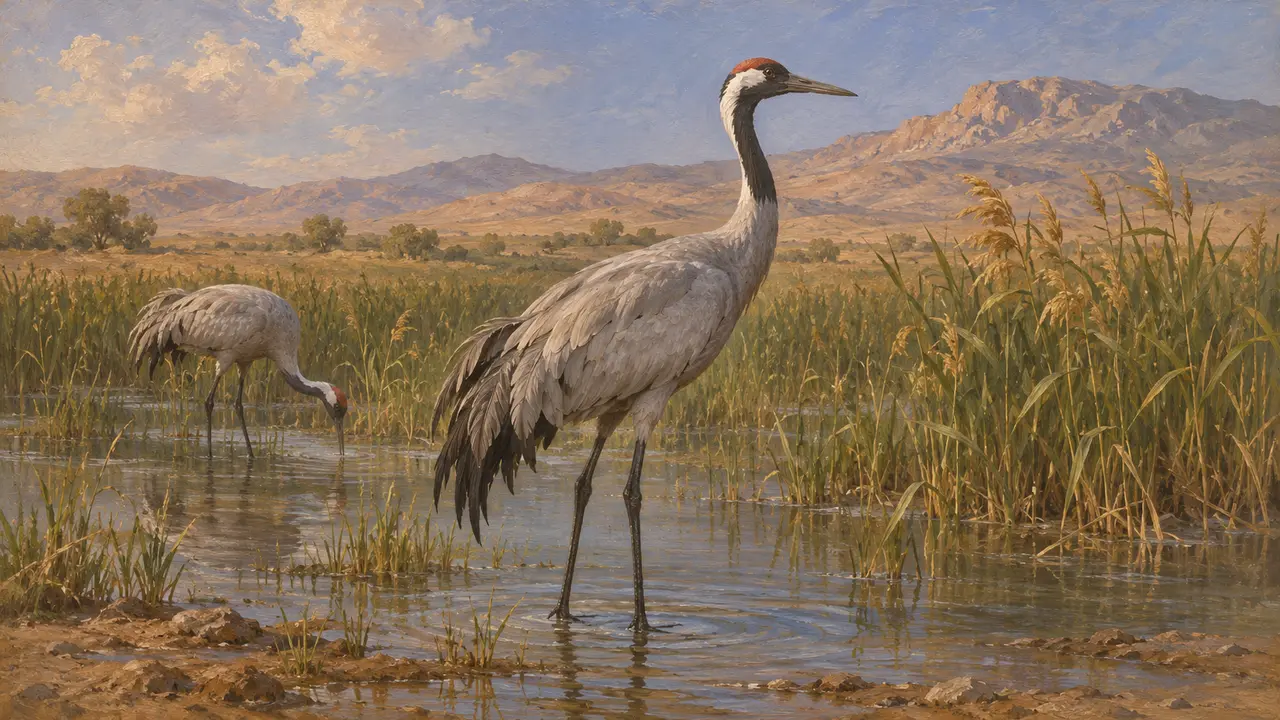
Ancient accountNo Achaemenid inscription or tablet known to the compilers of this entry treats the crane as a sacred or royal bird. Persian attitudes to the bird are therefore unknown, and what is said about cranes in this period comes from Greek writers.
Herodotus 2.22
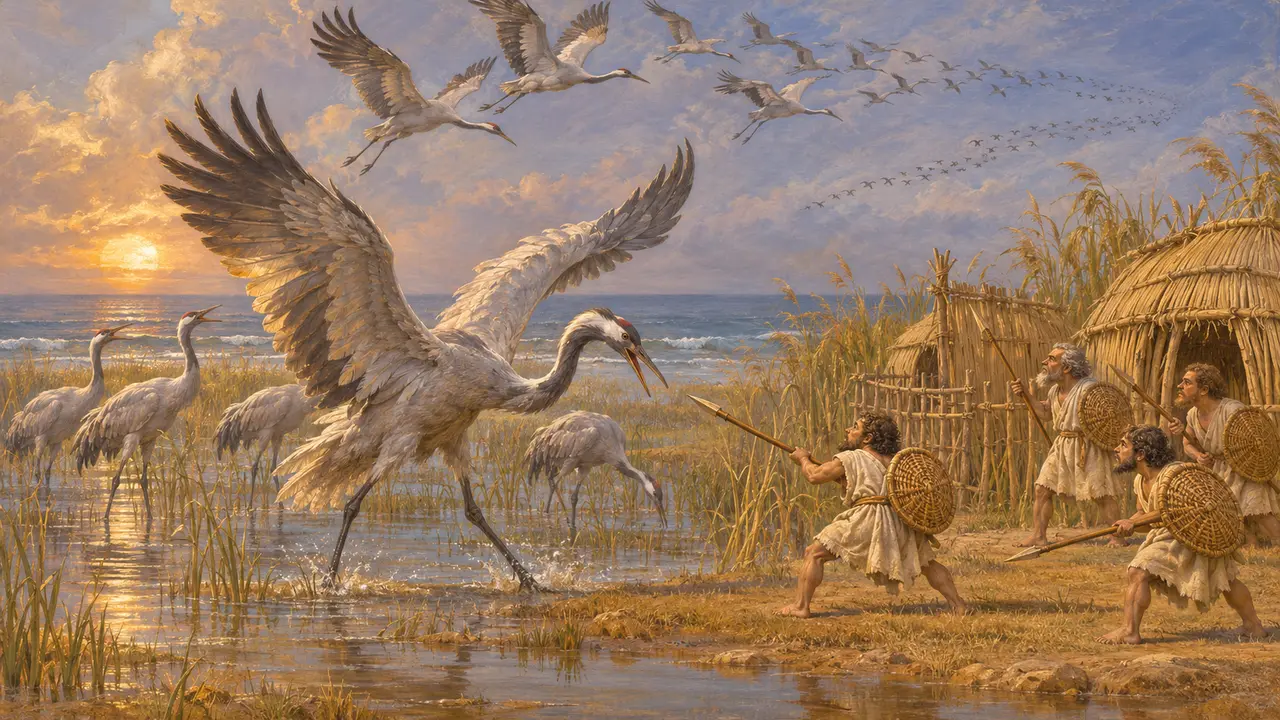
The cranes and the pygmies
Later legendHomer compares the Trojan army to cranes crying as they flee winter and fly toward the Ocean, bringing death to the Pygmies. The picture belongs to poetry and myth, not to natural history, and it has no bearing on the Persian period.
Homer, Iliad 3.3-7
Sources
- Herodotus 2.22
- Hesiod, Works and Days
- Homer, Iliad 3.3-7
- Aristotle, History of Animals