Encyclopedia › Wildlife and weather

The Egyptian goose
A Nile waterbird of Egyptian marshes and art, Memphis, about 525 BCE
In the game: Level 2: The Spear-bearer
The Egyptian goose (Alopochen aegyptiaca) is a long-legged, goose-like bird of the Nile valley and Africa south of the Sahara. Egyptian artists painted and carved marsh birds for thousands of years before the Persian conquest. The bird gives a small touch of Nile scenery to Memphis, though the sources say little about this species.
In the game: The game draws the Egyptian goose as a raft of birds afloat on the Nile at Memphis. It is scenery only and no rule reads it.
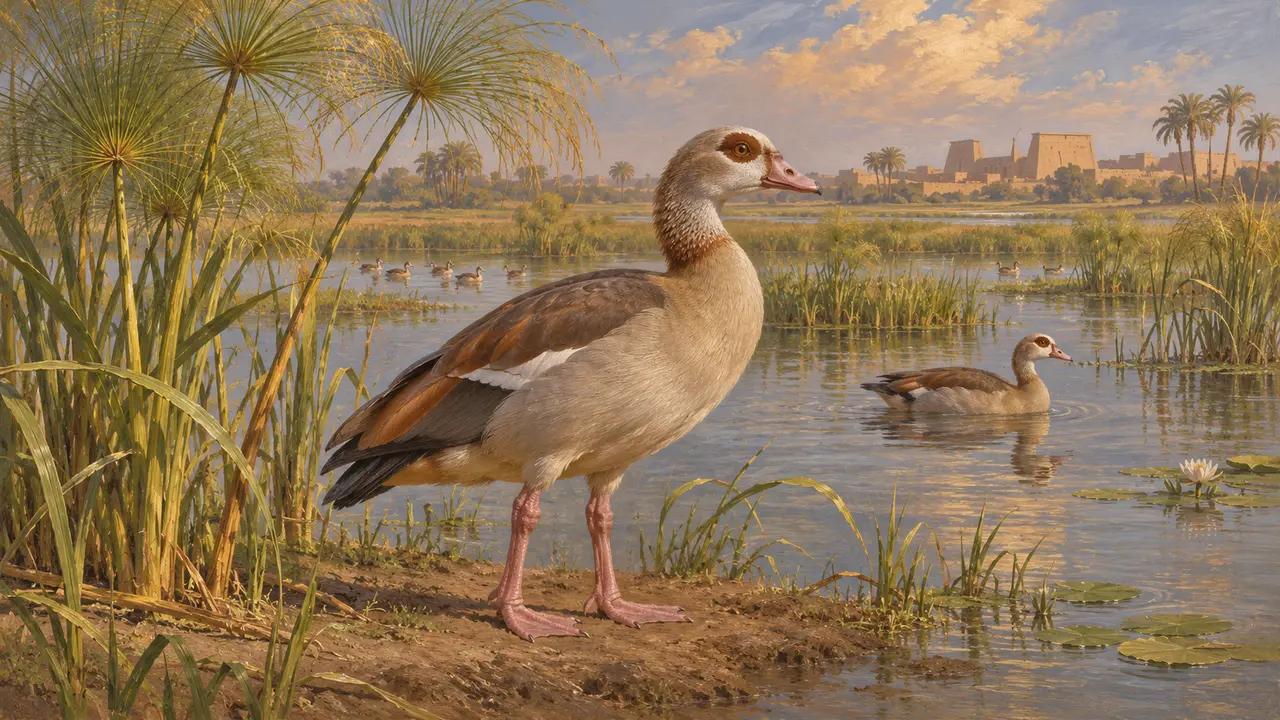
A bird of the Nile and its marshes
In the recordWaterfowl appear throughout the marsh scenes painted and carved in Egyptian tombs, where the tomb owner is shown hunting birds and fishing among papyrus. These scenes are centuries older than the Persian conquest of 525. They show that Nile marshes were rich in birds, and the wetlands near Memphis probably were too when Cambyses arrived.
Egyptian tomb scenes of marsh fowling
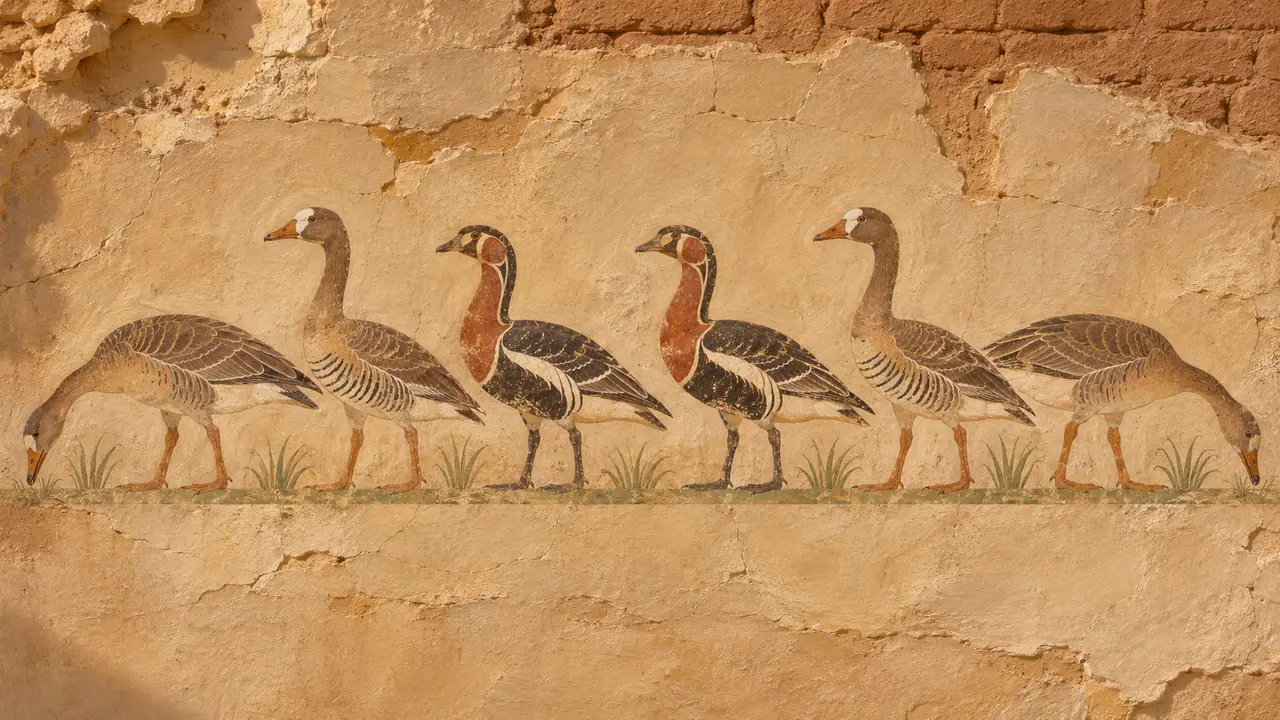
The Meidum geese are other species
DisputedThe painting of geese from a tomb chapel at Meidum, from the Old Kingdom, is sometimes taken to show Egyptian geese. Modern students of the painting identify its birds as bean, white-fronted and red-breasted geese. The Egyptian goose is a separate bird, more closely related to shelducks than to true geese. Identifications of painted birds rest on modern judgement of the pigment and outline, so individual cases are argued.
P. Houlihan, The Birds of Ancient Egypt, 1986
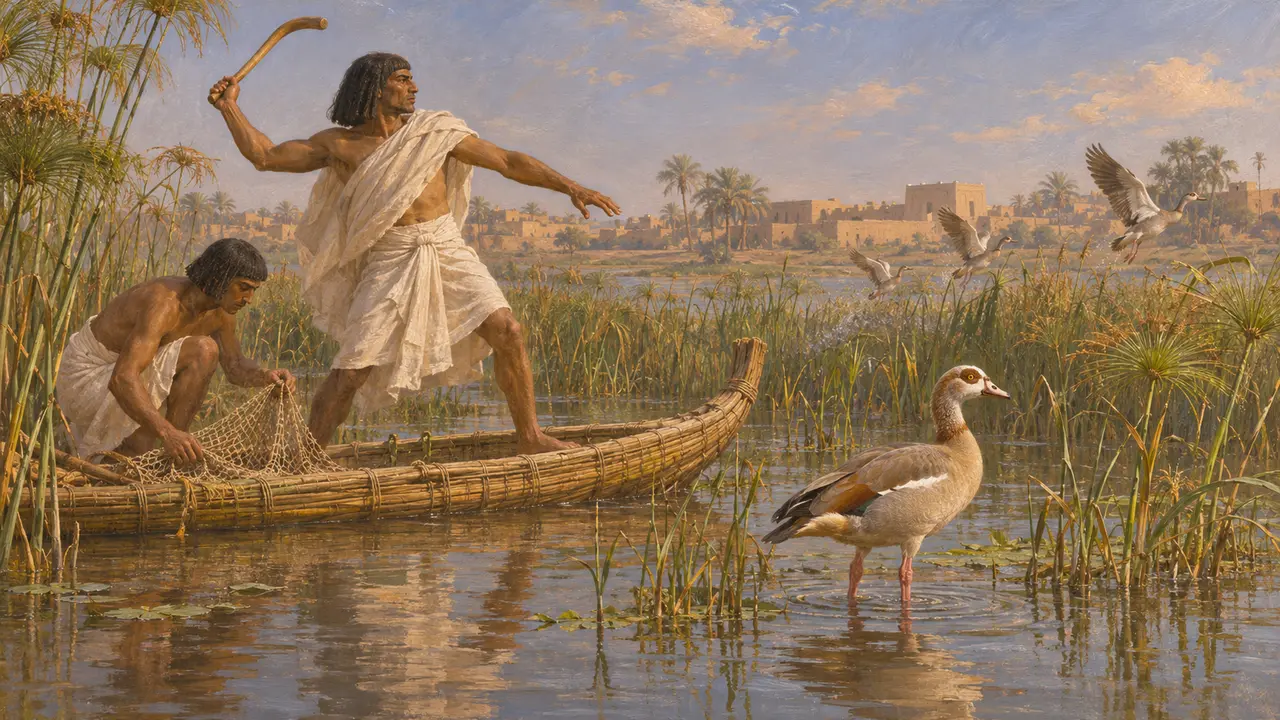
Birds as food and offering
In the recordEgyptian tomb scenes and offering scenes show birds as food, as offerings to the dead and as game taken with nets and throw-sticks. Fowling in the marsh appears as a pursuit of the elite as well as a source of food. The scenes do not by themselves show which species were taken in the Persian period.
Egyptian tomb scenes of fowling and offering
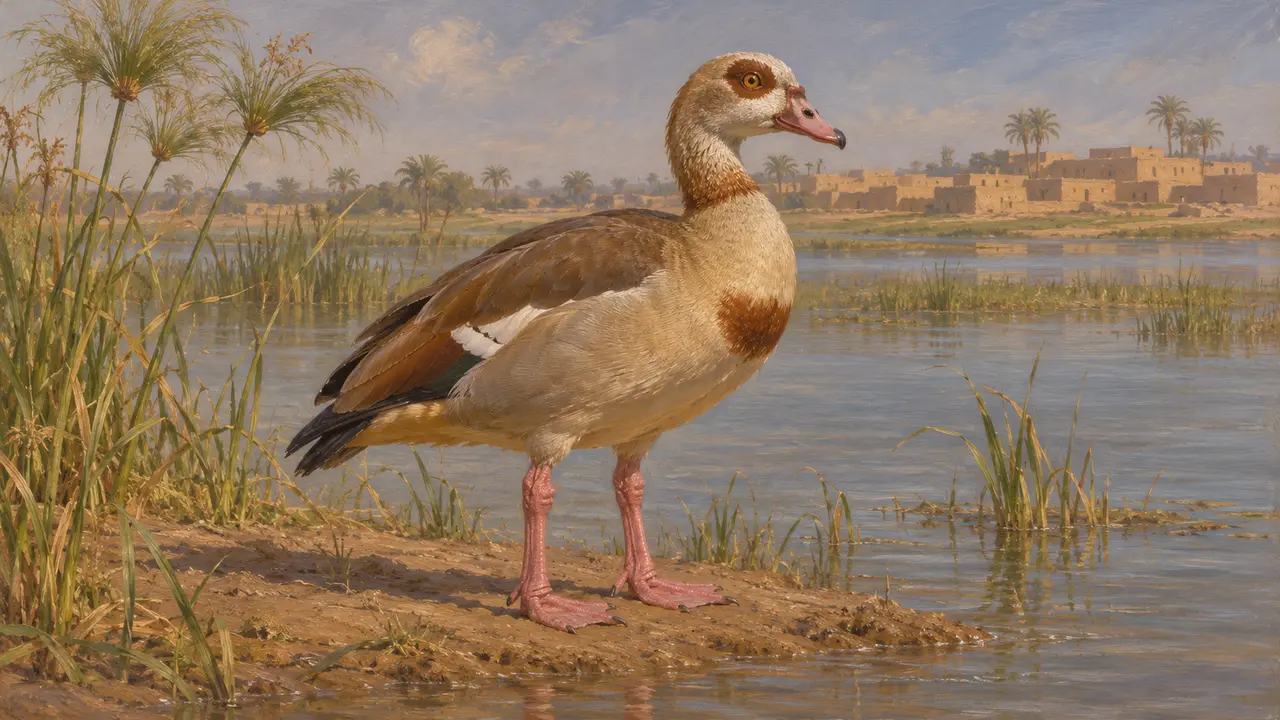
What Herodotus says
DisputedHerodotus describes Egypt's customs and animals at some length, including sacred animals. He mentions a bird he calls the fox-goose as sacred to the Nile god. The fox-goose is usually identified with the Egyptian goose, but claims about the bird in Persian-period Memphis rest mainly on its natural range.
Herodotus 2.72
Sources
- Herodotus 2.72
- Egyptian tomb scenes of marsh fowling, Old Kingdom to Late Period
- P. Houlihan, The Birds of Ancient Egypt, 1986