Encyclopedia › Wildlife and weather

The sacred ibis
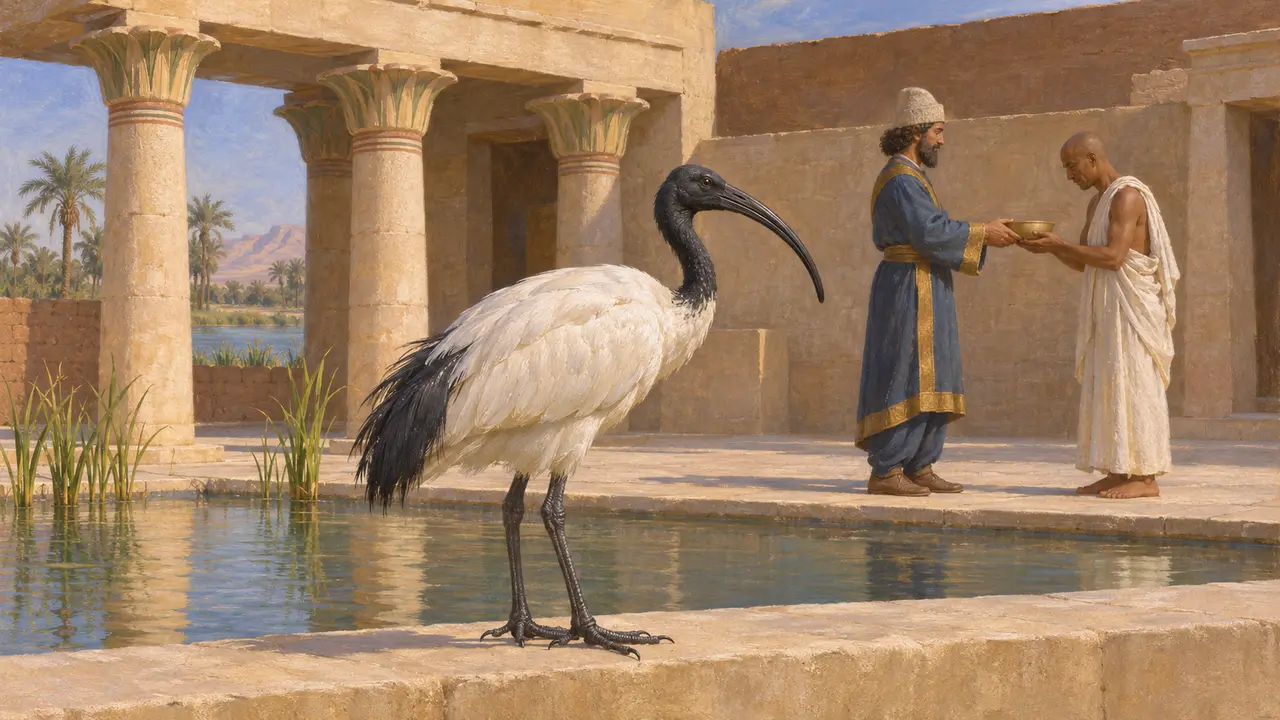
Wading bird of the Nile valley, sacred to Thoth, Egypt, 525 BCE and after
In the game: Level 2: The Spear-bearer
The sacred ibis was a white wading bird with a black head and neck, common in Egypt and linked to the god Thoth. Egyptians kept and buried it as a sacred animal, and Herodotus recorded that killing one was punished. The Persians ruled Egypt from 525, in a land where animal cults were old and widespread.
In the game: The game draws ibises as birds overhead on the Memphis level only. They are scenery: no rule reads them.
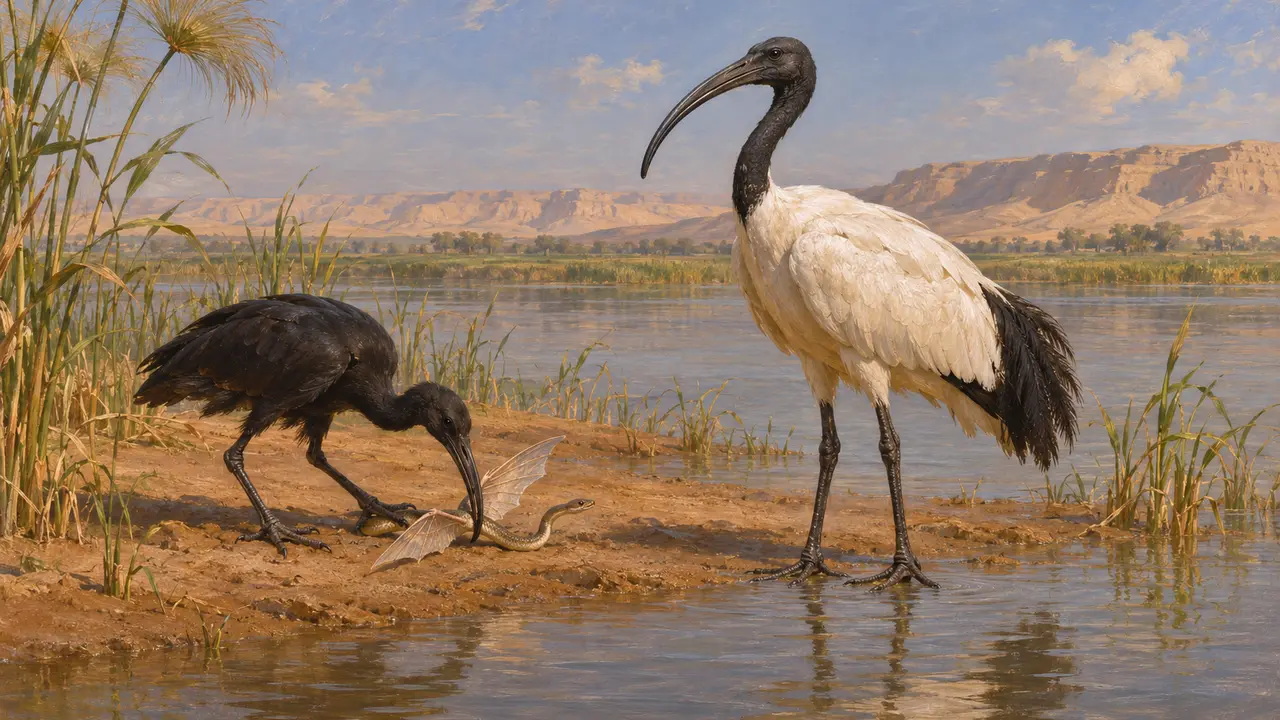
The bird as Herodotus saw it
Ancient accountHerodotus describes two kinds of ibis in Egypt. One is black all over and fights winged snakes. The other has a white body with black head, neck, wing tips and tail, and bare legs. He ties the snake-fighting bird to a story about winged serpents coming from Arabia.
Herodotus 2.75-76
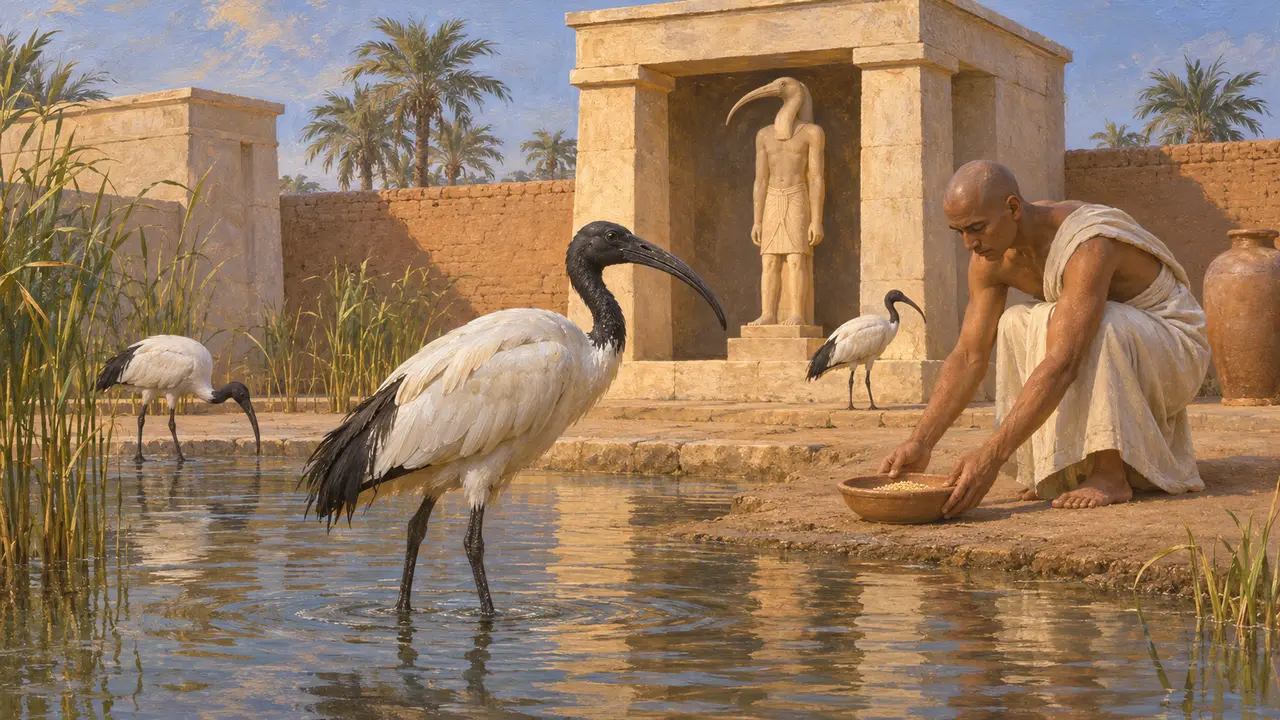
The ibis and Thoth
In the recordIn Egyptian religion the ibis was a form of Thoth, god of writing and reckoning, who was also shown as a baboon or as a man with an ibis head. Temple and cult evidence shows that ibises were kept as sacred animals and offered to the god.
D. Kessler, Die heiligen Tiere und der König, 1989
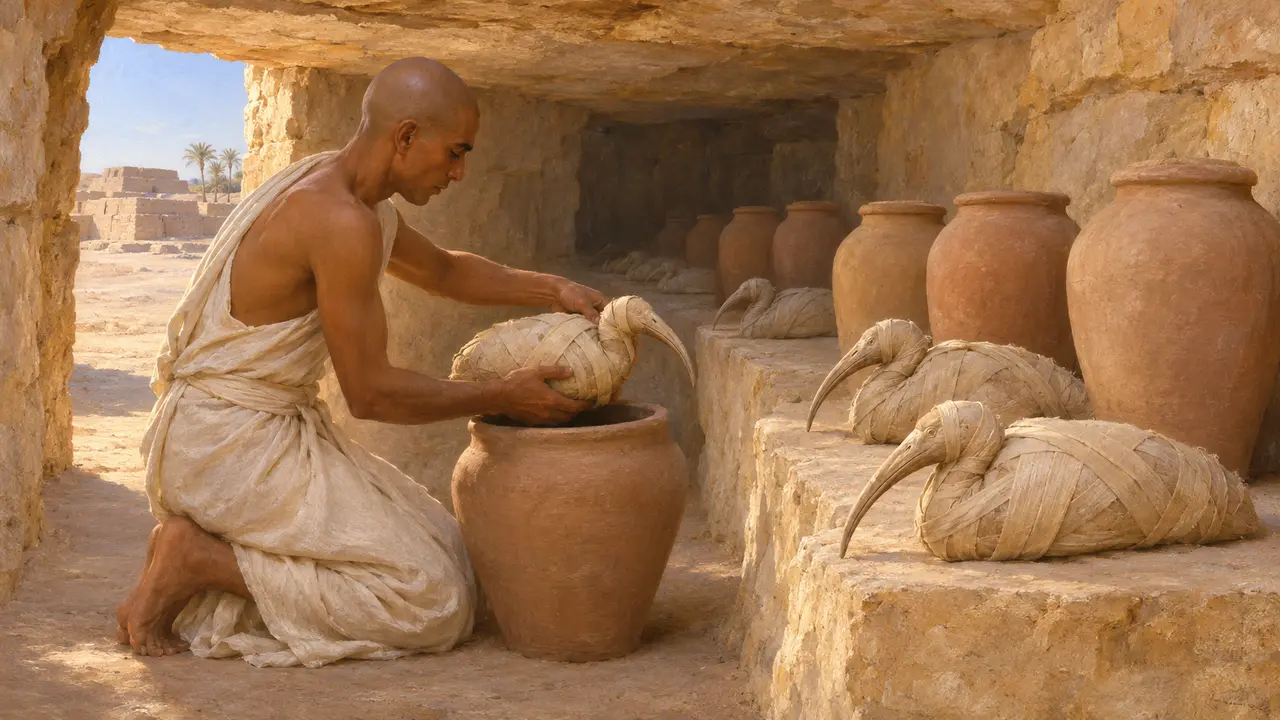
Mummified ibises at Saqqara
In the recordExcavations at the necropolis of Saqqara, near Memphis, have found vast numbers of mummified ibises buried in galleries. Most of the great deposits belong to the later first millennium, so in their bulk they are later than the Persian period. They show a practice that grew over centuries and was not fixed in 525.
D. Kessler, Die heiligen Tiere und der König, 1989
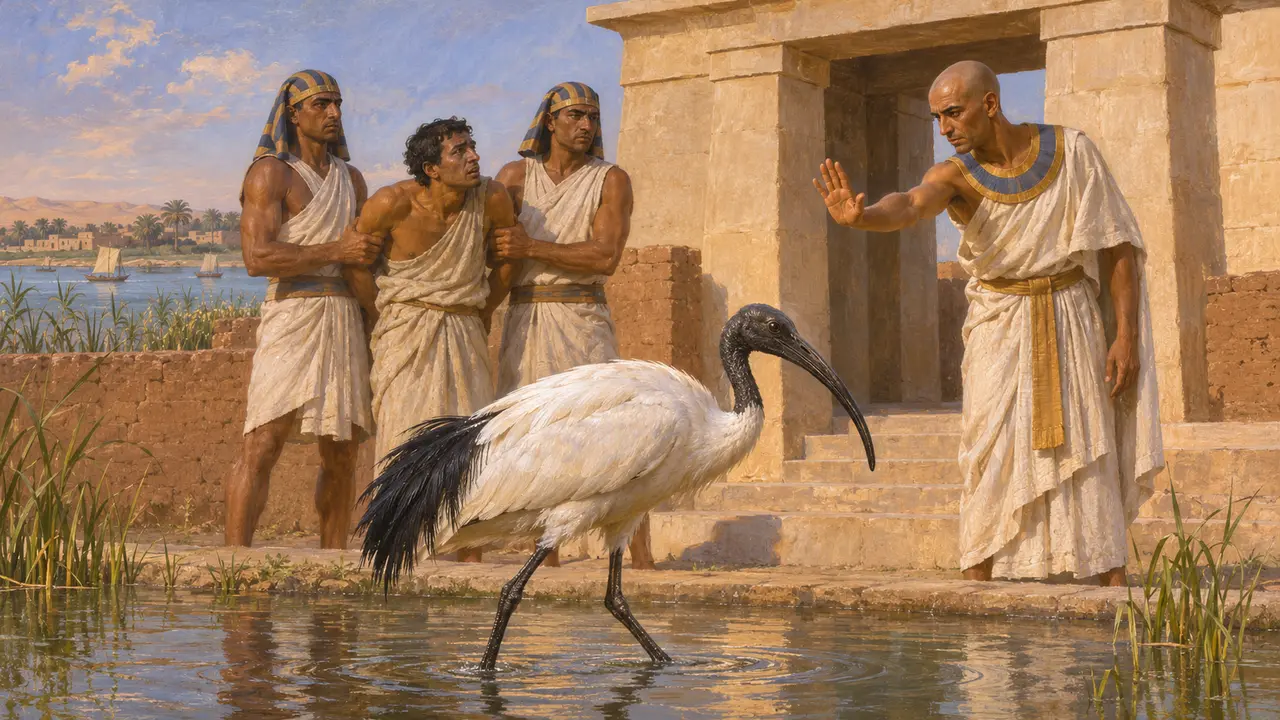
Protection under Egyptian custom
Ancient accountHerodotus says that in Egypt anyone who killed an ibis or a hawk, even by accident, was put to death. This is the report of a Greek visitor, and it may overstate the law. It does fit the reverence for sacred animals that he records elsewhere.
Herodotus 2.65
Persian kings and Egyptian cults
DisputedHerodotus says Cambyses mocked Egyptian customs and stabbed the Apis bull. Egyptian sources from the time, including the Apis stelae and the statue of Udjahorresnet, show Persian rulers supporting some temples and cults. Historians still argue over how far Herodotus's hostile picture of Cambyses can be trusted.
Herodotus 3.27-29; P. Briant, From Cyrus to Alexander, 2002
Sources
- Herodotus 2.65
- Herodotus 2.75-76
- Herodotus 3.27-29
- P. Briant, From Cyrus to Alexander, 2002
- D. Kessler, Die heiligen Tiere und der König, 1989