Encyclopedia › Battles and events
Cambyses' conquest of Egypt
Persian invasion and conquest of Pharaoh's kingdom, Pelusium and Memphis, 525 BCE
In the game: Level 1: The Founder's Tomb, Level 2: The Spear-bearer
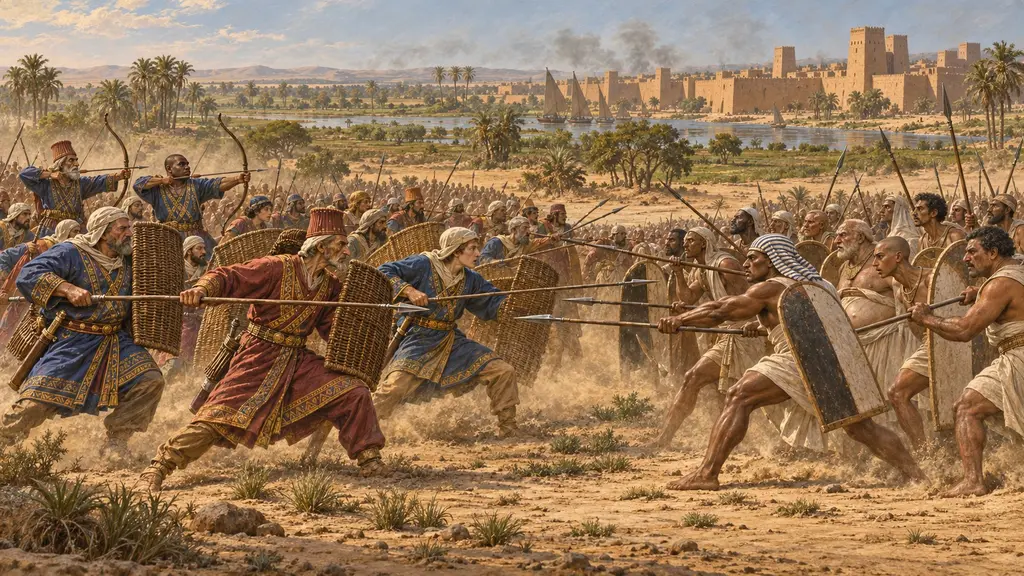
In 525 Cambyses, son of Cyrus, led a Persian army, supported by Phoenician, Cypriot and Greek ships, against Egypt, the last great independent kingdom of the Near East. After a victory at Pelusium and the surrender of Memphis, he made Egypt a satrapy and ruled it as pharaoh. Herodotus says Psamtik III was spared at first but was put to death when he was caught stirring up revolt.
In the game: The Memphis level sets the campaign in 525, with Phanes guiding the army, the Arabs supplying water and a Phoenician fleet, as Herodotus tells it. The real fleet also included Cypriot and Greek ships.
Why Cambyses marched
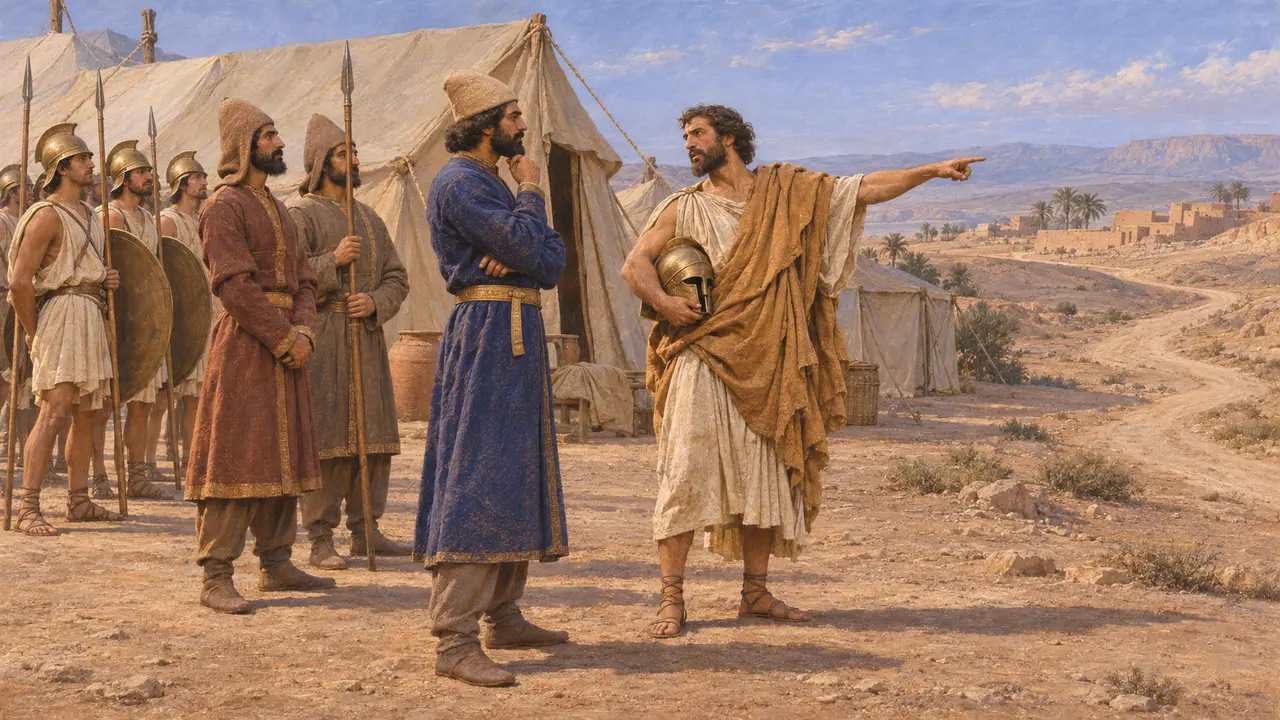
Ancient accountHerodotus says Cambyses counted the Ionian and Aeolian Greeks among the subjects he inherited from Cyrus, and that he took them with him against Egypt. The expedition gained a guide when Phanes of Halicarnassus, a mercenary officer of Pharaoh Amasis, deserted to the Persians and advised asking the Arab king for safe passage. Amasis died before the invasion, and Herodotus gives his son Psamtik III a reign of only six months.
Herodotus 2.1; 3.1-4; 3.10-14
Across the desert to Pelusium and Memphis
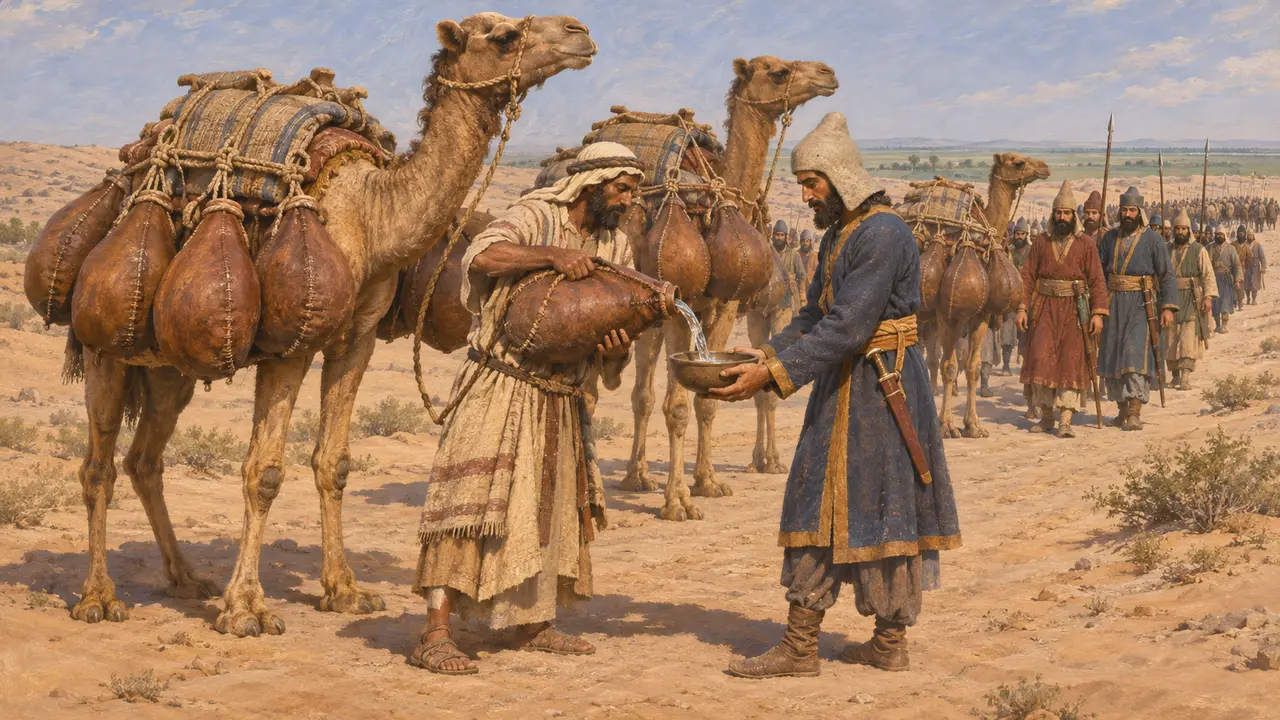
Ancient accountAccording to Herodotus, the Arab king loaded skins of water onto camels and set them along the desert road. He also reports a story of a leather pipeline from a river, which he finds less believable. The armies met at Pelusium on the eastern edge of the Delta, where the Egyptians were routed and fled to Memphis. When the Egyptians there killed a Persian herald and his crew, Cambyses besieged the city until it surrendered.
Herodotus 3.7-13
Pharaoh in Egyptian eyes
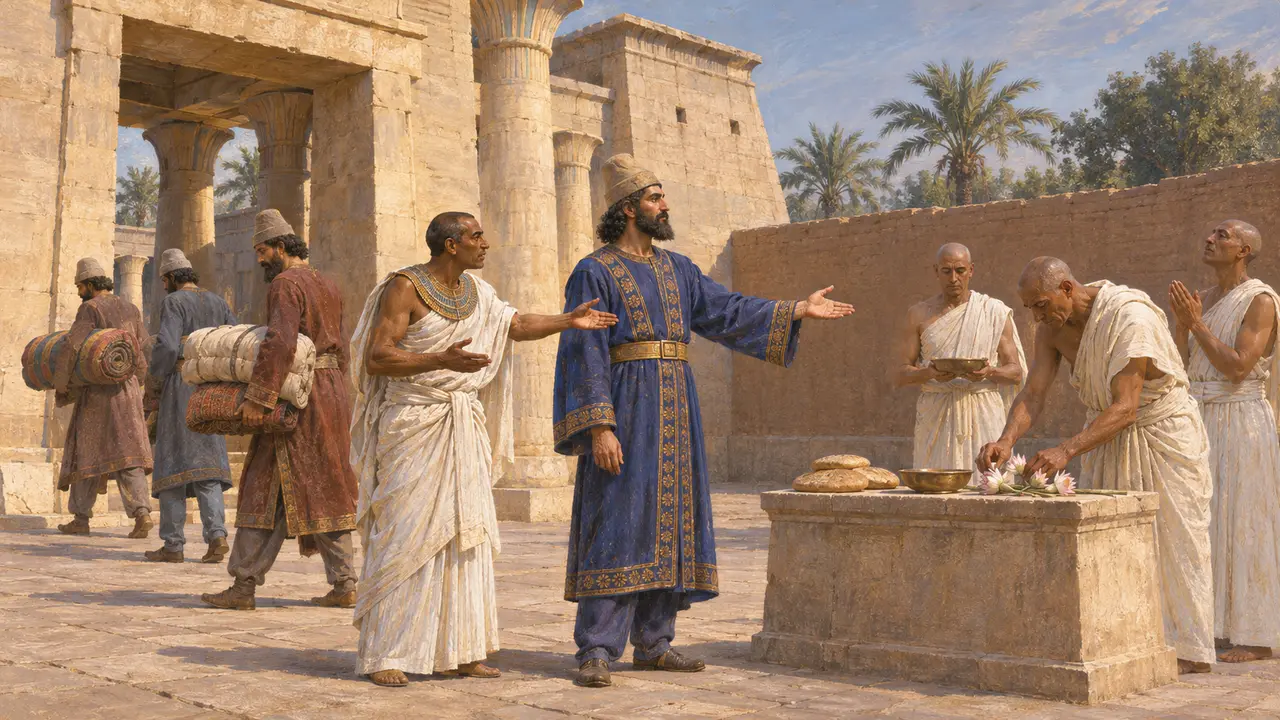
In the recordThe inscribed statue of Udjahorresnet, a naval commander under Amasis and Psamtik III, says that he served Cambyses and composed his royal titles, including the throne name Mesutira. It also says he persuaded the King to clear foreigners from the temple of Neith at Sais and restore its rites. The Behistun inscription of Darius says only that Cambyses went to Egypt and that disloyalty spread at home while he was away.
Statue of Udjahorresnet (Vatican Museums); DB §10
Madman or careful ruler
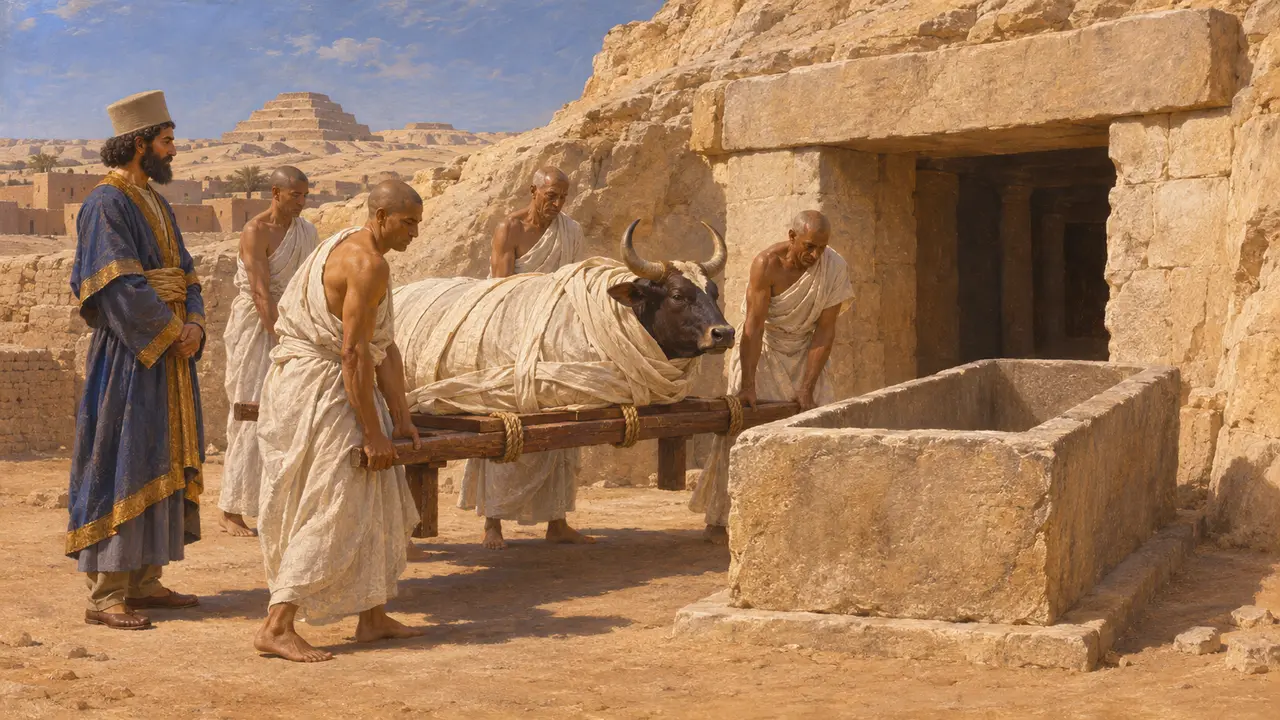
DisputedHerodotus, drawing on Egyptian informants, says Cambyses stabbed the Apis bull and that it died of the wound. A stela and an inscribed sarcophagus from the Apis galleries at Saqqara show an Apis buried with honours in 524, the sarcophagus given by Cambyses, and the next Apis lived into the reign of Darius. Many historians trace the madman story to priestly resentment over cuts Cambyses made to temple revenues, which a later Demotic text reports.
Herodotus 3.27-29; Apis stela of Cambyses' year 6 (Louvre)
False brides and sacred cats
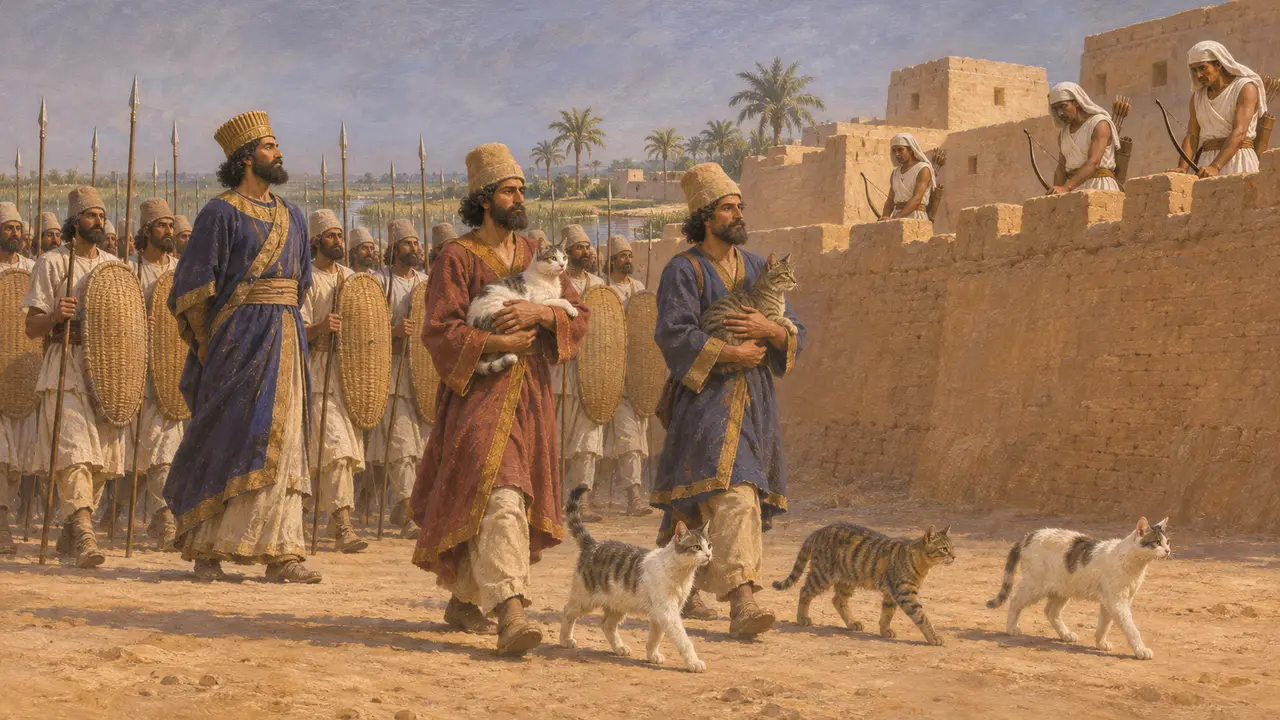
Later legendHerodotus reports tales that Cambyses went to war because Amasis had sent him a false bride, Nitetis, daughter of the earlier pharaoh Apries, in place of his own daughter. He also reports an Egyptian claim that Cambyses was the son of Nitetis, which he rejects. Much later, Polyaenus told how Cambyses placed animals sacred to the Egyptians in front of his troops at Pelusium so that the defenders would not shoot. No source of the time supports these tales.
Herodotus 3.1-3; Polyaenus, Stratagems 7.9
Sources
- Herodotus 3.1-16
- Herodotus 3.27-29
- Statue of Udjahorresnet (Vatican Museums)
- Apis stela of Cambyses' year 6, Serapeum of Saqqara (Louvre)
- DB §10
- P. Briant, From Cyrus to Alexander, 2002