Encyclopedia › Battles and events
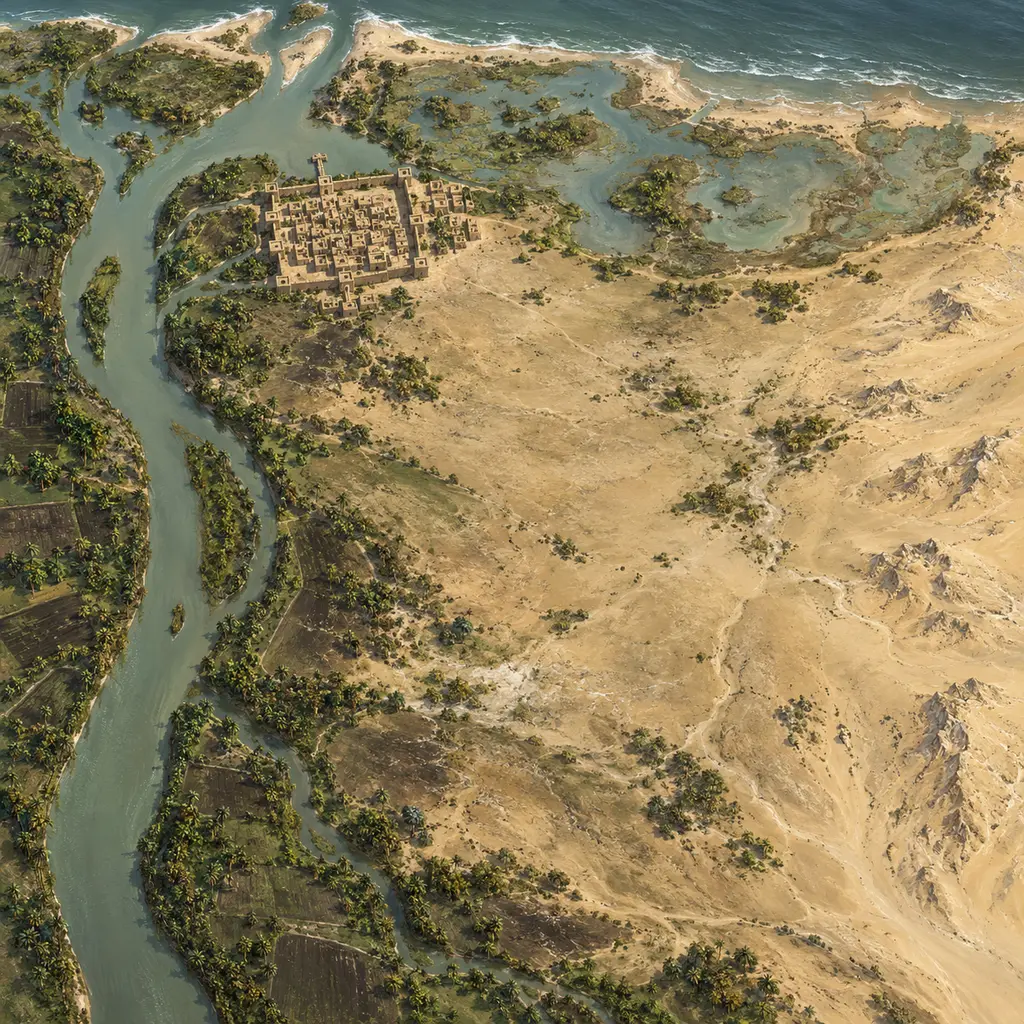
The battle of Pelusium
Cambyses' victory over Psamtik III on the eastern edge of the Nile Delta, 525 BCE
In the game: Level 2: The Spear-bearer
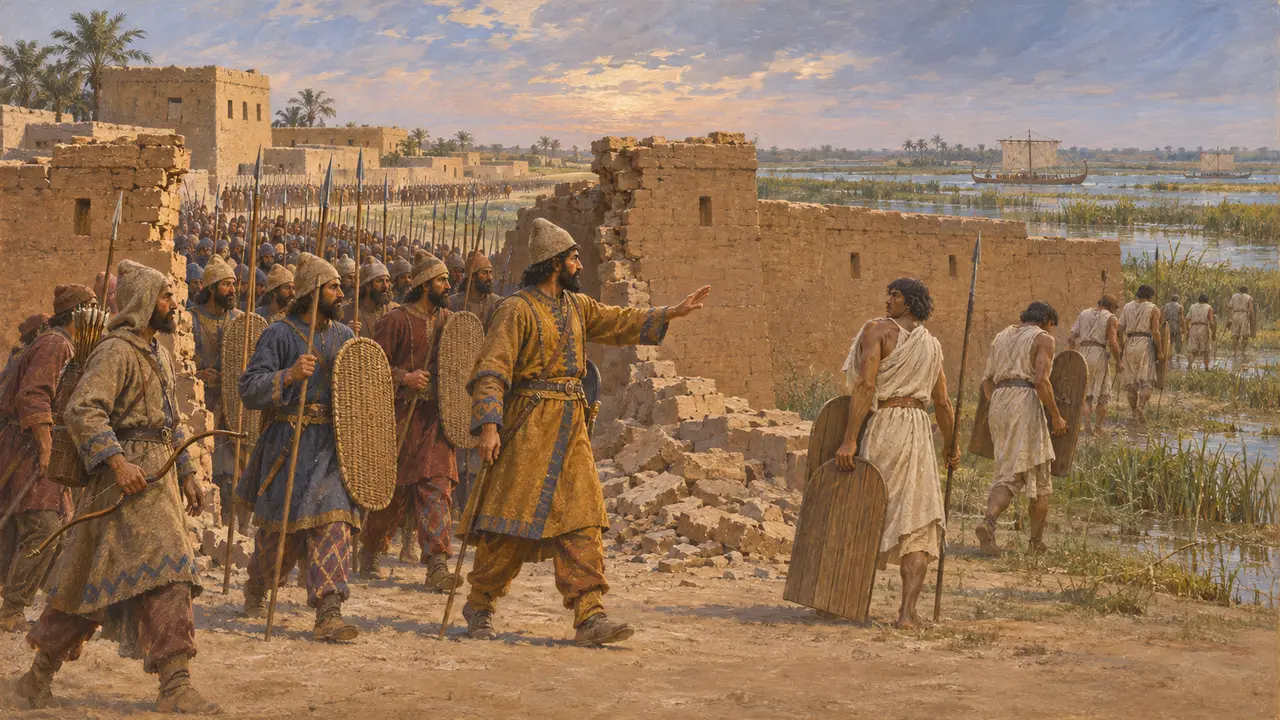
In 525 Cambyses, son of Cyrus, defeated the new pharaoh Psamtik III near the Pelusian mouth of the Nile, the eastern gateway to the Delta. The victory opened the way to Memphis and brought Egypt into the Persian empire, where it stayed for more than a century. Almost everything known about the fighting comes from Herodotus.
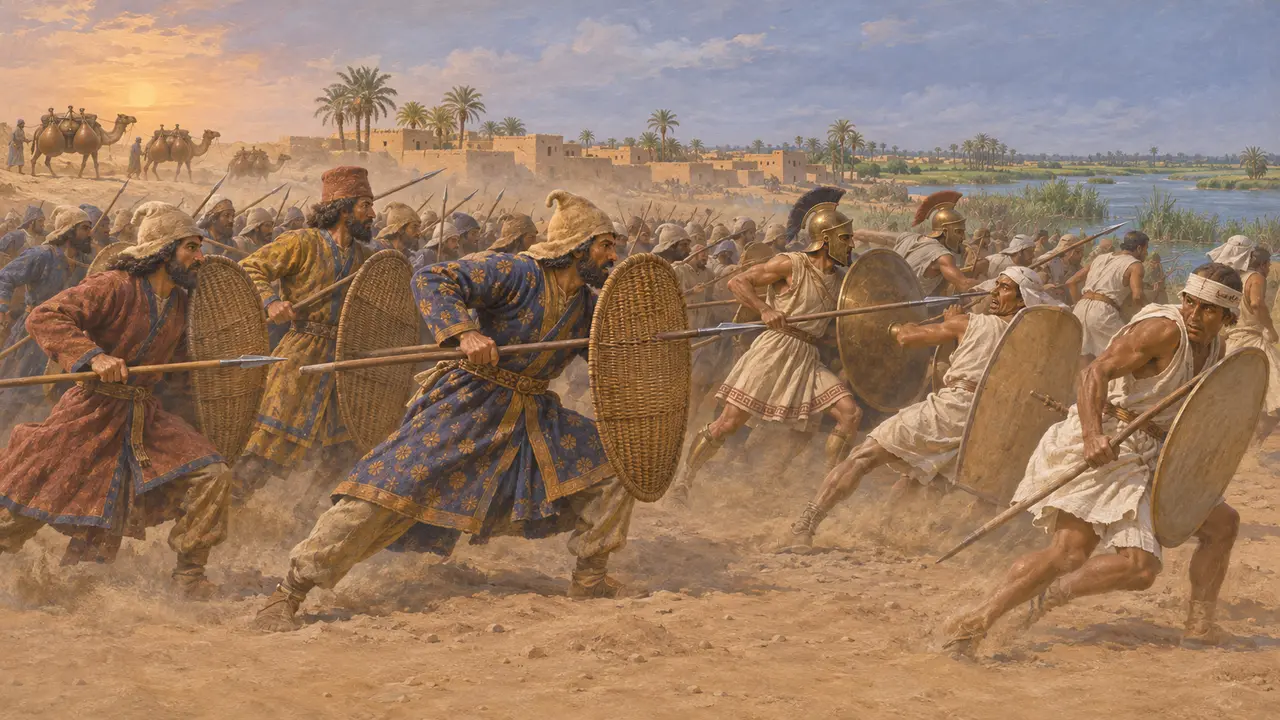
In the game: The game shows Cambyses beating Psamtik III and his Greek and Carian mercenaries, and the Egyptians fleeing to Memphis. Following Herodotus, the Chronicle gives no army sizes and treats Ctesias's casualty figures as unreliable.
The march and the battle
Ancient accountHerodotus says the mercenary captain Phanes of Halicarnassus deserted Amasis and advised Cambyses to ask the Arabs for safe passage across the desert, and the Arab king sent camels loaded with water skins. Psamtik III, king for only a few months after his father's death, waited at the Pelusian mouth of the Nile. Herodotus reports a hard fight with heavy losses on both sides before the Egyptians broke and ran for Memphis.
Herodotus 3.4-13
Phanes' sons and the field of bones
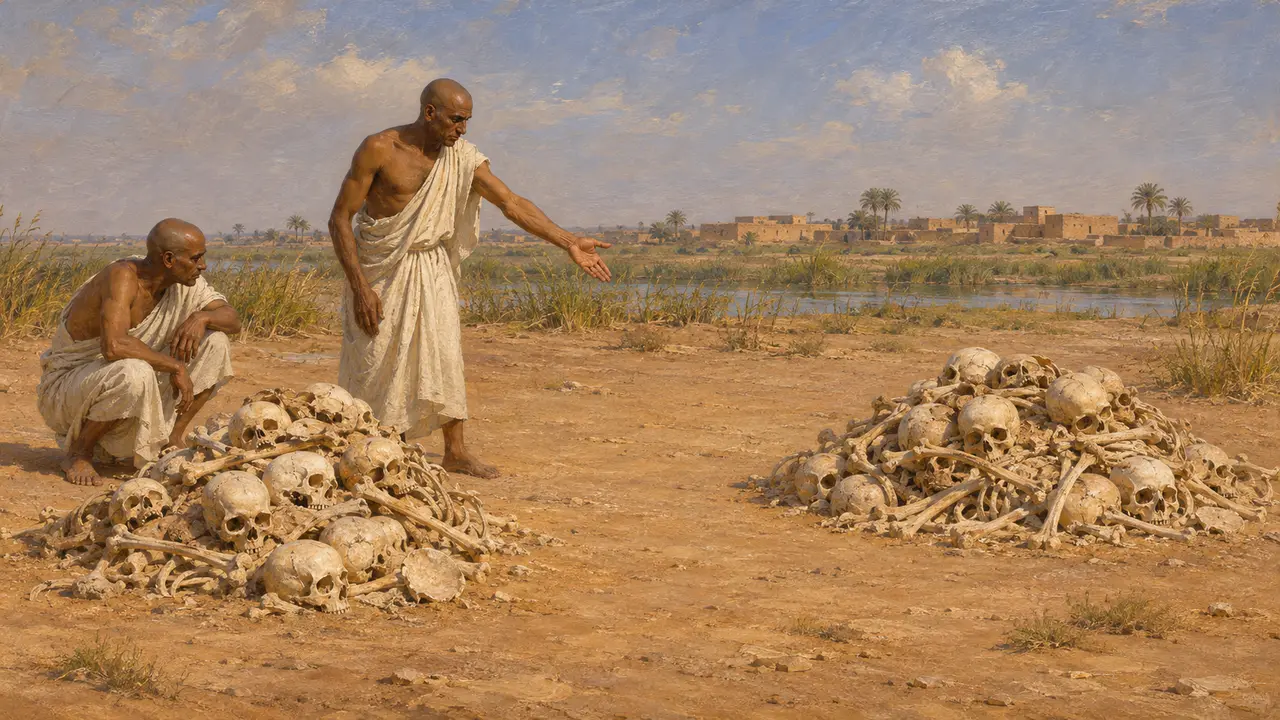
Ancient accountHerodotus tells that before the battle Psamtik's Greek and Carian mercenaries killed the sons of Phanes where their father could see, mixed their blood with wine and water in a bowl and drank it. He says he later saw the bones of the dead lying in separate heaps. The local people showed him that Egyptian skulls were hard and Persian ones thin. They put this down to Egyptians shaving their heads in the sun while Persians wore felt caps, and he accepted their explanation.
Herodotus 3.11-12
What the Egyptian record shows
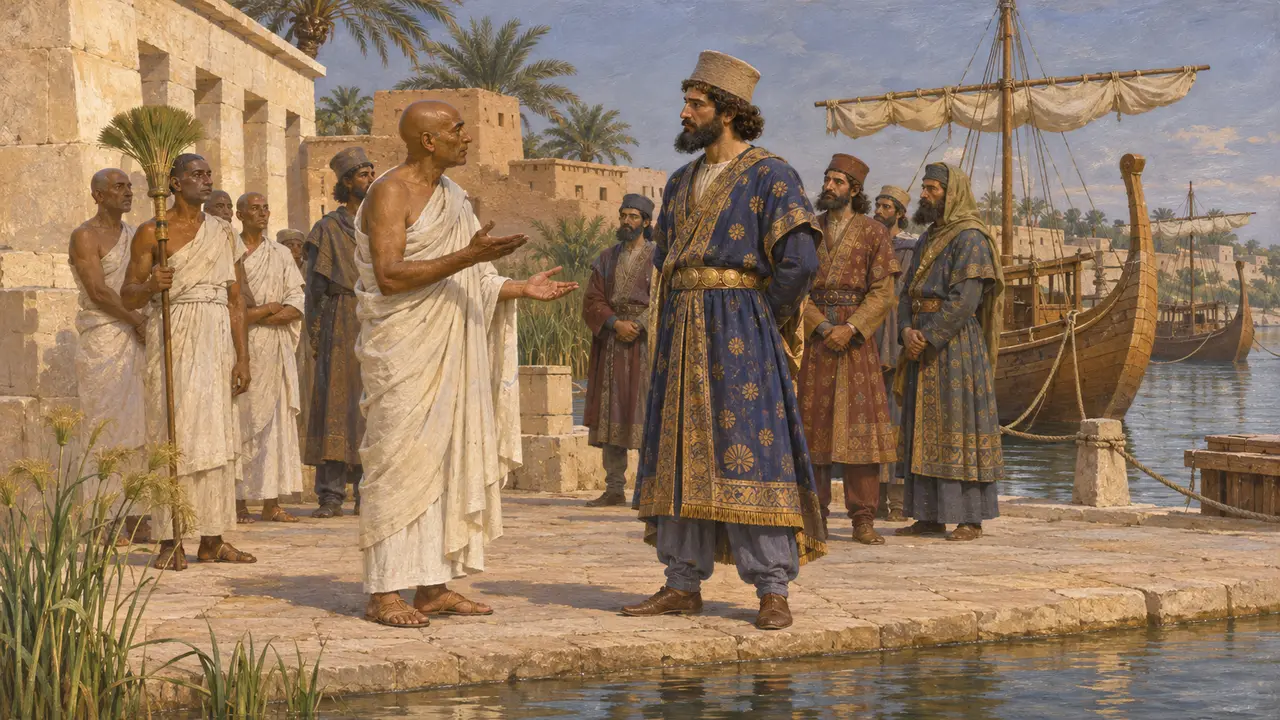
In the recordNo Egyptian text describes the battle. The inscribed statue of Udjahorresnet, now in the Vatican Museums, shows that he commanded the royal ships under Amasis and Psamtik III and then served Cambyses as chief physician, helping to compose his Egyptian royal titles. It speaks of Cambyses coming to Egypt with foreigners of every land, but says nothing of the fighting itself.
Statue of Udjahorresnet (Vatican Museums)
Numbers, betrayal and date
DisputedHerodotus gives no army sizes. Ctesias, writing about 400, says 50,000 Egyptians and 7,000 Persians died and that a eunuch named Combaphis betrayed the Egyptian defences. Yet he also calls the pharaoh Amyrtaeus, and historians treat his figures as guesswork. Some ask whether Udjahorresnet's fleet stood aside, but his own text does not say. The battle is usually dated 525, though some scholars argue for 526.
Ctesias, Persica (Photius epitome); P. Briant, From Cyrus to Alexander, 2002
A tale of sacred animals
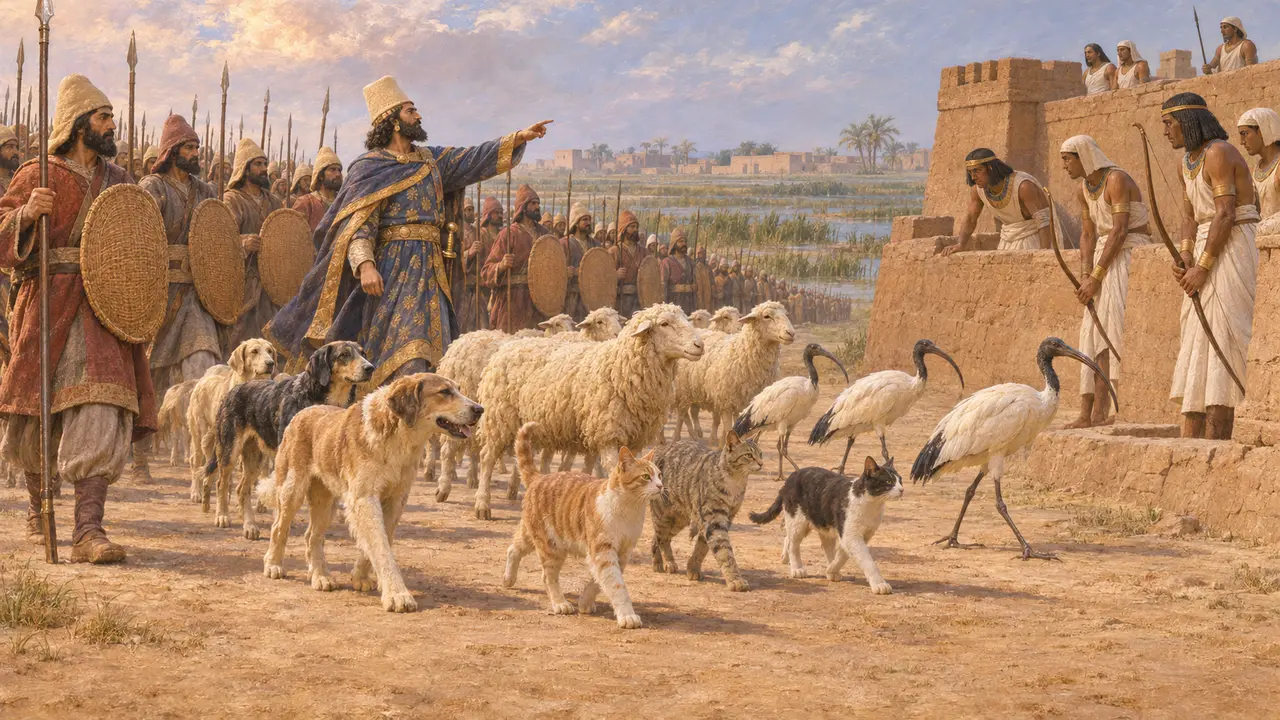
Later legendPolyaenus, a writer of the second century CE, says Cambyses set dogs, sheep, cats, ibises and other animals sacred to the Egyptians in front of his army at Pelusium, so that the defenders would not shoot for fear of harming them. The story first appears some seven centuries after the battle and is found in no earlier writer. Modern pictures of Persians carrying cats on their shields go further still.
Polyaenus, Stratagems 7.9
Sources
- Herodotus 3.1-16
- Ctesias, Persica (Photius epitome)
- Statue of Udjahorresnet (Vatican Museums)
- Polyaenus, Stratagems 7.9
- P. Briant, From Cyrus to Alexander, 2002
- D. Asheri, A. Lloyd, A. Corcella, A Commentary on Herodotus Books I-IV, 2007