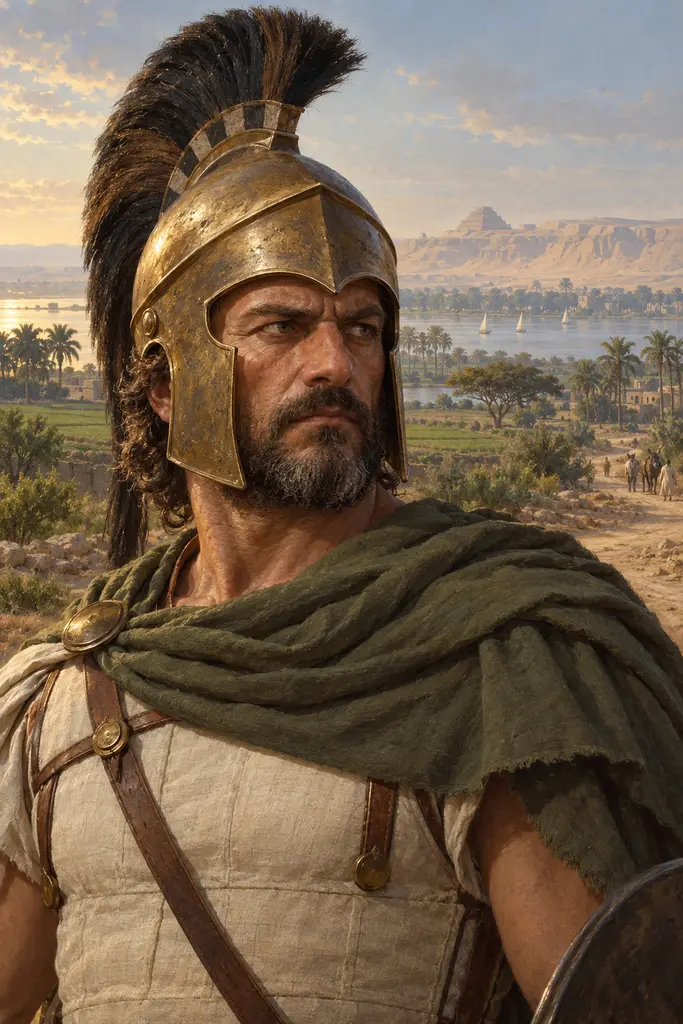
Phanes of Halicarnassus
Greek mercenary officer who deserted Egypt for Cambyses, about 526-525 BCE
In the game: Level 2: The Spear-bearer
Phanes was a Greek from Halicarnassus who commanded mercenaries for the Egyptian king Amasis and then went over to the Persian king Cambyses. Herodotus says he gave Cambyses inside knowledge of Egypt and advised him how to get an army across the waterless desert to the Nile. His story is known only from Herodotus, who makes him a key figure in the Persian conquest of Egypt in 525.
In the game: The game's chronicle names Phanes as the Greek captain who deserted to Cambyses, showed him the desert route and lost his sons before Pelusium. It does not name the pharaoh he left; Herodotus says it was Amasis, not Psamtik III.
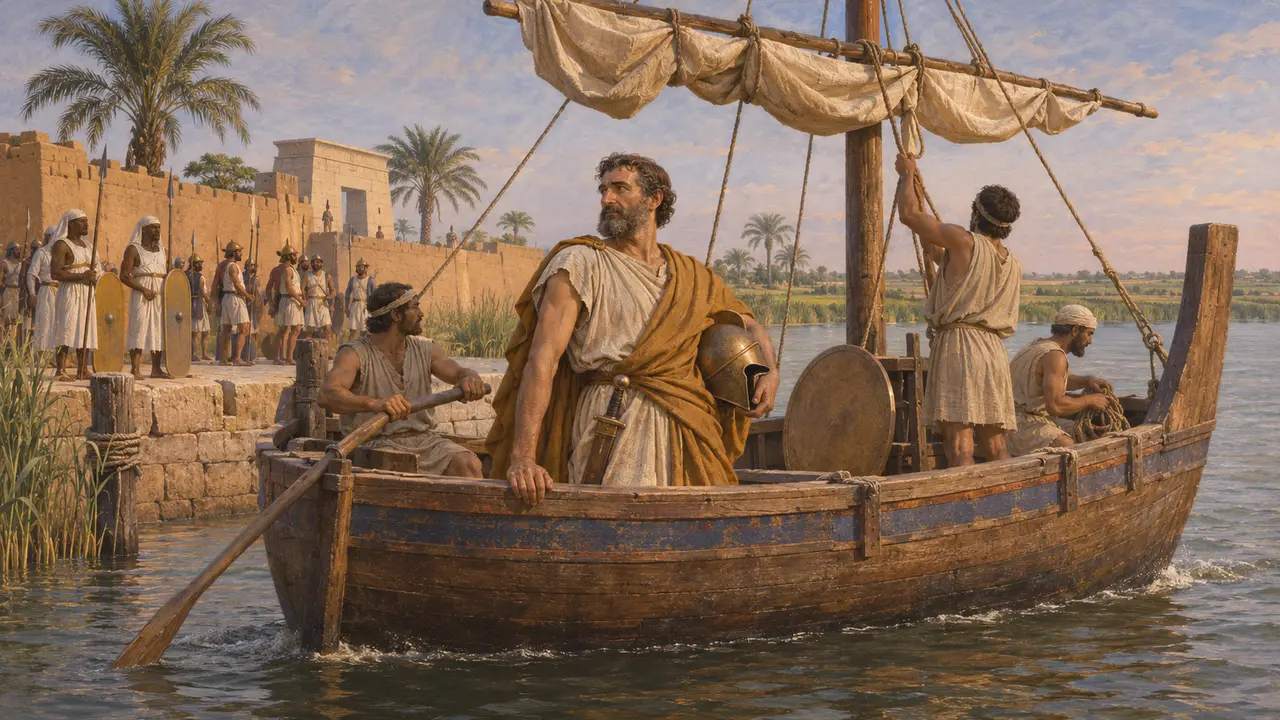
A captain in the service of Amasis
Ancient accountHerodotus describes Phanes as one of the foreign mercenaries of Amasis, sound in judgement and brave in war. He says Phanes had some grievance against the king, though he does not say what it was, and slipped away by ship to join Cambyses. Egypt relied heavily on Greek and Carian soldiers in this period, so a senior mercenary officer probably knew a great deal about its defences.
Herodotus 3.4
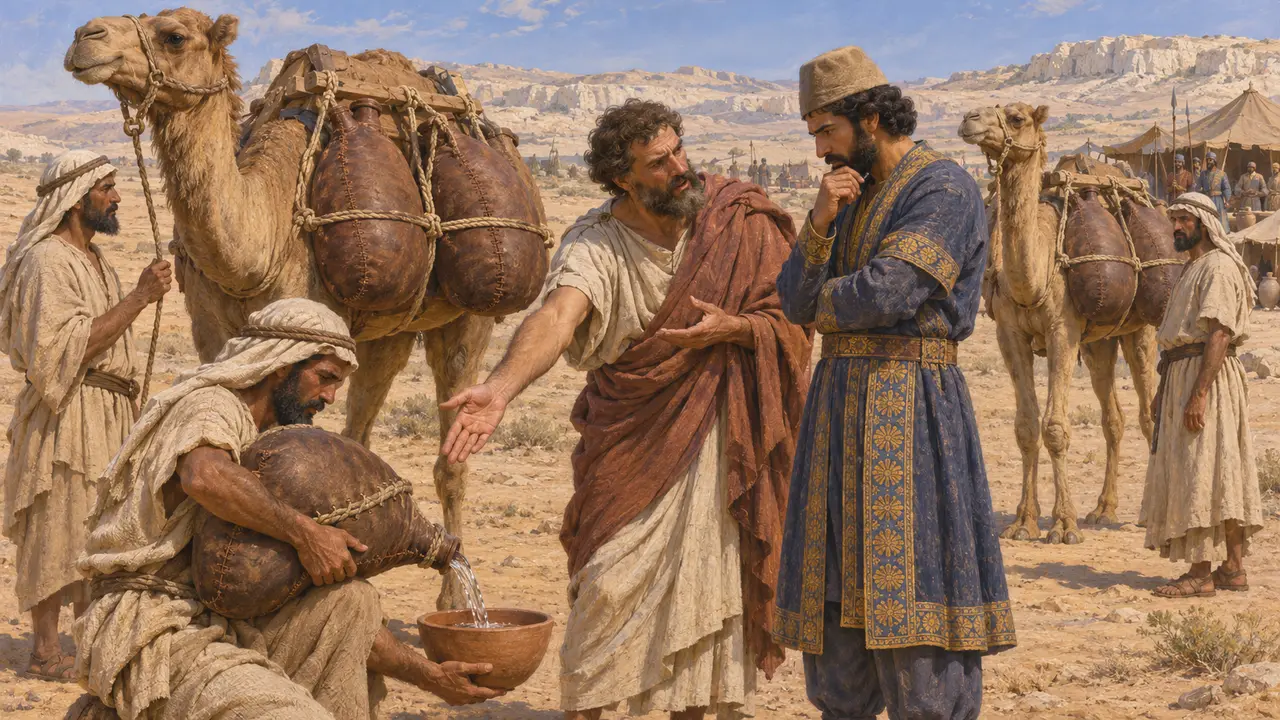
Escape and advice on the desert crossing
Ancient accountHerodotus says Amasis sent a trusted eunuch in a warship after Phanes, who was caught in Lycia but escaped after making his guards drunk. Reaching Cambyses, he explained the state of Egypt and urged him to ask the king of the Arabs for safe passage. Herodotus says the Arabs then supplied water for the march, and he gives two versions of how: camels carrying skins, or a long pipe of hides from a river.
Herodotus 3.4, 3.7, 3.9
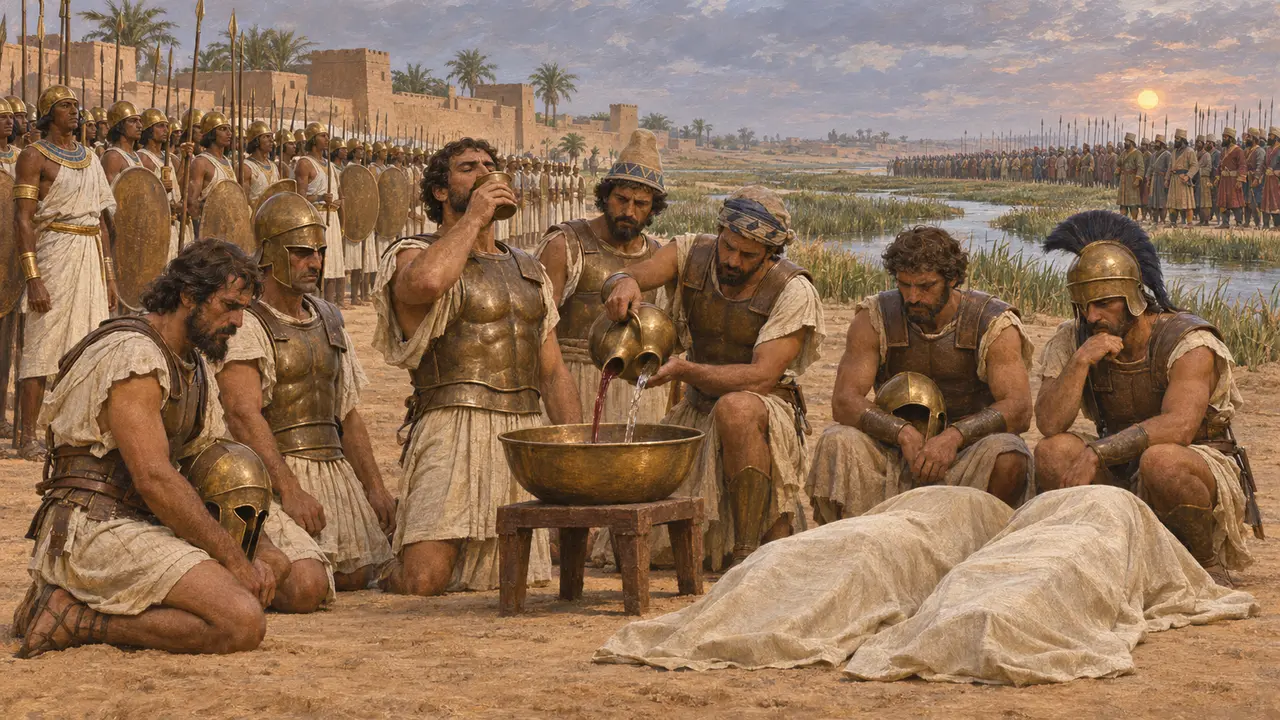
His sons killed before Pelusium
Ancient accountBy the time the Persians arrived, Amasis had died and his son Psamtik III ruled. Herodotus says the Greek and Carian mercenaries, furious that Phanes had led a foreign army against Egypt, brought his sons out between the armies, cut their throats over a bowl, mixed wine and water with the blood and drank it before going into battle. The Egyptians were then defeated after a hard fight near the Pelusiac mouth of the Nile.
Herodotus 3.10-3.11
How much of the story can be trusted
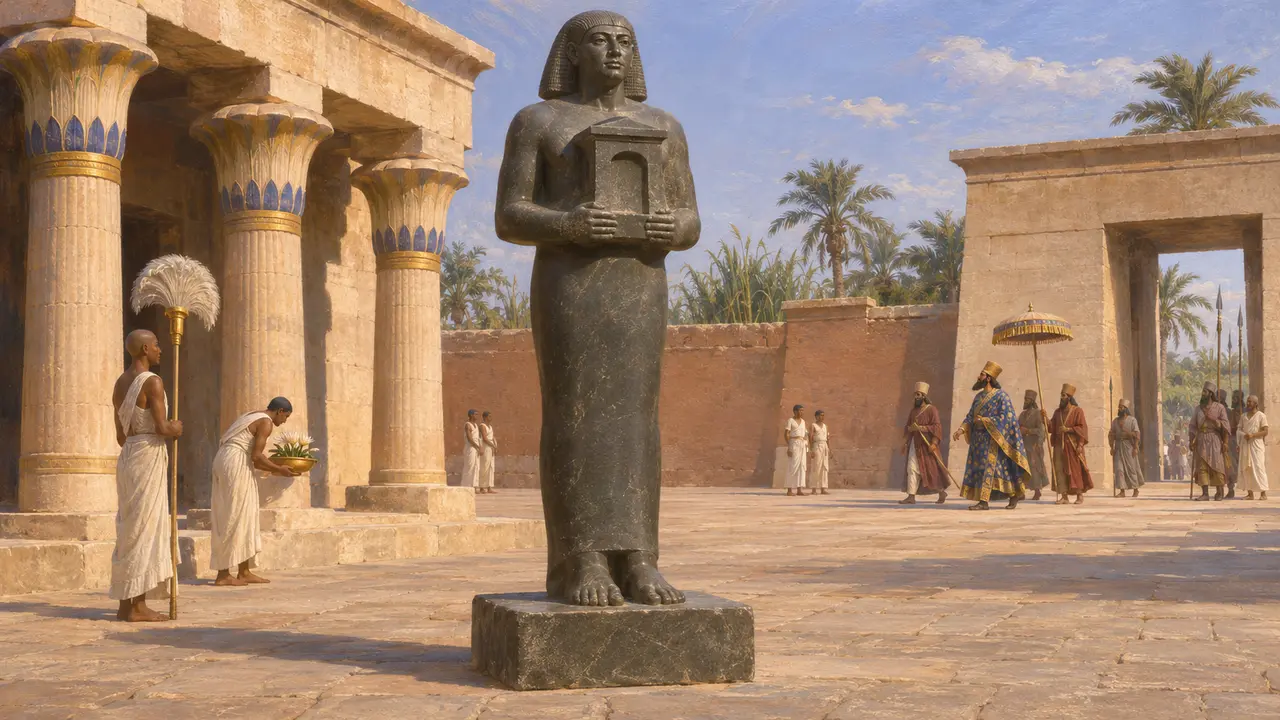
DisputedNo Persian or Egyptian document names Phanes; the statue inscription of Udjahorresnet records Cambyses' arrival in Egypt but says nothing of him. The pursuit, the drunken guards and the blood oath read like storytelling, and historians debate how far Herodotus shaped them. Some scholars link him to a Phanes named on a dedication found at Naucratis, but the name was common and the identification is uncertain.
Asheri, Lloyd and Corcella, A Commentary on Herodotus Books I-IV, 2007
Sources
- Herodotus 3.4-3.11
- Asheri, Lloyd and Corcella, A Commentary on Herodotus Books I-IV, 2007
- P. Briant, From Cyrus to Alexander, 2002
- Statue of Udjahorresnet (Vatican Museums)