Encyclopedia › Soldiers and ships
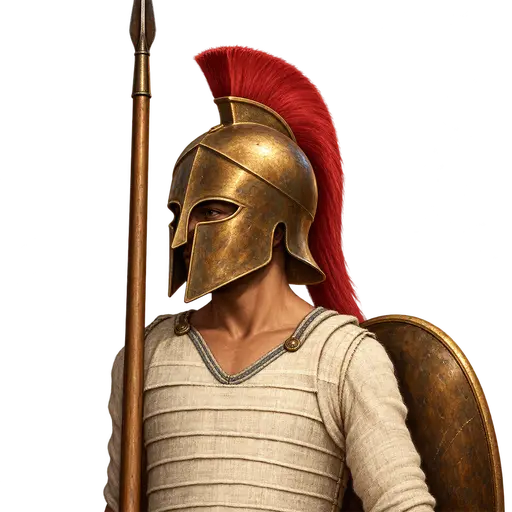
Greek Mercenary Hoplite
Hired Greek heavy infantry, chiefly in Egyptian service, about 664-525 BCE
Greek hoplites who fought for pay served foreign rulers long before the Persians reached the Aegean. The kings of Egypt's Saite dynasty relied heavily on Ionian and Carian soldiers, and such men faced Cambyses at Pelusium in 525. Their armour and close formation made them strong opponents, and their presence shows how far Greek warfare had spread across the eastern Mediterranean.
In the game: The game fields them as armoured shield troops of the King's enemies, named differently by level, holding against spearmen and riders but worn down by archers. In fact Persian horse and archers harried hoplites hard at Plataea.
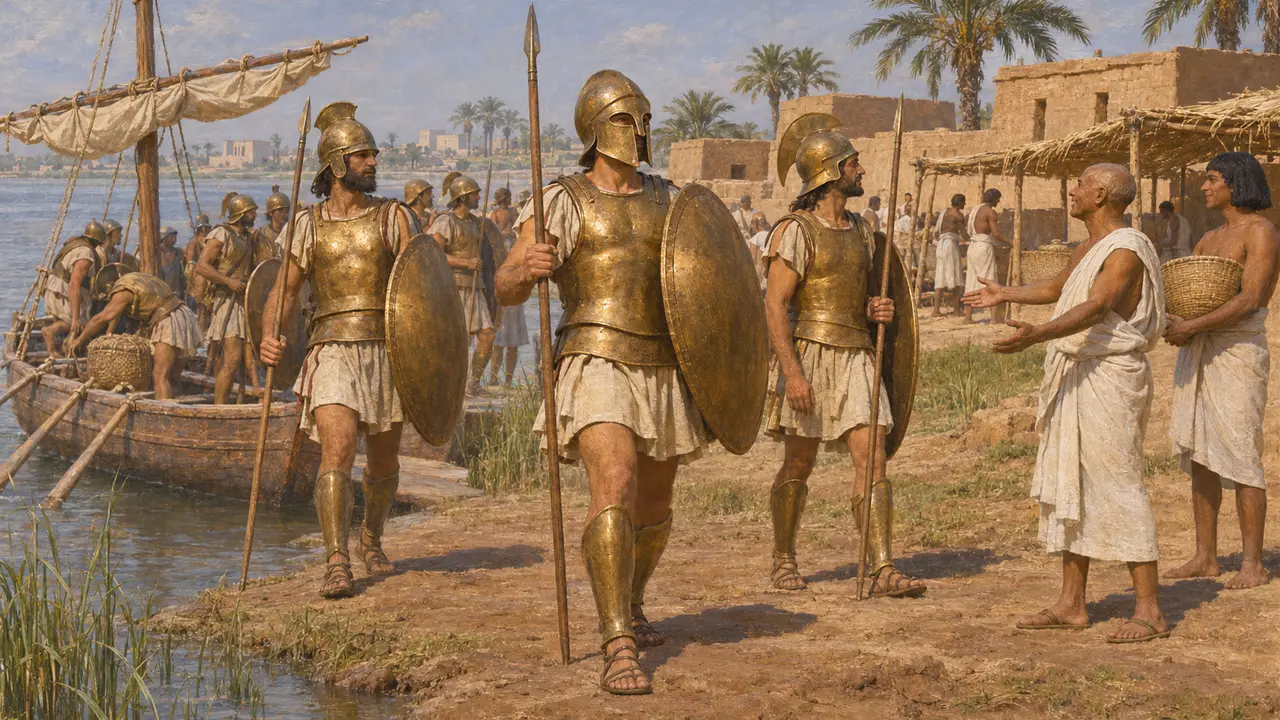
Bronze men from the sea
Ancient accountHerodotus says Psamtik I won his throne with Ionian and Carian raiders in bronze armour, then gave them land on the Pelusiac branch of the Nile called the Camps. He adds that Amasis later moved them to Memphis as his guard. Herodotus also credits Apries with 30,000 Carian and Ionian mercenaries, a figure that may well be inflated.
Herodotus 2.152-154, 2.163
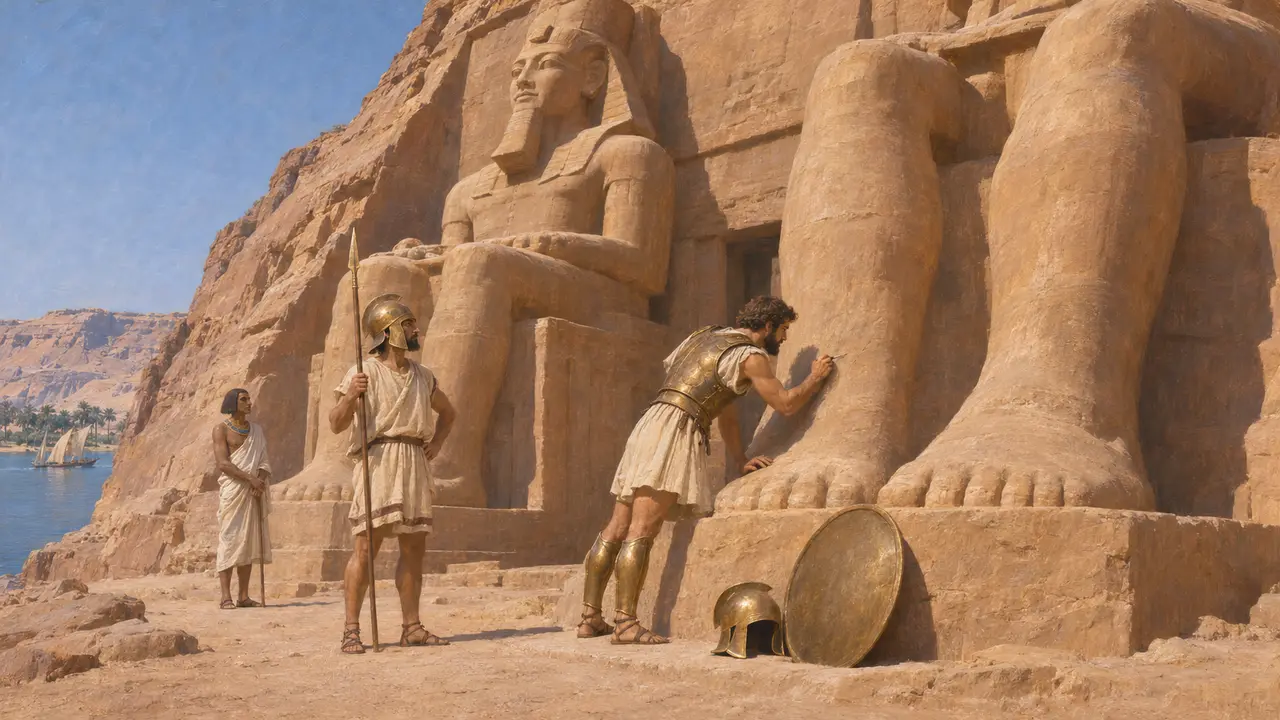
Names carved at Abu Simbel
In the recordAround 591, Greek soldiers on Psamtik II's campaign into Nubia scratched their names on the legs of the colossal statues of Ramesses II at Abu Simbel. The graffiti name men from Ionian and Dorian cities and mention separate commanders for the Egyptians and for the foreign-speaking troops. They survive today as some of the earliest dated Greek inscriptions.
R. Meiggs and D. Lewis, Greek Historical Inscriptions, rev. ed. 1988, no. 7
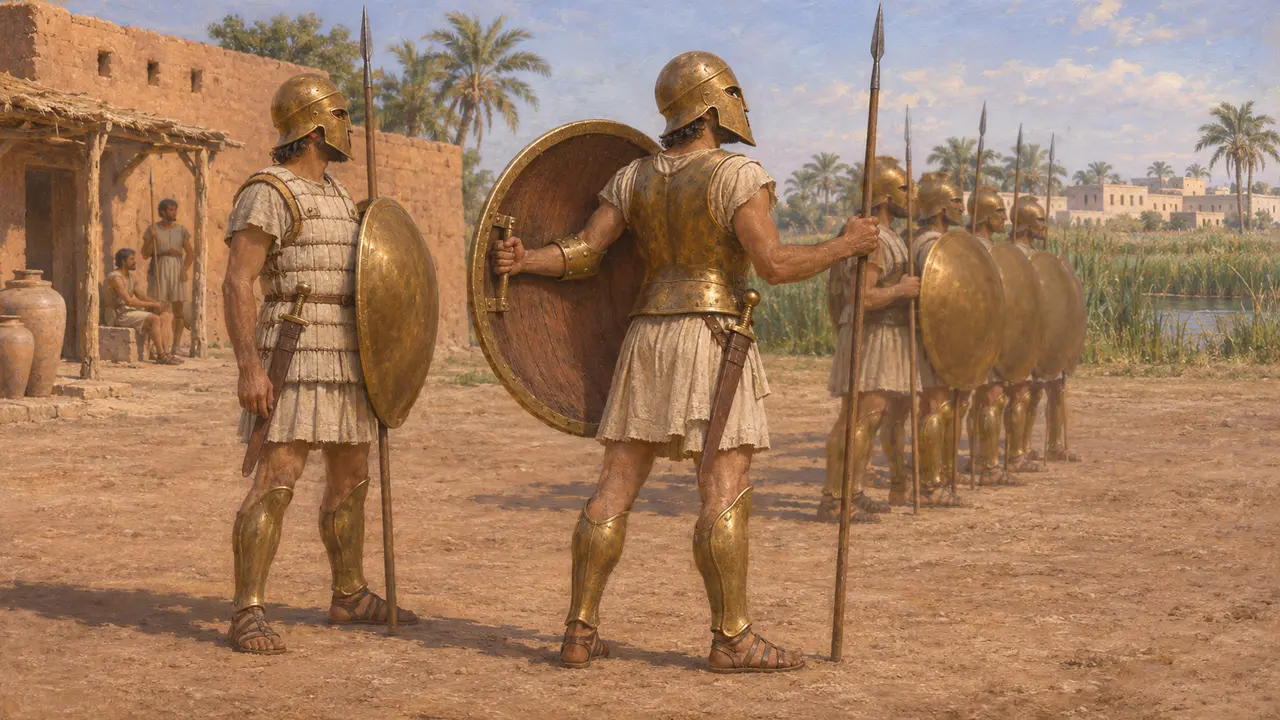
The hoplite's equipment
In the recordExcavated helmets, greaves and shields, many dedicated at sanctuaries such as Olympia, show the hoplite's kit: a bronze helmet, bronze greaves, and a large round shield held by an arm-band and a hand-grip. Bronze breastplates survive, and vase paintings also show corselets of layered linen. He fought with a thrusting spear and carried a short sword. The gear was heavy and costly and worked best in a tight line on level ground.
A. Snodgrass, Arms and Armour of the Greeks, 1967
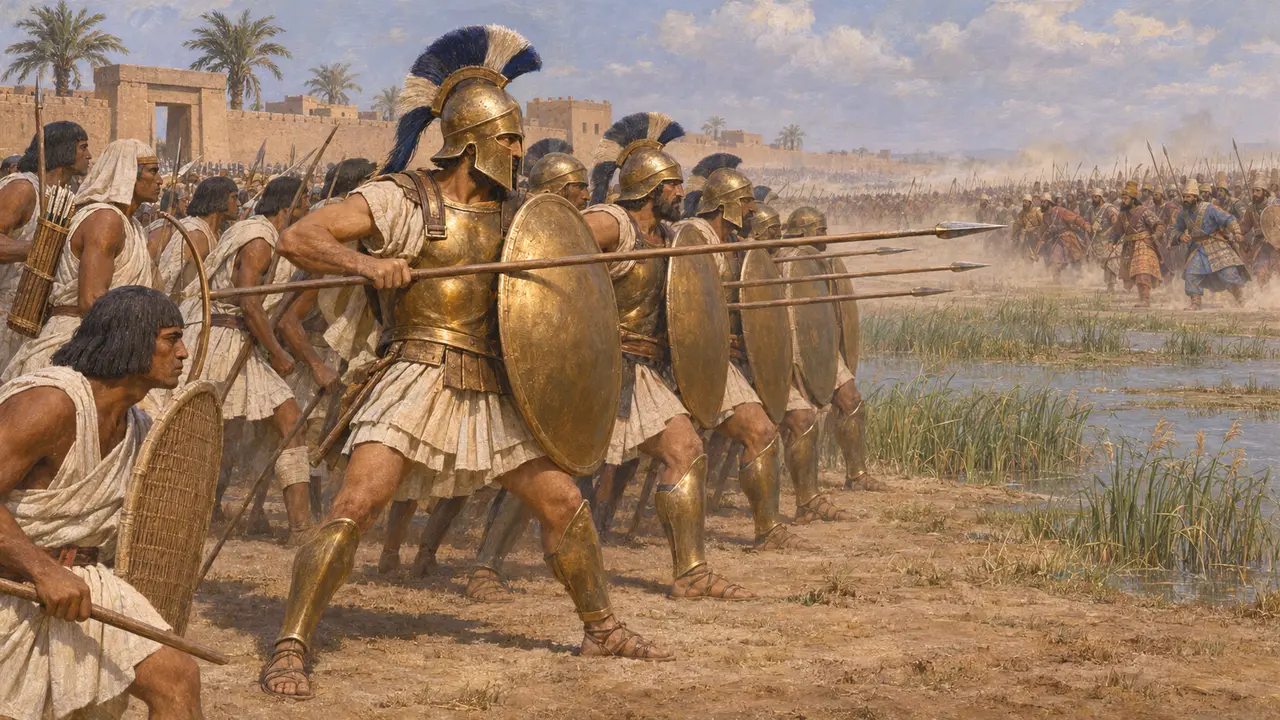
Phanes and the battle at Pelusium
Ancient accountHerodotus tells of Phanes of Halicarnassus, one of Amasis's Greek mercenaries, who deserted to Cambyses and advised him to cross the desert with the help of the Arab king. In 525 the Persians met Psamtik III's army, Greeks and Carians among it, at Pelusium and defeated it. Herodotus says he later saw the bones of the fallen still lying on the field.
Herodotus 3.4, 3.7, 3.11-12
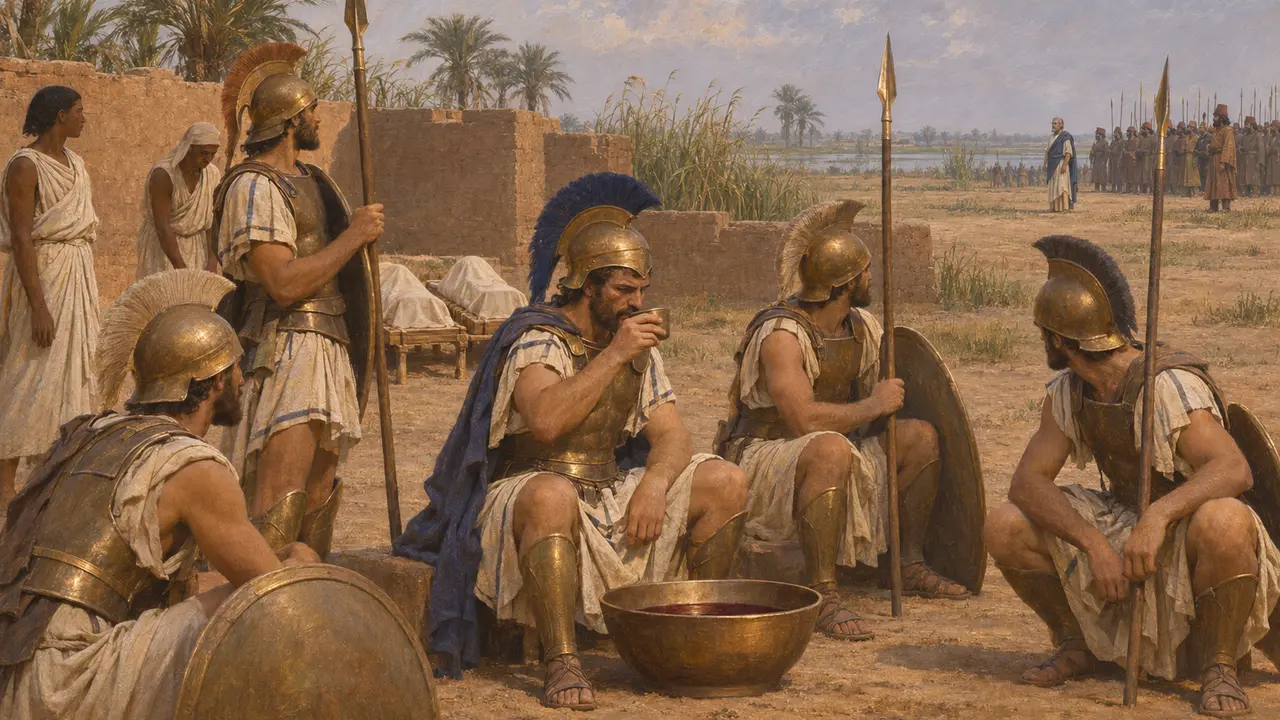
The sons of Phanes
Later legendHerodotus also reports that before the battle the mercenaries in Egyptian pay brought out Phanes' sons, killed them in sight of their father, and drank their blood mixed with wine. No other source confirms the story. It reads as a tale of betrayal and revenge and is best treated as such.
Herodotus 3.11
Sources
- Herodotus, Histories 2.152-154, 2.163, 3.4-12
- R. Meiggs and D. Lewis, Greek Historical Inscriptions, rev. ed. 1988, no. 7
- M. Trundle, Greek Mercenaries, 2004
- A. Snodgrass, Arms and Armour of the Greeks, 1967
- H. W. Parke, Greek Mercenary Soldiers, 1933