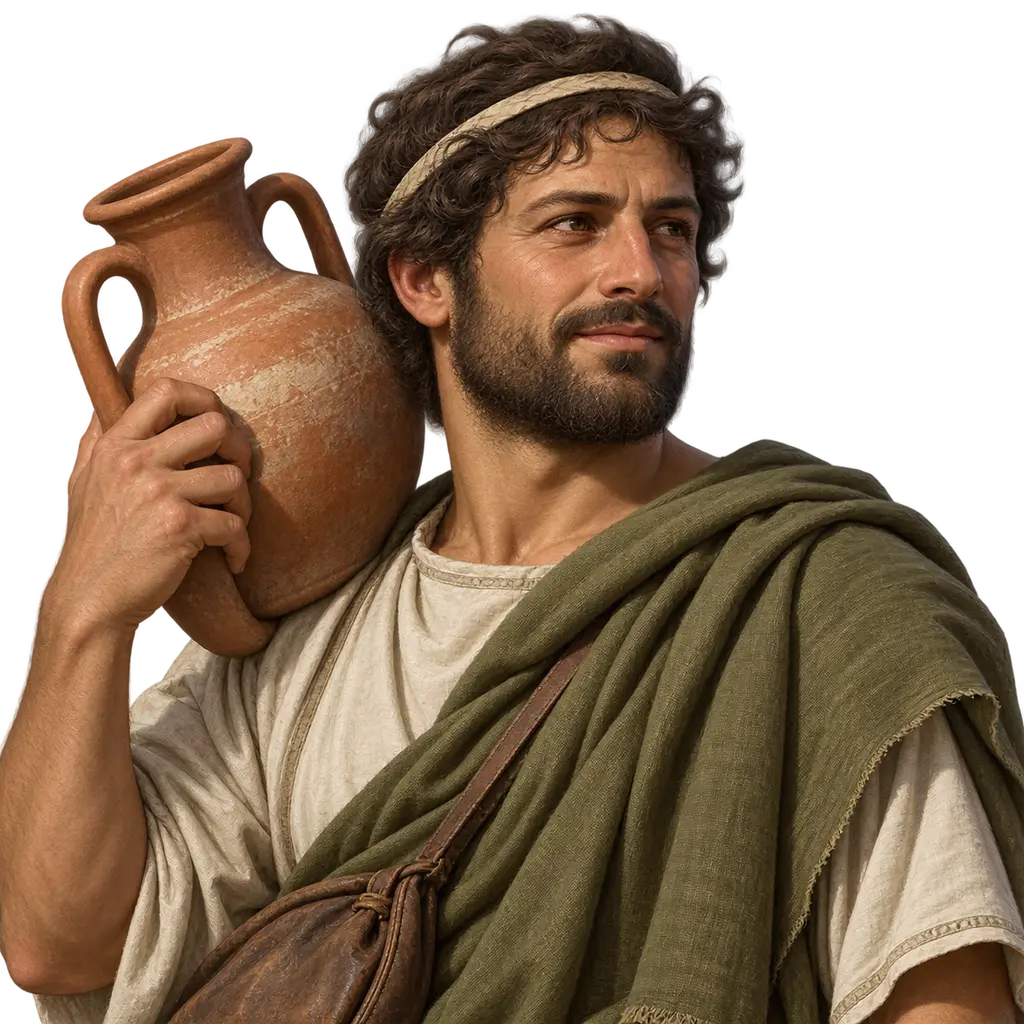
The Greeks of Naucratis
Greek traders settled at Naucratis in the western Nile Delta, from about 620 BCE
In the game: Level 2: The Spear-bearer
Naucratis was a trading town on the Canopic branch of the Nile where merchants from many Greek cities lived beside Egyptians. Through it passed Greek silver, wine and oil, and Egyptian grain, linen and natron. When Cambyses conquered Egypt in 525, the town and its traders came under Persian rule and kept working.
In the game: In the Memphis level the Greeks of Naucratis appear as a trade partner. Naucratis itself lay downstream from Memphis in the western Delta, so the game links them to Memphis by trade, not by place.
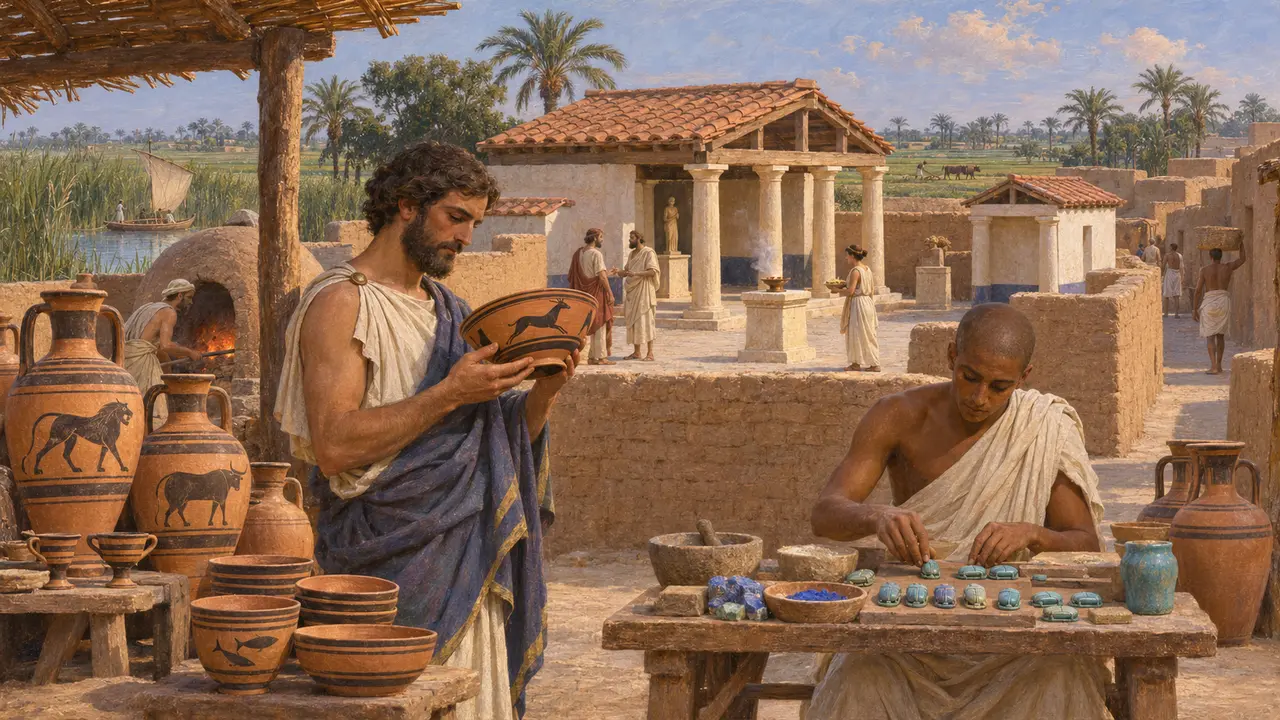
The excavated town
In the recordFlinders Petrie identified the site near modern Kom Gieif in 1884 and dug there, and Ernest Gardner continued the work in 1885-86. They found Greek pottery from about the 620s onwards, sanctuaries of Apollo, Aphrodite and the Dioscuri, and a workshop making faience scarabs. D. G. Hogarth later located the Hellenion and the sanctuary of Hera. Hundreds of pots carry painted or scratched dedications in Greek.
W. M. F. Petrie, Naukratis I, 1886; A. Villing et al., Naukratis: Greeks in Egypt, British Museum, 2013
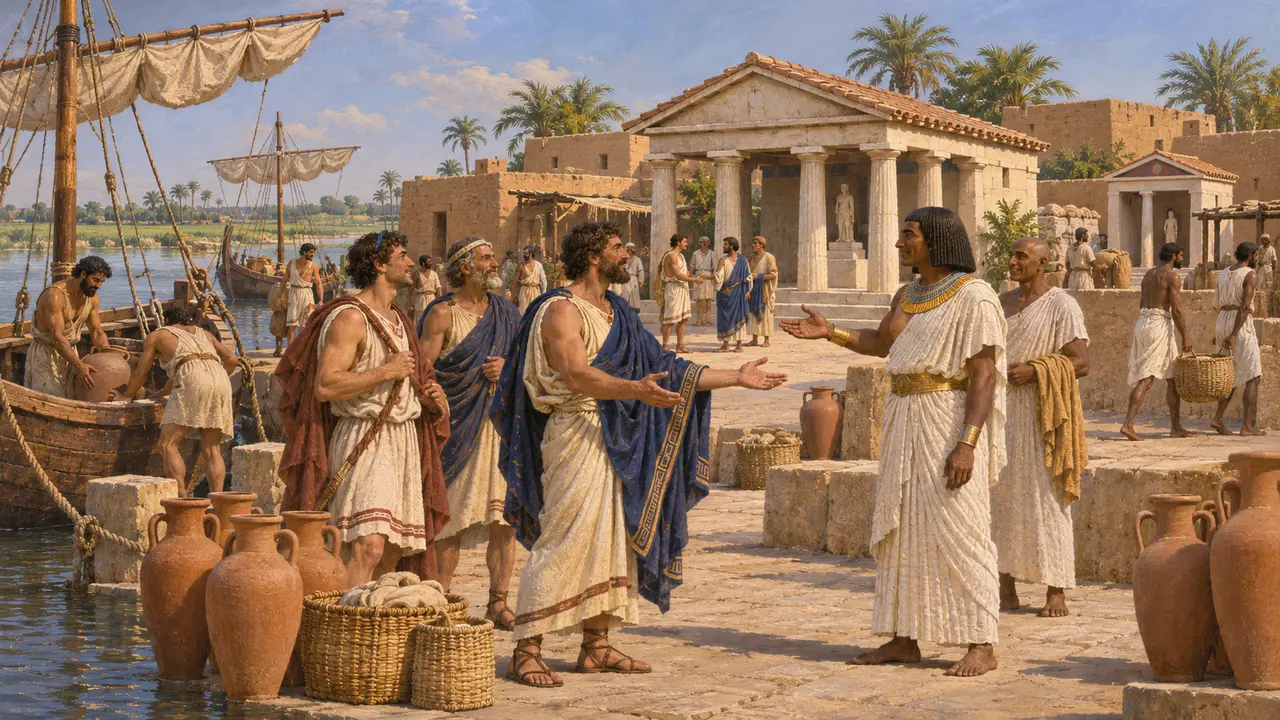
Herodotus on the gift of Amasis
Ancient accountHerodotus says the pharaoh Amasis gave Naucratis to the Greeks as a place to live and trade. He lists nine East Greek cities that shared the Hellenion, among them Chios, Rhodes, Phocaea and Halicarnassus, while Aegina, Samos and Miletus kept temples of their own. He adds that Naucratis was once the only port open to Greek ships in Egypt.
Herodotus 2.178-179
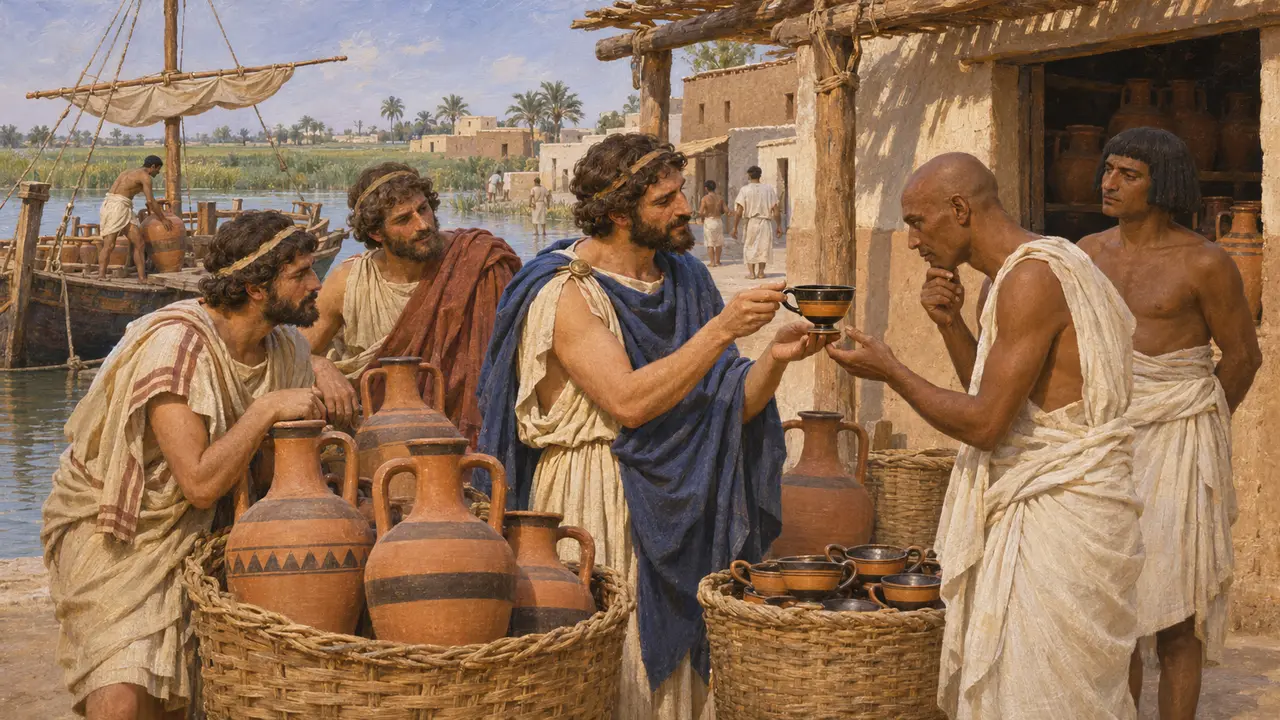
Who founded it and when
DisputedThe pottery shows Greeks at Naucratis well before Amasis began to reign in 570, probably under Psamtik I. Most historians think Amasis reorganised and limited a settlement that already existed. They still argue about how far the pharaohs controlled its trade and how much was left to the Greek cities.
A. Möller, Naukratis: Trade in Archaic Greece, 2000
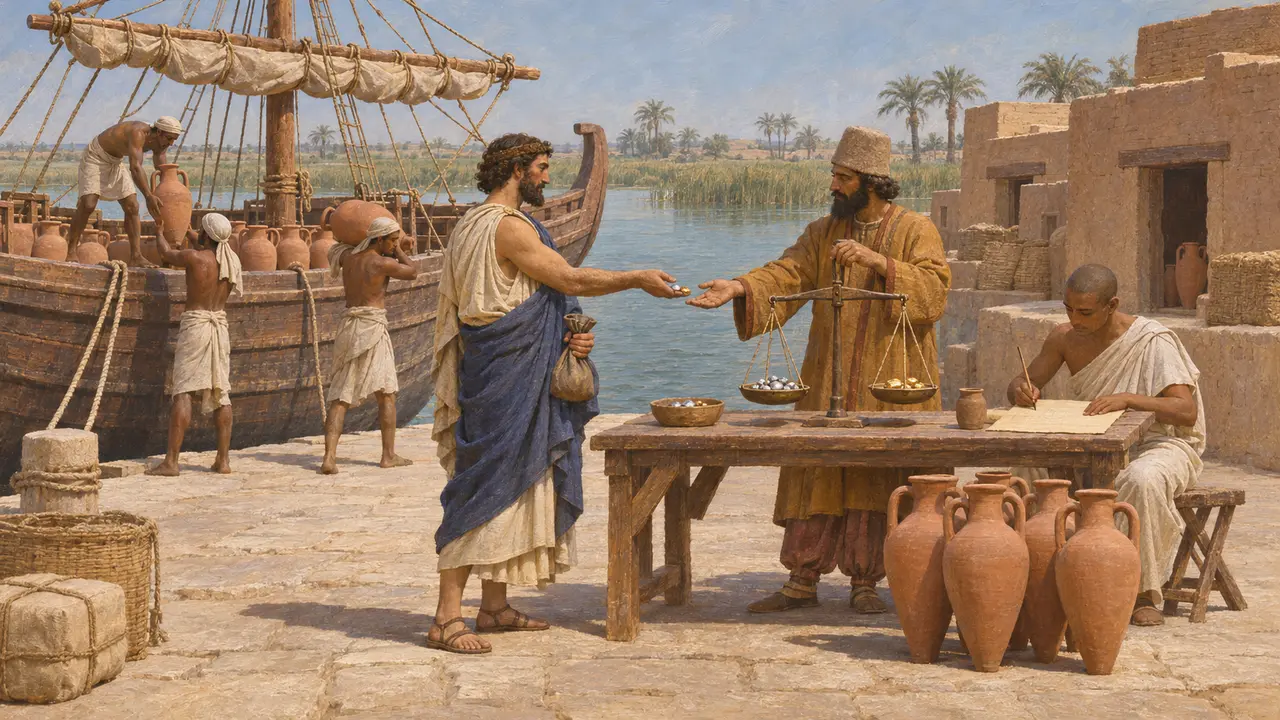
A customs register under Xerxes
In the recordAn Aramaic papyrus found at Elephantine, later reused for another text, records customs taken in about 475 on ships entering Egypt. Ionian ships paid dues in gold and silver and a share of their cargoes, such as oil and wine. This shows Greek trade continuing under Persian officials. The surviving text does not name the port, and scholars differ on whether it was Naucratis or another Delta harbour.
B. Porten and A. Yardeni, Textbook of Aramaic Documents from Ancient Egypt, vol. 3, 1993 (TAD C3.7); P. Briant, From Cyrus to Alexander, 2002
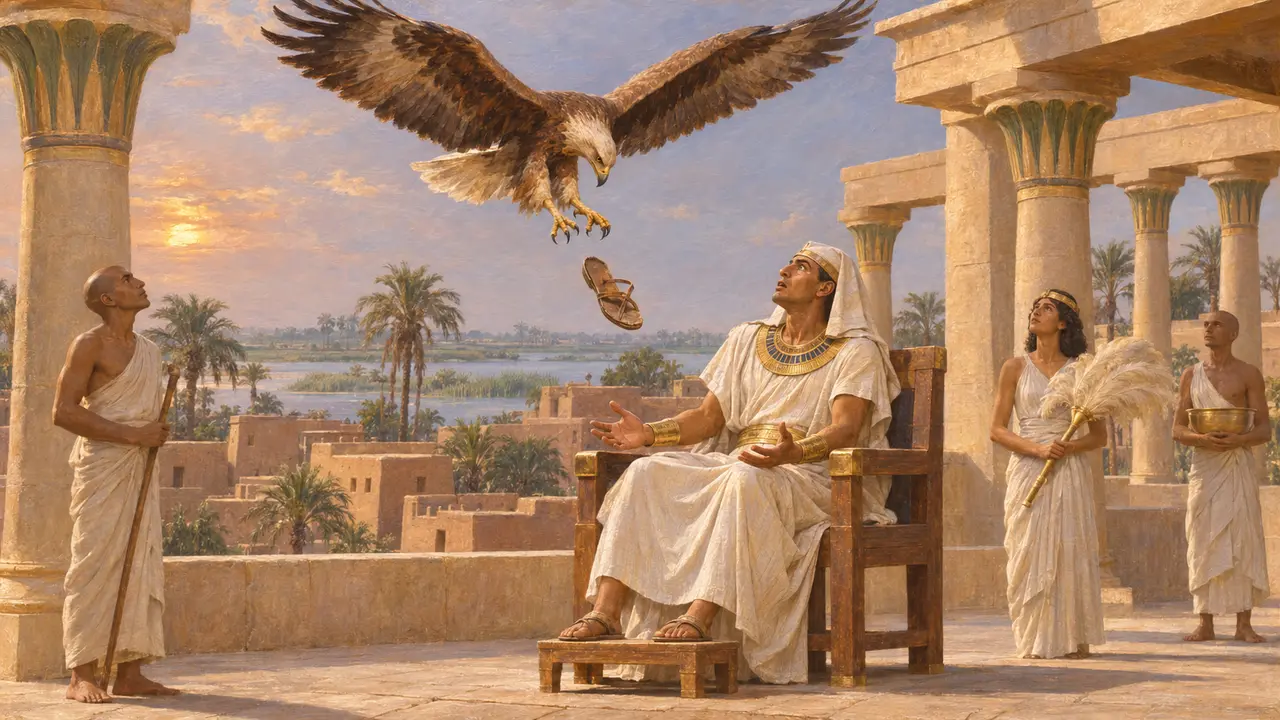
Rhodopis and the sandal
Later legendHerodotus tells of Rhodopis, a Thracian courtesan once owned by Iadmon of Samos, who was freed by Charaxus, brother of the poet Sappho, and lived at Naucratis. Strabo, writing about five centuries after her time, adds that an eagle snatched her sandal and dropped it in the lap of a king at Memphis, who then sought her out and married her. The tale is a romance, not history.
Herodotus 2.134-135; Strabo 17.1.33
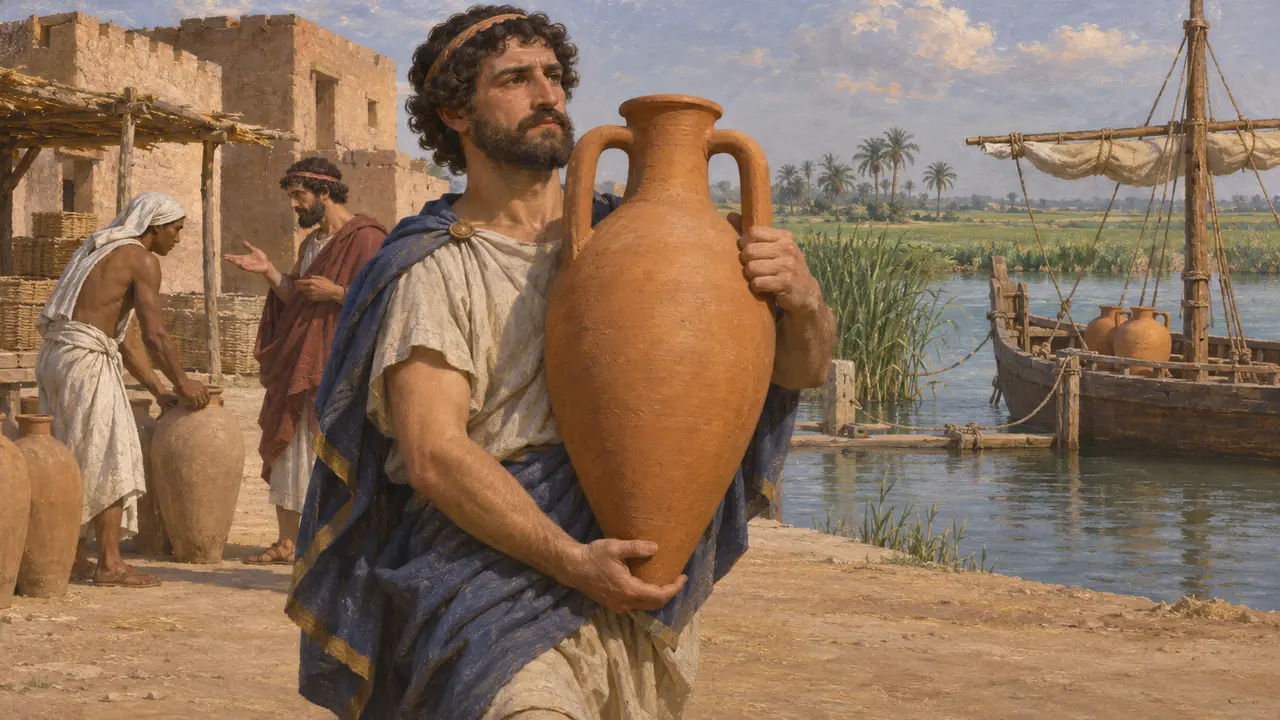
The emblem beside its name
DisputedThe Greeks of Naucratis carry a Greek transport amphora, for the trading port in the Delta that Amasis granted them. The town struck no coins of its own then; the jar stands for the trade that Herodotus describes.
Herodotus 2.178-179
Sources
- Herodotus 2.178-179
- W. M. F. Petrie, Naukratis I, 1886
- A. Möller, Naukratis: Trade in Archaic Greece, 2000
- A. Villing et al., Naukratis: Greeks in Egypt, British Museum, 2013
- B. Porten and A. Yardeni, Textbook of Aramaic Documents from Ancient Egypt, vol. 3, 1993
- P. Briant, From Cyrus to Alexander, 2002