Naucratis
Greek trading port on the Canopic branch of the Nile, Egypt, from about 620 BCE
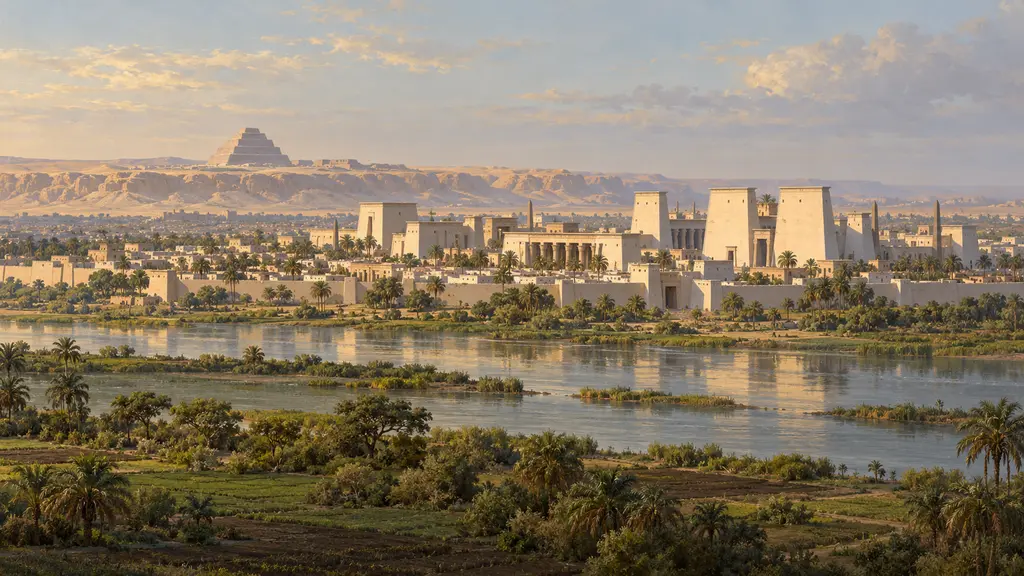
Naucratis was a river port in the western Nile Delta where Greek merchants were allowed to live, trade and build their own sanctuaries under Egyptian rule. It was the main gateway for Greek goods into Egypt and for Egyptian grain, linen and other wares bound for the Aegean, and it passed under Persian rule when Cambyses conquered Egypt in 525 BCE.
In the game: In the game Naucratis is a trade partner of the Memphis level. Historically it lay well downriver in the western Delta, near Sais, and goods moved between the two towns by boat on the Nile.
A port on the Canopic branch
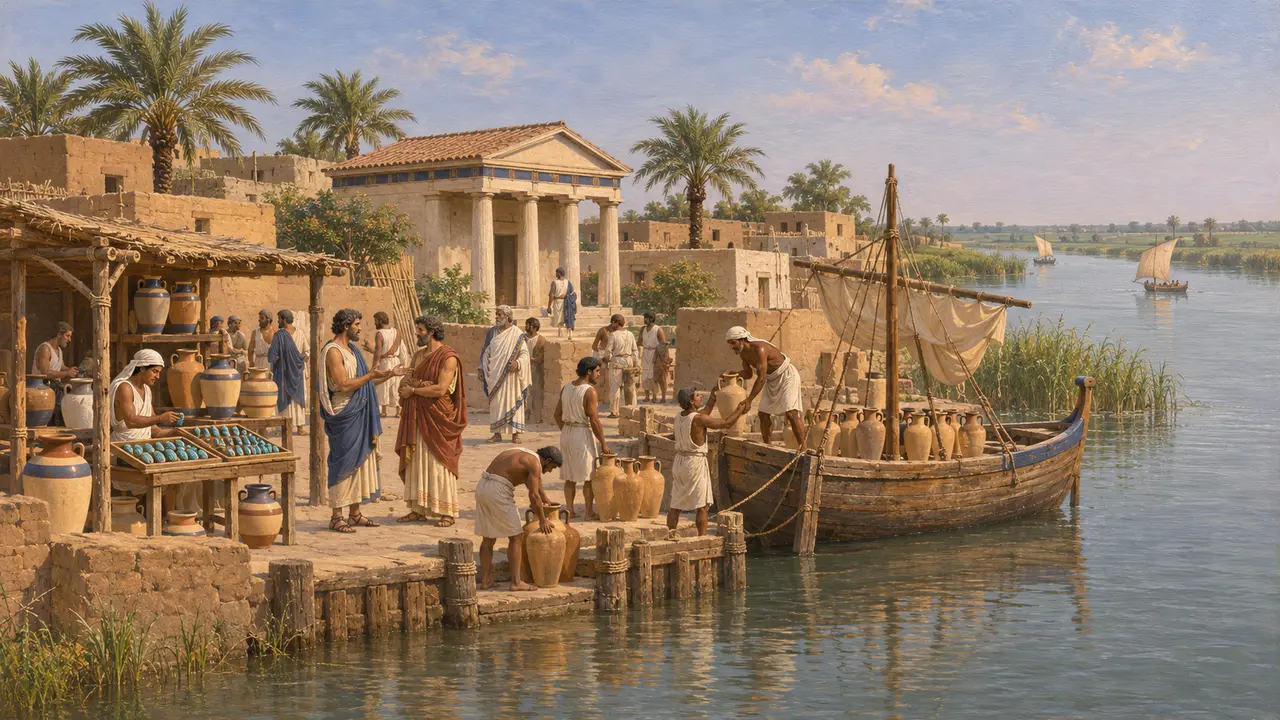
In the recordExcavations at Kom Gieif identified the site, which stood on the Canopic branch of the Nile a short distance from the royal city of Sais. Flinders Petrie and later British excavators found Greek sanctuaries, large deposits of East Greek and other imported pottery, and a workshop making faience scarabs and amulets for sale. Recent fieldwork has also traced harbour installations along the old river channel.
W. M. F. Petrie, Naukratis I, 1886; A. Villing et al., Naukratis: Greeks in Egypt, British Museum, 2013-
Herodotus on the grant of Amasis
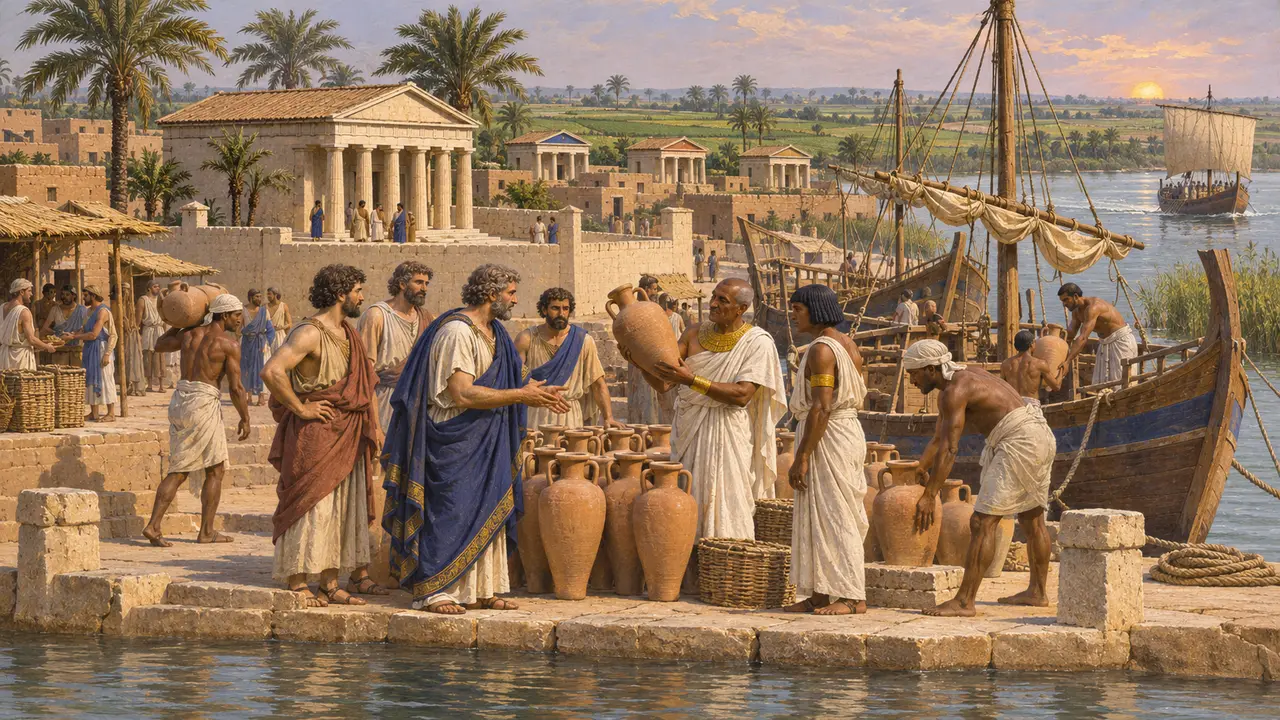
Ancient accountHerodotus says the pharaoh Amasis gave Naucratis to Greeks who came to Egypt as a place to settle and trade. He names nine East Greek cities, among them Chios, Rhodes, Halicarnassus and Mytilene, that jointly ran a shared precinct called the Hellenion, while Aegina, Samos and Miletus kept their own temples. He adds that Naucratis had once been the only port open to Greek traders, so ships arriving at other Nile mouths were sent on to it.
Herodotus 2.178-179
Who founded it, and when
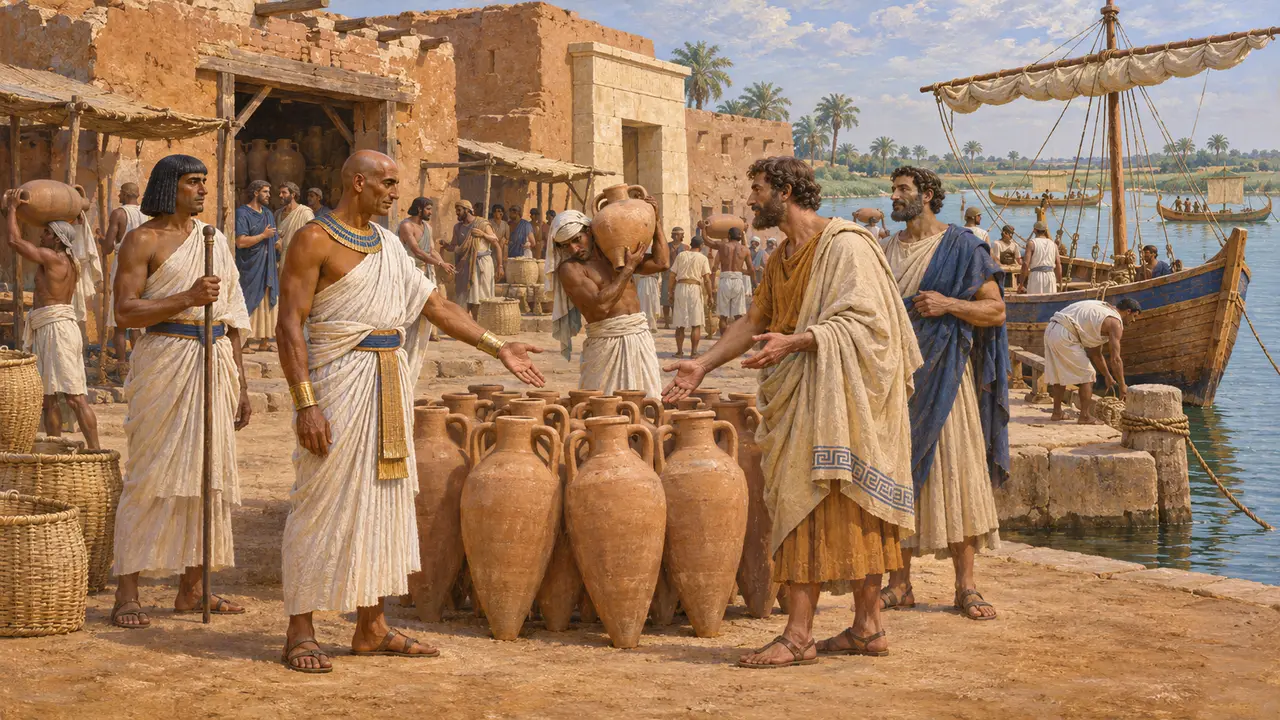
DisputedHerodotus links Naucratis to Amasis, who ruled from about 570 BCE, but Strabo credits Milesian settlers in the time of an earlier Psammetichus. The pottery supports a Greek presence from the late 7th century, before Amasis. Most historians now think Amasis regulated an existing trading community rather than founding it, though how the town was governed and how far it was Egyptian as well as Greek is still argued.
Strabo 17.1.18; A. Möller, Naukratis: Trade in Archaic Greece, 2000
Trade under Persian rule
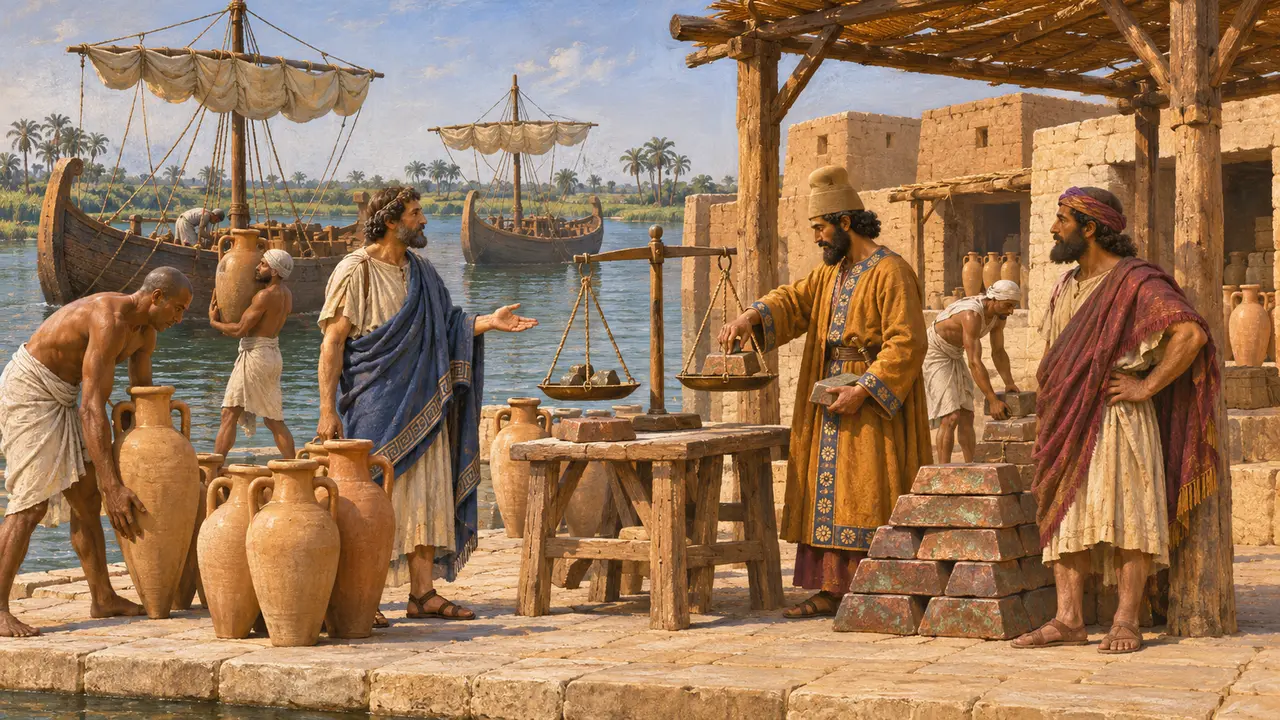
DisputedNaucratis kept trading after Cambyses took Egypt in 525 BCE, and Greek imports continued. An erased Aramaic customs account from Elephantine, dated to about 475 BCE in the reign of Xerxes, lists Ionian and Phoenician ships paying duties on cargoes entering Egypt, including wine, oil and metals. The text does not name its port, and scholars disagree whether it reflects Naucratis or another Delta harbour, but it shows how the King's officials taxed this sea trade.
A. Yardeni, Maritime Trade and Royal Accountancy in an Erased Customs Account from 475 BCE, 1994; P. Briant, From Cyrus to Alexander, 2002
Rhodopis and the brother of Sappho
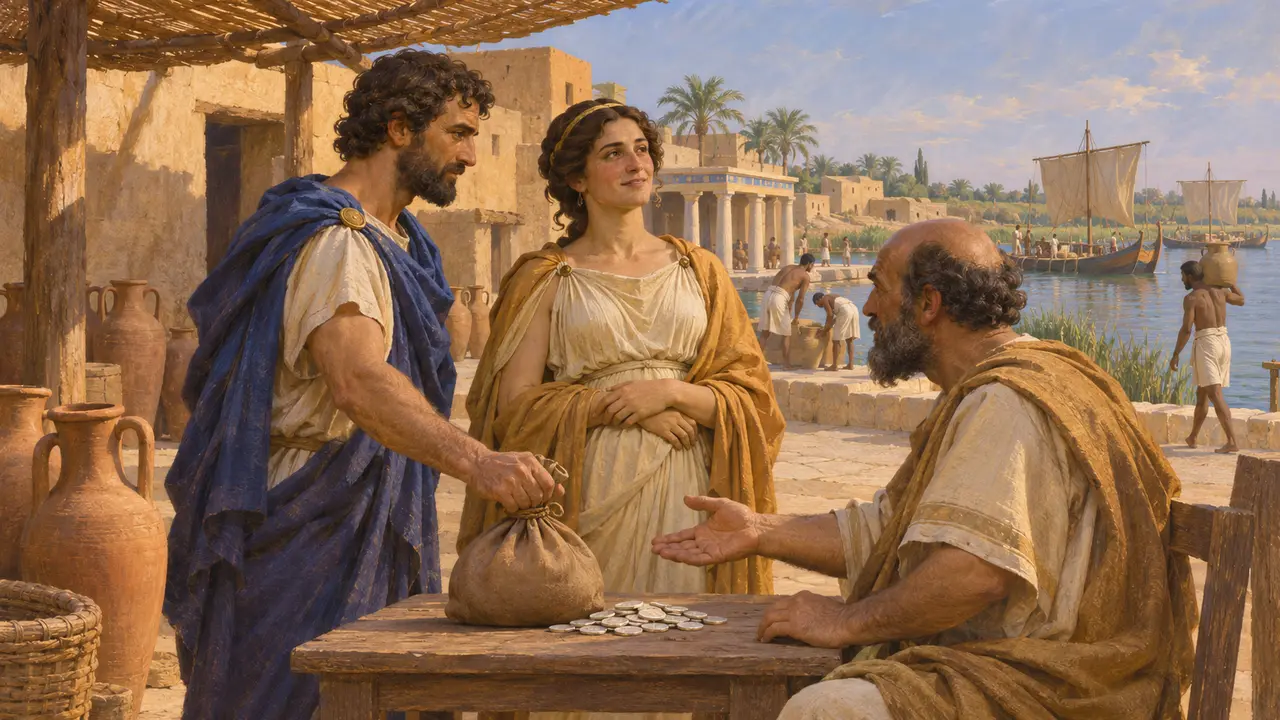
Later legendHerodotus tells of Rhodopis, a Thracian-born courtesan who became famous at Naucratis in the time of Amasis. Charaxus of Mytilene, brother of the poet Sappho, paid a large sum to free her, and Herodotus says Sappho mocked her brother for it in a poem. Some Greeks claimed Rhodopis built one of the Giza pyramids, a story Herodotus rejects. The tale reflects the town's fame in Greek gossip more than its history.
Herodotus 2.134-135
Sources
- Herodotus 2.178-179
- A. Möller, Naukratis: Trade in Archaic Greece, 2000
- A. Villing et al., Naukratis: Greeks in Egypt, British Museum, 2013-
- W. M. F. Petrie, Naukratis I, 1886
- Strabo 17.1.18
- P. Briant, From Cyrus to Alexander, 2002