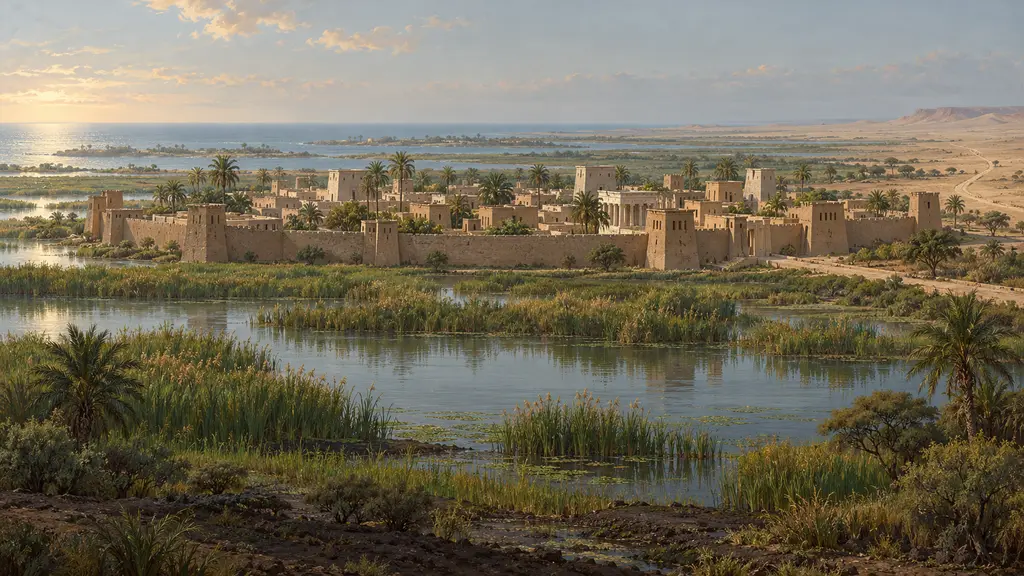
The Nile Delta
The low land of the Nile's mouths in northern Egypt, Persian from 525 BCE
The Delta is the wide, low triangle of land where the Nile divides into branches before reaching the sea. Its towns included Sais, Naucratis and Pelusium. Cambyses entered Egypt at its eastern edge in 525, and Herodotus, who saw it, calls Egypt the gift of the river.
In the game: The Delta's eastern edge is the Pelusium field and the Memphis level's way in; its mud, mouths and towns appear in the level's texts and chatter.
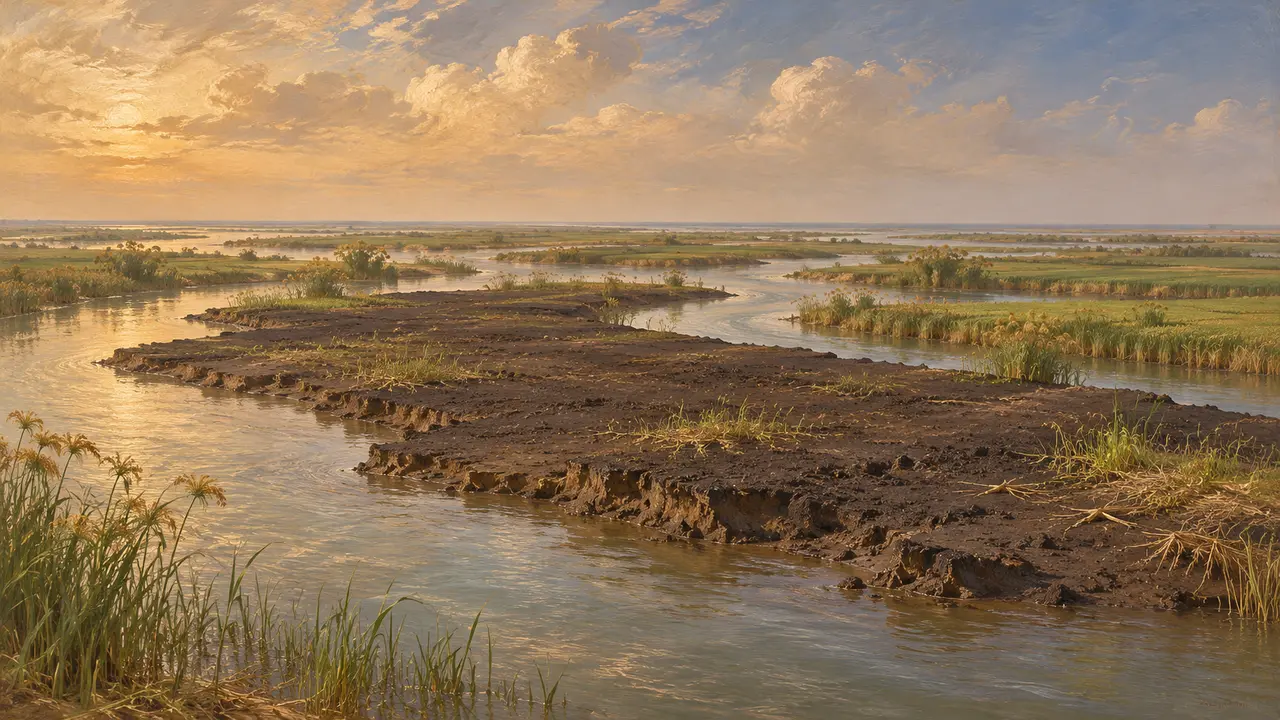
The gift of the river
Ancient accountHerodotus says the part of Egypt the Greeks sail to is land the river has brought down, the gift of the river. He gives the coast as sixty schoeni long, from the Plinthine gulf to the Serbonian lake, and describes the land as flat, watery and made of black, crumbling soil.
Herodotus 2.5-6, 2.12
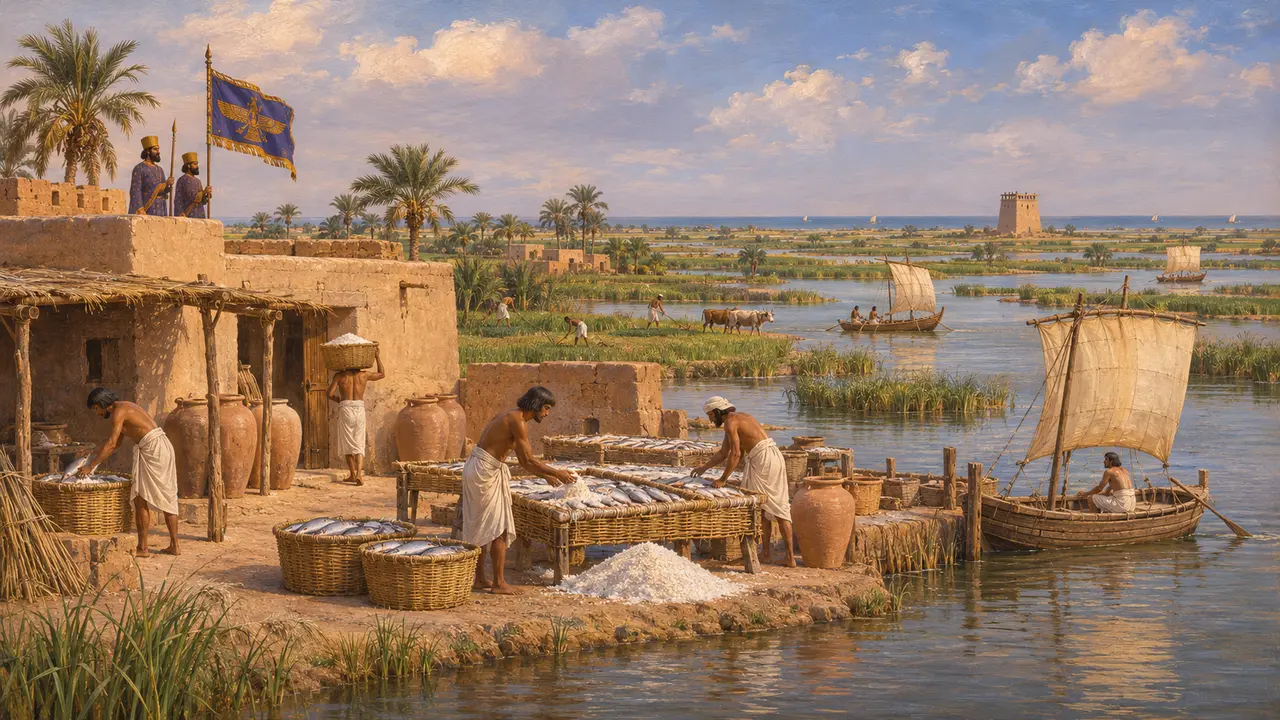
The Ionians' Egypt
Ancient accountHerodotus reports the Ionian view that only the Delta was Egypt, from the watch-tower of Perseus to the salting-houses of Pelusium. He rejects it: Egypt, he says, is all the land the Egyptians live in, from Elephantine to the sea.
Herodotus 2.15-17
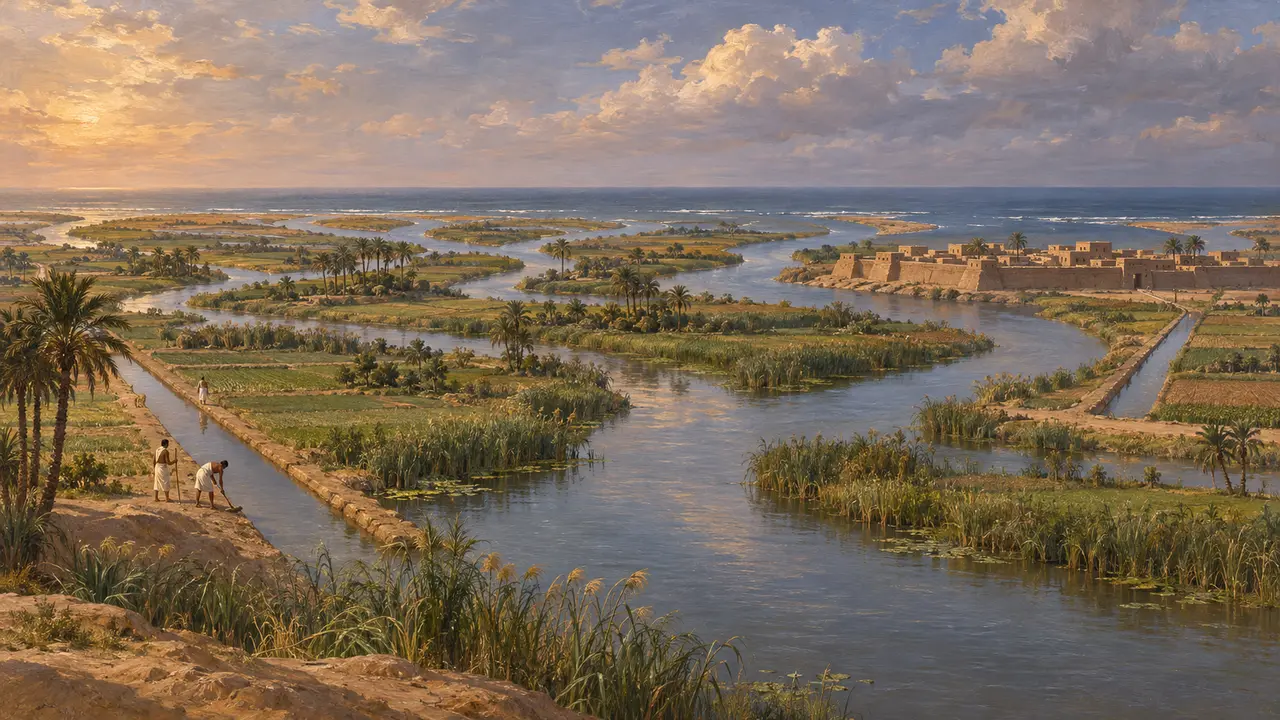
Seven mouths
Ancient accountHerodotus names the Nile's mouths: the Pelusiac in the east, the Canopic in the west, and between them the Sebennytic, Saitic, Mendesian, Bolbitine and Bucolic, the last two dug by hand. Pelusium guarded the eastern mouth, and Cambyses' army met Psamtik's there.
Herodotus 2.17, 3.10-11
The Saite kingdom
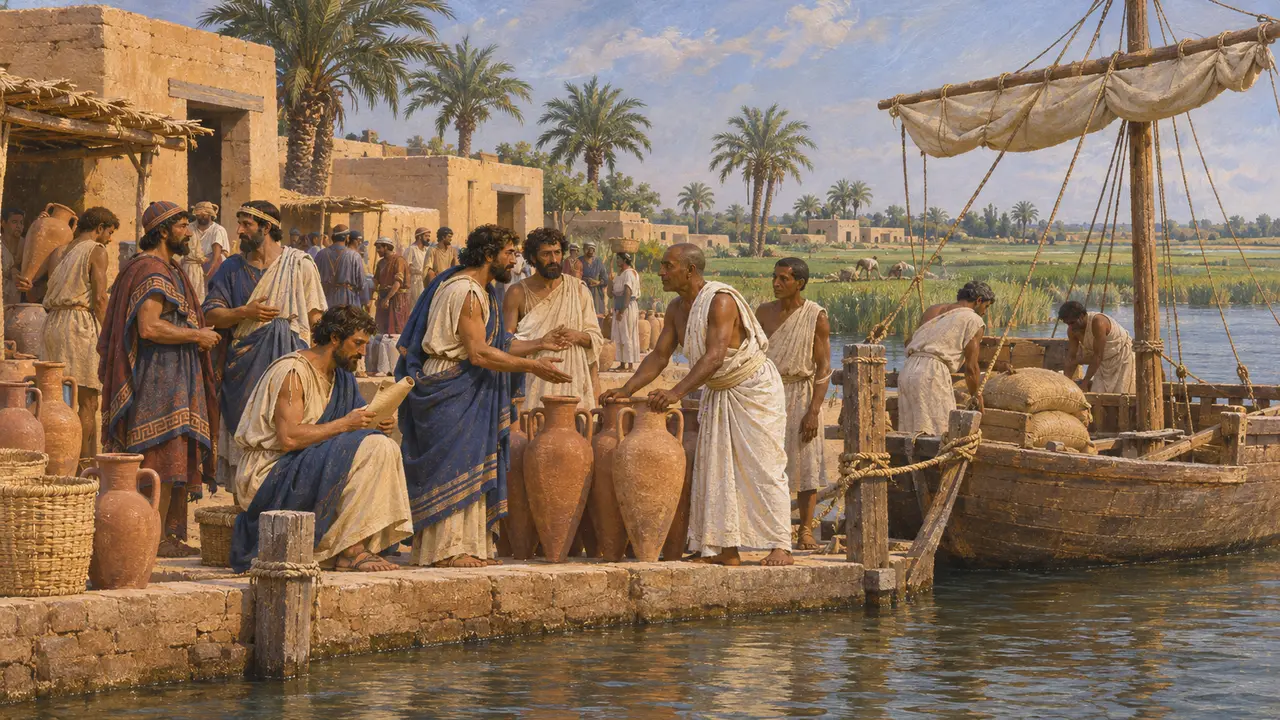
In the recordThe last native dynasty before the Persians ruled from Sais in the western Delta, and Amasis gave the Greeks Naucratis as their trading town. Excavations at Sais, Naucratis and Tell Defenneh show the Delta's Greek and Carian settlers of the sixth century.
Excavations at Naucratis and Sais; Herodotus 2.154, 2.178
Sources
- Herodotus 2.5-17, 2.154, 2.178, 3.10-11
- A. B. Lloyd, Herodotus Book II, 1975-1988