Encyclopedia › Soldiers and ships
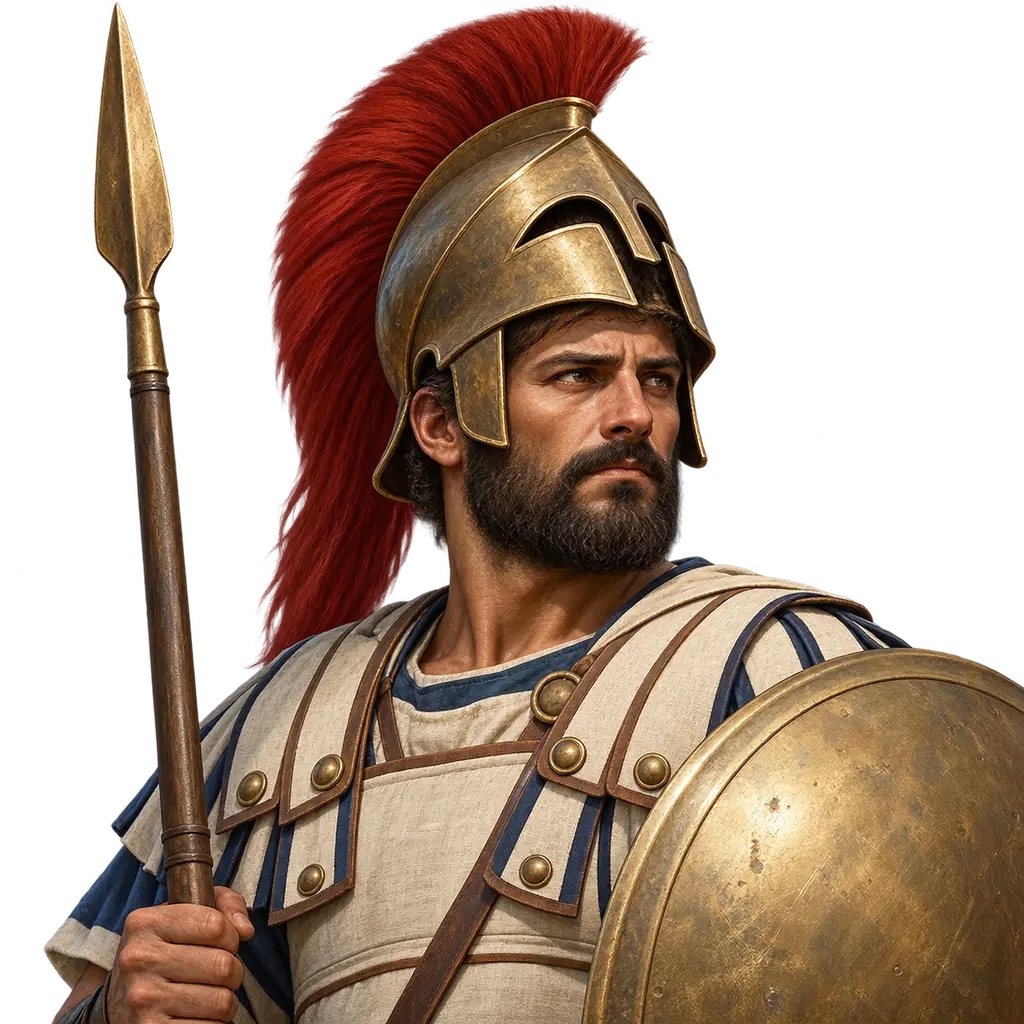
Greek hoplites
Armoured citizen spearmen of the Greek cities, foes and subjects of the King, 499-479 BCE
In the game: Level 7: Sardis Burns, Level 10: The Hot Gates, Level 11: The Finale
Hoplites were the heavy infantry of the Greek cities: men wealthy enough to buy a bronze helmet, body armour, greaves, a thrusting spear and a large round shield. They fought in close ranks. In the wars of 499 to 479 they marched on Sardis and faced the King's armies at Marathon, Thermopylae and Plataea. Greeks also served the King, as the Ionians did before and after their revolt and the Thebans did in 479.
In the game: The game fields Athenian, Ionian, Greek and Theban hoplites: tough foot that outlast the King's spearmen and hold against horse but turn few arrows. At Marathon the Athenians come on at the run, as Herodotus tells it.
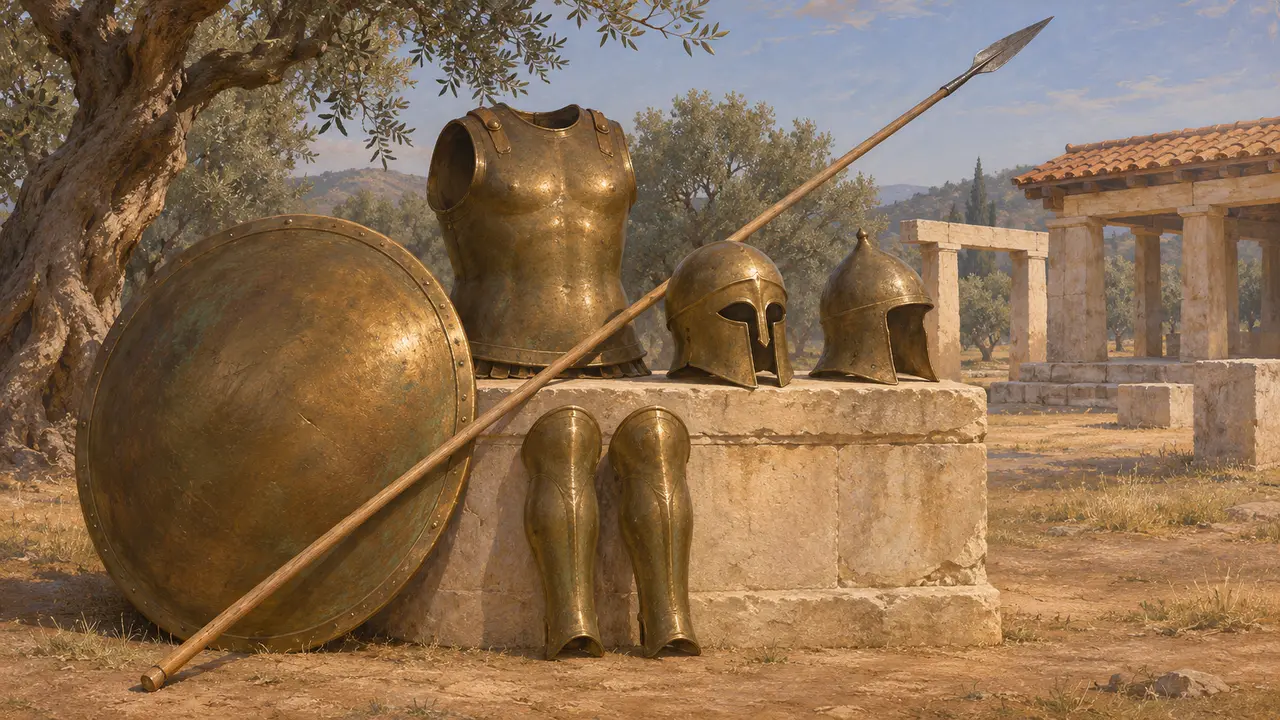
Shield, spear and bronze
In the recordExcavated arms, many dedicated at Olympia, show the kit. It comprised a bronze helmet, often of the closed Corinthian type, greaves, and a bronze or linen corslet. It also included an iron-tipped spear about two to two and a half metres long and a wooden shield faced with bronze, close to a metre across. One Olympia helmet bears the name of Miltiades, perhaps the general of Marathon. Another, of eastern type, carries an Athenian dedication saying it was taken from the Medes.
A. Snodgrass, Arms and Armour of the Greeks, 1967; Olympia excavation reports
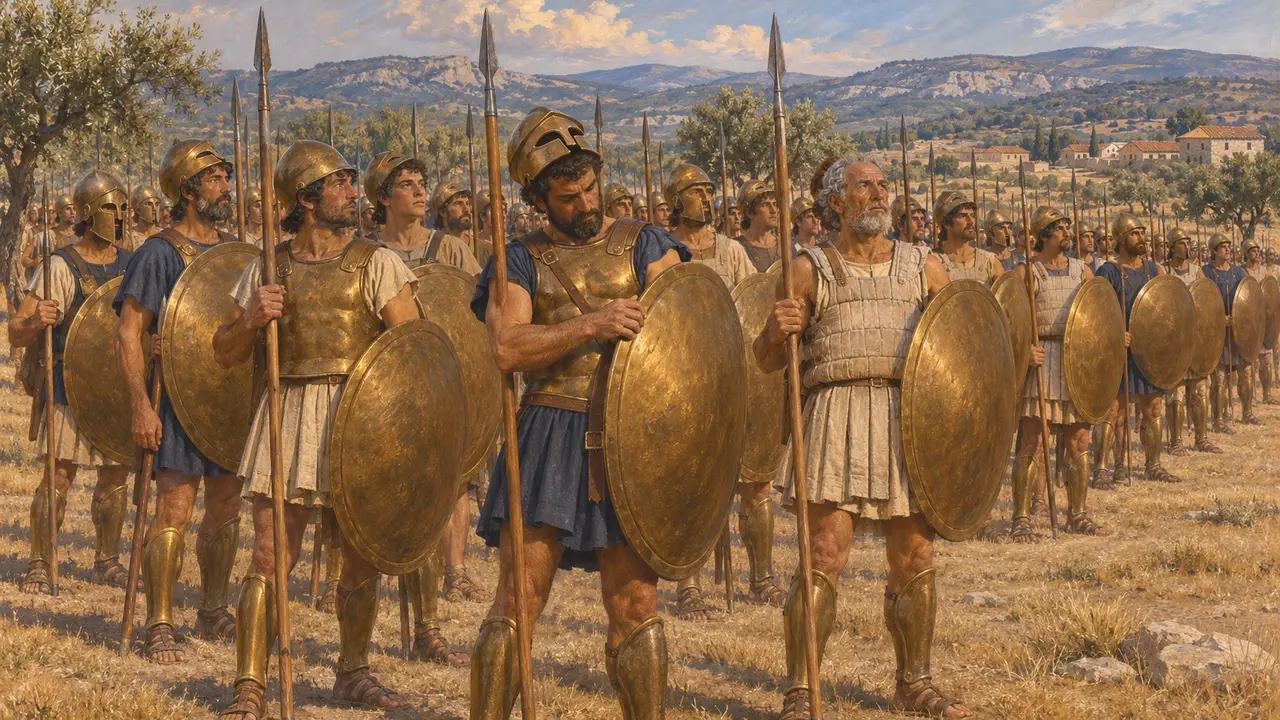
Who stood in the line
Ancient accountHoplites were citizens who paid for their own equipment, not hired professionals. Spartan citizens, who trained for war full time, came closest to an exception. At Athens most hoplites came from the middle and upper property classes. Herodotus lists 38,700 hoplites in the Greek army at Plataea in 479. Many historians accept that figure as roughly plausible, unlike his far larger totals for the Persian side.
Herodotus 9.28-30; H. van Wees, Greek Warfare: Myths and Realities, 2004
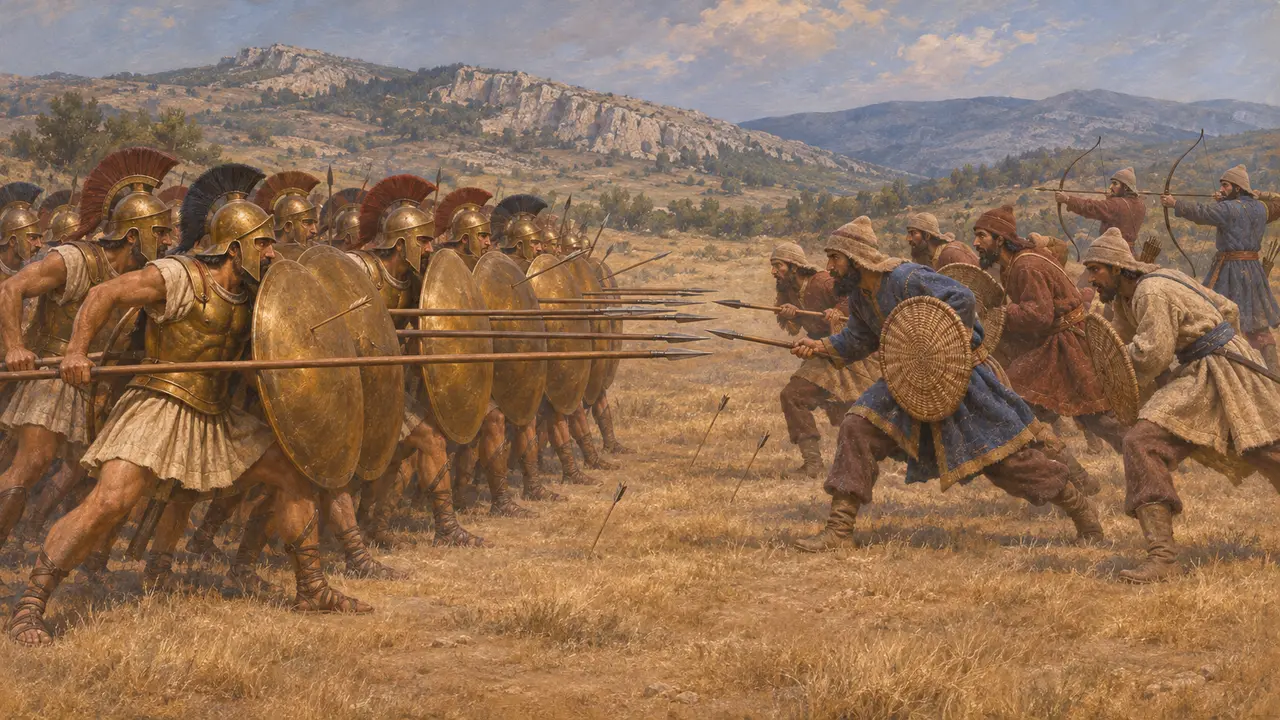
Hoplites against the King's foot
Ancient accountHerodotus explains Greek victories largely by equipment and skill. At Thermopylae he says the Persians used shorter spears than the Greeks. At Plataea he says the Persians were not inferior in courage or strength, but they fought without armour and with less skill, rushing out in small groups against a formed line. He also records that Persian arrows wounded and killed many Spartans while they waited for favourable sacrifices.
Herodotus 7.211; Herodotus 9.61-63
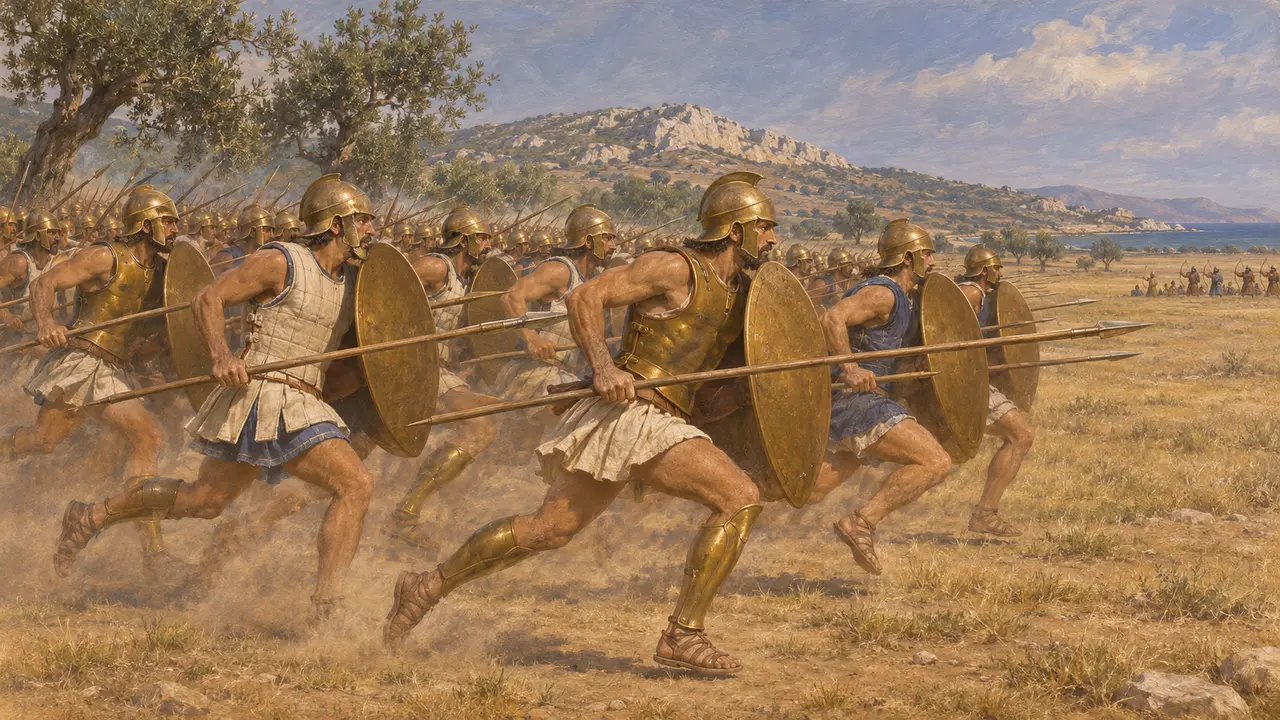
The run at Marathon
DisputedHerodotus says the Athenians at Marathon charged at a run over no less than eight stades, about 1.5 kilometres, the first Greeks he knew of to do so. Historians disagree over whether this was possible. Many think armoured men could not run so far and still fight in order, and that they ran only the last stretch, within range of the Persian bows. P. Krentz argues that hoplite kit was lighter in 490 and the full run was feasible.
Herodotus 6.112; P. Krentz, The Battle of Marathon, 2010
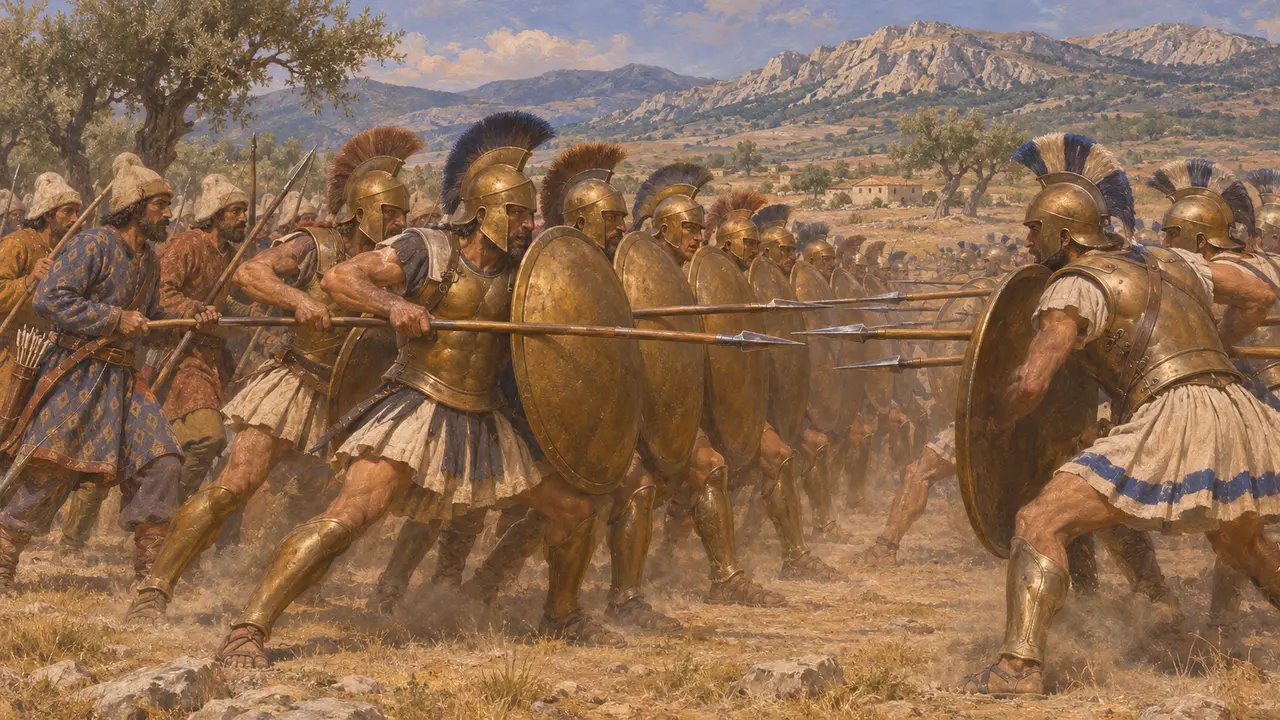
Greeks on the King's side
Ancient accountHoplites did not fight only against Persia. Ionian and other eastern Greek cities were the King's subjects and supplied men and ships. After their revolt failed at Lade in 494, they served him again in 480. In 479 the Thebans and other Boeotians fought for Mardonius at Plataea. Herodotus says they fought hard against the Athenians and lost about three hundred of their best men before giving way.
Herodotus 6.7-17; Herodotus 7.94; Herodotus 9.67
Sources
- Herodotus, Histories, books 5-9
- A. Snodgrass, Arms and Armour of the Greeks, 1967
- H. van Wees, Greek Warfare: Myths and Realities, 2004
- P. Krentz, The Battle of Marathon, 2010
- V. D. Hanson, The Western Way of War, 1989