Xerxes' Canal
Ship canal across the isthmus of Athos in the northern Aegean, dug about 483-480 BCE
In the game: Level 9: The Canal
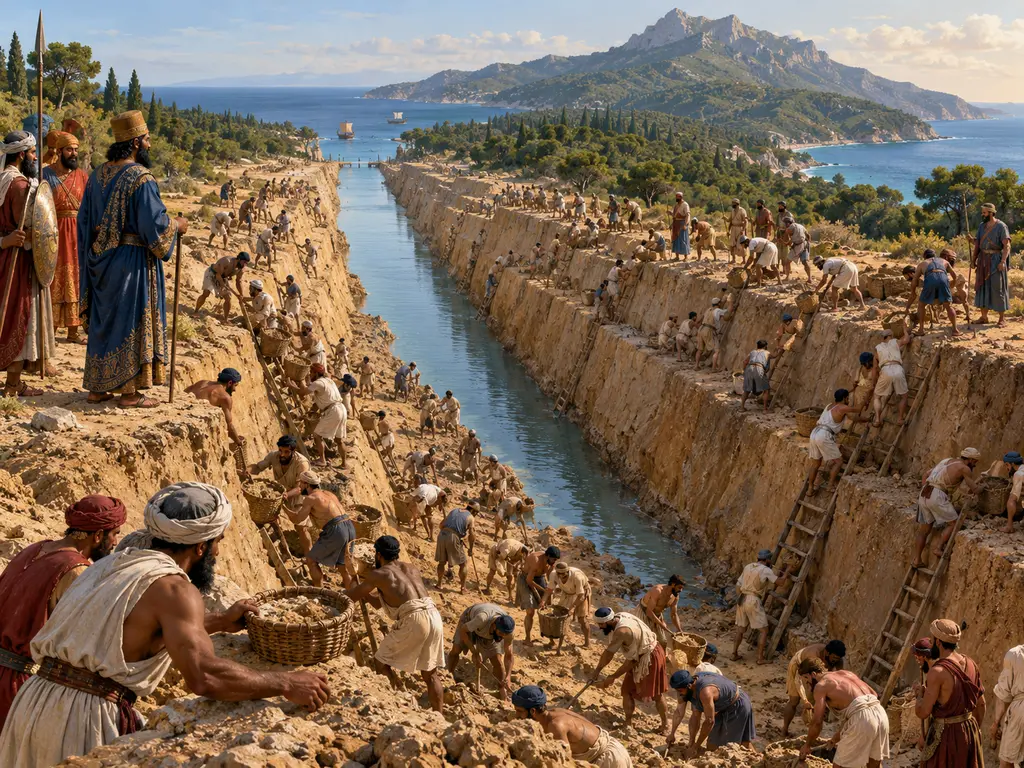
Xerxes' Canal was a channel cut across the narrow neck of the Athos peninsula so that the royal fleet could avoid the dangerous cape where a Persian fleet had been wrecked in 492. Herodotus describes the work in detail, and modern surveys have confirmed that the canal really existed. It shows how far the King could reach in moving labour, food and skill from across the empire.
In the game: The canal is laid across the neck of land with each end on water, using barley for the diggers, limestone for the moles and timber for ladders and baskets. Herodotus's moles were heaped earth, so the limestone is the game's departure.
The wreck that prompted it
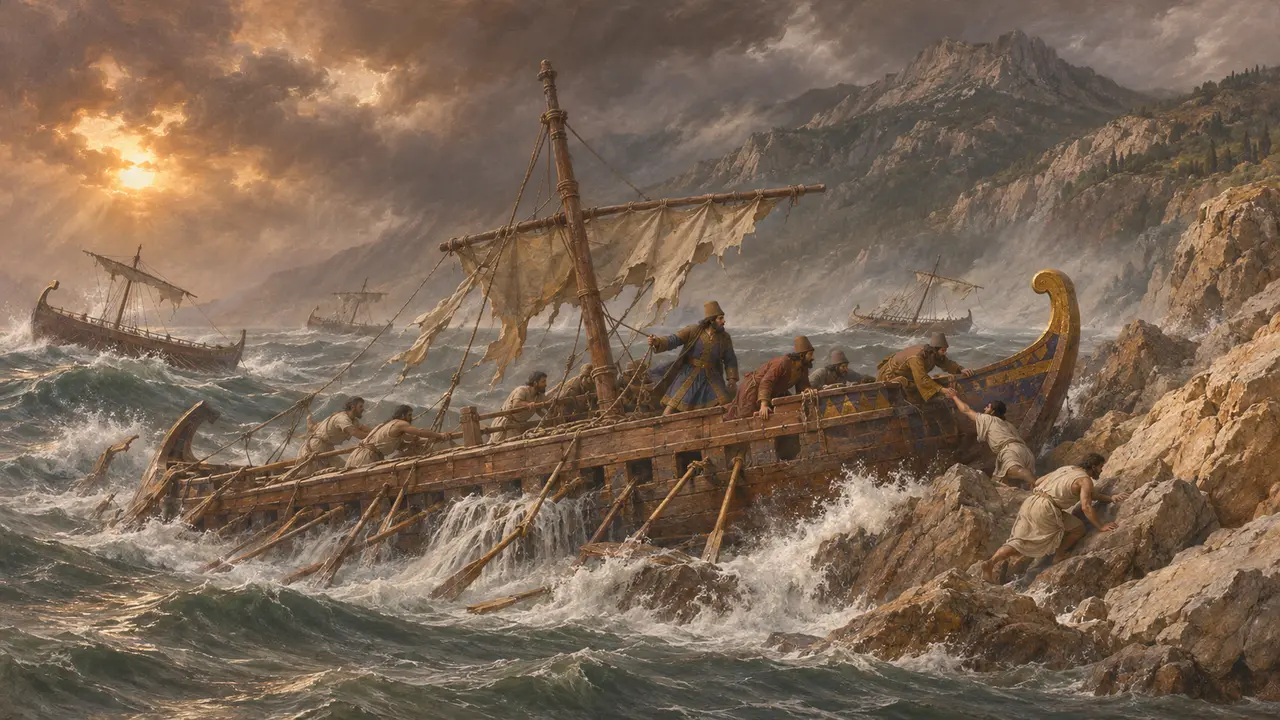
Ancient accountHerodotus says that in 492 a fleet under Mardonius was caught by a storm while rounding Mount Athos and driven onto the rocks. He puts the losses at about 300 ships and more than 20,000 men, figures historians treat with caution. He links the canal directly to this disaster and says preparations for the Athos work took about three years.
Herodotus 6.44; Herodotus 7.22
How the digging was done
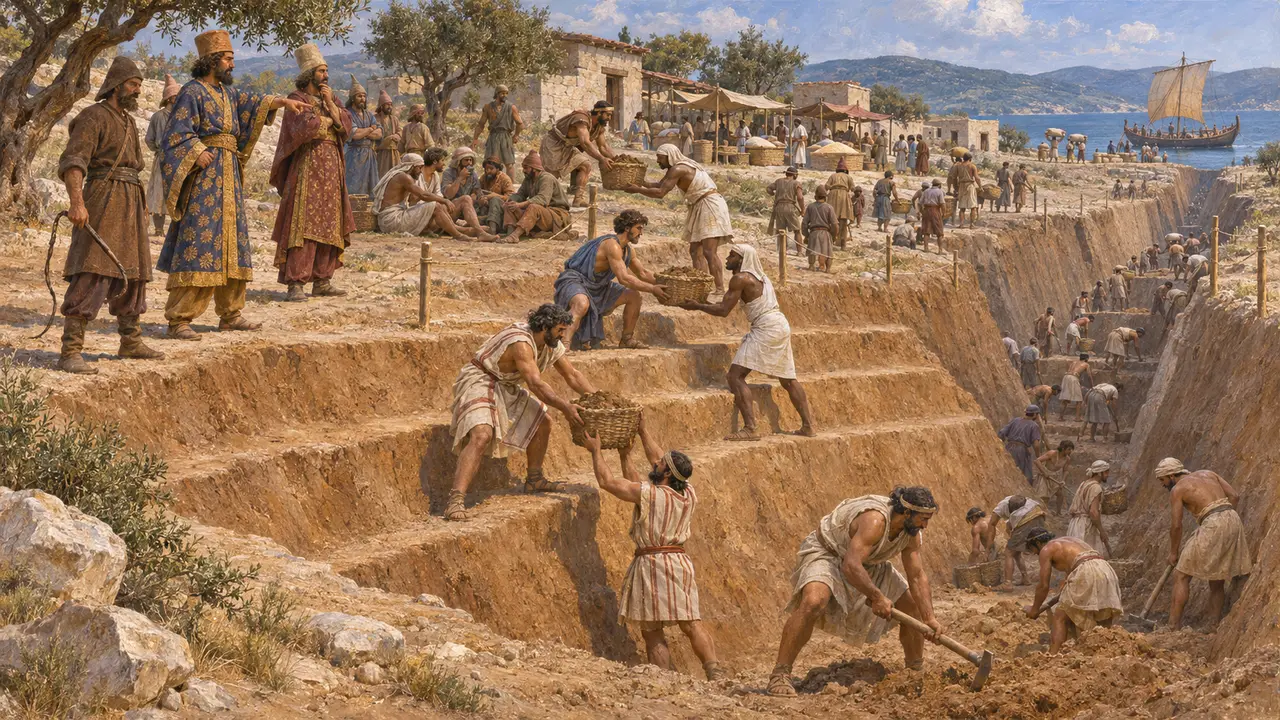
Ancient accountHerodotus says men from every part of the army were sent to dig in relays, driven by the whip, under the direction of Bubares and Artachaees. The line was marked out by the town of Sane and divided among the peoples. Diggers at the bottom passed soil up to men on steps above. Only the Phoenicians, he says, made the trench wider at the top so its sides did not collapse, and a market nearby sold grain and flour shipped from Asia.
Herodotus 7.22-23
The finished channel
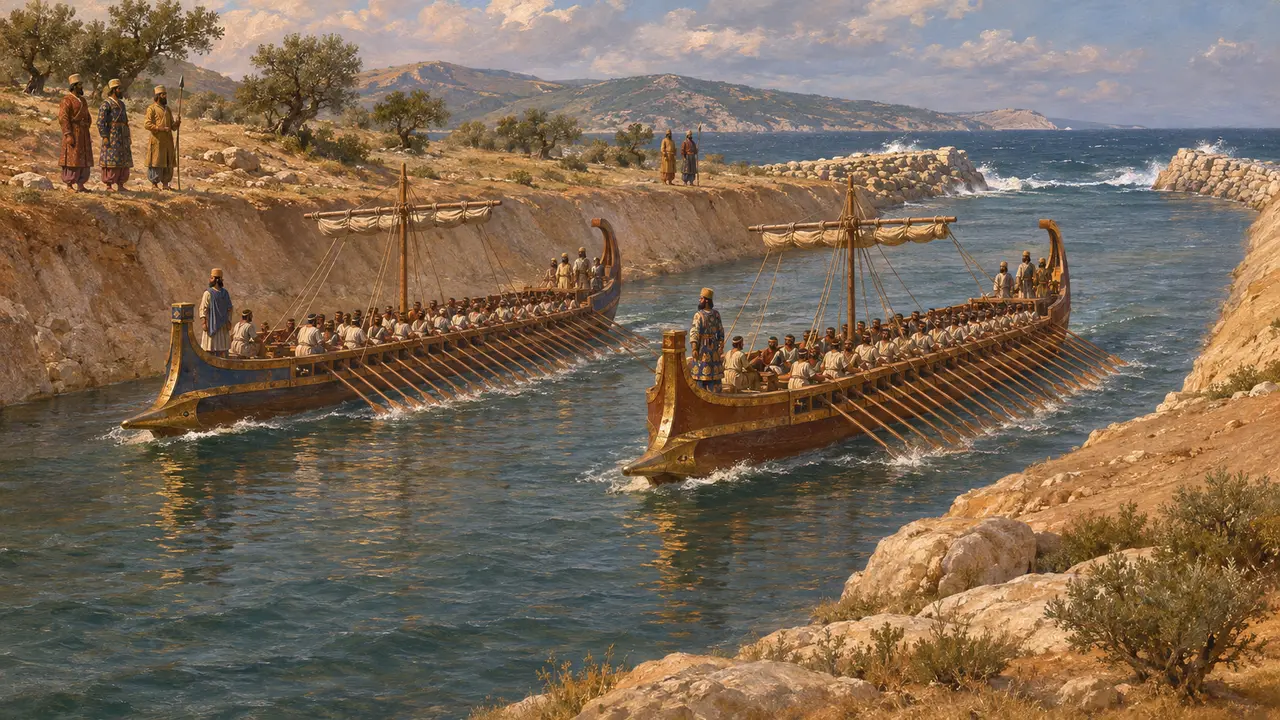
Ancient accountHerodotus says the canal was wide enough for two triremes to be rowed side by side and that moles were heaped up at its mouths against the surf. The fleet sailed through in 480 on its way west. Thucydides later mentions the King's canal as a landmark of the region. Herodotus also records that Artachaees died at nearby Acanthus and was buried with honour by the army.
Herodotus 7.24; Herodotus 7.37; Herodotus 7.117; Herodotus 7.122; Thucydides 4.109
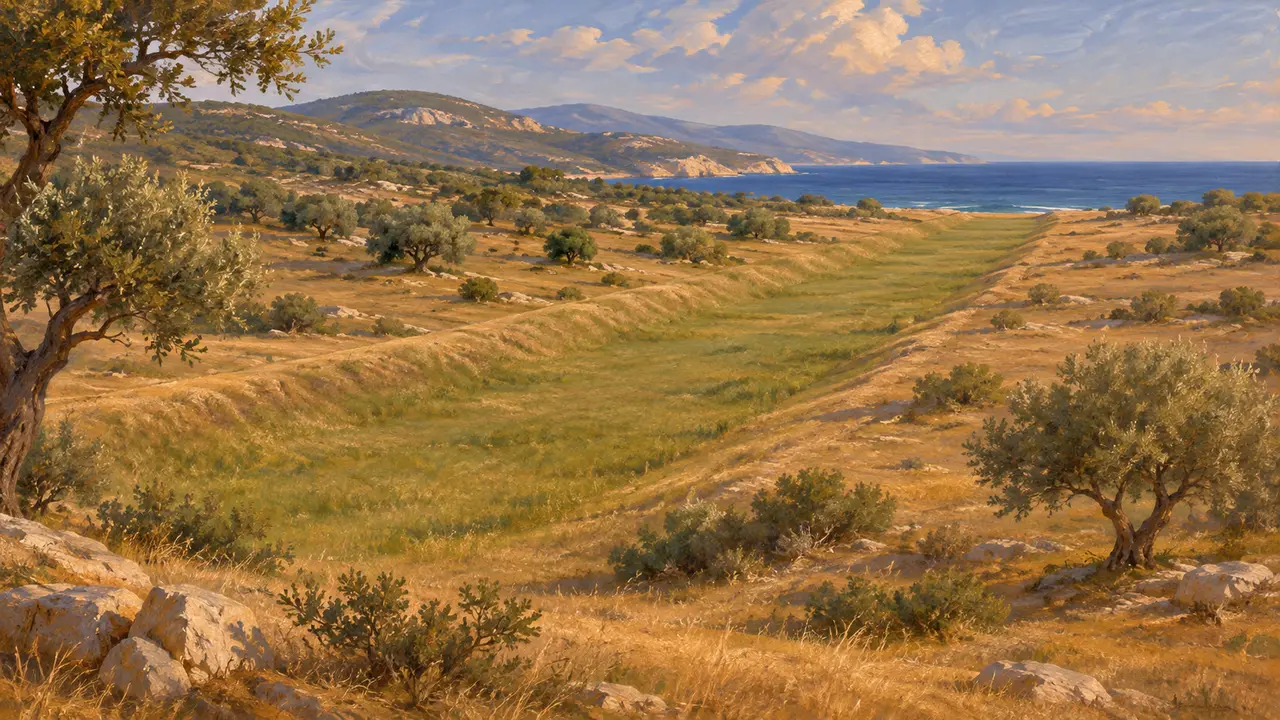
What the ground shows today
In the recordA British and Greek team surveyed the isthmus between 1991 and 2001 using geophysics, boreholes and sediment cores. They traced a filled-in channel running across the neck of land, roughly two kilometres long, along the line Herodotus describes. Its silted course is no longer open water, but the work settled the old question of whether the canal had existed at all.
B. S. J. Isserlin et al., The Canal of Xerxes: Summary of Investigations 1991-2001, 2003
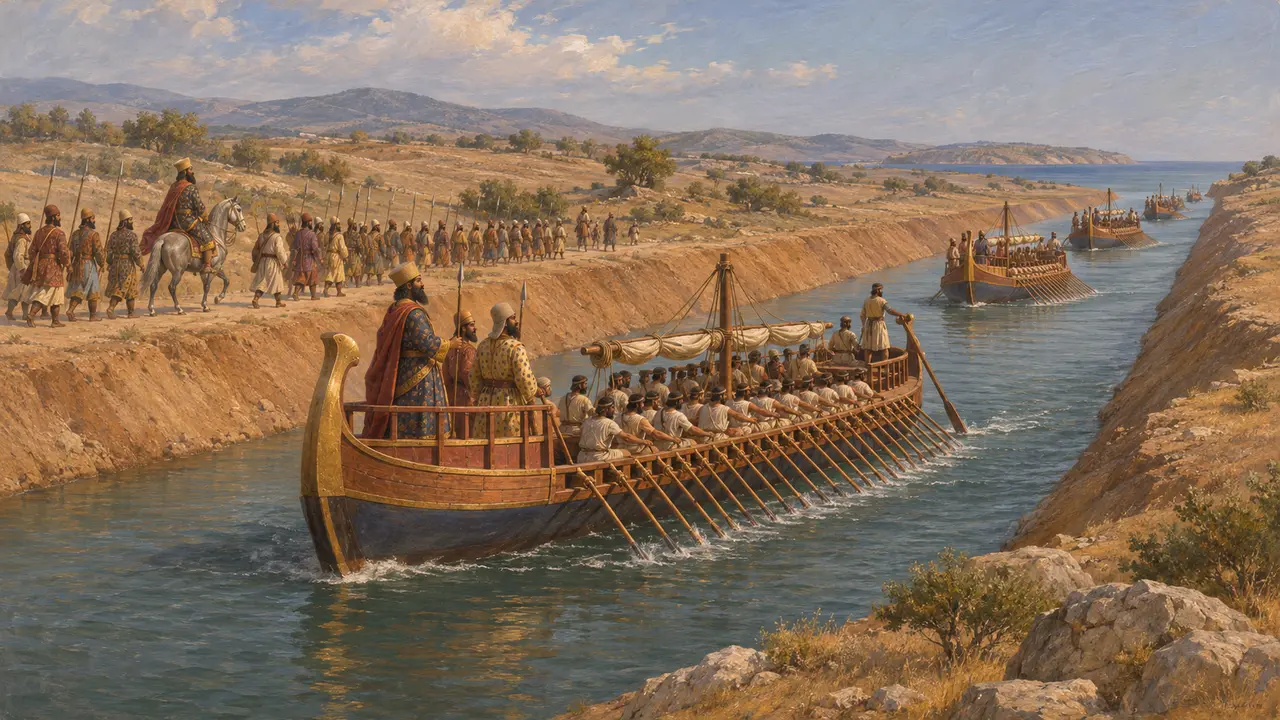
Need or display
DisputedHerodotus judged the canal an act of pride, since ships could have been hauled across the isthmus on land. Many modern historians see practical reasons: a safe passage for a large fleet, and a way to keep fleet and army moving together. Others stress its message to the Greek cities about royal power. Some Roman writers, such as Juvenal, mocked the story as a Greek lie, a doubt the surveys have answered.
Herodotus 7.24; P. Briant, From Cyrus to Alexander, 2002; Juvenal, Satires 10
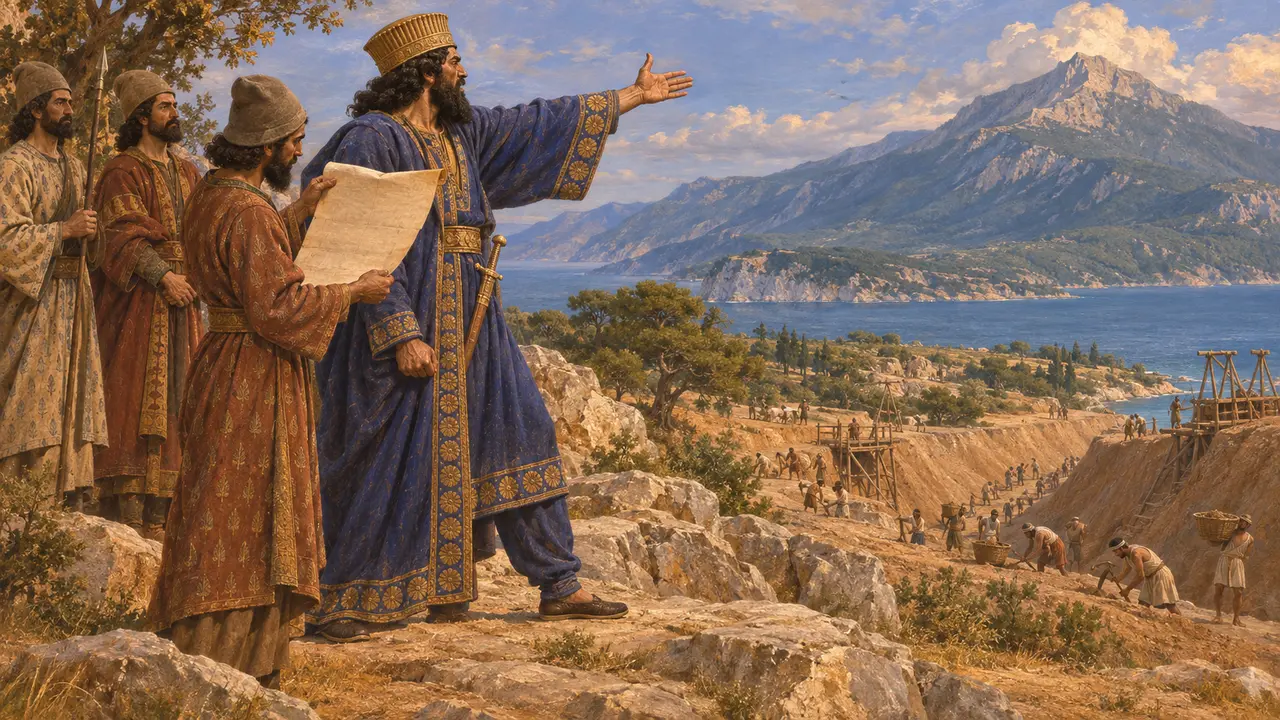
A letter to the mountain
Later legendPlutarch, writing some six centuries later, tells that Xerxes wrote a letter to Mount Athos threatening to cut it down and throw it into the sea if it hindered his work. The story belongs with Greek tales of the King's arrogance, such as the whipping of the Hellespont. It is a moral lesson about anger rather than a record of events.
Plutarch, On the Control of Anger
Sources
- Herodotus 6.44; 7.22-24, 7.37, 7.117, 7.122
- Thucydides 4.109
- B. S. J. Isserlin et al., The Canal of Xerxes: Summary of Investigations 1991-2001, 2003
- P. Briant, From Cyrus to Alexander, 2002
- Plutarch, On the Control of Anger
- Juvenal, Satires 10