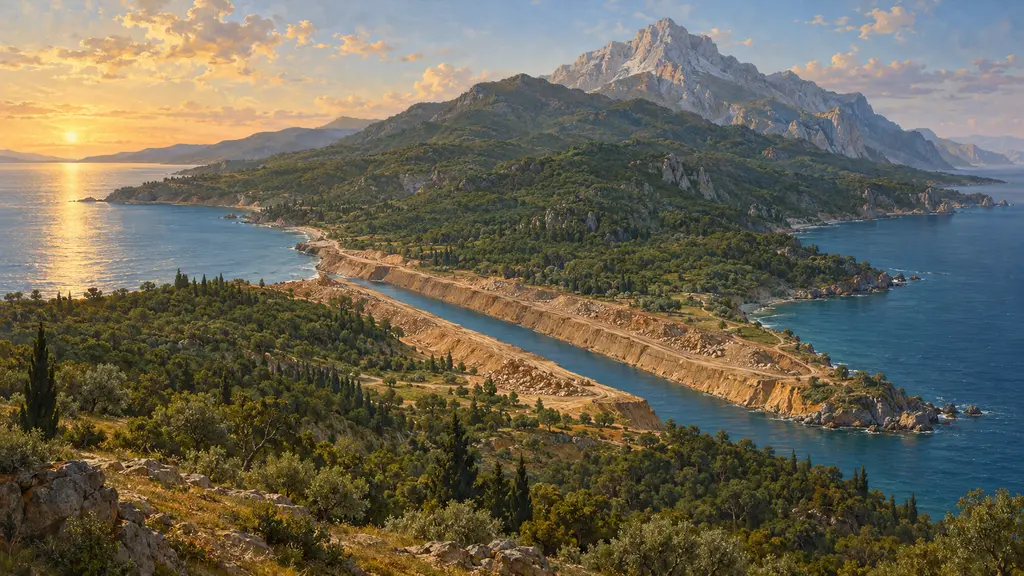
Athos
Headland and isthmus in the northern Aegean, site of a wreck and a canal, 492-480 BCE
In the game: Level 9: The Canal
Athos is the easternmost of the three peninsulas that reach south from Chalcidice, ending in a steep mountain about 2,000 metres high. A Persian fleet under Mardonius was wrecked off its cape in 492. Xerxes then had a canal cut through the narrow neck of the peninsula so that his fleet of 480 could avoid the cape altogether.
In the game: Athos is the game's ninth level (483-480), with Xerxes' Canal and a Supply Depot among its buildings. The game's note calls it the Holy Mountain, a name from the later Christian monasteries that Herodotus never used.
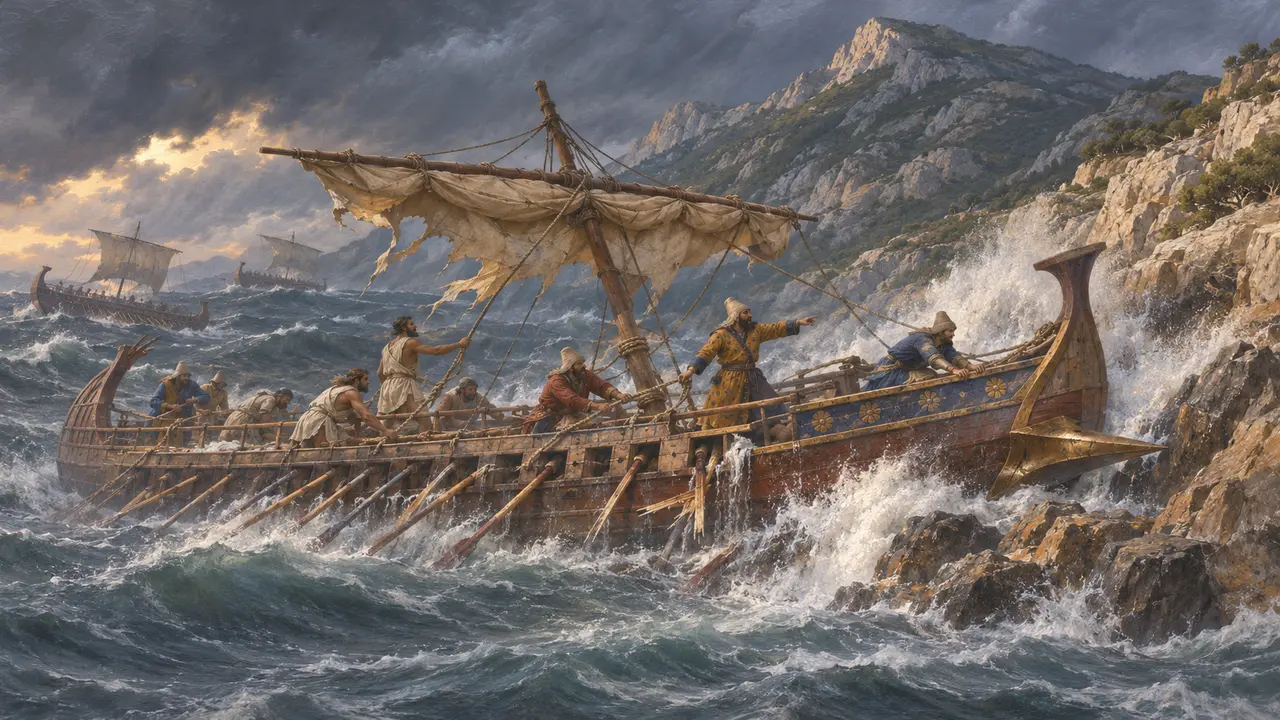
The wreck of Mardonius's fleet
Ancient accountHerodotus says that in 492 Mardonius led an army and fleet along the Thracian coast, and that a violent north wind caught the ships as they rounded Athos and drove many onto the rocks. He puts the loss at about 300 ships and more than 20,000 men, figures historians treat as probably too high. With his army also mauled by the Thracian Brygi, Mardonius turned back to Asia.
Herodotus 6.44-45
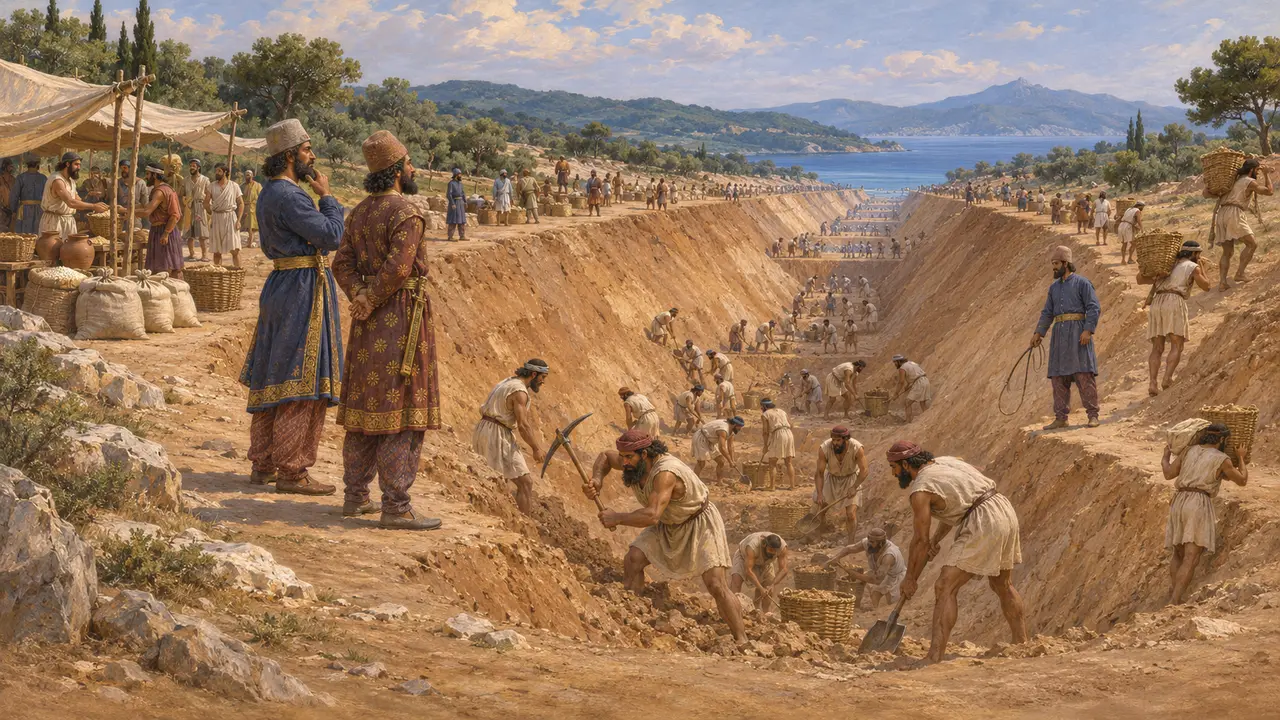
Cutting the isthmus
Ancient accountHerodotus says the preparations took about three years, with the digging directed by two Persians, Bubares son of Megabazus and Artachaees son of Artaeus. Men from the forces and the local towns dug in turns under the lash, each people taking a stretch. He adds that only the Phoenicians cut their section wider at the top so its sides did not collapse, and that grain was brought from Asia to a market nearby.
Herodotus 7.22-23
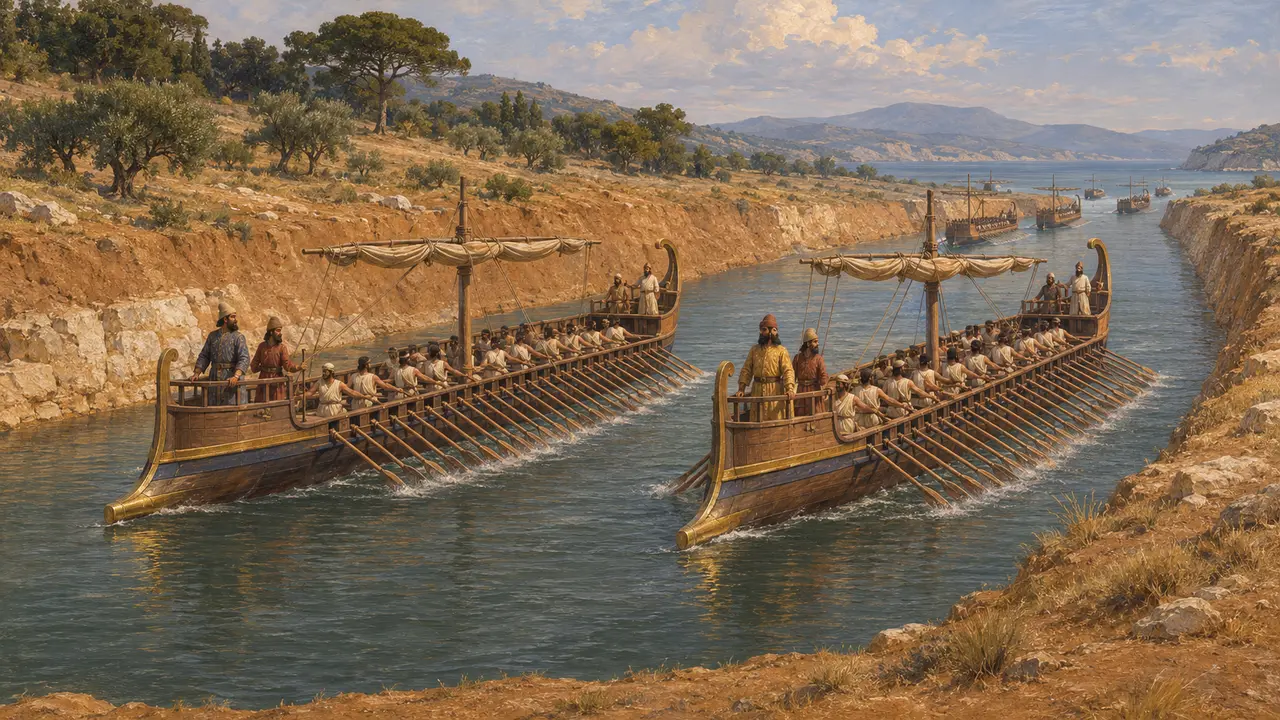
The fleet passes through
Ancient accountHerodotus reports that the canal was wide enough for two triremes to be rowed abreast, and that Xerxes' fleet sailed through it in 480 before heading west along the coast towards Therma. Thucydides, describing the region during the Peloponnesian War, still mentions the King's canal near Acanthus. Neither writer gives a measured width or depth.
Herodotus 7.24, 7.122; Thucydides 4.109
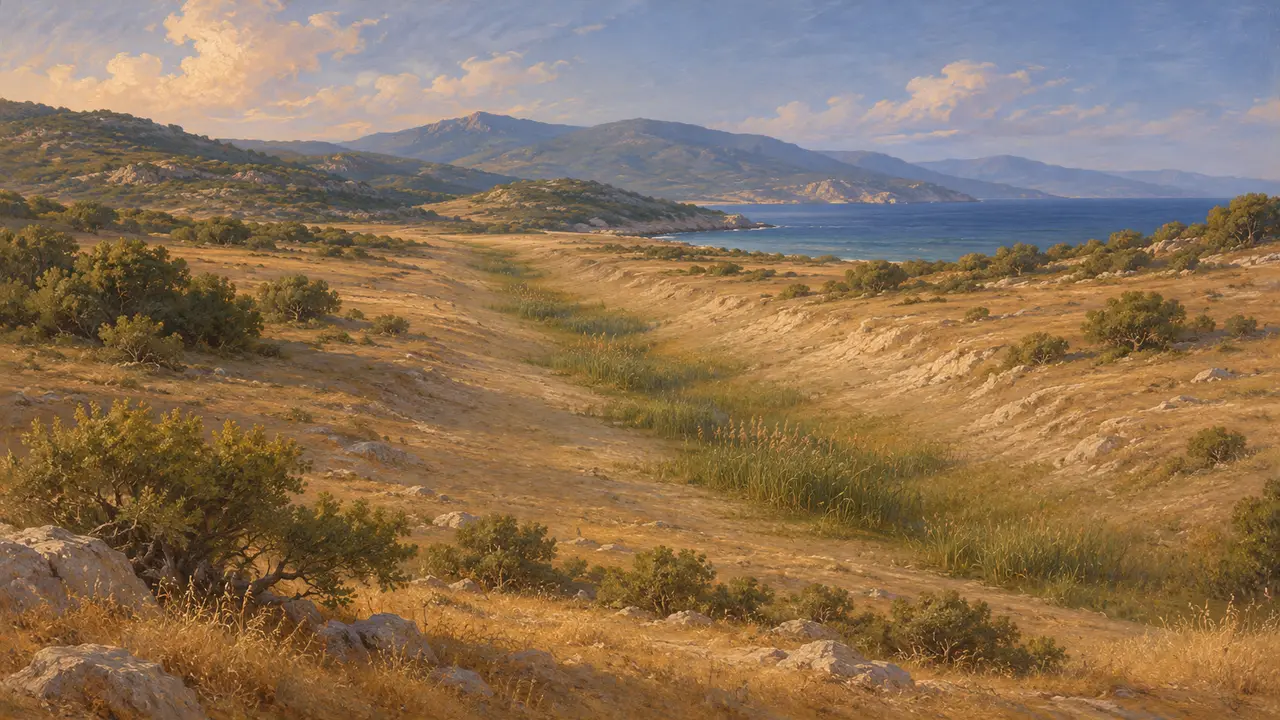
The silted trace today
In the recordThe line of the canal survives as a low, silted depression across the isthmus, roughly 2 kilometres long. Geophysical and coring surveys by a British and Greek team in the 1990s and early 2000s found a continuous buried channel with water-laid sediments. This showed that the canal was really dug from sea to sea, which some modern sceptics had doubted.
B. S. J. Isserlin and others, 'The Canal of Xerxes: Facts and Problems', Annual of the British School at Athens, 2003
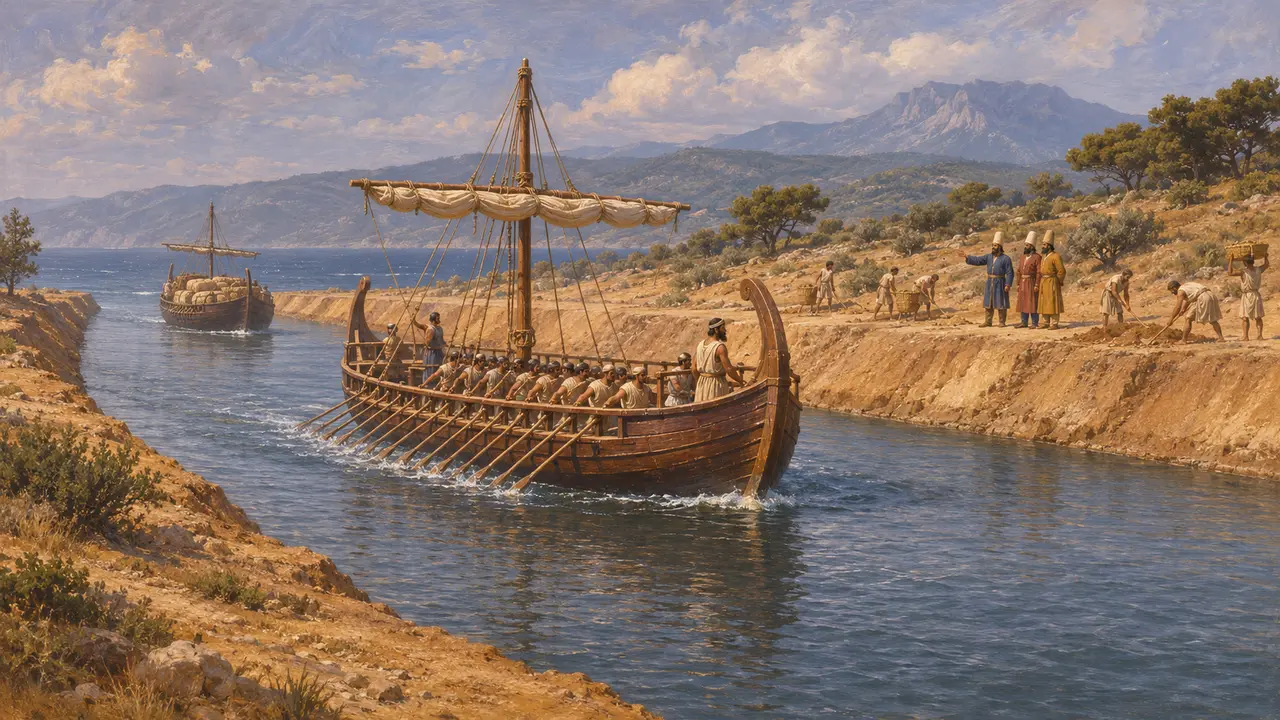
Pride or prudence
DisputedHerodotus judged that Xerxes ordered the canal out of pride and a wish to leave a monument, since ships could have been hauled across the neck on land. Modern historians usually point to the loss of 492 and the danger of the cape. They see the work as a sensible way to protect a large fleet and its supply ships, and note that Herodotus wrote within a Greek tradition that cast Xerxes as arrogant.
Herodotus 7.24; P. Briant, From Cyrus to Alexander, 2002
Sources
- Herodotus 6.44-45
- Herodotus 7.22-24
- Herodotus 7.122
- Thucydides 4.109
- B. S. J. Isserlin and others, 'The Canal of Xerxes: Facts and Problems', Annual of the British School at Athens, 2003
- P. Briant, From Cyrus to Alexander, 2002