Acanthus
Greek city at the neck of the Athos peninsula, beside Xerxes' canal, 483-480 BCE
In the game: Level 9: The Canal
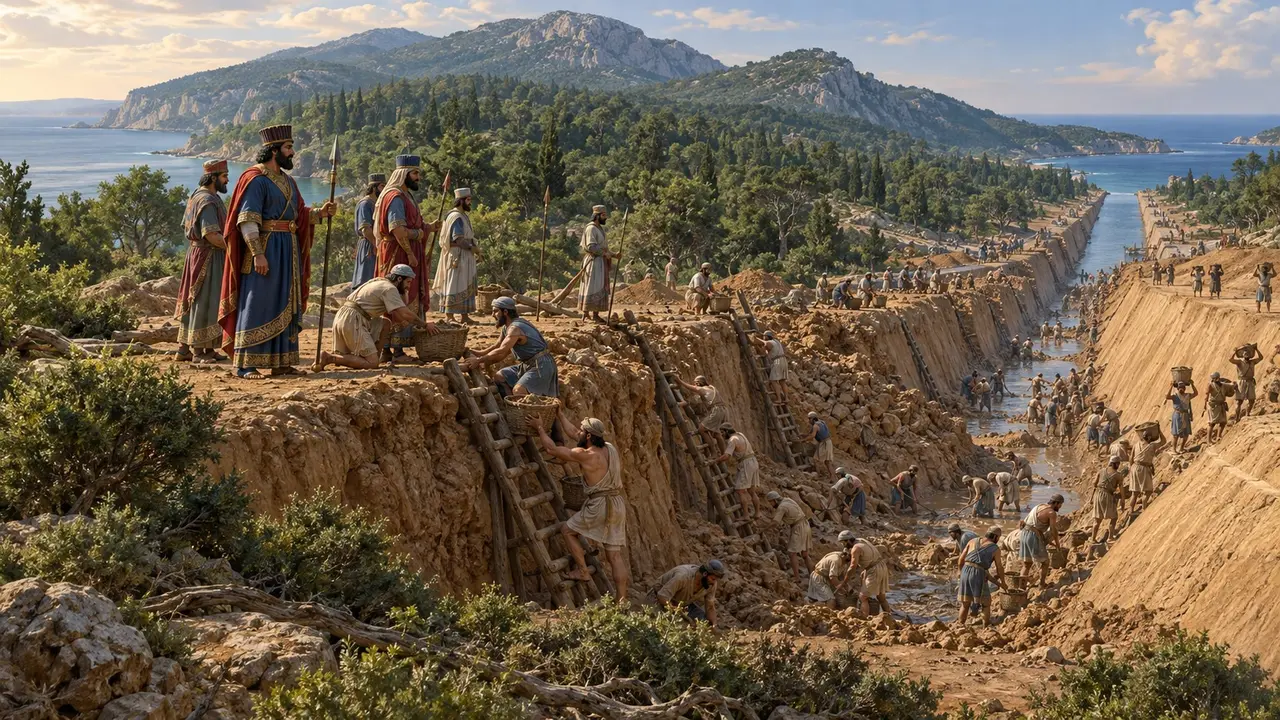
Acanthus was a Greek city founded from Andros on the coast where the Athos peninsula joins the mainland. Xerxes' canal was dug across the isthmus just beyond it, and in 480 his army passed through on its march west. Herodotus says Xerxes made the Acanthians his guest-friends for their zeal for the work.
In the game: The Athos level is built on the coastal plain at Acanthus: its diggers' town, its farms and the mound of Artachaees stand there.
The city by the isthmus
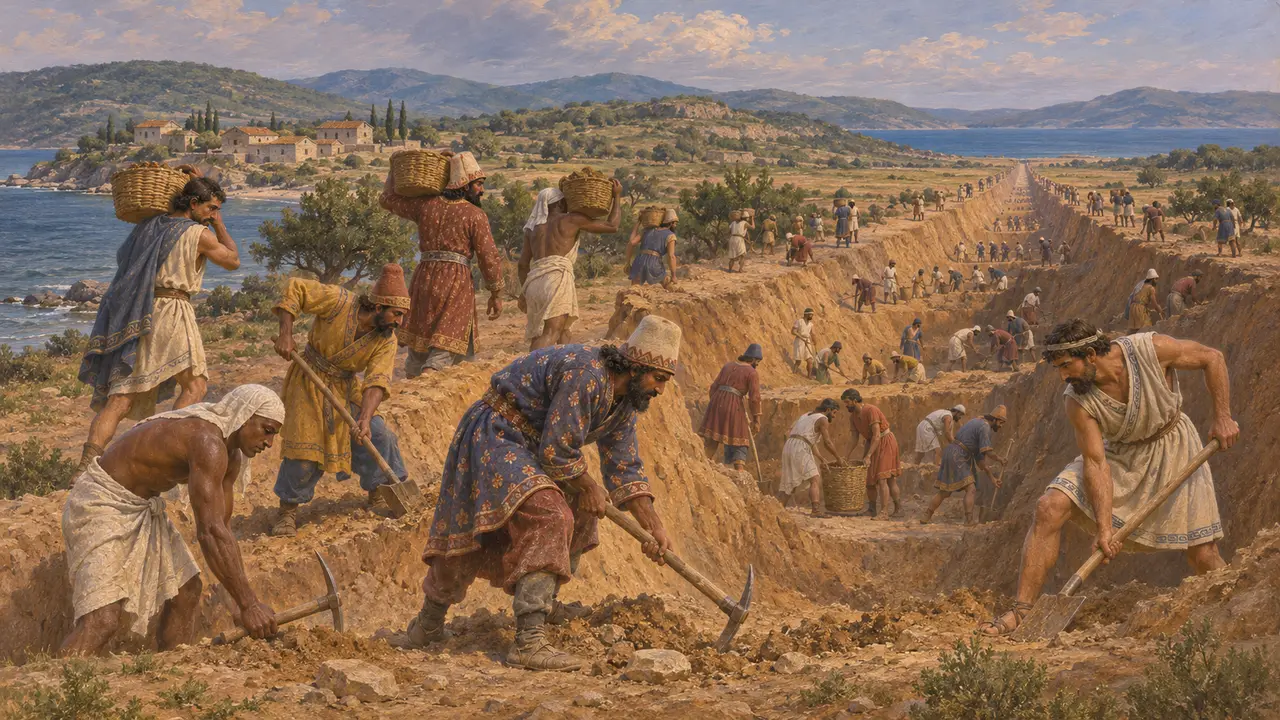
Ancient accountHerodotus places the canal across the neck of land between Acanthus's sea and the gulf of Torone, about twelve furlongs wide. The diggers came from the King's nations and from the people of Athos itself. The canal's line has been traced by survey near the modern villages of Nea Roda and Tripiti.
Herodotus 7.22-23
The King's guest-friends
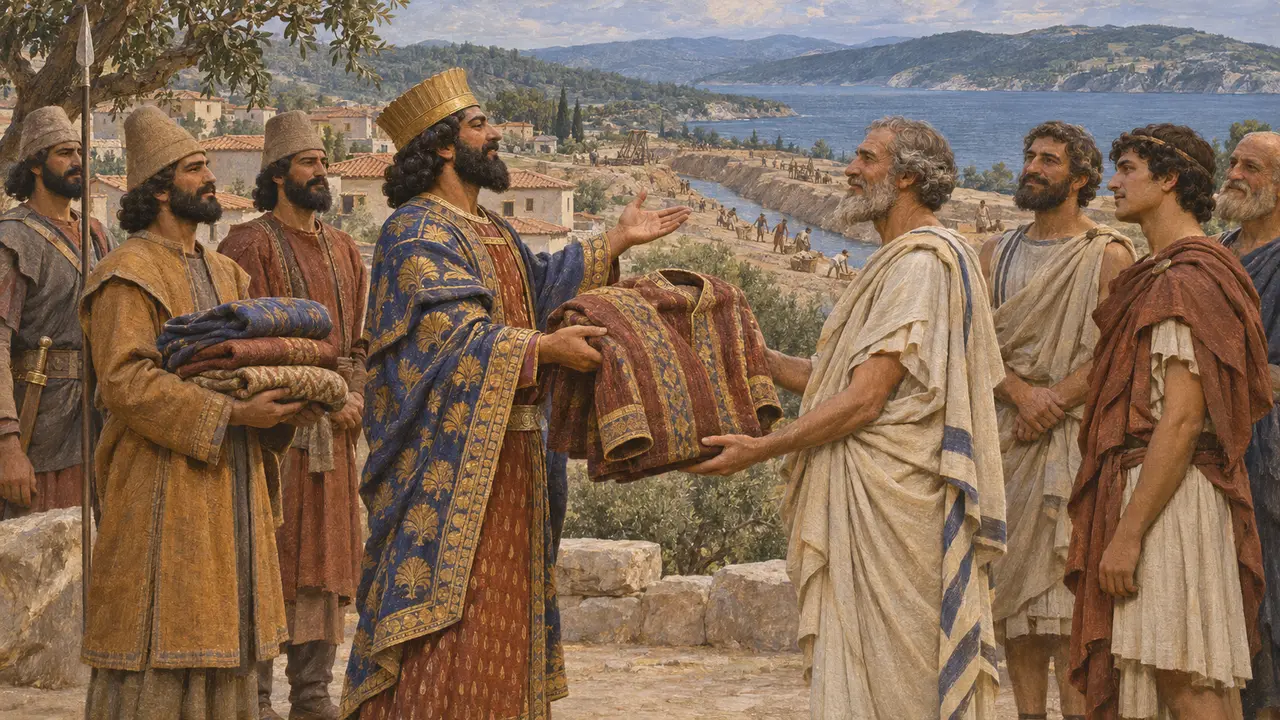
Ancient accountHerodotus says that when Xerxes reached Acanthus he proclaimed guest-friendship with its people, gave them Median dress and praised them, seeing they were eager for the war and hearing of the canal. The gift was an honour; it also bound the city to the King.
Herodotus 7.116
The mound of Artachaees
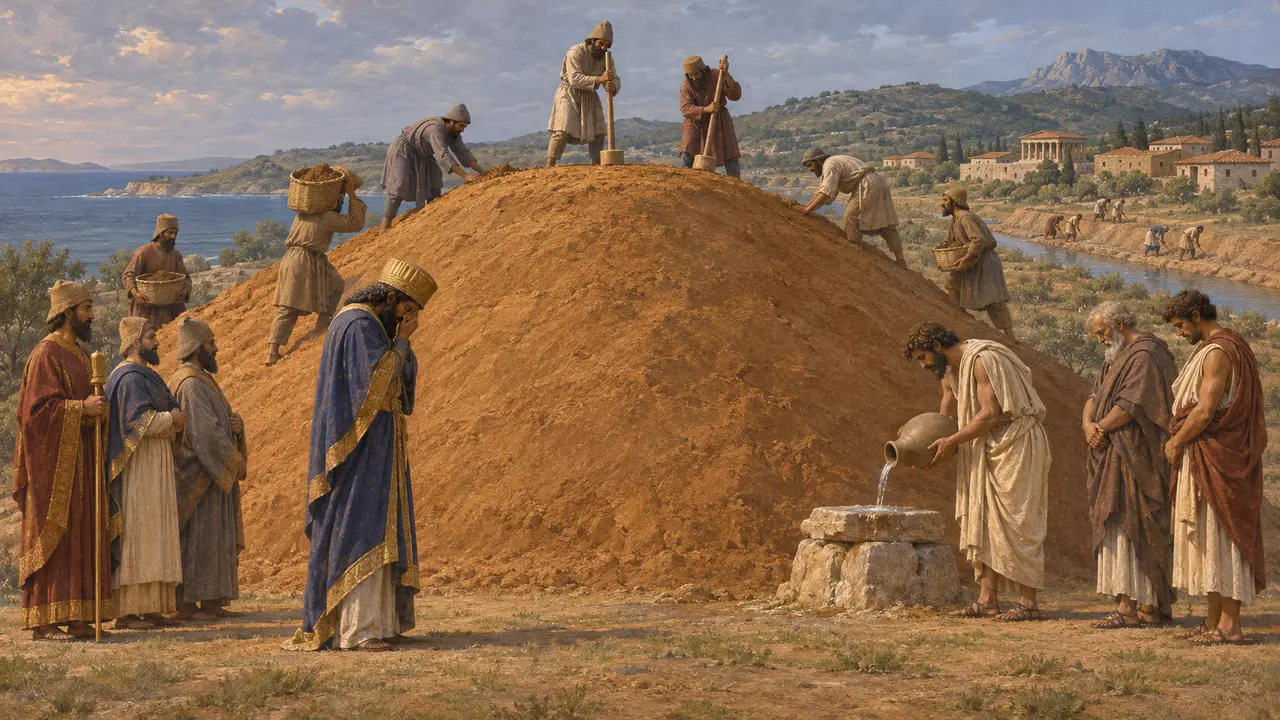
Ancient accountWhile Xerxes was at Acanthus, Artachaees, one of the canal's overseers and the tallest of the Persians, died. Herodotus says Xerxes mourned him, the army raised a mound over him, and the Acanthians by an oracle's command sacrificed to him as a hero, calling on his name.
Herodotus 7.117
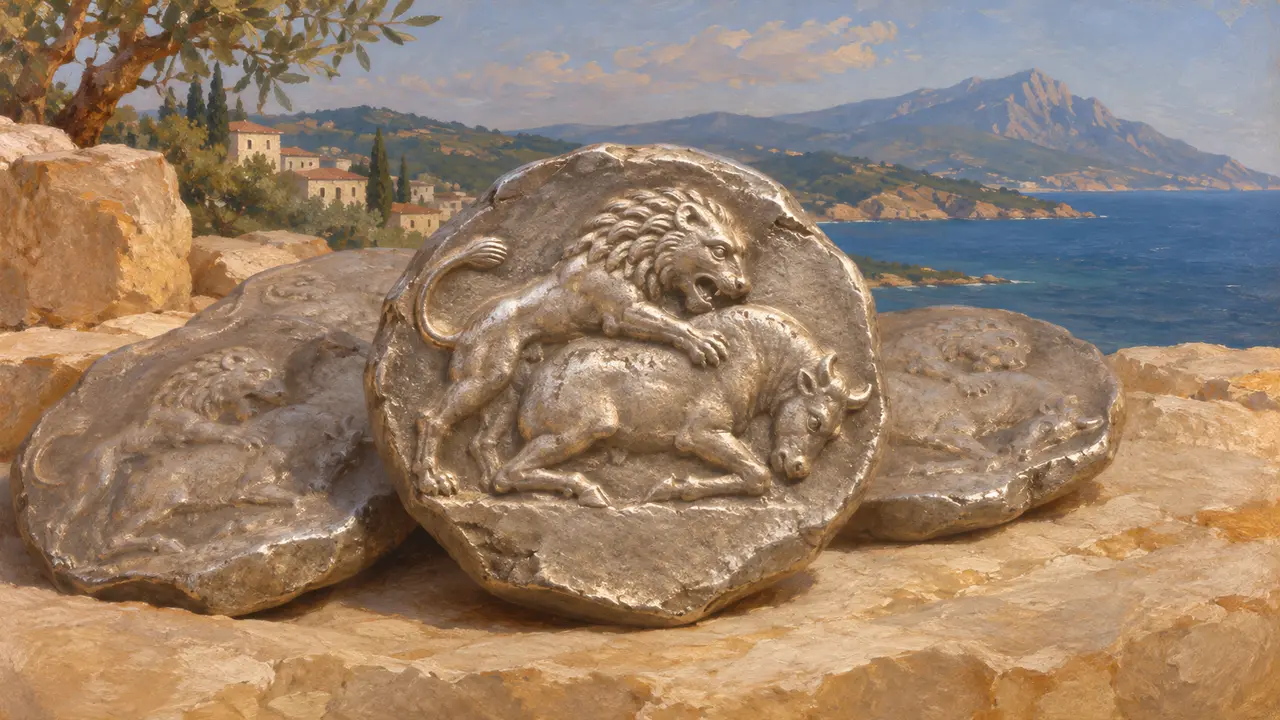
Coins and later history
In the recordAcanthus struck silver coins showing a lion bringing down a bull from the late sixth century. In 424 it went over to the Spartan Brasidas, as Thucydides reports. The city's coins are the main record of it in the Persian years.
Thucydides 4.84-88; Head, Historia Numorum, Macedon
Sources
- Herodotus 7.22-24, 7.115-117
- Thucydides 4.84-88
- B. S. J. Isserlin and others, The Canal of Xerxes, 2003