Encyclopedia › Battles and events
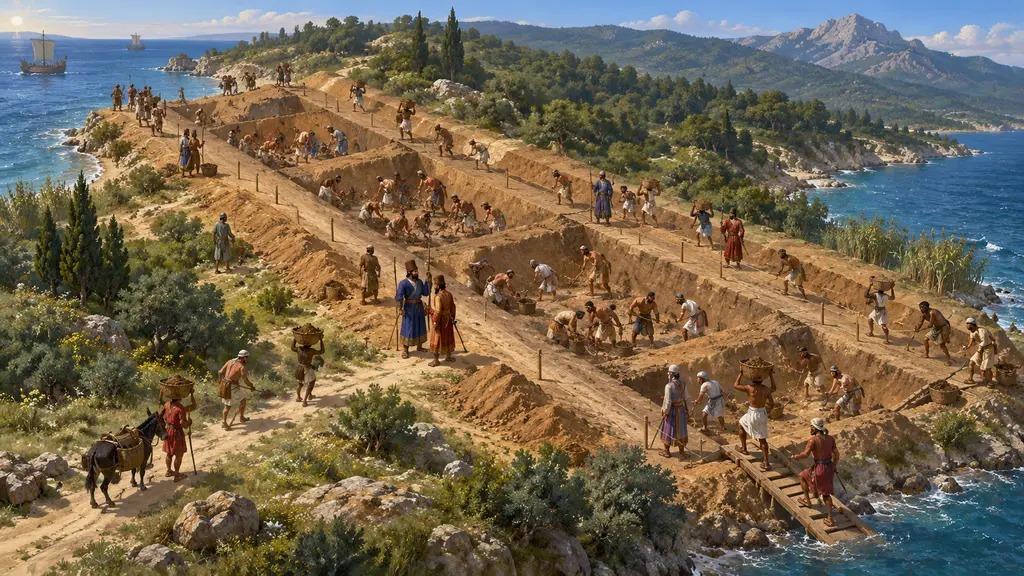
The digging of the Athos canal
Xerxes' ship canal across the isthmus behind Mount Athos, about 483-480 BCE
In the game: Level 9: The Canal
In about 483 Xerxes began a ship canal across the narrow isthmus behind Mount Athos in the northern Aegean, so that his fleet would not have to round the cape where Mardonius's ships had been wrecked in 492. Herodotus describes the digging in detail and judges it vanity. The buried channel has since been traced, and with the Hellespont bridges it was part of Xerxes' long preparation for the invasion of Greece.
In the game: The Athos level is built around the canal, dug under Bubares and Artachaees with the Phoenicians' stretch the best, as Herodotus tells it. The game's notes also give his view that the work was vanity.
Why cut through Athos
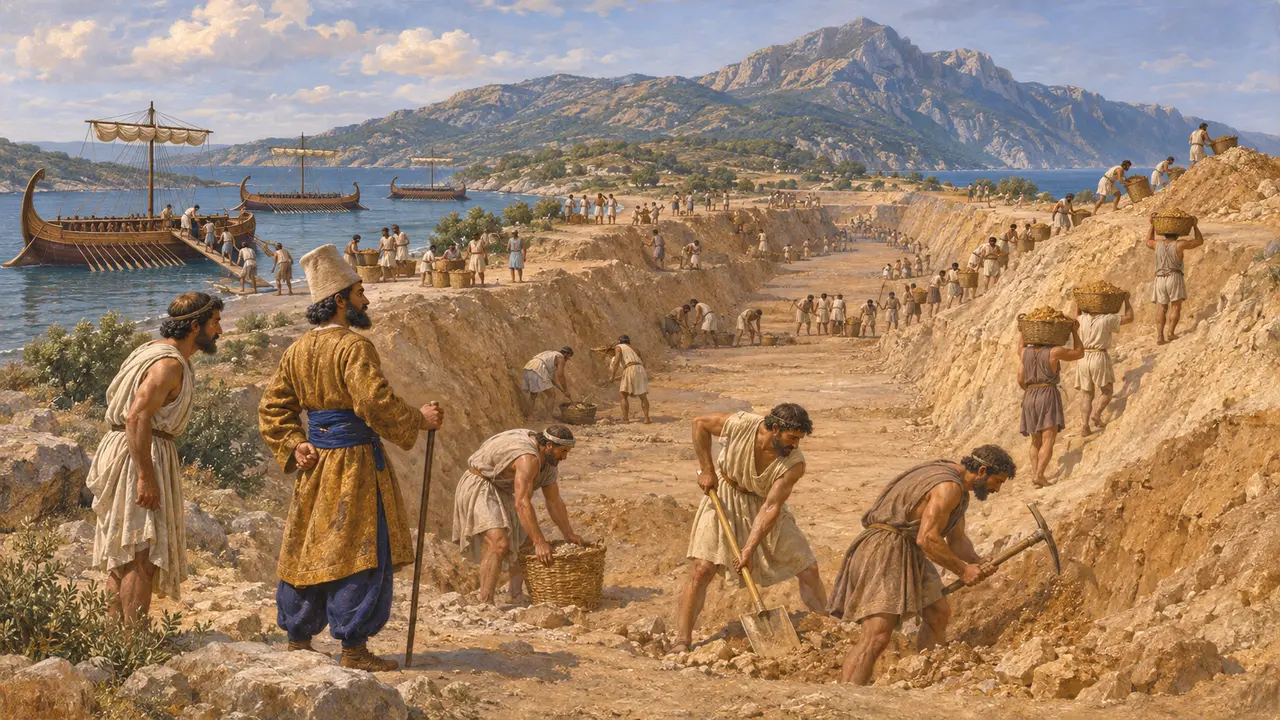
Ancient accountHerodotus says Mardonius's fleet was wrecked rounding the cape of Athos in 492. By his figures some 300 ships and more than 20,000 men were lost, numbers that may well be inflated. Xerxes, who succeeded Darius in 486, chose not to risk the cape again. Herodotus says the work at Athos went on for about three years, with triremes based at Elaeus in the Chersonese sending men across in relays.
Herodotus 6.44; Herodotus 7.22
Digging by nations
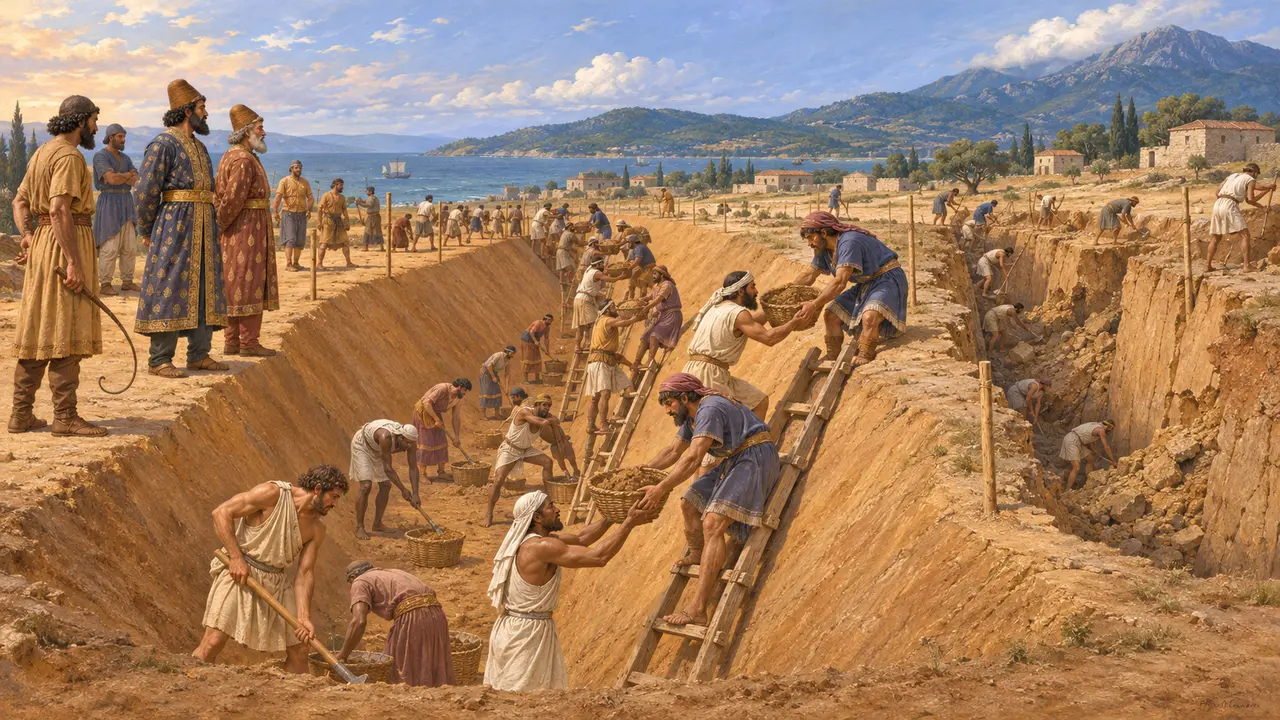
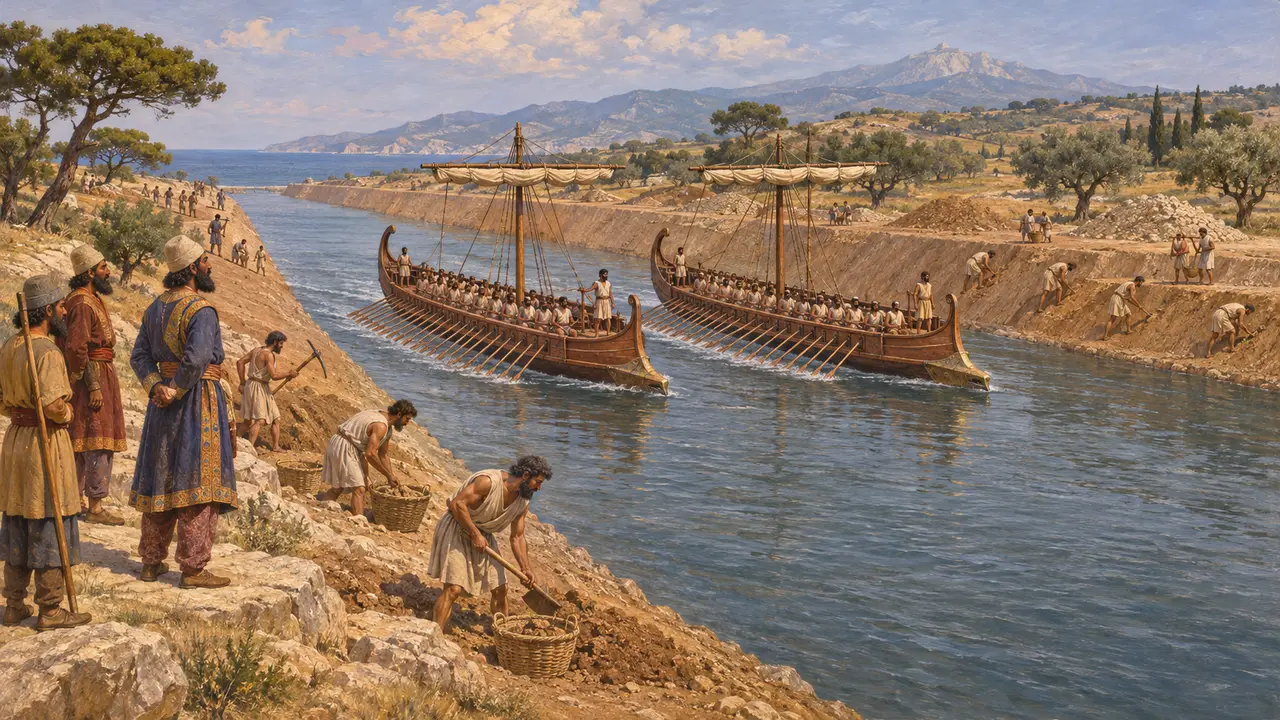
Ancient accountHerodotus says the ground was marked out along a line from the town of Sane and shared among the peoples of the army. They dug under the lash, joined by the people living around Athos, with the Persians Bubares son of Megabazus and Artachaees son of Artaeus in charge. As the trench deepened, earth was passed up on ladders. The sides kept falling in, except in the Phoenicians' stretch, which they cut twice as wide at the top as at the bottom.
Herodotus 7.22-23
The canal under the fields
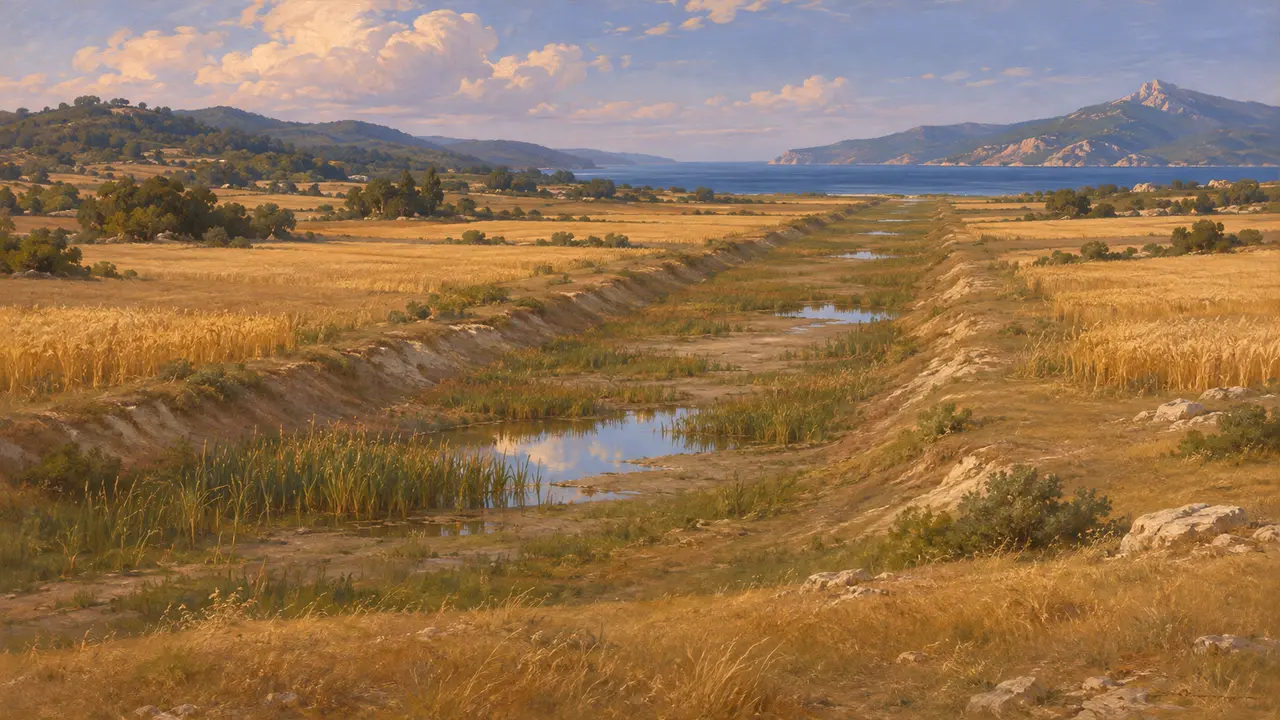
In the recordNo Persian inscription or tablet mentions the canal, but the ground preserves it. From 1991 a British and Greek team used geophysical survey and boreholes to trace a buried channel about 2 km long across the isthmus, between the coast near Nea Roda and the bay at Trypiti. Its line fits Herodotus's account. It seems to have been kept open only briefly before it silted up.
B.S.J. Isserlin et al., The canal of Xerxes: summary of investigations 1991-2001, Annual of the British School at Athens 98, 2003
Pride or good sense
DisputedHerodotus thought the canal was dug from pride, since the ships could have been hauled over the isthmus. He adds that it was wide enough for two triremes to row abreast. Many historians now see sound reasons too: hauling hundreds of warships was slow, and the cape was a known danger. The Roman poet Juvenal doubted it had ever existed, but Thucydides named it as the King's canal, and the survey confirms it.
Herodotus 7.24; Thucydides 4.109; Juvenal, Satires 10; P. Briant, From Cyrus to Alexander, 2002
A letter to the mountain
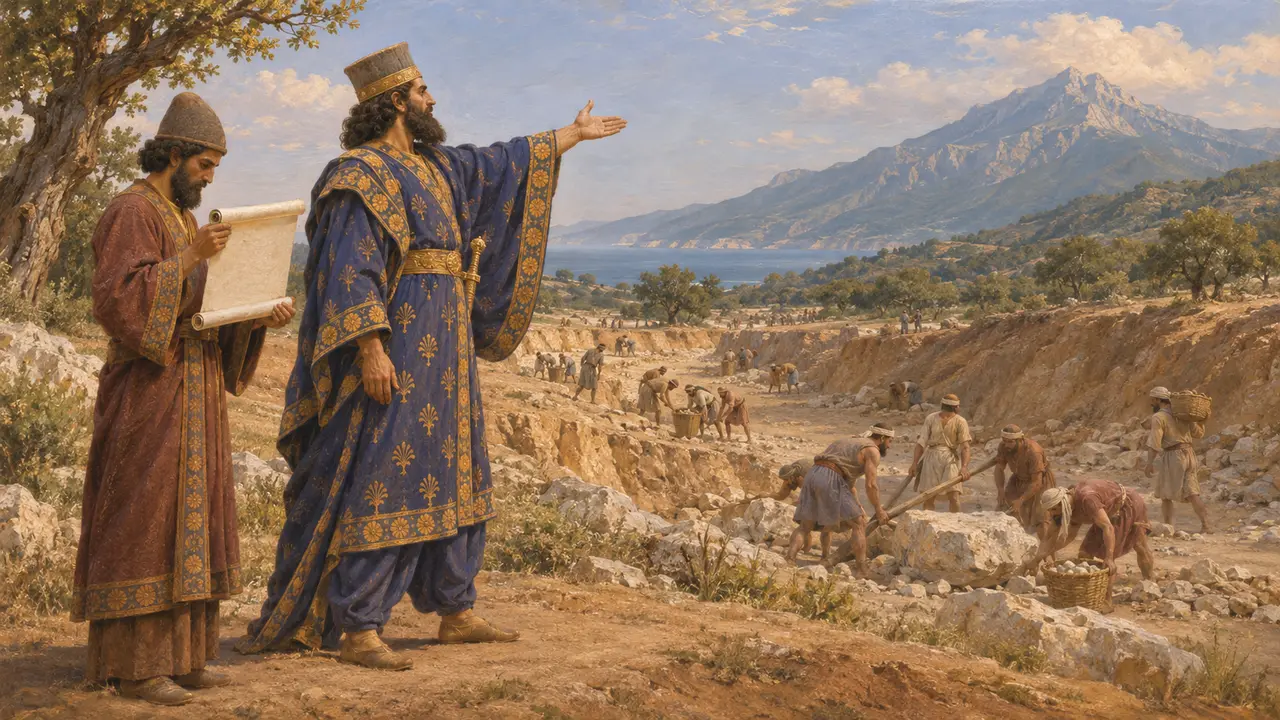
Later legendLater Greek writers made the canal a lesson in royal arrogance. Plutarch tells that Xerxes wrote a letter to Athos, warning the mountain not to put great stones in his workmen's way or he would cut it down and throw it into the sea. The tale belongs with Greek stories of Xerxes punishing the Hellespont, and no early source supports it.
Plutarch, On the Control of Anger
Sources
- Herodotus 7.22-24
- Herodotus 6.44
- Thucydides 4.109
- B.S.J. Isserlin et al., The canal of Xerxes: summary of investigations 1991-2001, Annual of the British School at Athens 98, 2003
- P. Briant, From Cyrus to Alexander, 2002
- Plutarch, On the Control of Anger