Encyclopedia › Battles and events
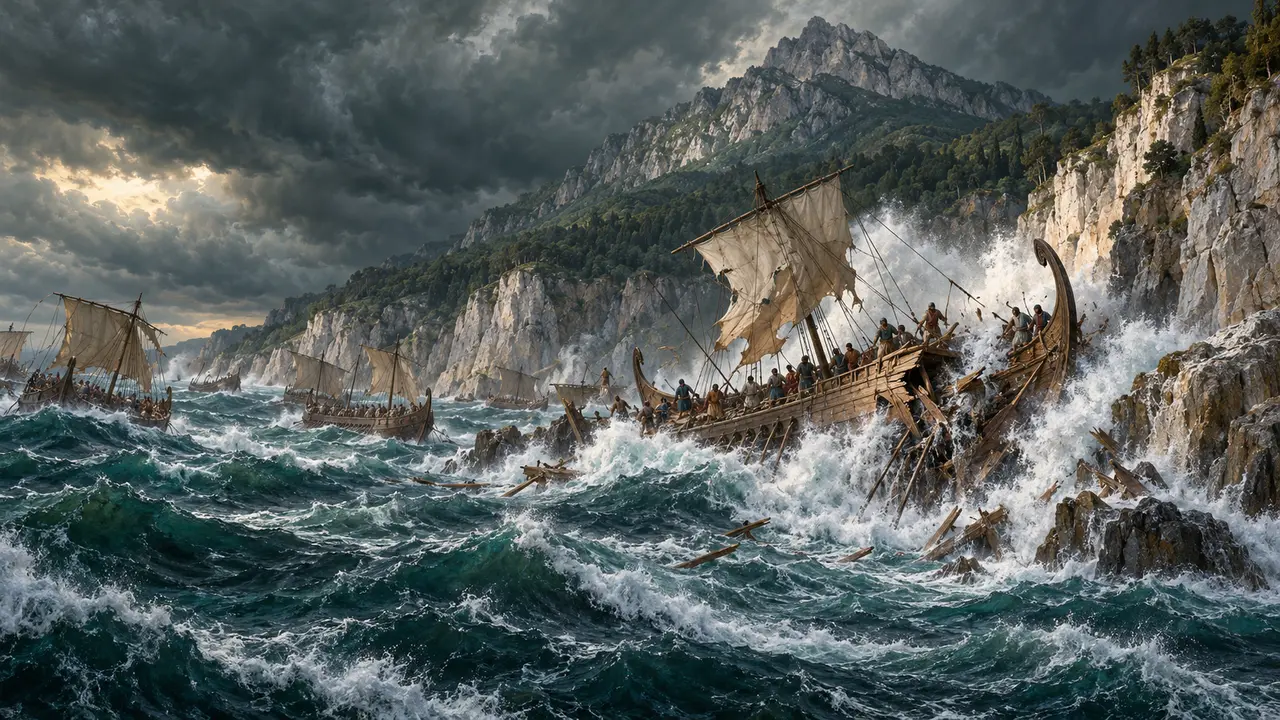
Mardonius's expedition and the wreck off Athos
Persian campaign into Thrace and Macedonia, with a fleet wrecked off Mount Athos, 492 BCE
In the game: Level 9: The Canal
In 492 Darius sent his young general Mardonius across the Hellespont with an army and a fleet, probably to reassert Persian power in the north Aegean after the Ionian Revolt. The army brought the Macedonians and parts of Thrace under Persian rule and the fleet took Thasos, but a storm off Mount Athos destroyed much of the fleet. Herodotus treats the campaign as a failure, and the wreck shaped Persian plans for the invasion of 480.
In the game: The game gives Herodotus's figures of 300 ships and over 20,000 men, which may be inflated. It says the wreck led to the canal; Herodotus gives that reason but also says Xerxes dug it to show his power (7.22-24).
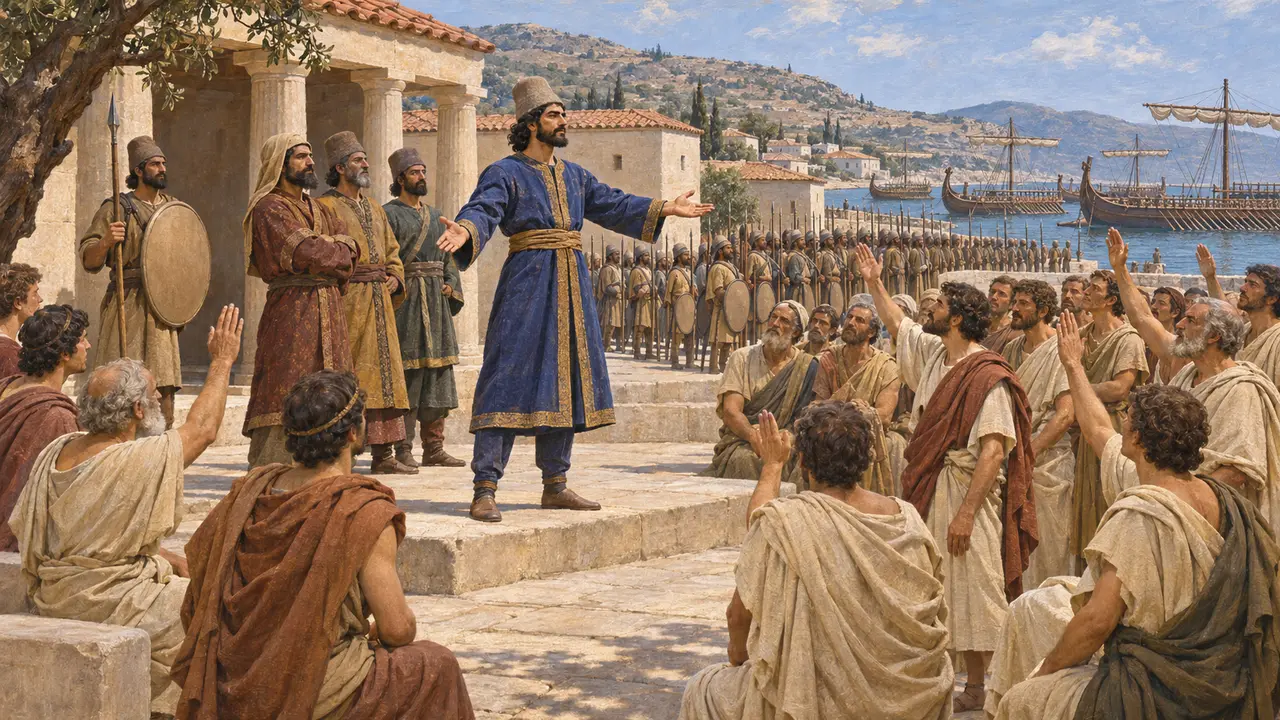
Mardonius takes command in Ionia
Ancient accountHerodotus says that Darius sent Mardonius, son of Gobryas, young and lately married to the King's daughter Artozostre, down to the coast with a large army and fleet. In Ionia he removed the tyrants and let the cities govern themselves as democracies. Herodotus offers this as proof for Greeks who doubted that Persians had ever debated such a constitution. Historians usually read it as part of the settlement after the revolt.
Herodotus 6.43
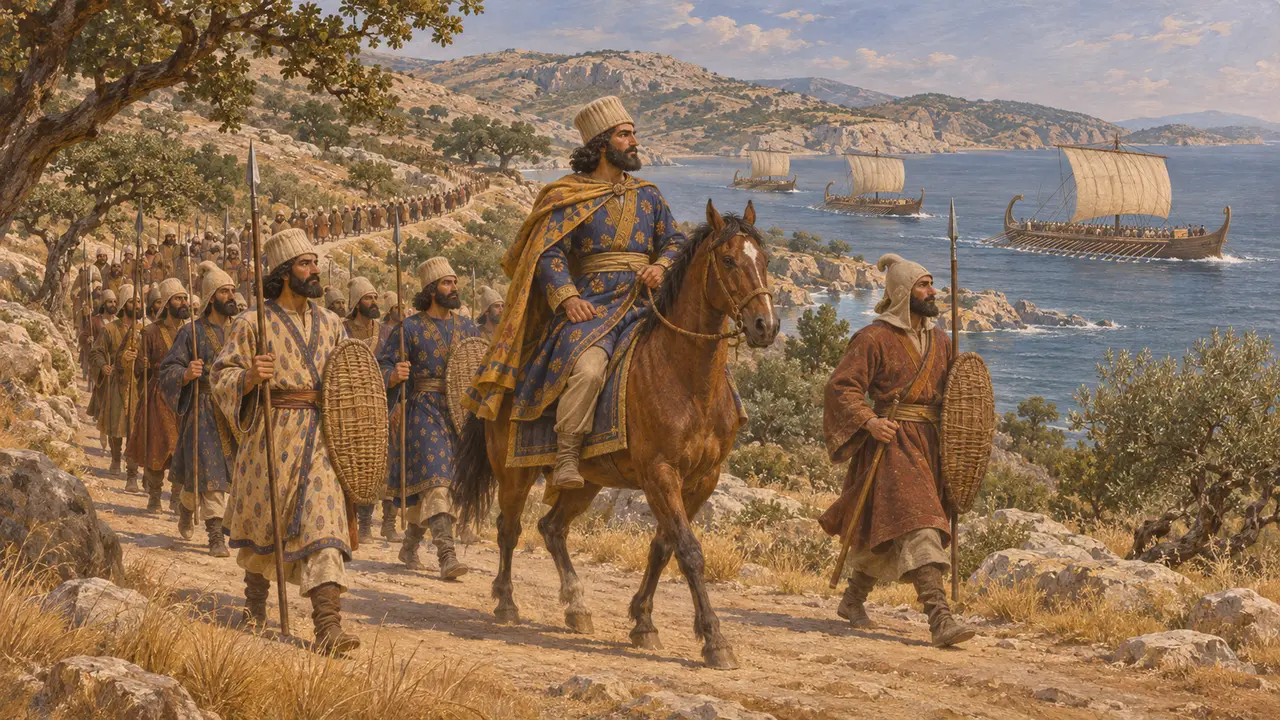
Through Thrace to Macedonia
Ancient accountMardonius crossed the Hellespont and marched west through Thrace while the fleet kept pace along the coast. Herodotus says the stated targets were Eretria and Athens, but the real aim was to subdue as many Greek cities as possible. The fleet took Thasos without a fight, and the army added the Macedonians to the peoples already subject. The Thracian Brygi then attacked the camp at night and wounded Mardonius, though he subdued them before returning to Asia.
Herodotus 6.44-45
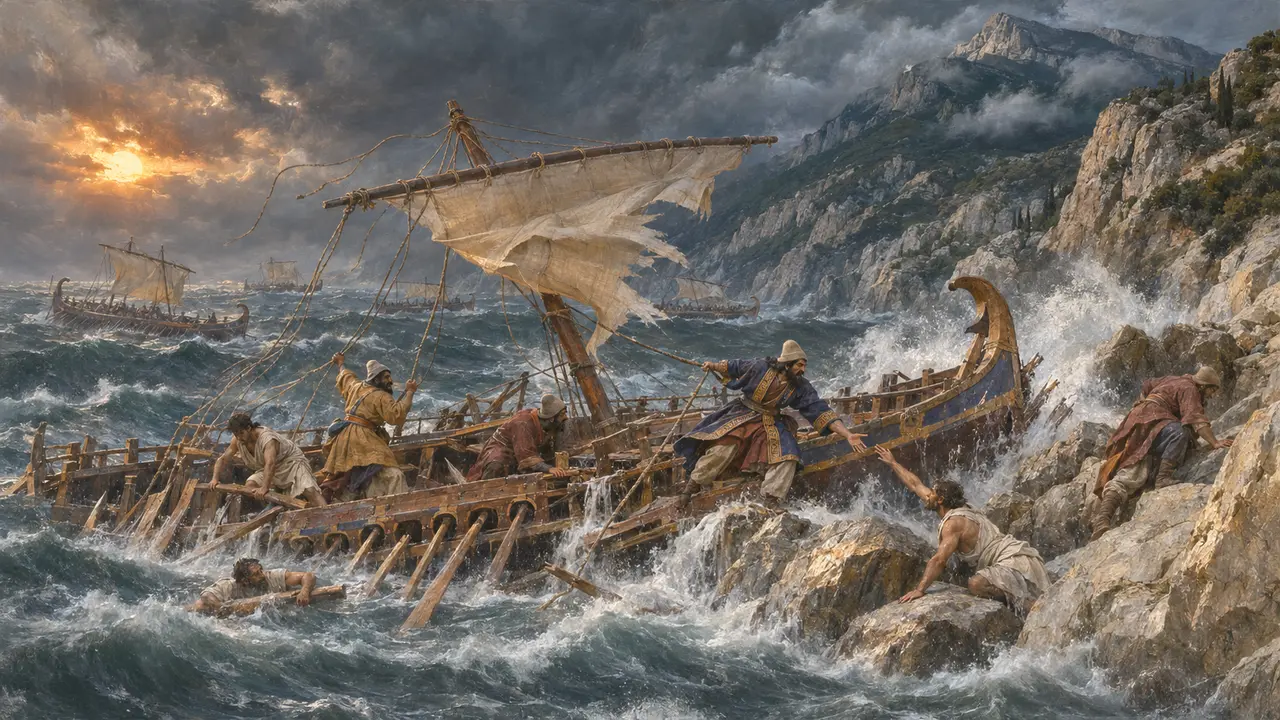
The wreck off Athos
Ancient accountAs the fleet tried to round the Athos peninsula, a strong north wind drove many ships onto the rocks. Herodotus says about 300 ships and more than 20,000 men were lost. Some were killed by sea creatures, some were broken on the rocks, and others died of cold or because they could not swim. His figures are the only ones we have, and historians think they may be exaggerated.
Herodotus 6.44
Failure or success
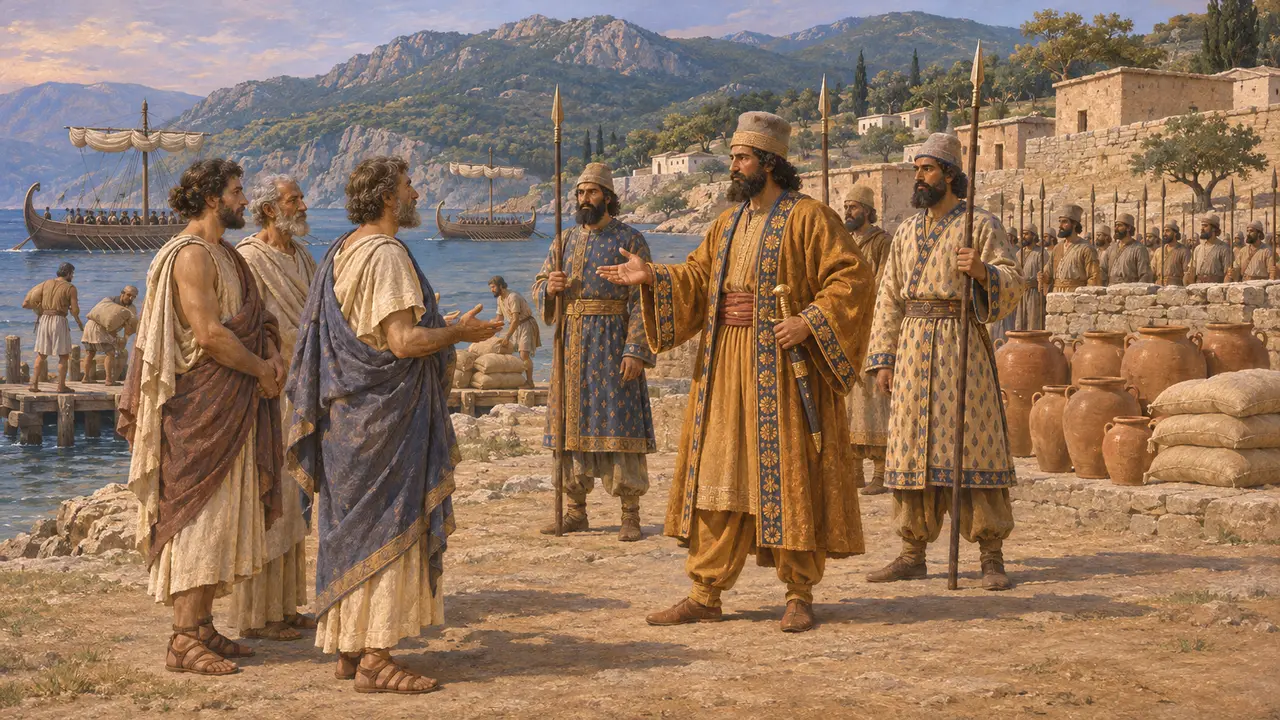
DisputedHerodotus calls the campaign a disgrace and says Darius later replaced Mardonius with Datis and Artaphernes. Many modern historians see it differently: Thasos, Macedonia and the Thracian coast were brought under Persian control, giving the base used in 480. They also question whether Athens and Eretria were targets in 492 or whether Herodotus read the later war back into it. Mardonius kept high favour and led armies again under Xerxes.
Herodotus 6.45, 6.94; P. Briant, From Cyrus to Alexander, 2002
What the Persian record shows
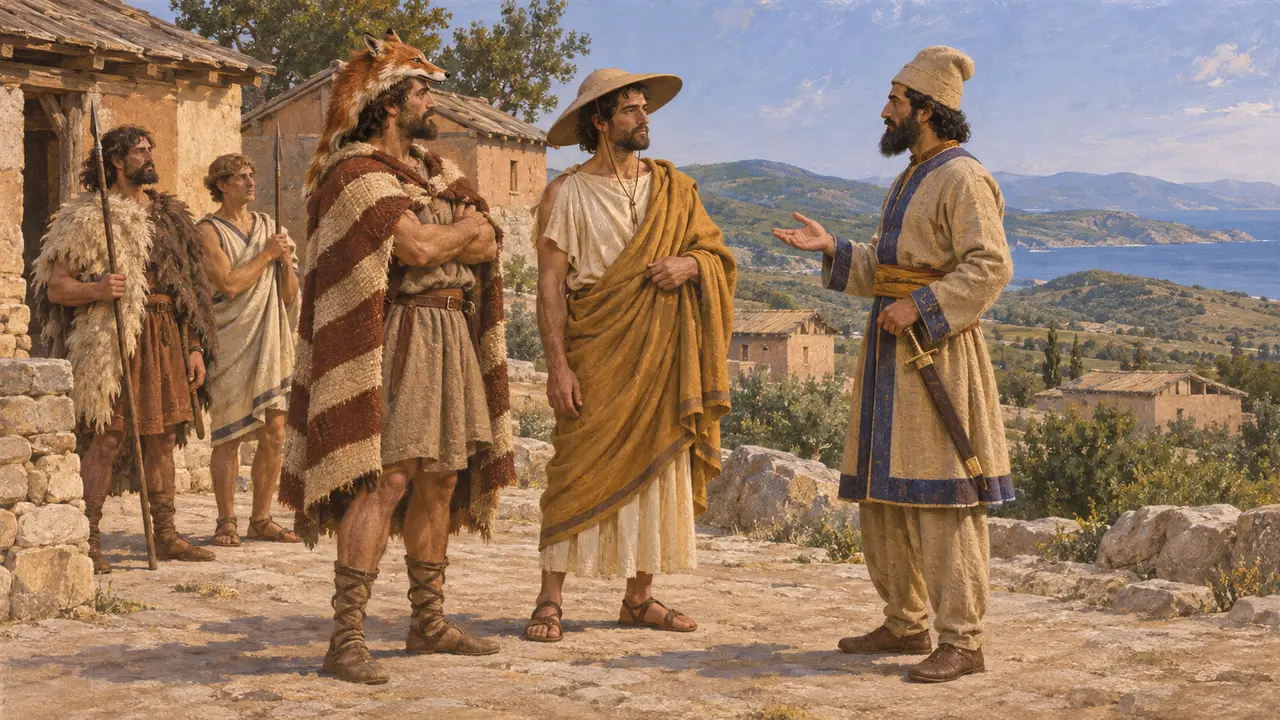
In the recordNo Persian text describes the campaign or the storm. Darius's tomb inscription at Naqsh-e Rostam lists Skudra among his lands, together with the Yauna takabara, a phrase often rendered as Ionians wearing the petasos hat. Both are usually placed in Thrace and Macedonia, which would fit Persian rule there. However, the inscription cannot be dated closely and the locations are debated.
DNa
Sources
- Herodotus 6.43-45
- Herodotus 6.94
- Herodotus 7.22-24
- DNa
- P. Briant, From Cyrus to Alexander, 2002
- A. R. Burn, Persia and the Greeks, 1962