Eretria
Greek city on the island of Euboea, sacked by a Persian expedition in 490 BCE
In the game: Level 8: The Bay of Marathon
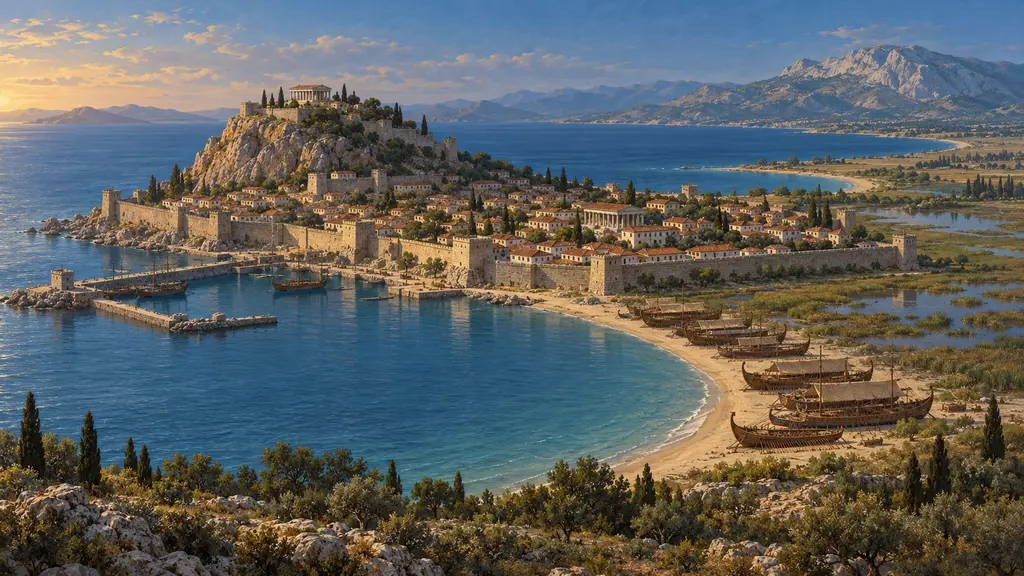
Eretria was a seafaring Greek city on the south-west coast of Euboea, facing the mainland across a narrow gulf. It sent five ships to help the Ionian revolt against Persia in 498. In 490 a Persian fleet under Datis and Artaphernes, son of the satrap of Sardis, besieged it, took it by treachery, burned its temples and carried many of its people off to the King.
In the game: The game's chronicle presents Eretria as the city that sent five ships to the Ionians and was betrayed after six days of siege in 490. This follows Herodotus, the only detailed source for these events.
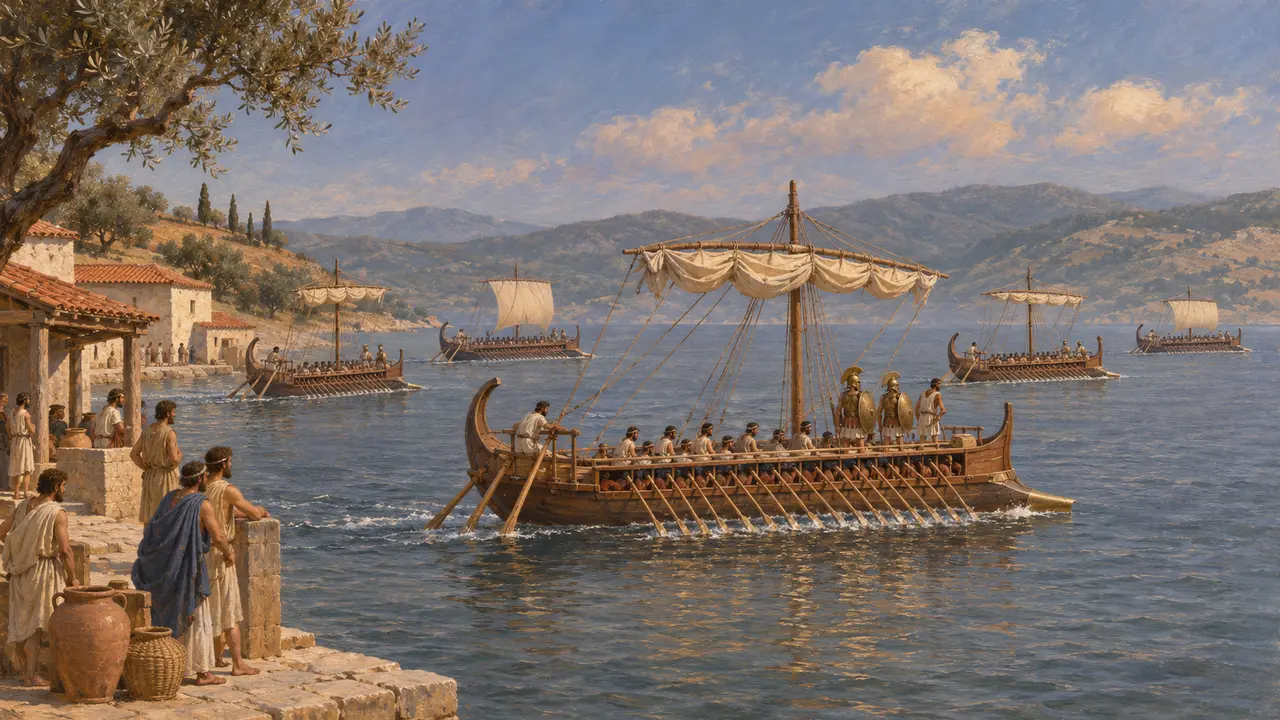
Five ships for the Ionian revolt
Ancient accountHerodotus says that when Aristagoras of Miletus sought allies, Athens sent twenty ships and Eretria five triremes. The Eretrians came, he explains, to repay Miletus for its help in an old war against their neighbour Chalcis. They joined the march on Sardis in 498, when the town and a temple of the goddess Cybebe burned. On the way back the Greeks were beaten near Ephesus, and the Eretrian general Eualcides was killed.
Herodotus 5.99, 5.102
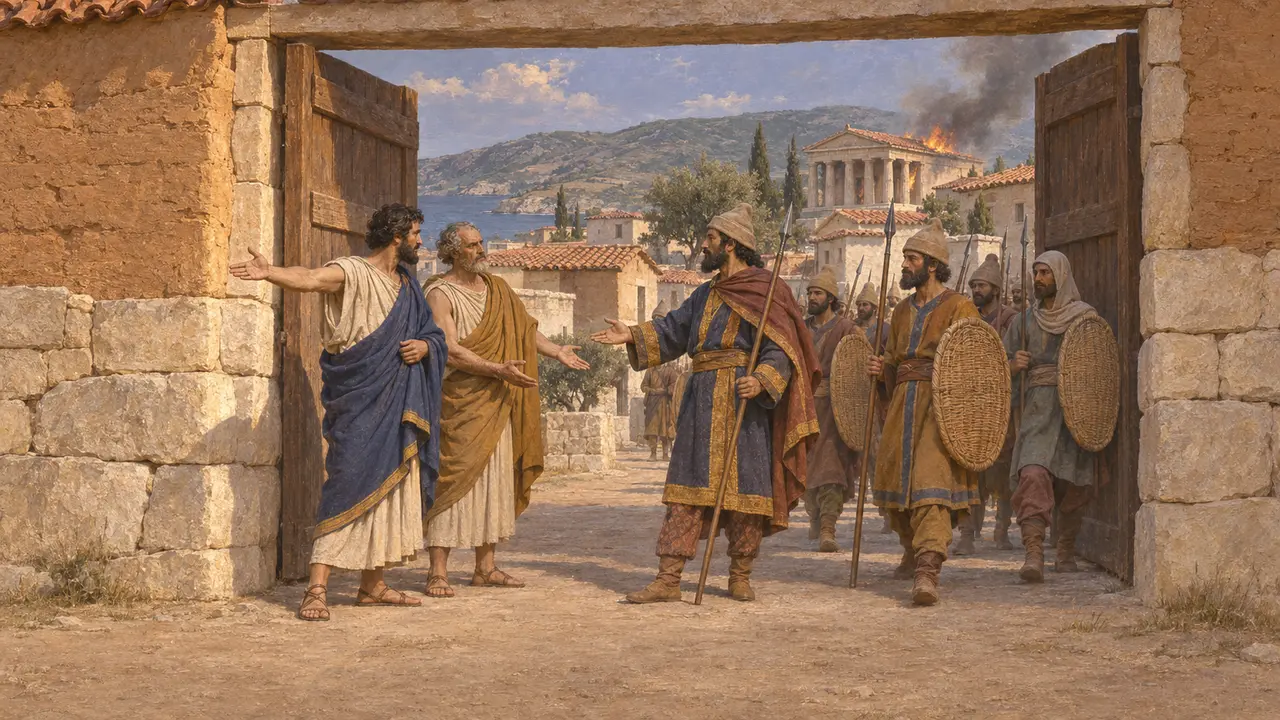
Siege and betrayal in 490
Ancient accountHerodotus says the Persian fleet landed at Tamynae, Choereae and Aegilia in Eretrian territory. The Eretrians chose to hold their walls rather than flee to the hills, while 4,000 Athenian settlers sent to help them crossed back to Oropus. After six days of hard fighting, two leading citizens, Euphorbus and Philagrus, betrayed the city to the Persians on the seventh. The Persians plundered it and burned its temples in revenge for those burned at Sardis.
Herodotus 6.100-101
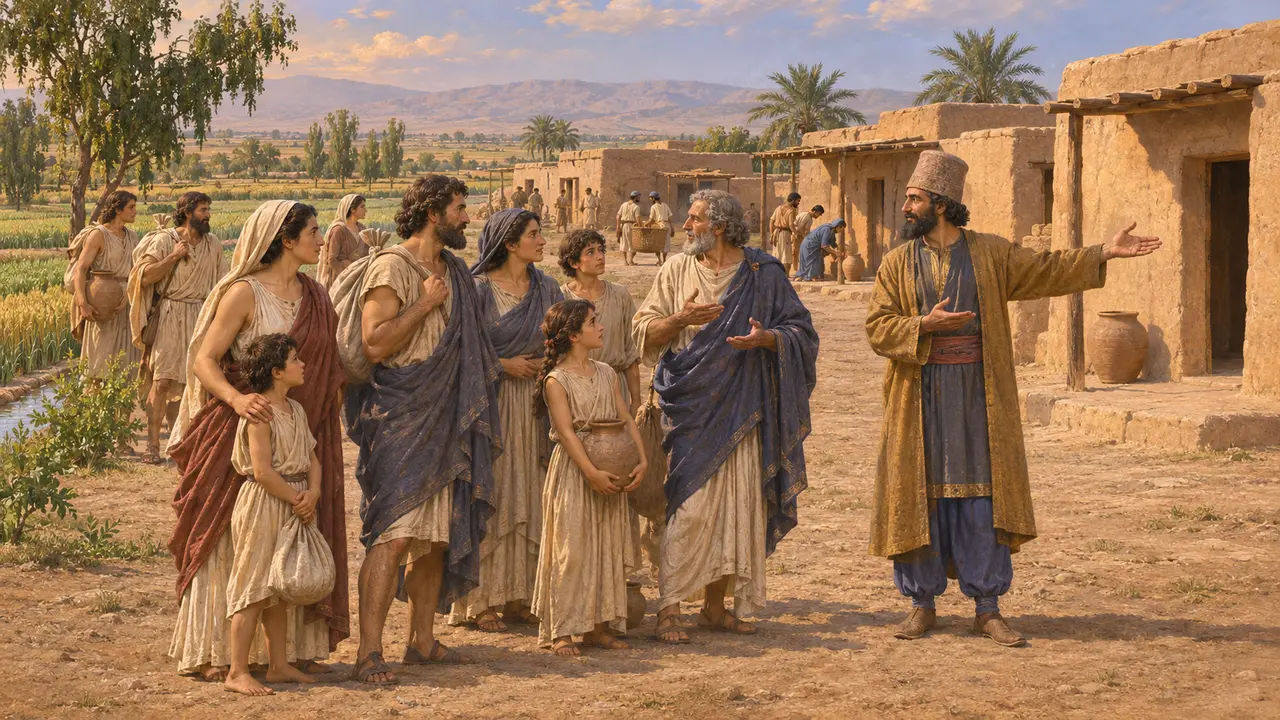
Captives near Susa and the city's recovery
Ancient accountHerodotus says Darius had ordered the Eretrians enslaved and brought to him, but did them no harm when they arrived. He settled them at Ardericca in Cissian land, about 210 stades from Susa and 40 stades from a well yielding bitumen, salt and oil, where in Herodotus's day they still kept their own language. The site has not been identified. Herodotus also records Eretrian ships at Artemisium and Salamis and Eretrian troops at Plataea.
Herodotus 6.119, 8.1, 8.46, 9.28
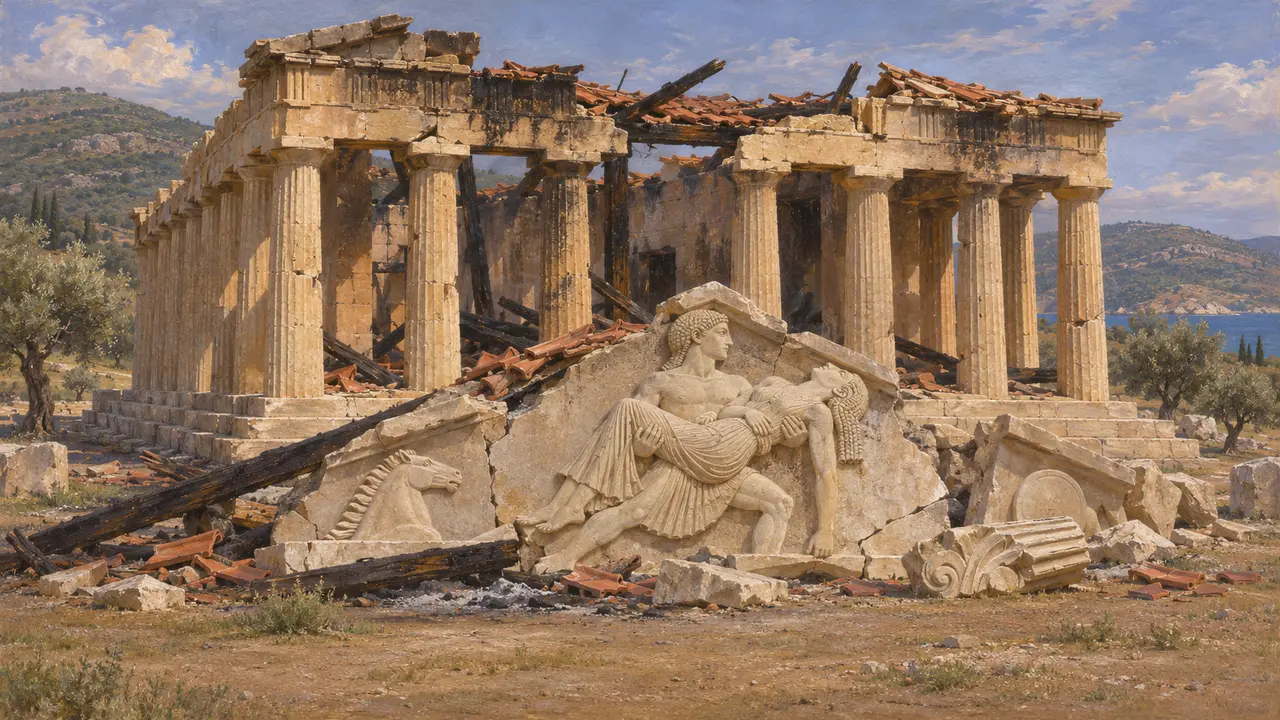
The burned temple of Apollo
In the recordGreek excavators working around 1900 uncovered the temple of Apollo Daphnephoros at Eretria and its late Archaic pediment sculptures, including a group of Theseus carrying off the Amazon Antiope. The Swiss School of Archaeology in Greece, at work in Eretria since 1964, has studied the sanctuary further. Excavators usually link the burned debris and the broken sculptures to the sack of 490. This dating is an inference from the remains, not a written record.
Eretria excavation reports (Greek Archaeological Society; Swiss School of Archaeology in Greece)
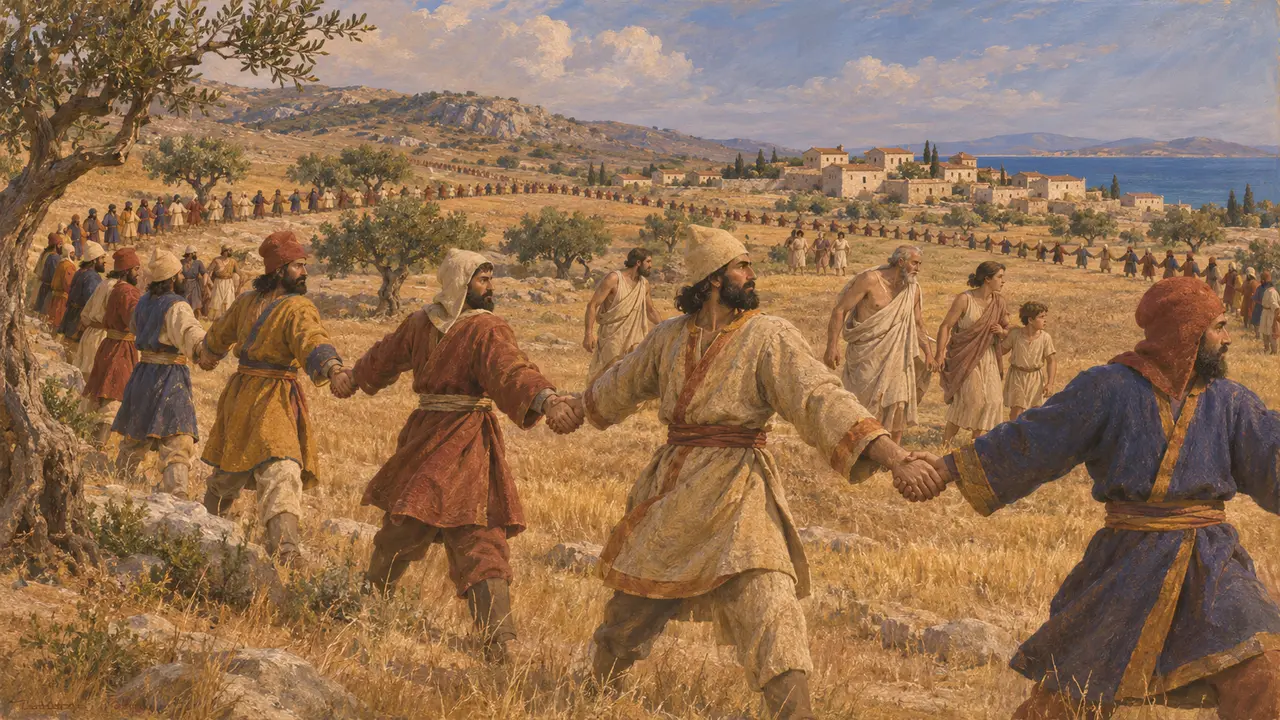
Plato's story of the net
Later legendMore than a century later, Plato wrote that Datis's soldiers joined hands and swept across Eretrian land like a net, so that no one escaped. Herodotus tells of this netting only for the islands of Chios, Lesbos and Tenedos after the Ionian revolt, not for Eretria. Plato's version reads as a dramatic image of total conquest and is not supported by the earlier account.
Plato, Laws 698d; Plato, Menexenus 240b; Herodotus 6.31
Sources
- Herodotus, Histories, books 5-6, 8-9
- Eretria excavation reports (Greek Archaeological Society; Swiss School of Archaeology in Greece)
- Plato, Laws; Menexenus
- Thucydides 1.15
- J. F. Lazenby, The Defence of Greece 490-479 BC, 1993
- P. Briant, From Cyrus to Alexander, 2002