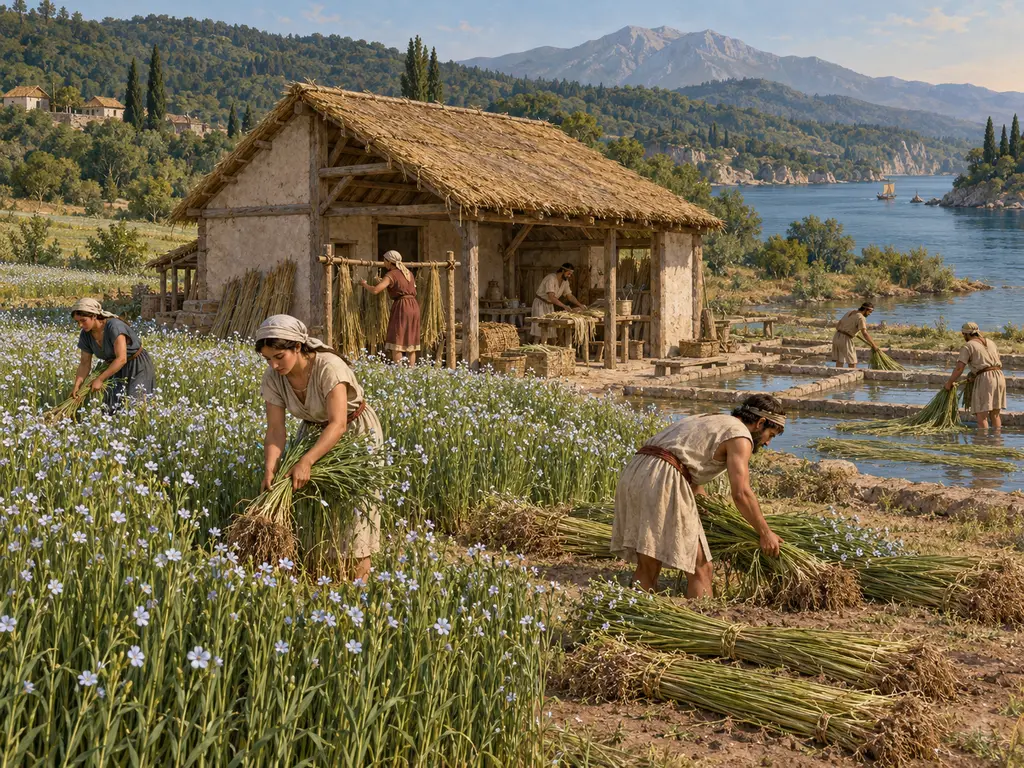
Flax Field
Fibre crop for linen and rope, in the Athos level, 483-480 BCE
In the game: Level 9: The Canal
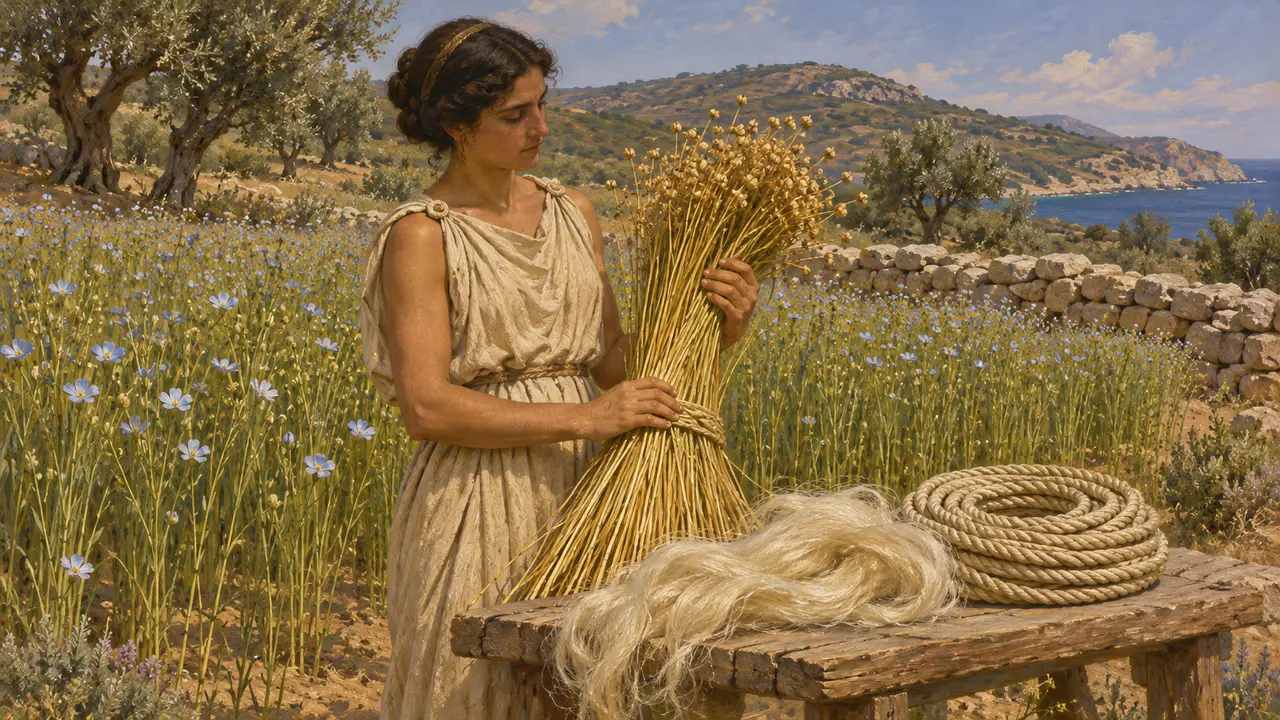
Flax was the main fibre plant of the ancient Mediterranean and Near East, grown for linen cloth, sailcloth and cord. Herodotus says that while Xerxes prepared to cross into Europe, cables of 'white flax' and papyrus were made for the bridges over the Hellespont. Those ropes are why flax belongs in the story of the Athos years.
In the game: The game builds Flax Fields at Athos to feed its ropewalk and files them as food. Flax is a fibre crop, and Herodotus says Phoenicians made the white-flax cables; no flax fields at Athos are recorded.
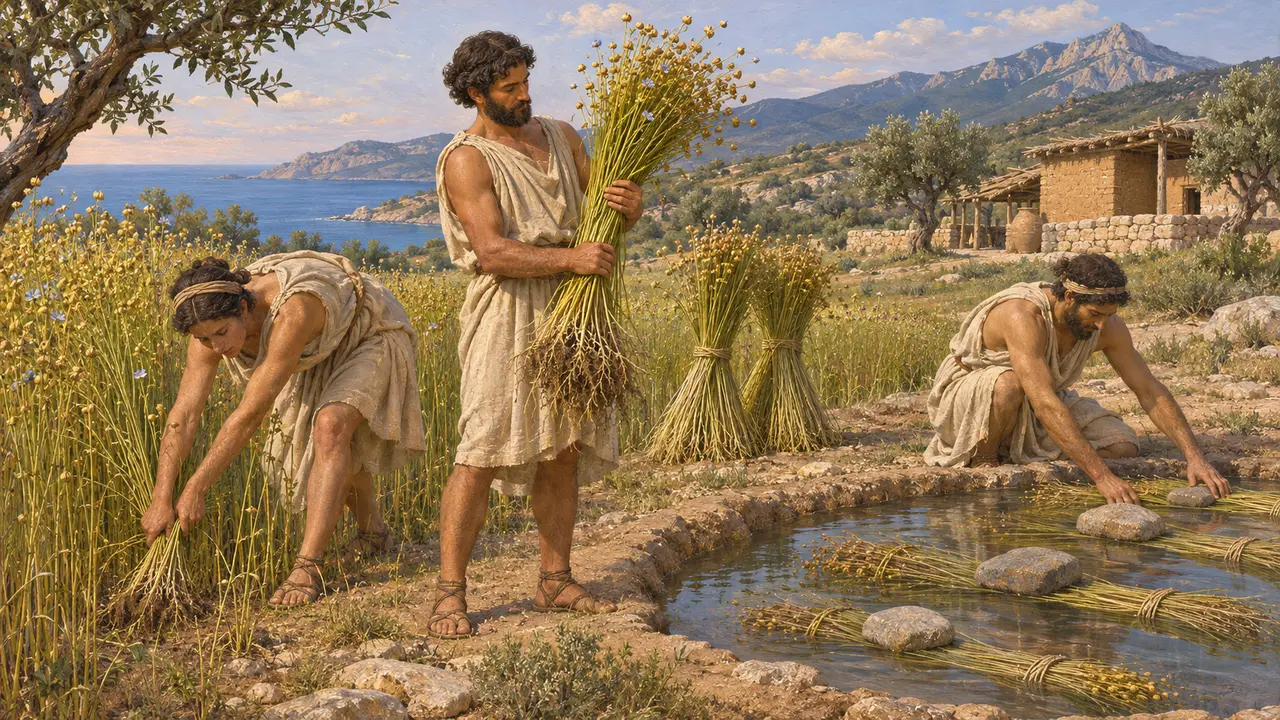
A fibre crop, pulled and retted
In the recordLinen textiles survive in large numbers from Egypt, and New Kingdom tomb paintings, centuries older than Xerxes, show flax being pulled up by the roots and bound in sheaves. The stalks were then retted, soaked in water or left on damp ground until rot loosened the fibres from the woody core. Breaking, scutching and combing followed before spinning. Flax seed could be pressed for oil, but the plant was grown above all for its fibre.
E. J. W. Barber, Prehistoric Textiles, 1991
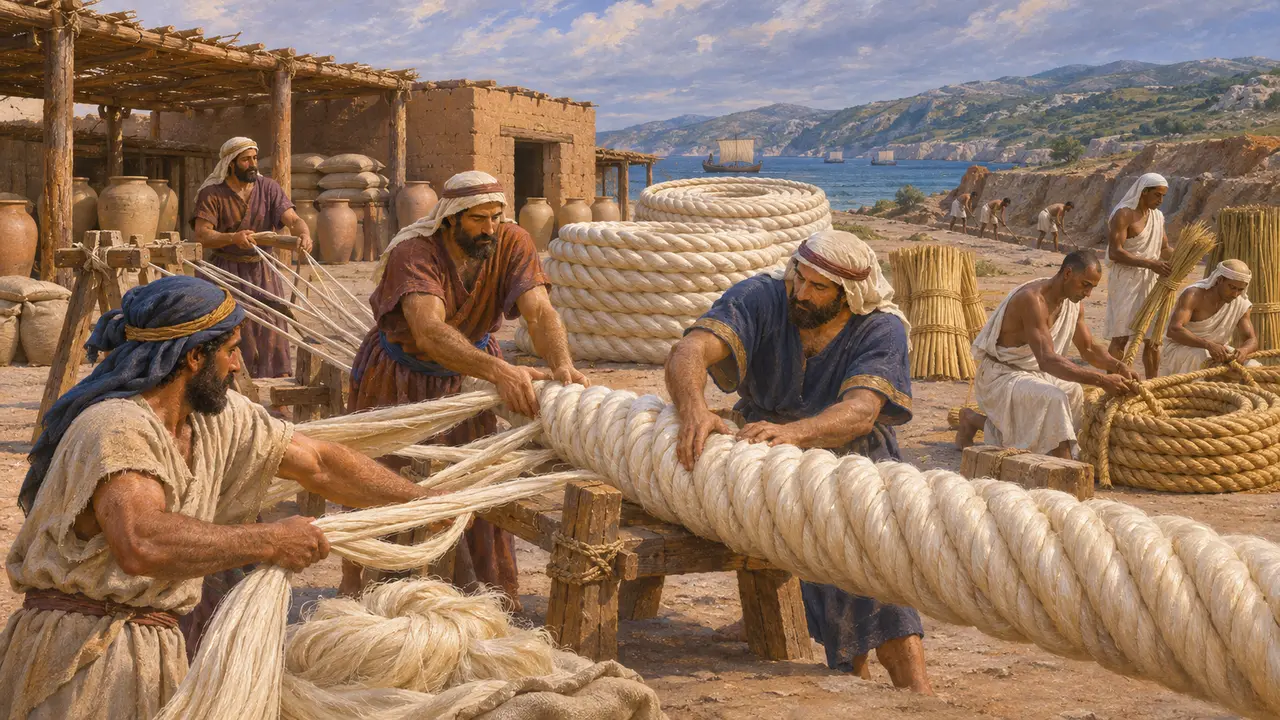
Cables for the Hellespont bridges
Ancient accountHerodotus says that while the Athos canal was being dug, Xerxes had cables of papyrus and white flax prepared for bridging the Hellespont. He gave this work to Phoenicians and Egyptians, and also had food stockpiled at depots along the Thracian coast. When the first bridges were built, the Phoenicians used white-flax cables and the Egyptians papyrus. In his telling, the craft lay with these peoples, not with farmers near Athos.
Herodotus 7.25; Herodotus 7.34
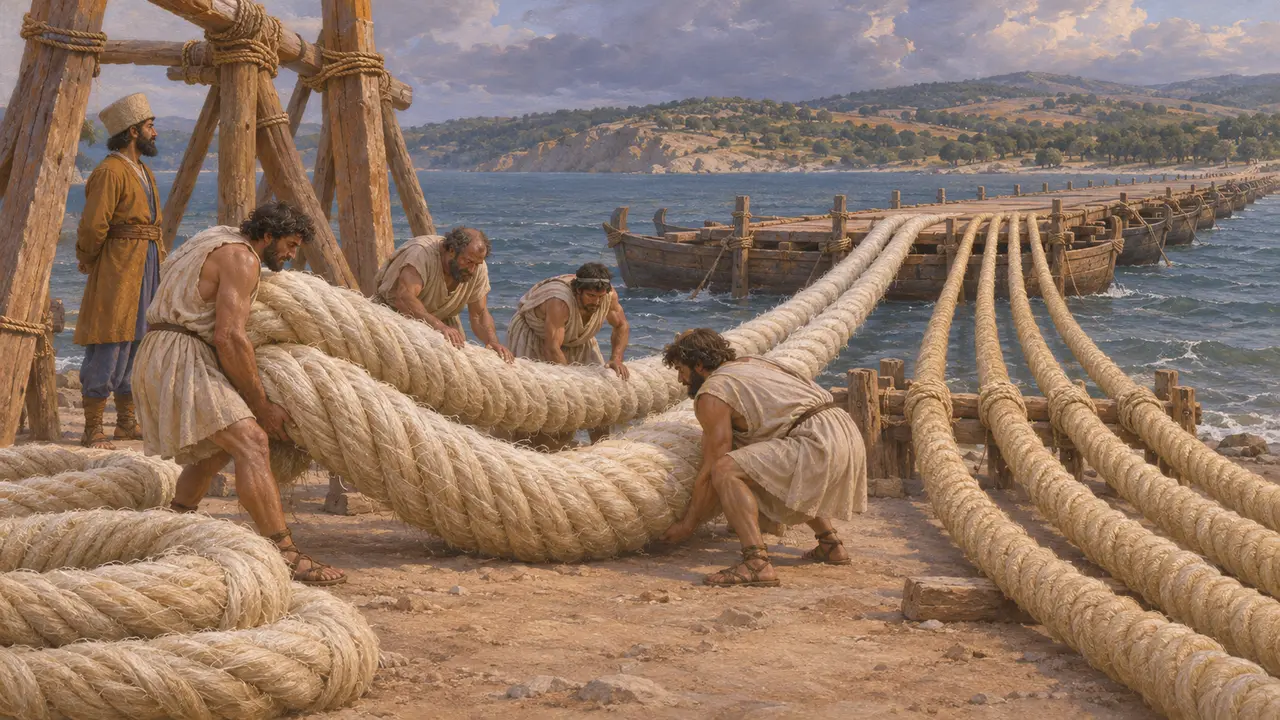
Heavier than papyrus
Ancient accountAfter a storm broke the first bridges, Herodotus says the new ones were rigged with two cables of white flax and four of papyrus each. He says the cables were alike in thickness and appearance, but the flax ones were heavier in proportion. He reports that a cubit of flax cable weighed a talent.
Herodotus 7.36
What was 'white flax'
DisputedHerodotus's word leukolinon is usually translated 'white flax', but the plant is not certain. Many take it as a form of ordinary linen flax. Some commentators have suggested a coarser fibre, such as esparto grass, that would suit heavy cables better. Modern studies of the bridges also debate how such ropes were made, anchored and tensioned across the strait.
N. G. L. Hammond and L. J. Roseman, The construction of Xerxes' bridge over the Hellespont, Journal of Hellenic Studies 116, 1996
Sources
- Herodotus 7.25
- Herodotus 7.34
- Herodotus 7.36
- N. G. L. Hammond and L. J. Roseman, The construction of Xerxes' bridge over the Hellespont, Journal of Hellenic Studies 116, 1996
- E. J. W. Barber, Prehistoric Textiles, 1991