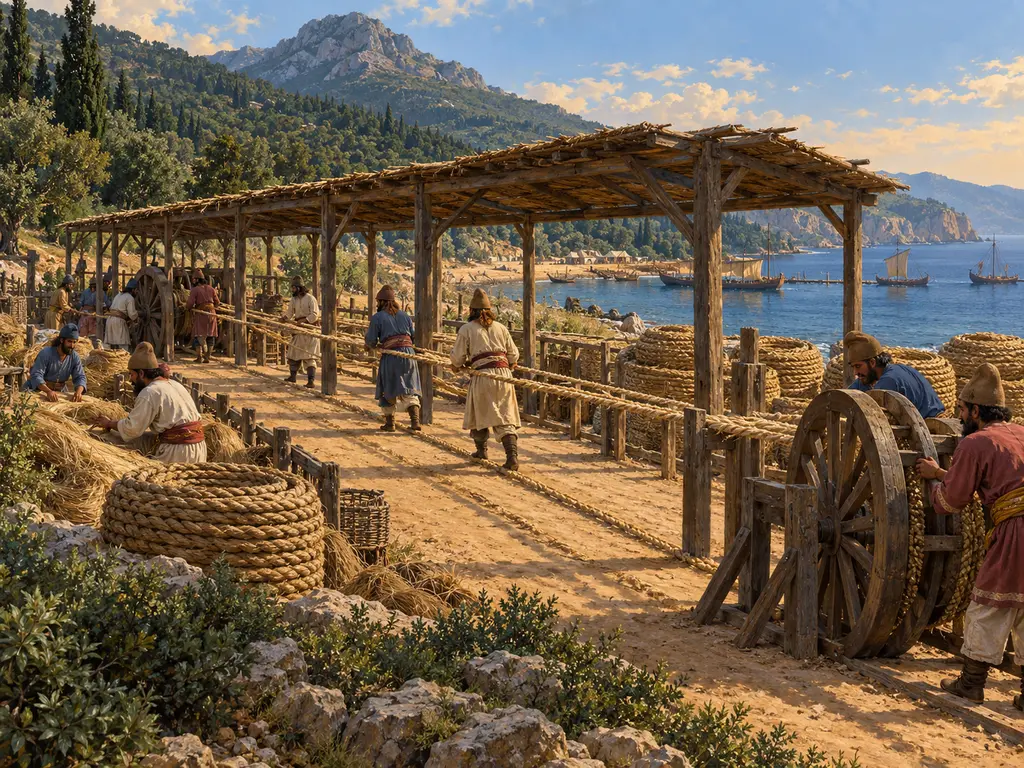
Ropewalk
Making cables for Xerxes' bridges over the Hellespont, about 483-480 BCE
In the game: Level 9: The Canal
To march his army from Asia into Europe, Xerxes had two bridges of ships built across the Hellespont near Abydos, held in place by huge cables. Herodotus says these cables were made of white flax and papyrus, and that Phoenician and Egyptian crews made and laid them. Rope on this scale was part of the long preparations that also cut the canal through Athos.
In the game: The game has ropemakers at Athos twist flax from the storeyards. The game uses flax alone. In Herodotus most cables were papyrus, made by Phoenicians and Egyptians at a place he does not name.
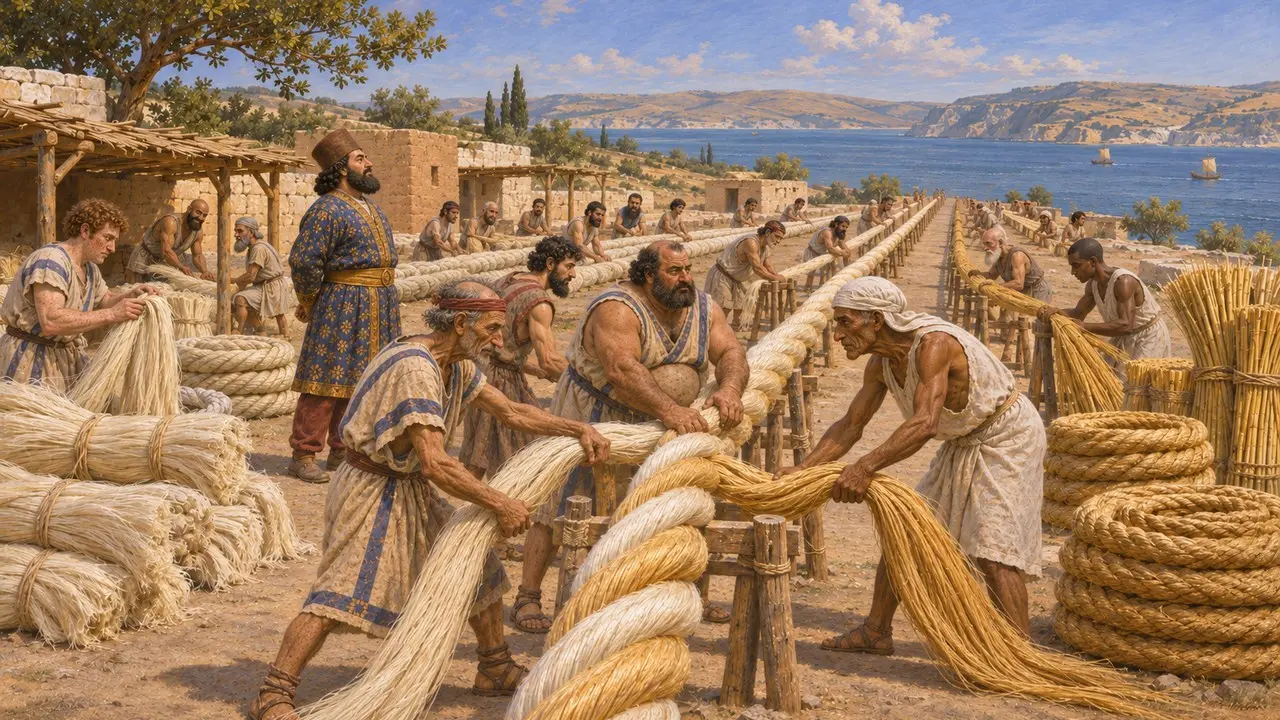
Cables ordered for the bridges
Ancient accountHerodotus says that while the Athos canal was being dug, Xerxes also had cables of papyrus and white flax prepared for bridging the Hellespont. In his account the Phoenicians built one bridge with flax cables and the Egyptians the other with papyrus. The first bridges were finished, but a storm broke them apart, and Herodotus says Xerxes had the men in charge of the work beheaded.
Herodotus 7.25; 7.34-35
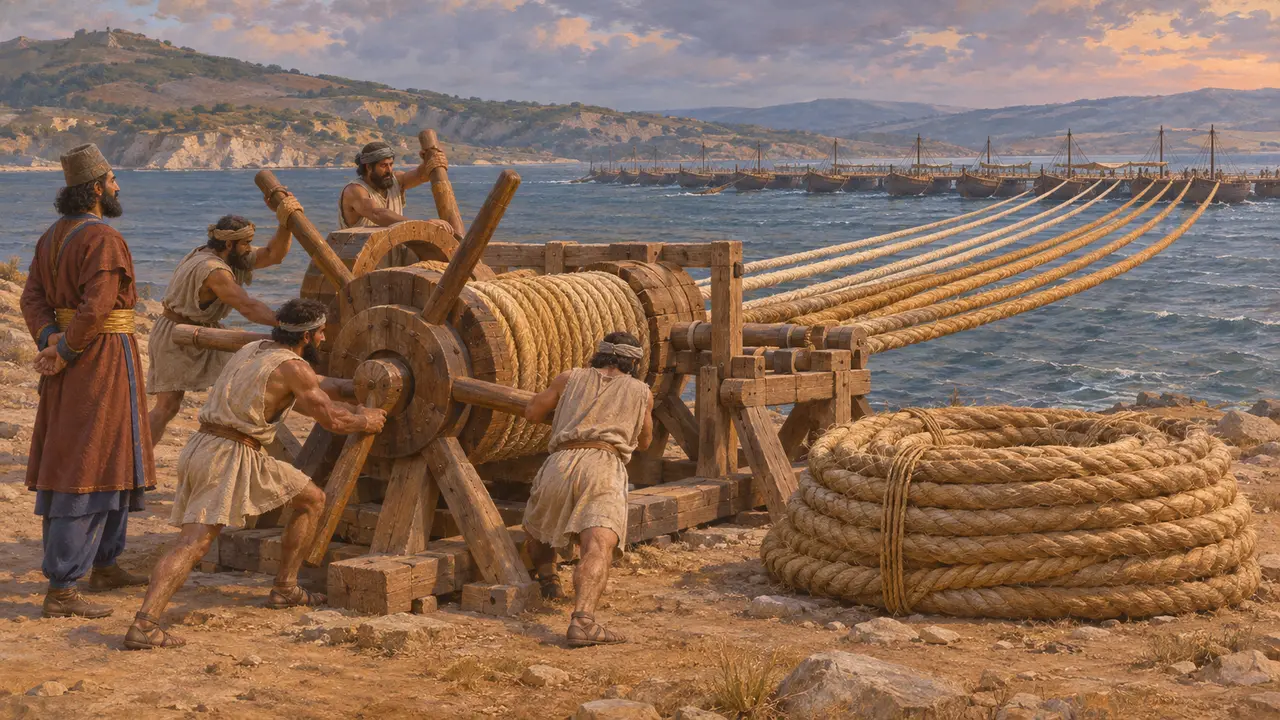
The second bridges and their fate
Ancient accountFor the rebuilt bridges, Herodotus says, each line of ships was held by six cables, two of flax and four of papyrus, tightened with wooden windlasses on the shore. He says both kinds were equally thick, but the flax was heavier, a cubit of it weighing a talent. After Mycale the Athenians besieged Sestos, took it after a long siege, and carried the cables home to dedicate in their temples.
Herodotus 7.36; 9.114-121
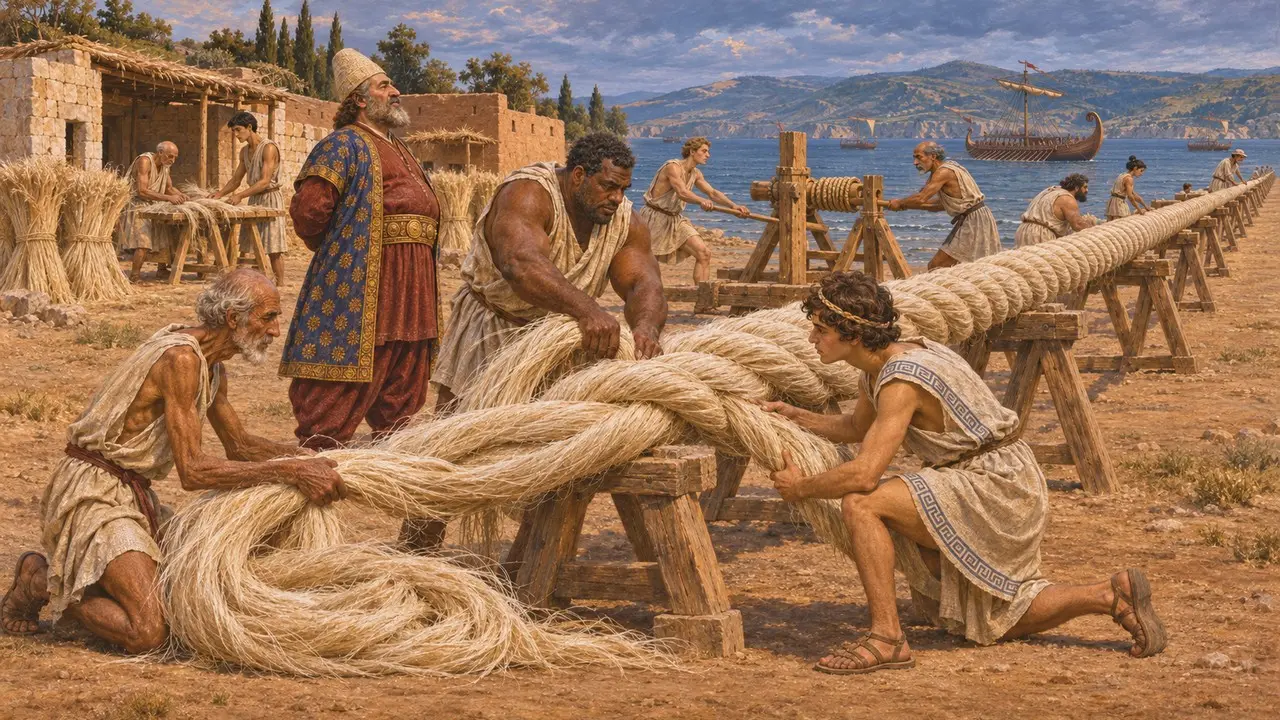
The size of the cables
DisputedHerodotus gives a weight for the flax cables but no measurement of their thickness, and historians and engineers have argued over what his figure implies. Modern reconstructions, such as that of Hammond and Roseman, try to work out the cable size, the number of ships and how the tension was held across the strait. Scholars also discuss what fibre Herodotus meant by white flax.
N. G. L. Hammond and L. J. Roseman, The Construction of Xerxes' Bridge over the Hellespont, 1996
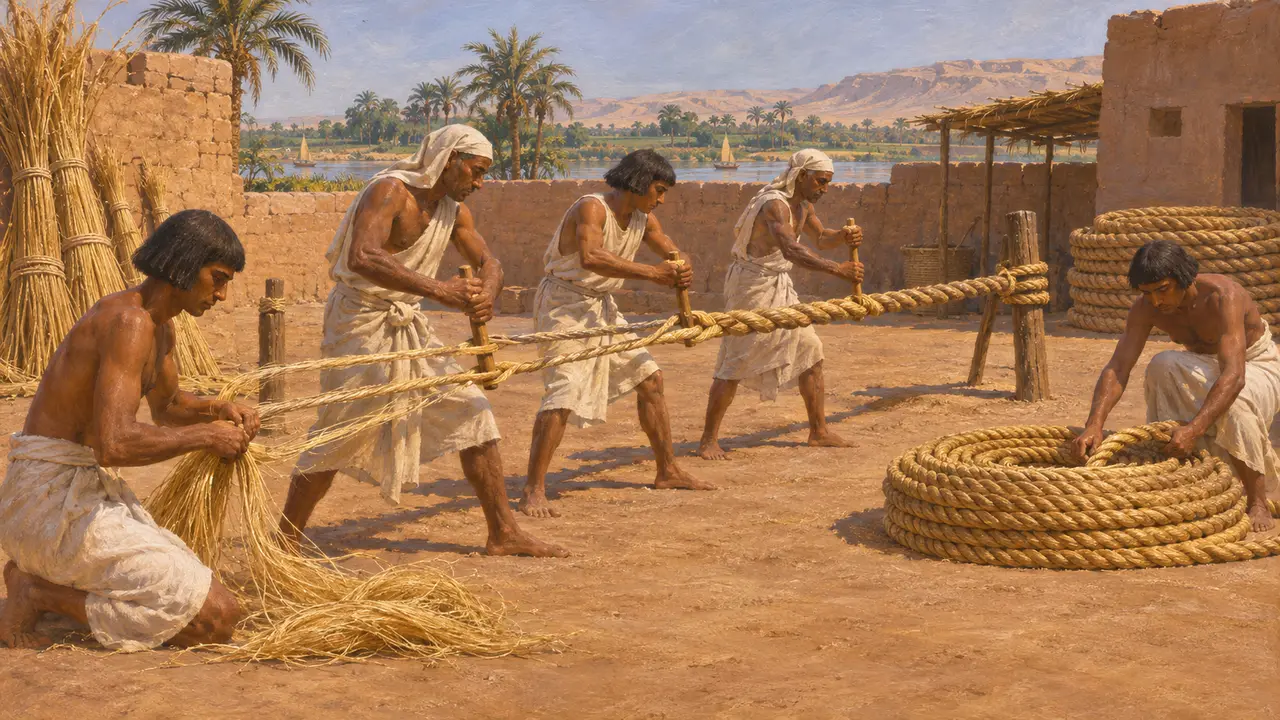
Ropemaking in Egypt
In the recordEgyptian ropemaking was very old by Xerxes' time, though the surviving evidence is much earlier than his reign. A painting in the Theban tomb of the vizier Rekhmire, about a thousand years earlier, shows workers twisting fibre into rope. Coils of ship rope survive from the Middle Kingdom harbour at Mersa Gawasis on the Red Sea. No remains of the Hellespont cables themselves are known.
N. de G. Davies, The Tomb of Rekh-mi-Re at Thebes, 1943; K. A. Bard and R. Fattovich, Harbor of the Pharaohs to the Land of Punt, 2007
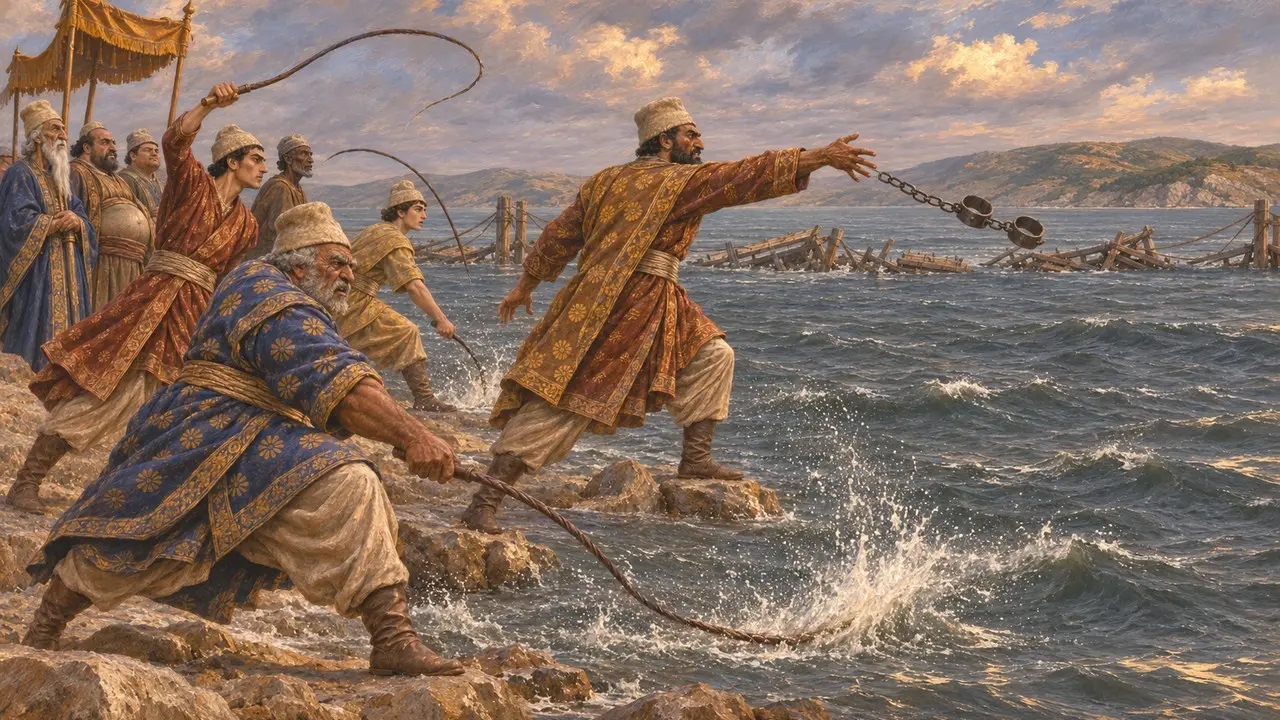
Whipping the Hellespont
Later legendHerodotus tells that when the storm broke the first bridges, Xerxes ordered the strait given three hundred lashes and a pair of fetters thrown into it, while the men lashing it spoke insulting words to the water. The story fits the Greek picture of a king punished for pride, and many historians treat it as a moral tale rather than a plain report.
Herodotus 7.35
Sources
- Herodotus, Histories 7.25, 7.33-36
- Herodotus, Histories 9.114-121
- N. G. L. Hammond and L. J. Roseman, The Construction of Xerxes' Bridge over the Hellespont, Journal of Hellenic Studies 116, 1996
- P. Briant, From Cyrus to Alexander, 2002
- N. de G. Davies, The Tomb of Rekh-mi-Re at Thebes, 1943
- K. A. Bard and R. Fattovich, Harbor of the Pharaohs to the Land of Punt, 2007