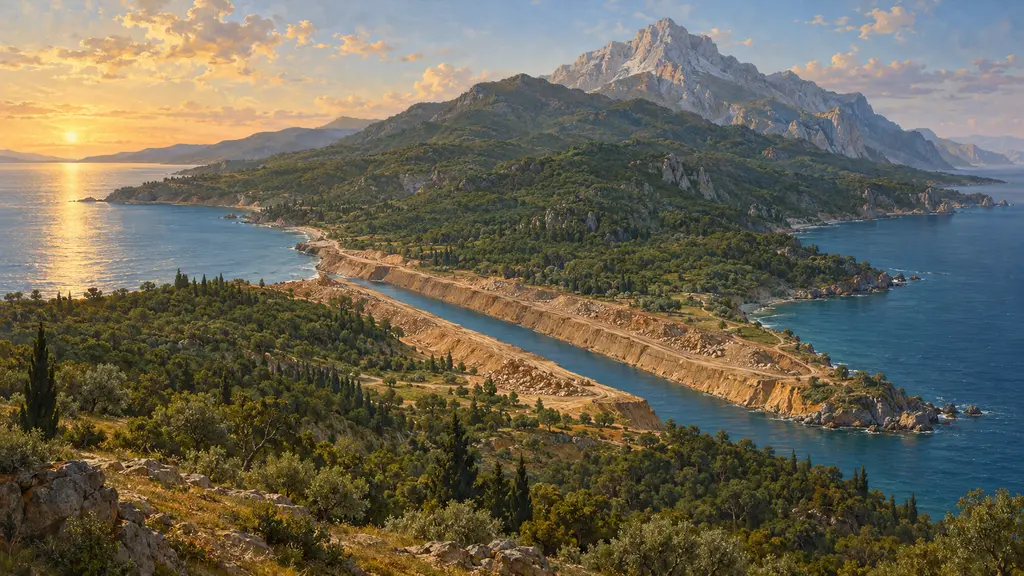
Eion and the Strymon
Persian-held port and supply base at the mouth of the Strymon, Thrace, about 512-476 BCE
In the game: Level 9: The Canal
Eion was a trading town at the mouth of the Strymon river in Thrace, on the coast route from the Hellespont towards Macedonia and Greece. Xerxes stocked it with food for his invasion of 480, and a Persian garrison held it after the defeat in Greece until the Athenians under Cimon took it, about 476.
In the game: The game presents Eion as Xerxes' supply depot on the Strymon, on the road to Greece. This matches Herodotus, who names Eion among the depots stocked before the march.
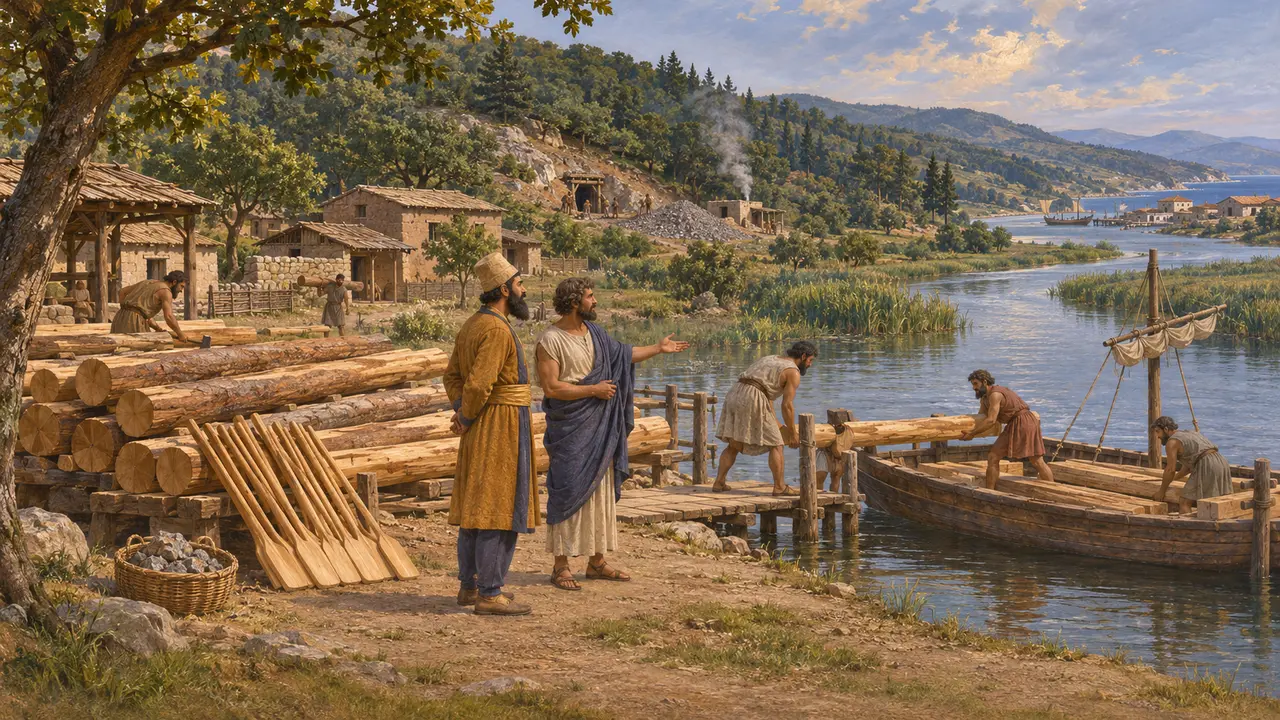
Timber, silver and the Edonian land
Ancient accountHerodotus says Persian power reached the lower Strymon after Megabazus campaigned in Thrace for Darius, about 512. Darius granted Histiaeus of Miletus the Edonian town of Myrcinus nearby. Herodotus has Megabazus warn the King that the district had plenty of ship timber, wood for oars and silver mines, and that a clever Greek should not be allowed to build up power there.
Herodotus 5.11; 5.23
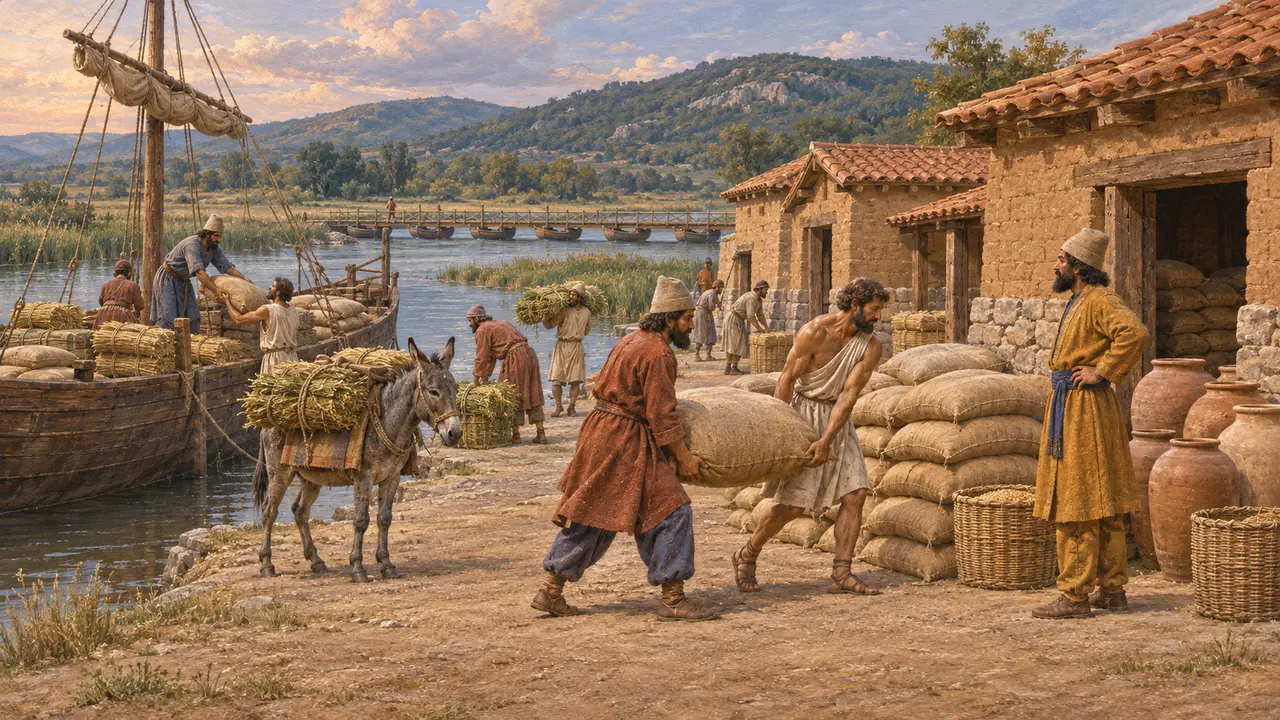
Stores for the march on Greece
Ancient accountHerodotus says that while the canal at Athos was being dug, Xerxes ordered the Strymon to be bridged. He also had food for men and animals brought from across Asia to depots on the route. Herodotus names White Cape, Tyrodiza, Doriscus, Eion on the Strymon and places in Macedonia. No document from the Eion depot itself survives.
Herodotus 7.24-25
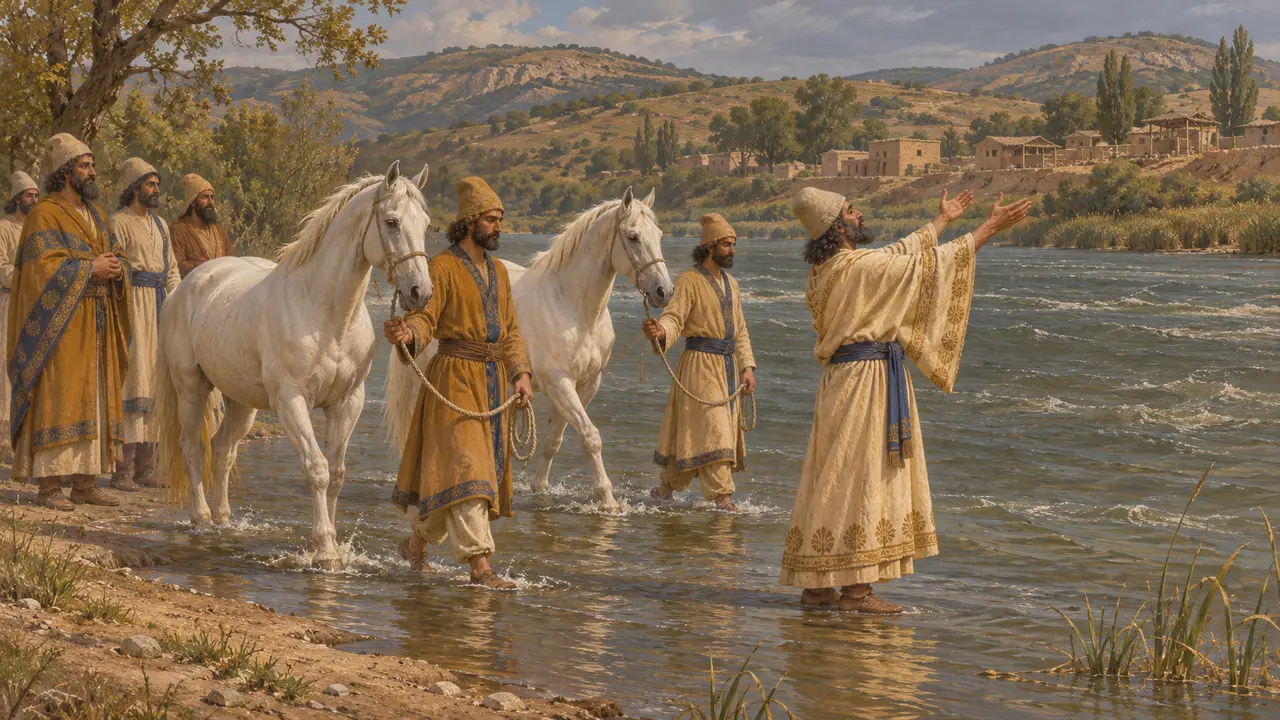
Sacrifice at the Nine Ways
DisputedHerodotus says the magi sacrificed white horses to the Strymon, and that at Nine Ways, a crossing upstream of Eion, the Persians buried alive nine boys and nine girls of the local people. He calls burial alive a Persian custom. The Persepolis tablets do record offerings to rivers, but many historians doubt the human sacrifice, which no Persian source supports.
Herodotus 7.113-114; W. Henkelman, The Other Gods Who Are, 2008
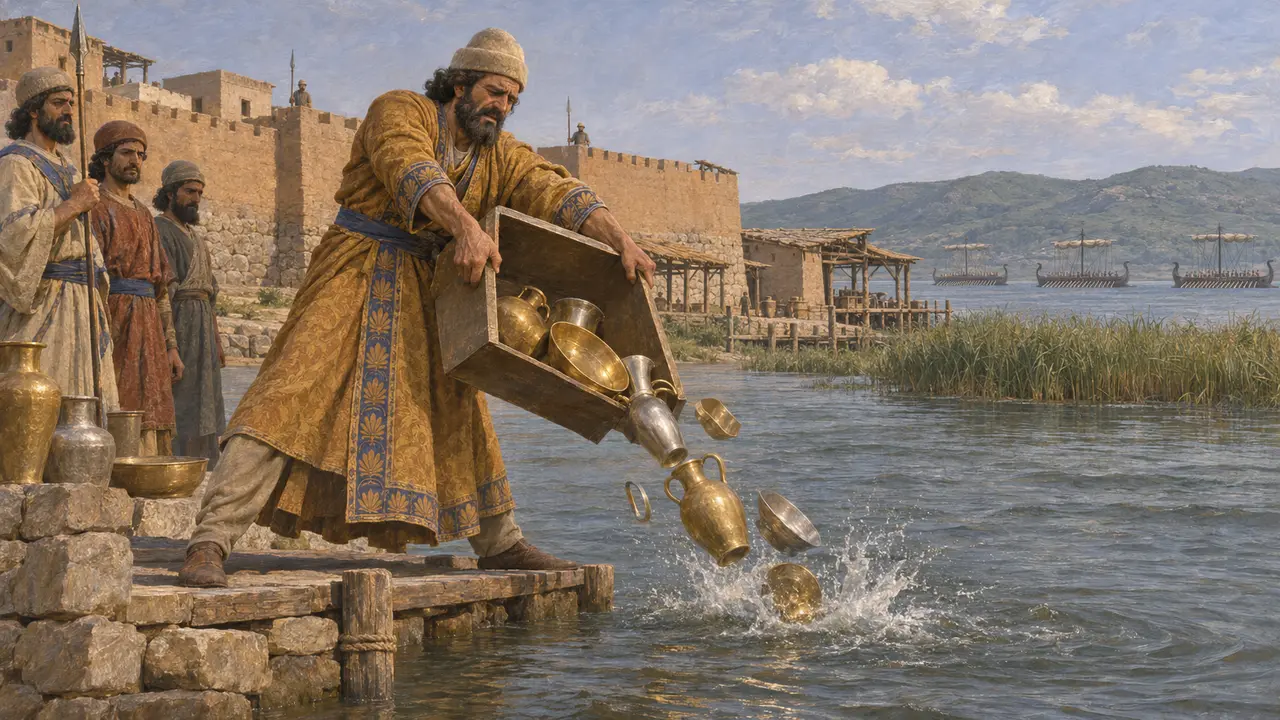
Boges and the Athenian siege
Ancient accountThucydides says the new Athenian-led alliance, under Cimon, besieged Eion while the Persians still held it, captured it and enslaved its people, probably about 476. Herodotus says its commander Boges refused terms, killed his family, threw his gold and silver into the Strymon and died on a pyre. Herodotus adds that Xerxes praised him and honoured his sons.
Thucydides 1.98; Herodotus 7.107; Plutarch, Cimon 7
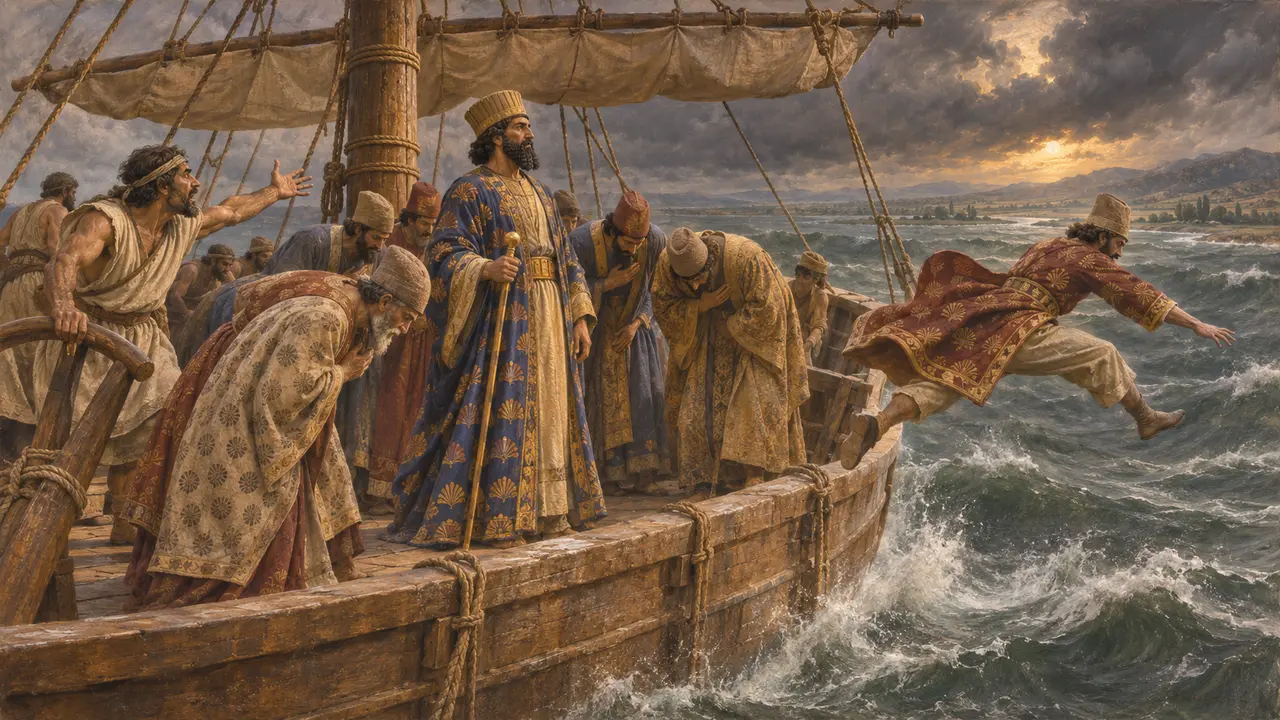
Xerxes' voyage from Eion
Later legendHerodotus reports a story that Xerxes, retreating in 480, sailed from Eion in a Phoenician ship. In a storm the helmsman said the ship had to be lightened, and Persian nobles bowed to the King and leapt into the sea. Herodotus himself rejects the tale and says Xerxes went back overland to the Hellespont.
Herodotus 8.118-120
Sources
- Herodotus 7.24-25, 7.107, 7.113-114, 8.118-120
- Thucydides 1.98
- Herodotus 5.11, 5.23
- Plutarch, Cimon 7
- P. Briant, From Cyrus to Alexander, 2002
- W. Henkelman, The Other Gods Who Are, 2008