Encyclopedia › Wildlife and weather

The swallow
A migratory bird seen across the Persian empire, 559-479 BCE
In the game: Level 1: The Founder's Tomb, Level 2: The Spear-bearer, Level 3: The Lie, Level 4: The Terrace, Level 5: The Charter, Level 6: The Bridge of Boats, Level 7: Sardis Burns, Level 8: The Bay of Marathon, Level 9: The Canal, Level 10: The Hot Gates, Level 11: The Finale
The swallow was a familiar summer bird in the lands the Persians ruled, from Greece and Anatolia to Egypt and Mesopotamia. No Persian source about it is known to the encyclopedia. What can be said of it rests on Greek writers, who treated its return as a sign of spring, and on the bird's known habits.
In the game: The game draws swallows as birds overhead on the Pasargadae, Memphis, Bagastana, Parsa, Susa, Ister, Sardis, Marathon, Athos, Thermopylae and Plataea levels. They are scenery only and no rule reads them.
A bird of the whole empire
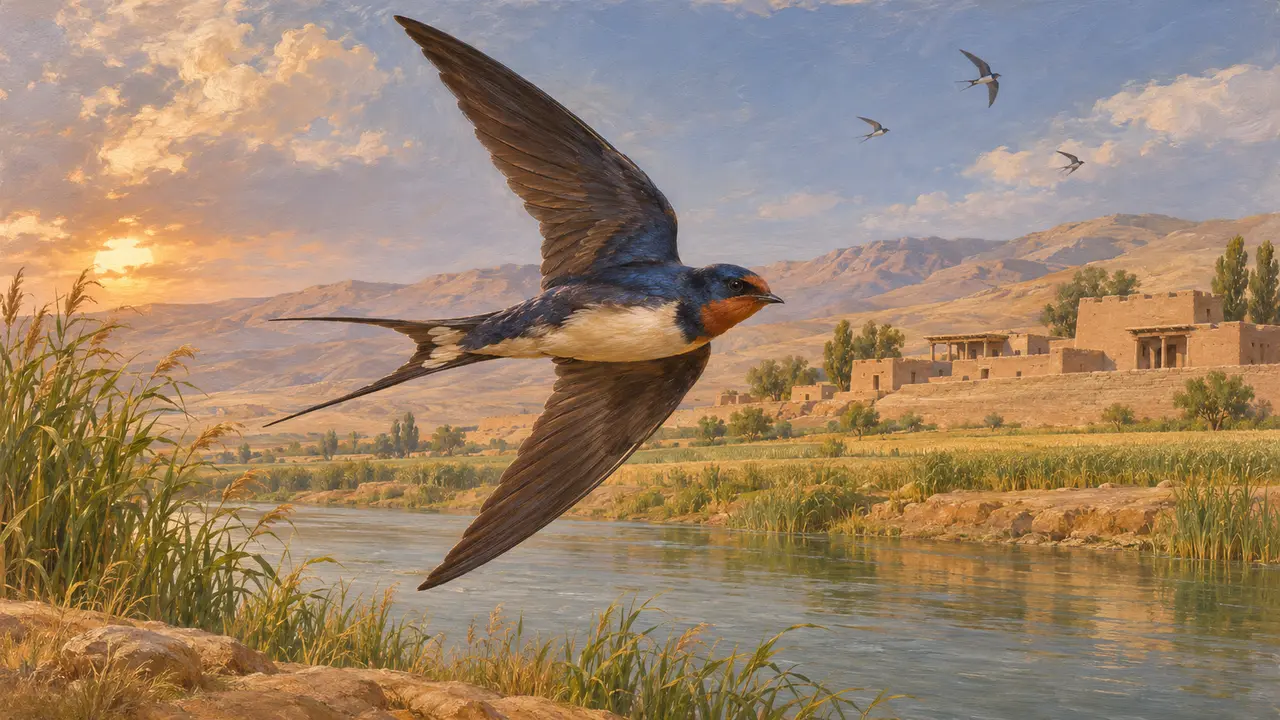
Ancient accountSwallows breed across Europe, western Asia and North Africa and winter further south, so they passed through every region in the game. This is inferred from the bird's modern range and habits. No inscription or excavated find from the period is known to name the bird.
Aristotle, History of Animals
The swallow as a sign of spring
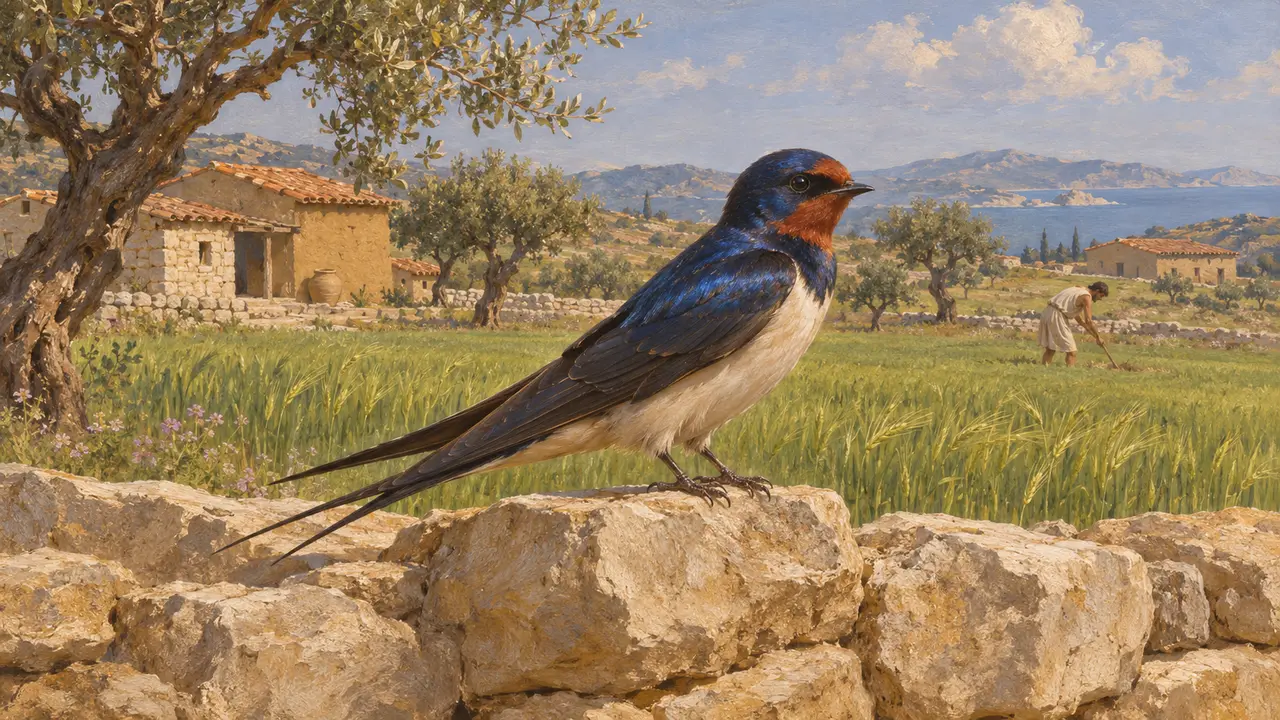
Ancient accountGreek writers treated the swallow's arrival as a marker of the season. Hesiod, in Works and Days, uses its return as a sign in the farming year, and Aristophanes uses the same idea in Birds. This is a Greek habit and tells nothing of Persian practice.
Hesiod, Works and Days; Aristophanes, Birds
Nesting in buildings
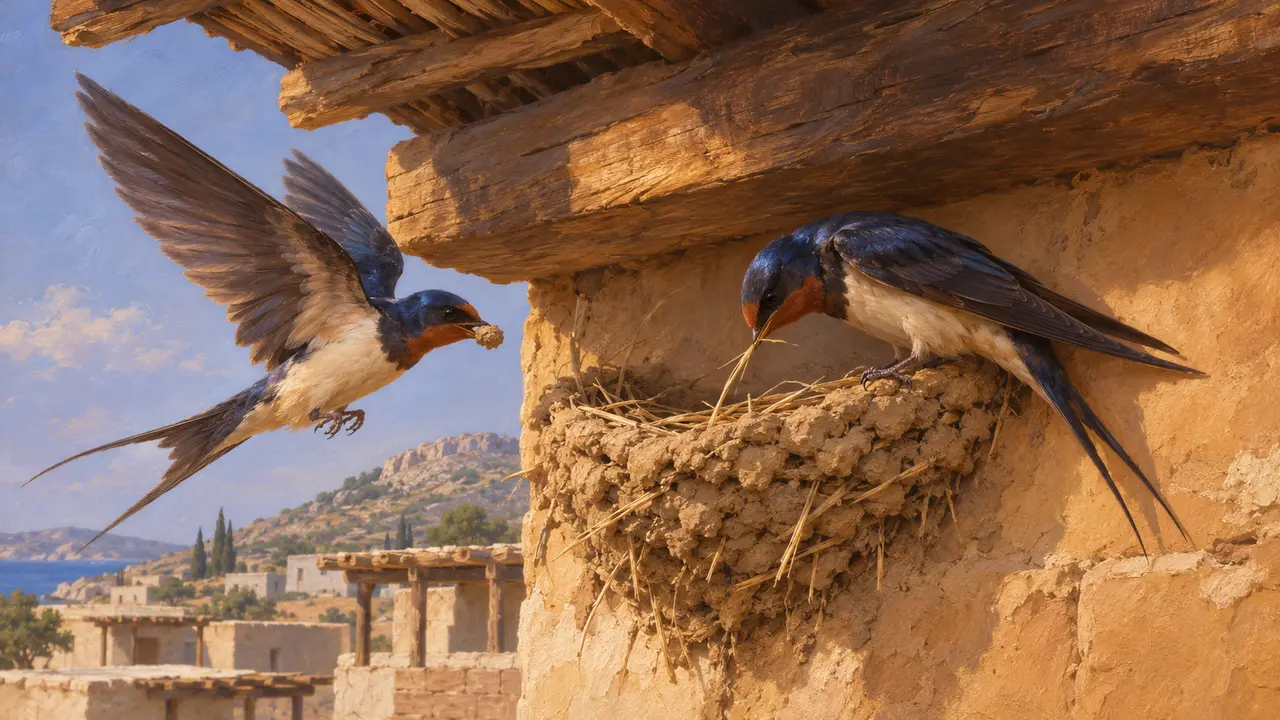
Ancient accountAristotle describes the swallow building its nest of mud and straw. Such nests suit the eaves and beams of mud-brick and timber buildings, which stood in Persian and Greek towns alike. No source from the period describes swallows nesting in Persian halls or houses.
Aristotle, History of Animals
The Greek myth of Procne
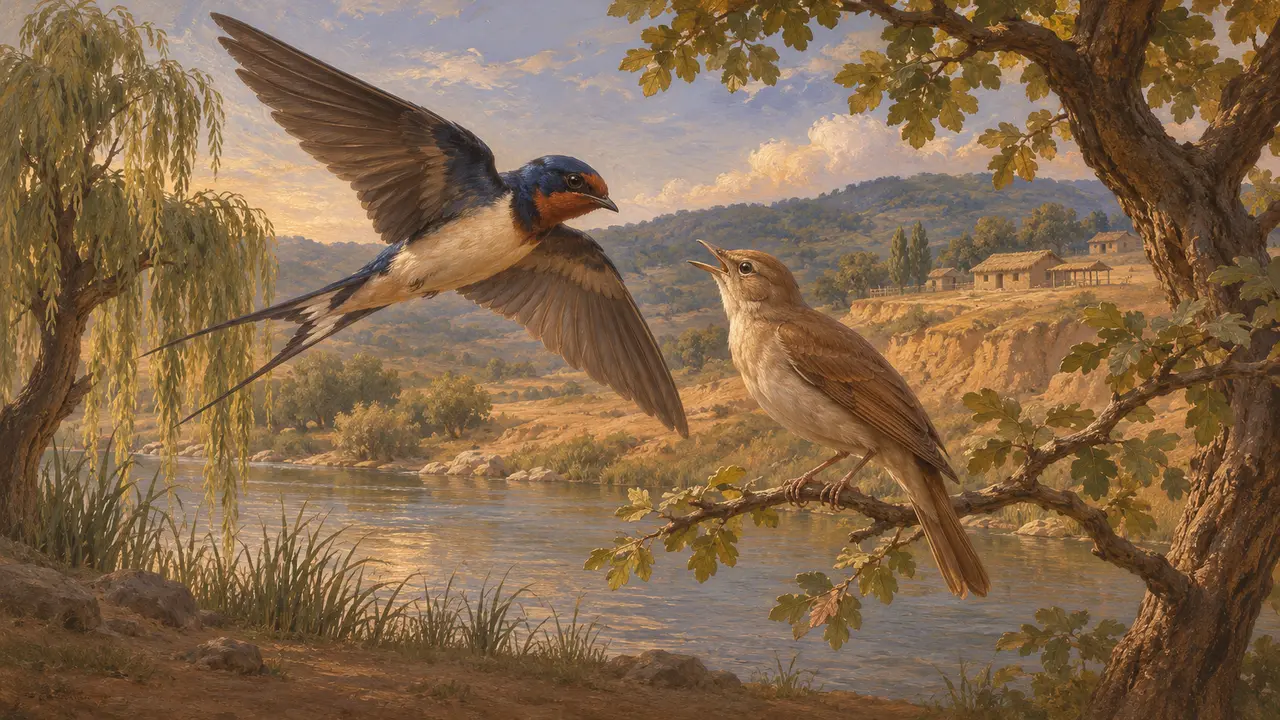
Later legendLater Greek tradition told of Procne and her sister Philomela, who were turned into a swallow and a nightingale after a crime within a family, and the tale was set in Thrace. The versions differ on which sister became which bird. It belongs to Greek storytelling and has no bearing on the Persian empire or the events of 559-479.
Apollodorus, Library 3.14.8
Sources
- Aristotle, History of Animals
- Hesiod, Works and Days
- Aristophanes, Birds
- Apollodorus, Library 3.14.8