Encyclopedia › Battles and events
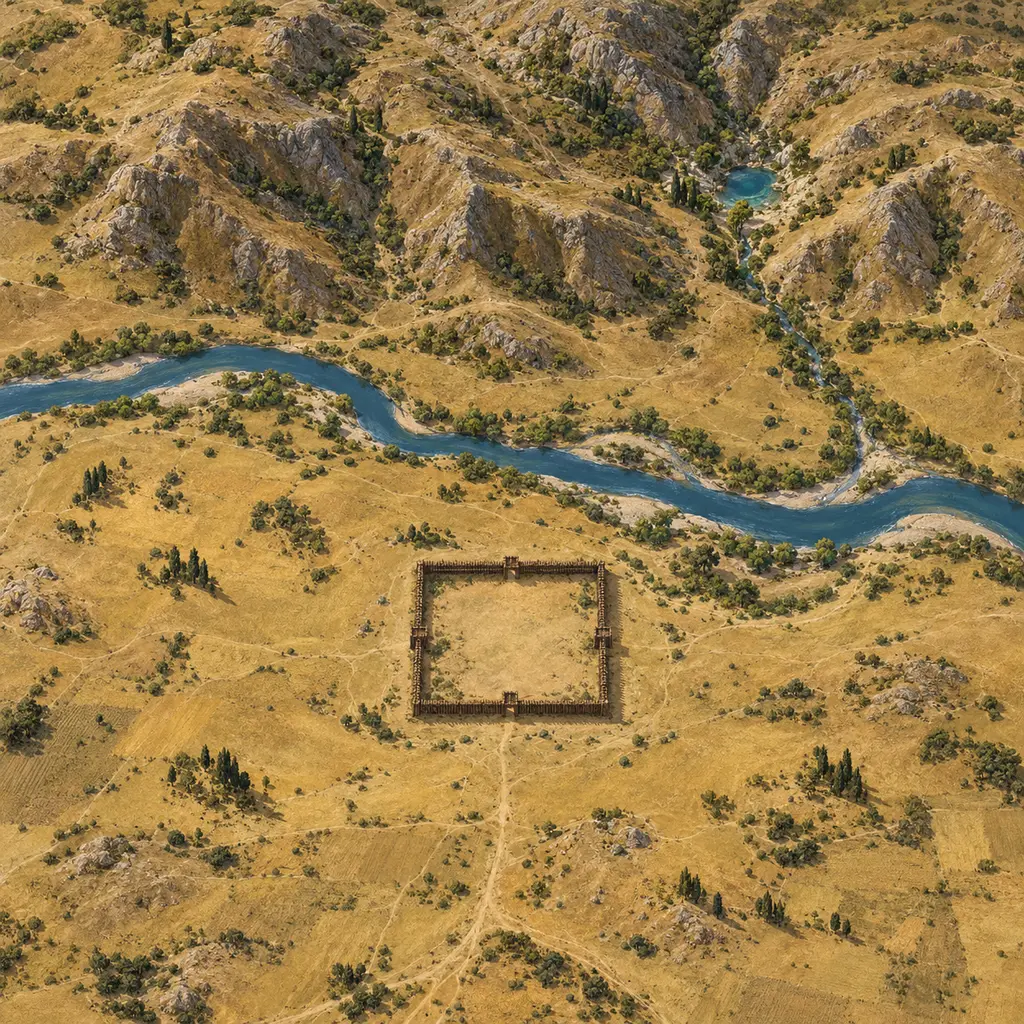
The battle of Plataea
Greek victory over Mardonius's army near Plataea in Boeotia, 479 BCE
In the game: Level 11: The Finale
The battle of Plataea, fought in Boeotia in the summer of 479, ended Xerxes' invasion of Greece. A Greek army under the Spartan regent Pausanias defeated the force that Mardonius had kept in Greece after Salamis, and Mardonius died in the fighting. Persia never again sent an army into mainland Greece.
In the game: The Plataea level is built around this battle: days of skirmishing, the fouling of Gargaphia, Mardonius's attack, his death and the storming of his fort. The Chronicle follows Herodotus but omits his guess of 50,000 Greek allies of Persia.
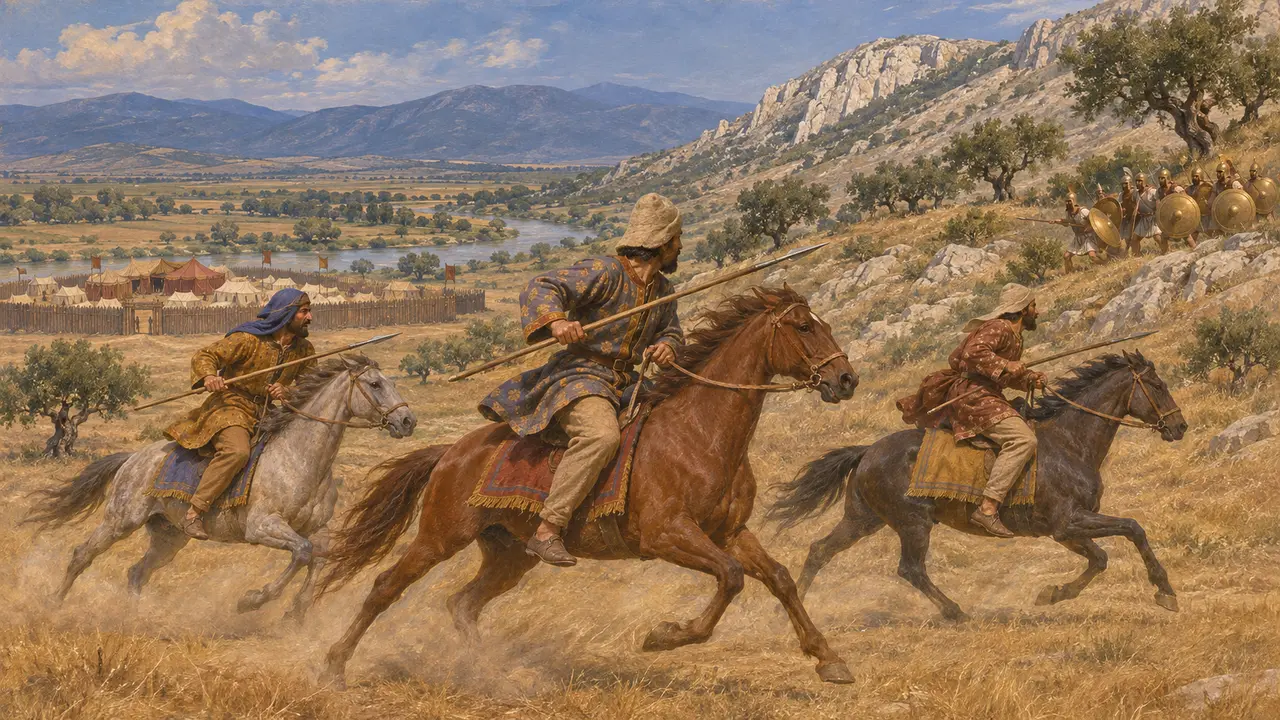
Mardonius in Boeotia
Ancient accountHerodotus says Mardonius wintered in Thessaly, retook Athens in 479, then fell back to Boeotia, where the open ground suited his cavalry, and built a wooden fort by the Asopus. The Greeks camped on the slopes of Cithaeron. His horsemen harried them for days, and their commander Masistius was killed in one clash. They then cut off Greek supply convoys in the passes and finally fouled the spring of Gargaphia.
Herodotus 8.113; 9.1-3, 9.13-25, 9.39, 9.49-50
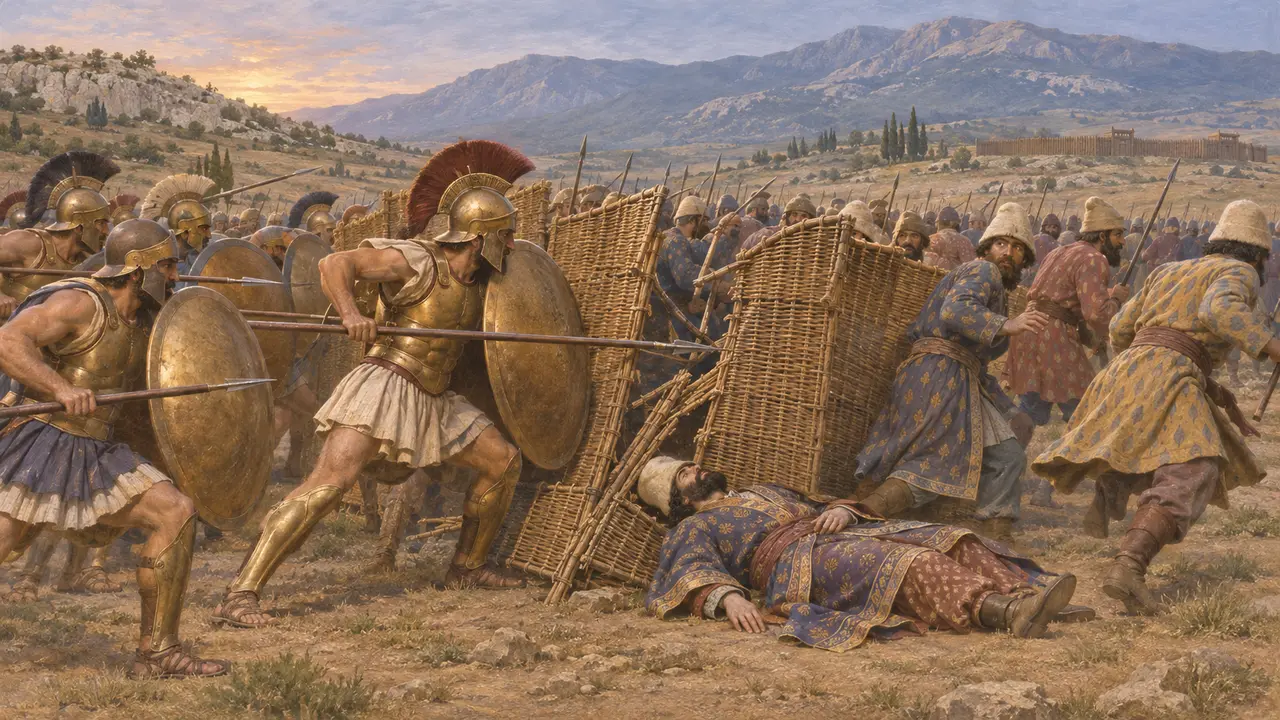
The withdrawal and the battle
Ancient accountShort of water, the Greeks tried to move by night to new ground nearer Plataea, and Herodotus describes the move as confused. At dawn Mardonius attacked the Spartans and Tegeans. The Persians fought from behind a wall of wicker shields, and when the Spartan Arimnestus killed Mardonius his men broke. The Athenians beat the Boeotians, and the Greeks stormed the fort.
Herodotus 9.51-70
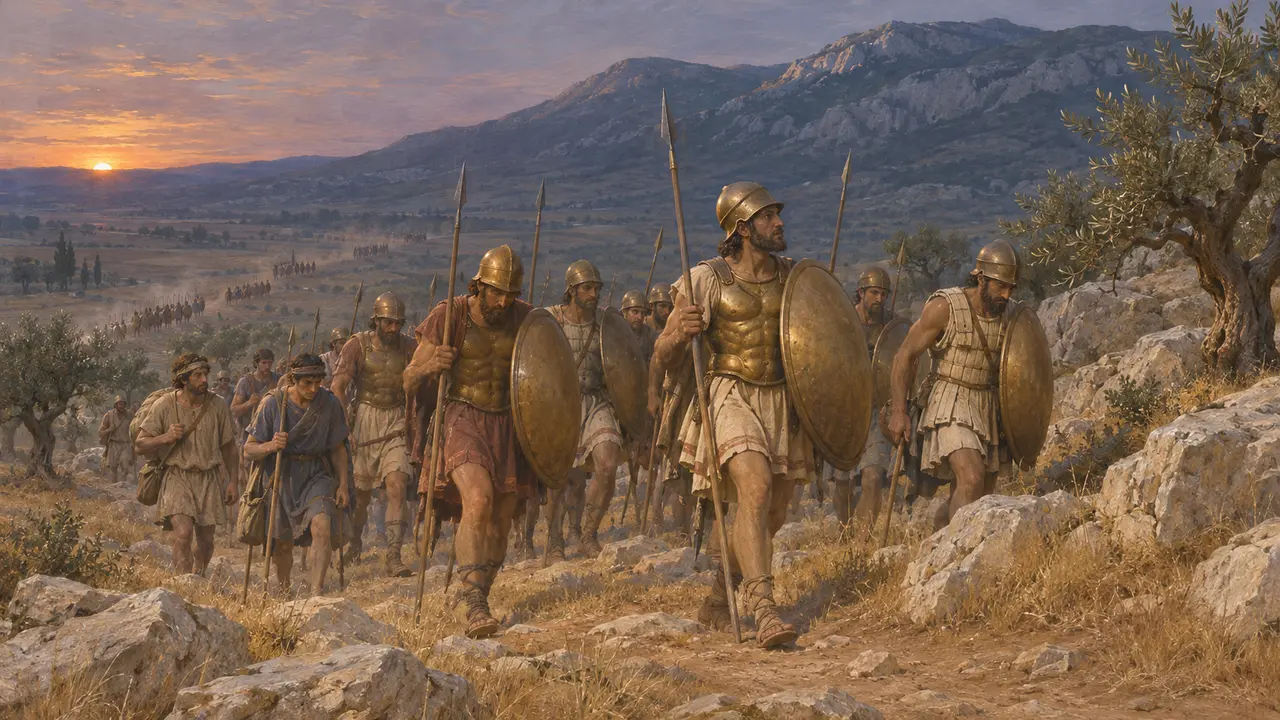
Numbers, losses and the night march
DisputedHerodotus gives 110,000 Greeks, 300,000 for the King's army and perhaps 50,000 Greek allies of Persia. Historians broadly accept his Greek figures but put Mardonius's force at perhaps 60,000 to 120,000. His claim that barely 3,000 survived, apart from 40,000 led off by Artabazus, is not credible, and his 159 Greek dead look too few. Historians also debate whether the night move was planned or a near-rout.
Herodotus 9.28-32, 9.66, 9.70; J. F. Lazenby, The Defence of Greece 490-479 BC, 1993
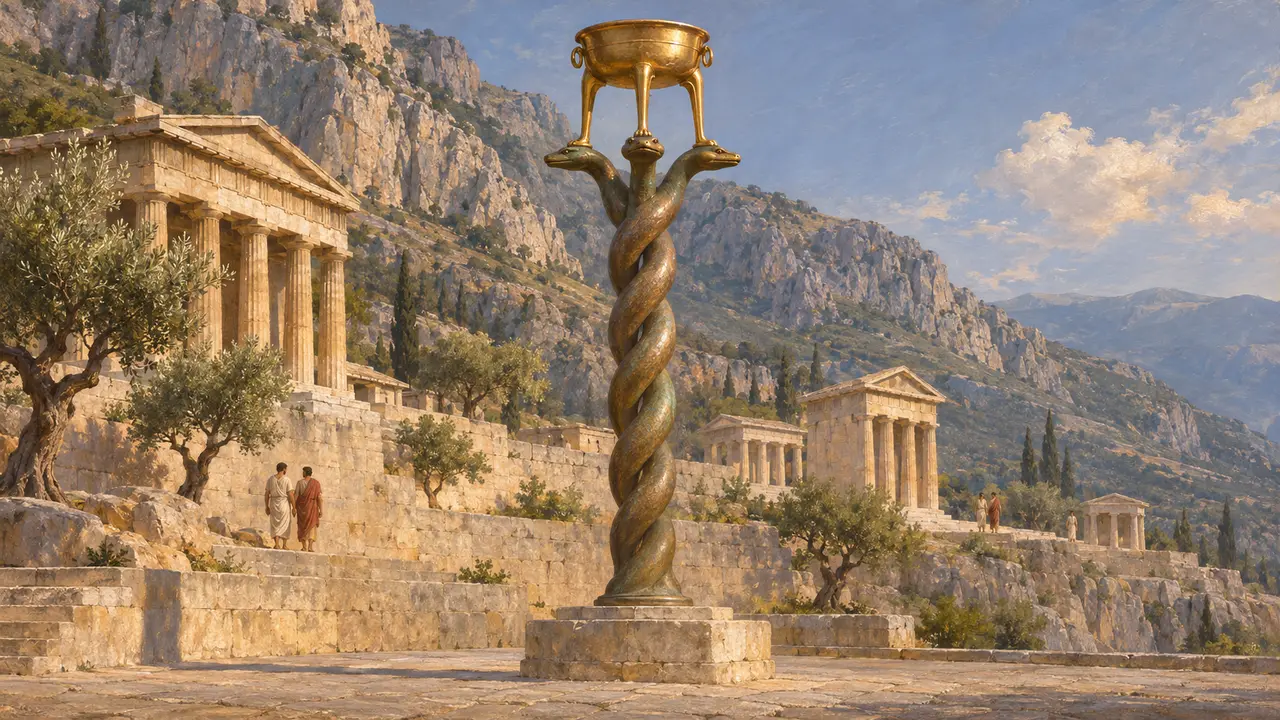
The Serpent Column and Persian silence
In the recordHerodotus says the Greeks set aside a tenth of the spoils for a gold tripod at Delphi, standing on a bronze column of three twisted snakes. The bronze shaft survives, inscribed on its coils with the names of 31 Greek states that fought the war, and stands today in the Hippodrome of Istanbul. No Persian inscription or tablet mentions the battle, so it is known almost only from the Greek side.
Herodotus 9.81; Thucydides 1.132; R. Meiggs and D. Lewis, A Selection of Greek Historical Inscriptions, 1969, no. 27
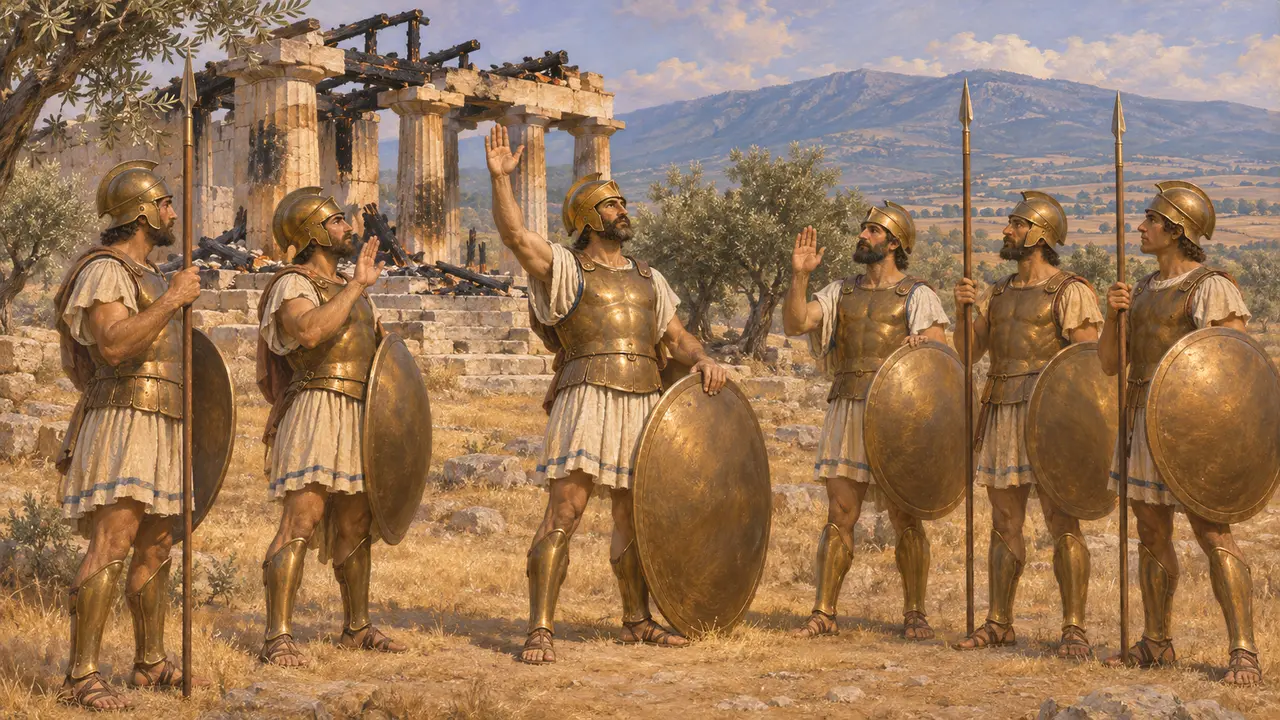
The oath of Plataea
Later legendThe Athenian orator Lycurgus in the fourth century, and Diodorus much later, quoted an oath the Greeks supposedly swore before the battle, promising to fight to the death and to leave the temples burned by the Persians in ruins as a memorial. A version without the temples clause is carved on a fourth-century stele from Acharnae. Theopompus already called it an Athenian fabrication, and historians still argue over whether any of it is genuine.
Lycurgus, Against Leocrates 81; Diodorus 11.29; Theopompus, FGrHist 115 F 153
Sources
- Herodotus 9.1-89
- Plutarch, Aristides
- R. Meiggs and D. Lewis, A Selection of Greek Historical Inscriptions, 1969
- J. F. Lazenby, The Defence of Greece 490-479 BC, 1993
- P. Green, The Greco-Persian Wars, 1996
- P. Briant, From Cyrus to Alexander, 2002