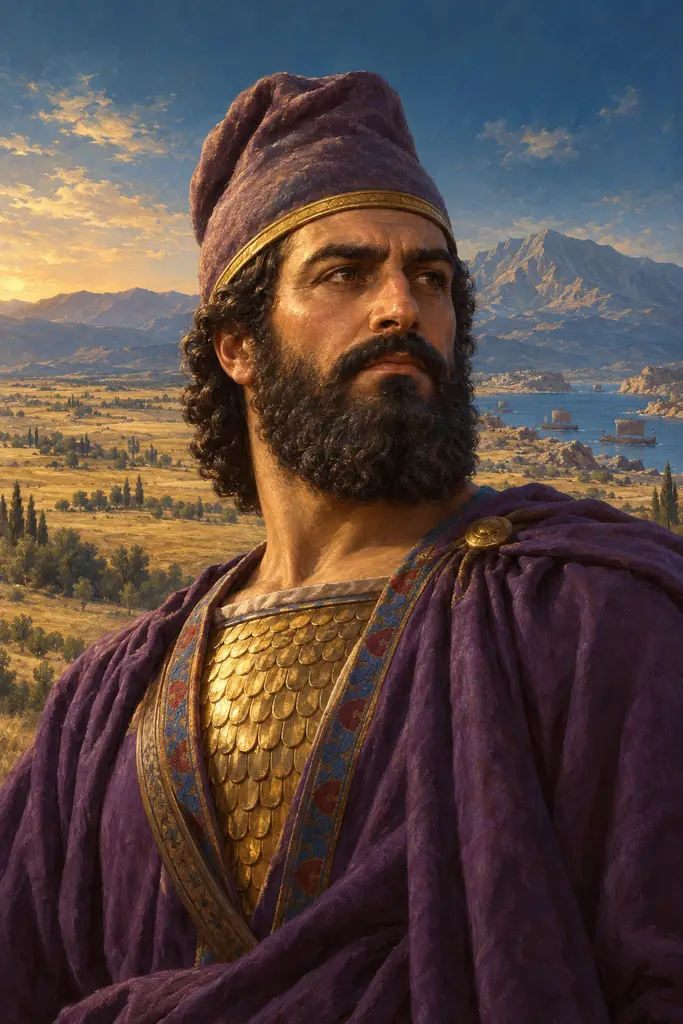
Masistius
Persian cavalry commander under Mardonius, killed near Erythrae in Boeotia in 479 BCE
In the game: Level 11: The Finale
Masistius led the Persian horse in the first fighting before the battle of Plataea in 479. Herodotus says the Persians and the King valued him more than any man after Mardonius. His death in a cavalry attack near Erythrae gave the Greeks their first success of the campaign. It raised their confidence, and soon after they moved down from the slopes of Cithaeron to better-watered ground near Plataea.
In the game: The game's chronicle names Masistius as commander of the horse before Plataea, mounted on a Nisaean horse with a golden bit and killed at Erythrae. This follows Herodotus; no Persian document is known to record him.
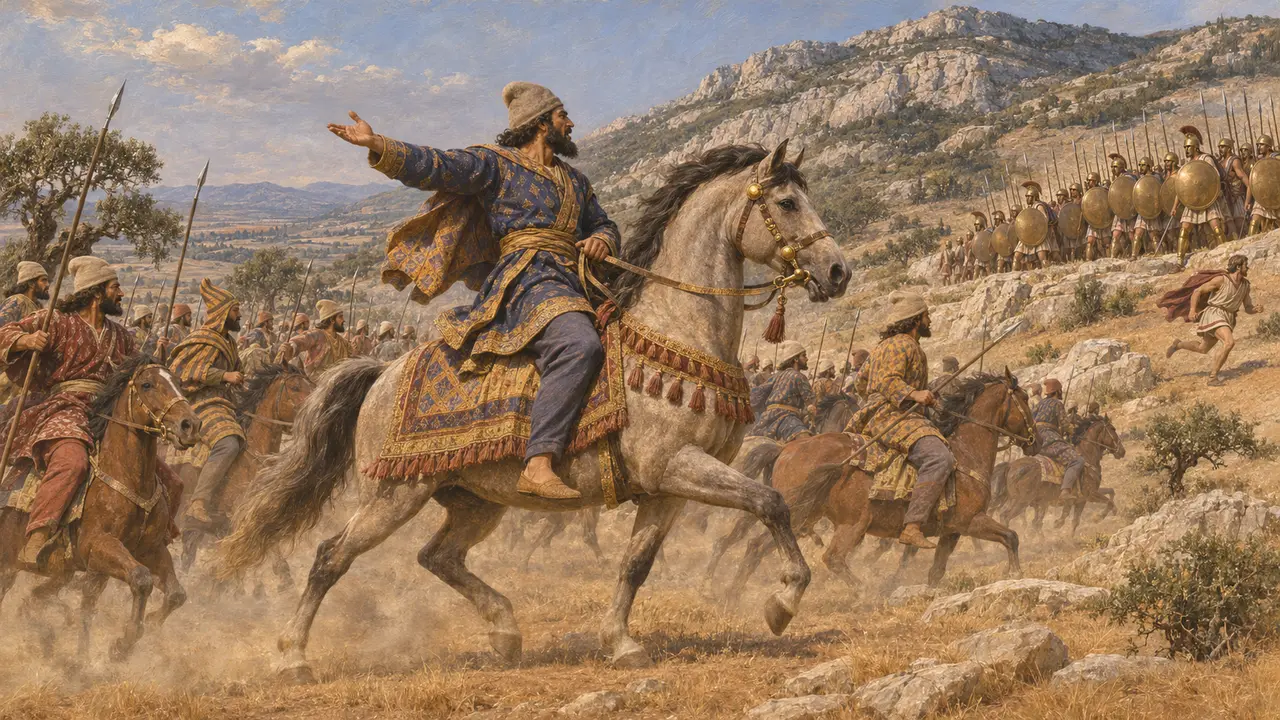
Commander of the horse
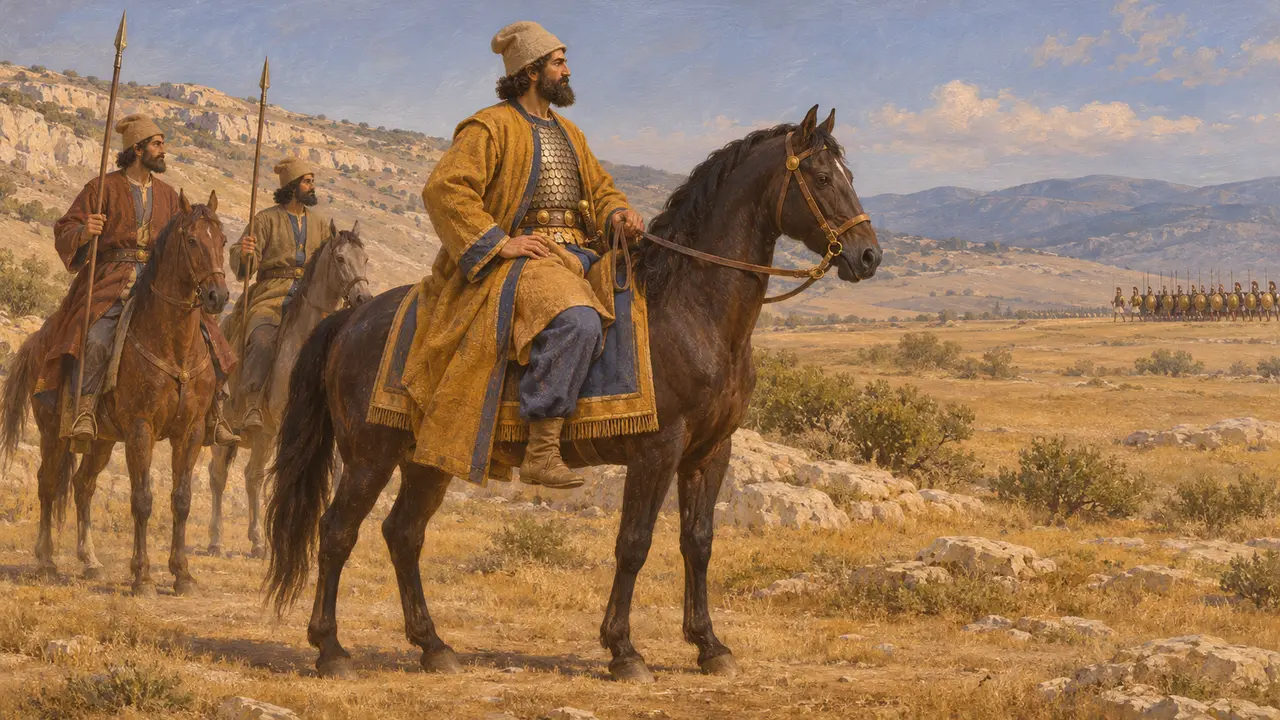
Ancient accountHerodotus says Mardonius sent his whole cavalry against the Greeks camped on the lower slopes of Mount Cithaeron, with Masistius in command. He rode a Nisaean horse with a golden bit and rich trappings. The horsemen attacked in squadrons and taunted the Greeks as women. The Megarians held the most exposed ground and sent word that they could not hold without help.
Herodotus 9.20-21
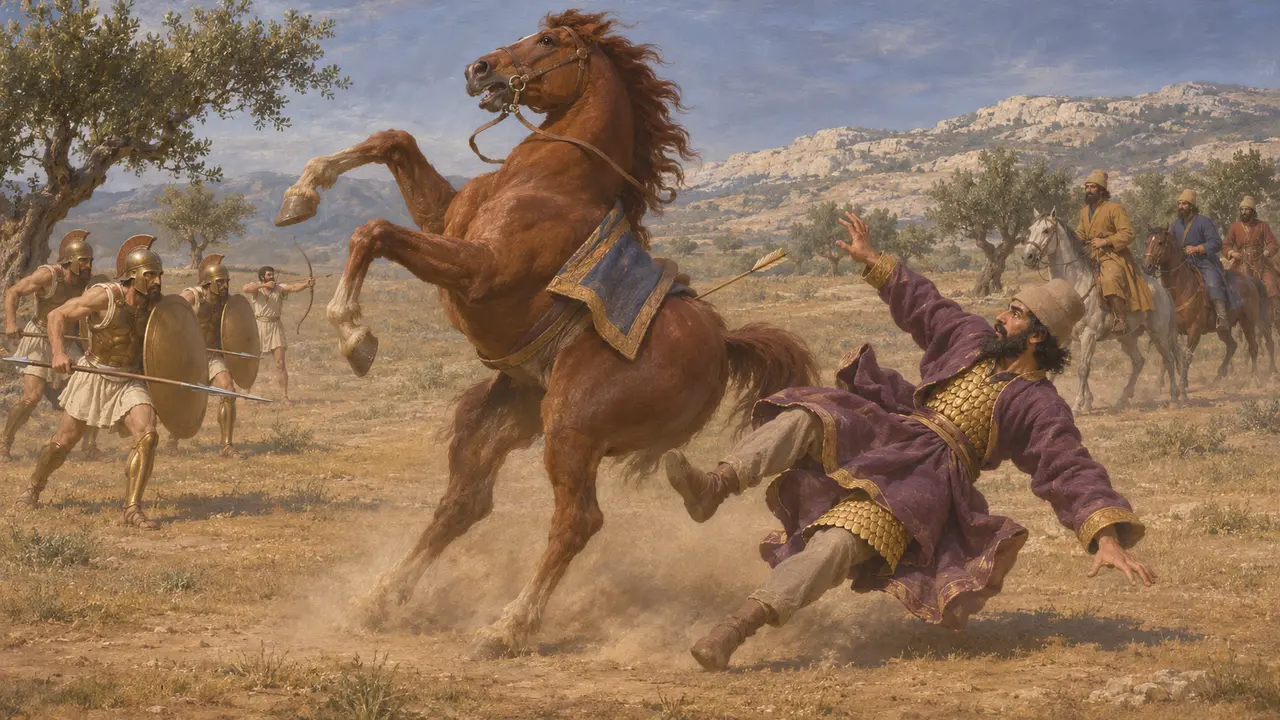
The fight at Erythrae
Ancient accountIn Herodotus's telling, three hundred picked Athenians under Olympiodorus, with archers, went to help the Megarians. An arrow struck Masistius's horse in the flank, and it reared and threw him. He wore a corselet of golden scales under a purple tunic, so blows had no effect until a man stabbed him in the eye. The Persian horse fought over the body but drew back when more Greek infantry came up.
Herodotus 9.21-23
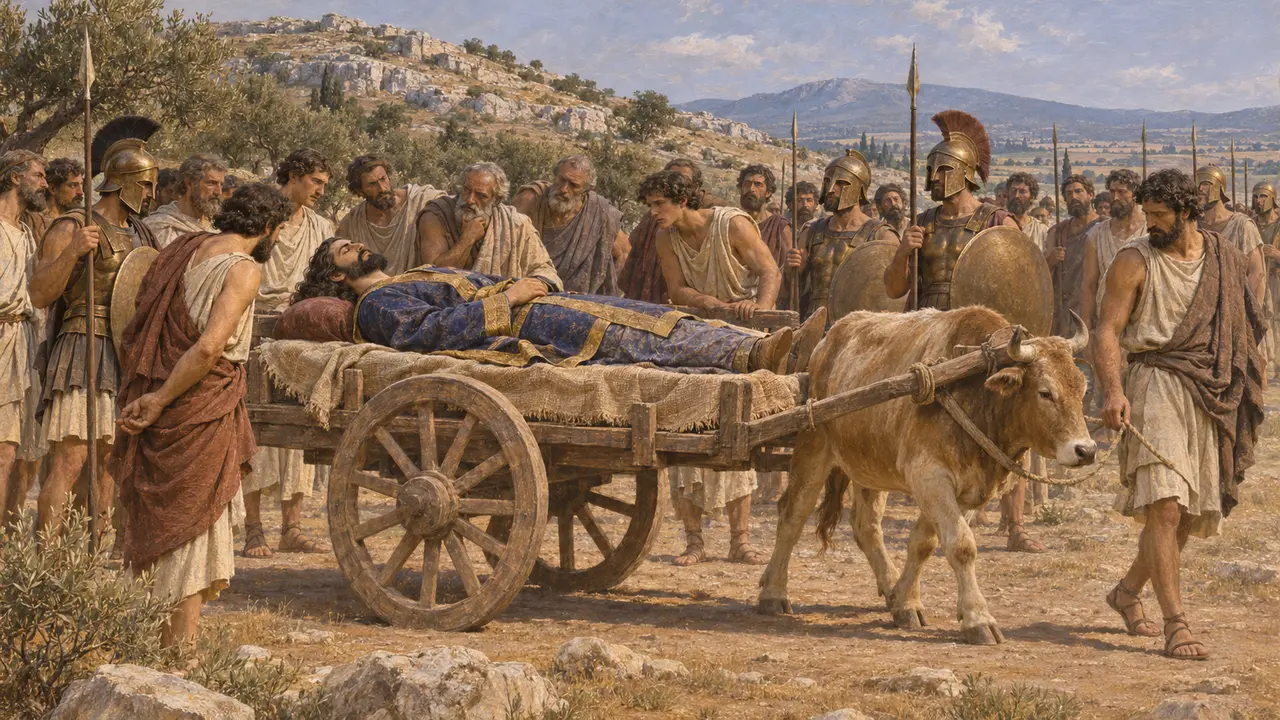
Mourning and the body on the cart
Ancient accountHerodotus says Mardonius and the army mourned Masistius by shaving their own heads and the manes of their horses and draught animals, and that their wailing carried across Boeotia. The Greeks laid his body on a cart and drove it along their lines, because men left their posts to see his size and beauty. Soon after, the Greeks moved to new positions near Plataea.
Herodotus 9.24-25
The corselet in Athens
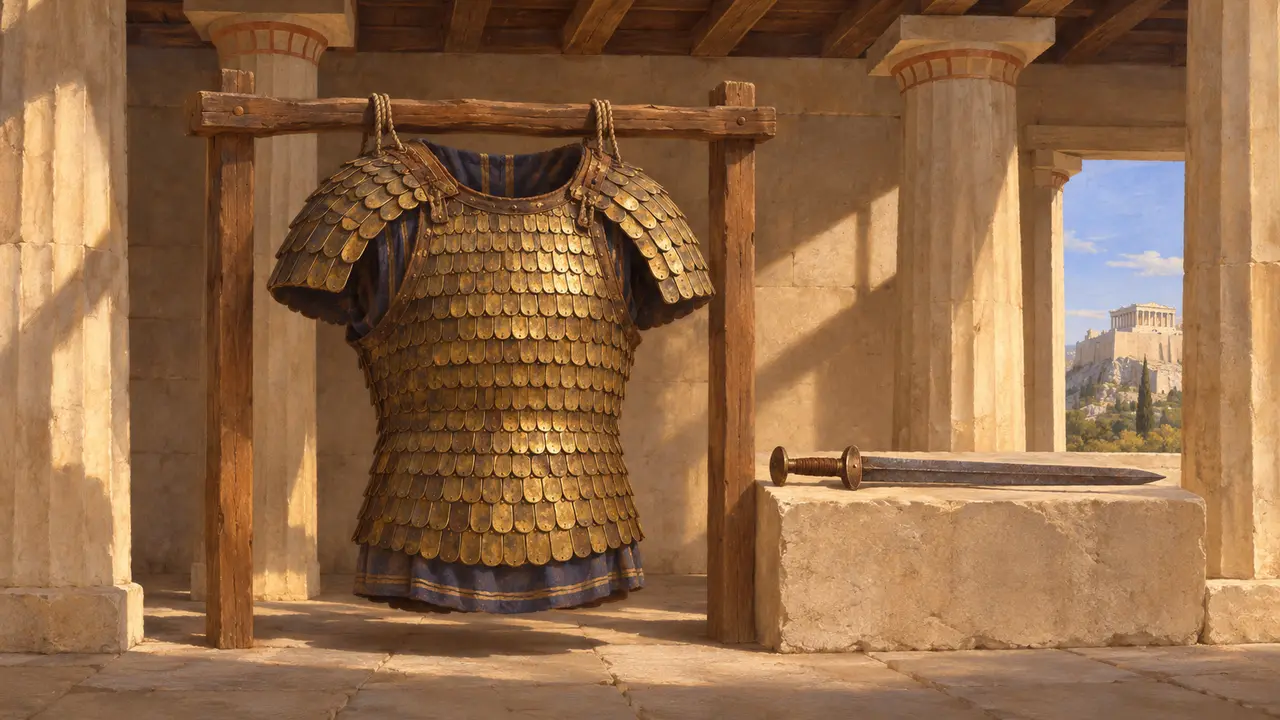
Ancient accountPausanias, writing in the second century CE, says the corselet of Masistius was kept in the temple of Athena Polias on the Acropolis, with a sword said to be that of Mardonius. Pausanias himself doubted the sword, since Mardonius fell fighting Spartans. He reports these as objects shown in his own day, long after the battle, so their history after 479 is unknown.
Pausanias 1.27.1
What is known of the man
DisputedNo Persian document is known that can be tied to Masistius; the whole story comes from Greek writers. Herodotus names a Masistius son of Siromitres as leader of the Alarodians and Saspeires in Xerxes' army, and it is uncertain whether this is the same man. Plutarch tells much the same story with small differences. Some historians think the Athenian sources behind it enlarge the Athenian part in the fight.
Herodotus 7.79; Plutarch, Aristides 14
Sources
- Herodotus 9.20-25
- Plutarch, Aristides 14
- Pausanias 1.27.1
- Herodotus 7.79
- J. F. Lazenby, The Defence of Greece 490-479 BC, 1993
- P. Briant, From Cyrus to Alexander, 2002