Encyclopedia › Soldiers and ships
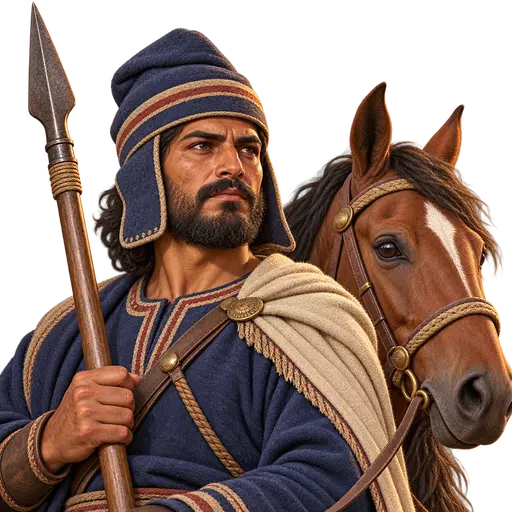
King's Horseman
Picked Persian cavalry who rode close to the King, about 530-479 BCE
The King's horsemen were picked Persian riders who escorted the King in procession and on campaign. Herodotus places two bodies of a thousand chosen Persian horsemen around Xerxes in 480. Riding was a mark of rank among the Persians, and in Herodotus's account of Plataea the cavalry was the Persian arm the Greeks found hardest to face.
In the game: The game shows the King's Horseman as a trained cavalry unit of the King's army. The picked royal horsemen were Persians of standing chosen to ride close to the King, so the game's simple trained unit is a simplification.
A thousand horse before and behind the King
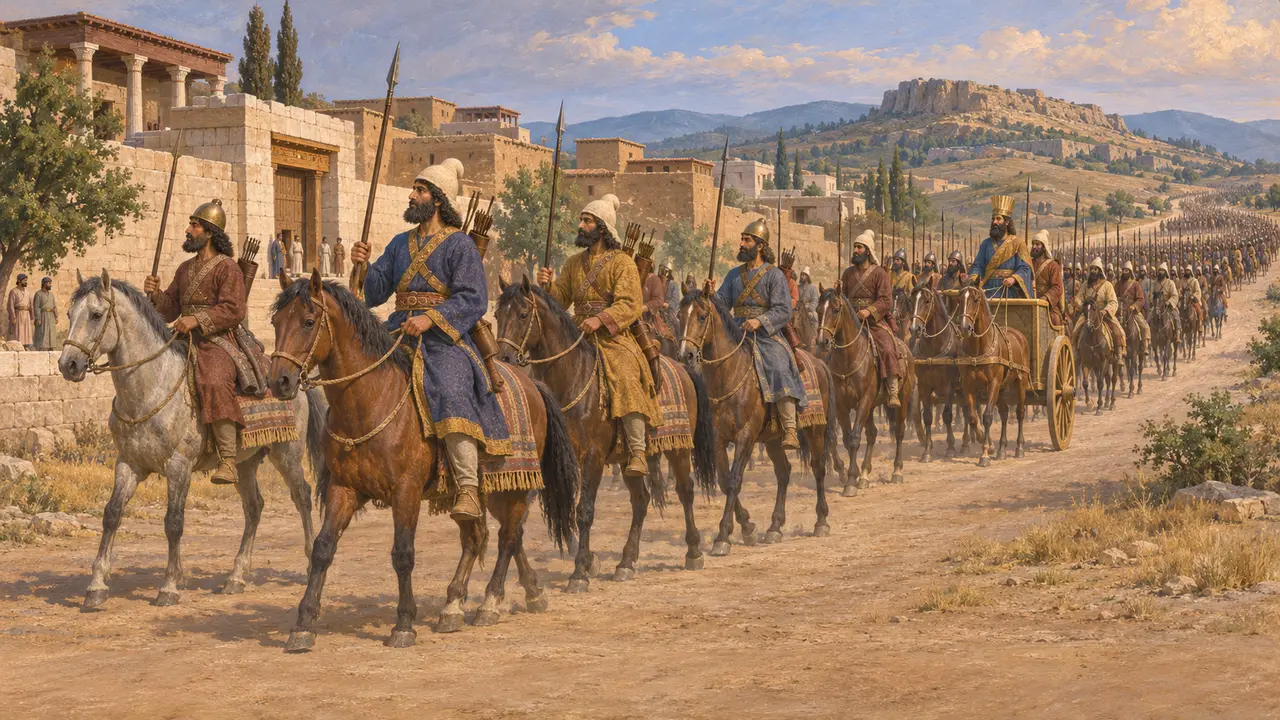
Ancient accountHerodotus describes Xerxes leaving Sardis in 480 with a thousand horsemen chosen from all the Persians riding ahead of him. Another thousand chosen horsemen rode behind his chariot and spearmen, and ten thousand more Persian horse followed the ten thousand foot. He says the Persian cavalry were armed like the Persian infantry, though some wore head-pieces of hammered bronze and iron.
Herodotus 7.40-41; Herodotus 7.84
A king who prided himself on riding
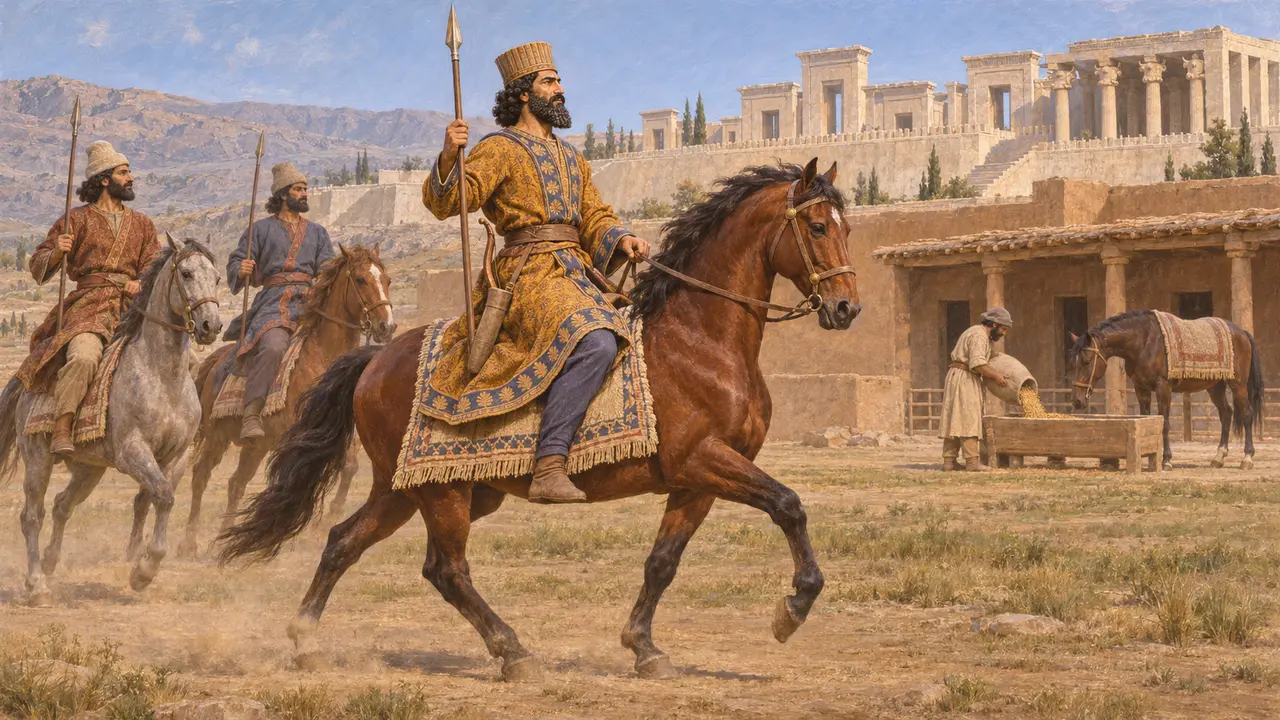
In the recordIn his tomb inscription at Naqsh-e Rostam, Darius claims to be a good horseman, and a good bowman and spearman both on foot and on horseback. The King presented skill in the saddle as a royal virtue. The Persepolis Fortification tablets, from about 509-493, show the practical side: officials issued grain as fodder for horses kept by the administration.
DNb; R. T. Hallock, Persepolis Fortification Tablets, 1969
The horsemen at Plataea
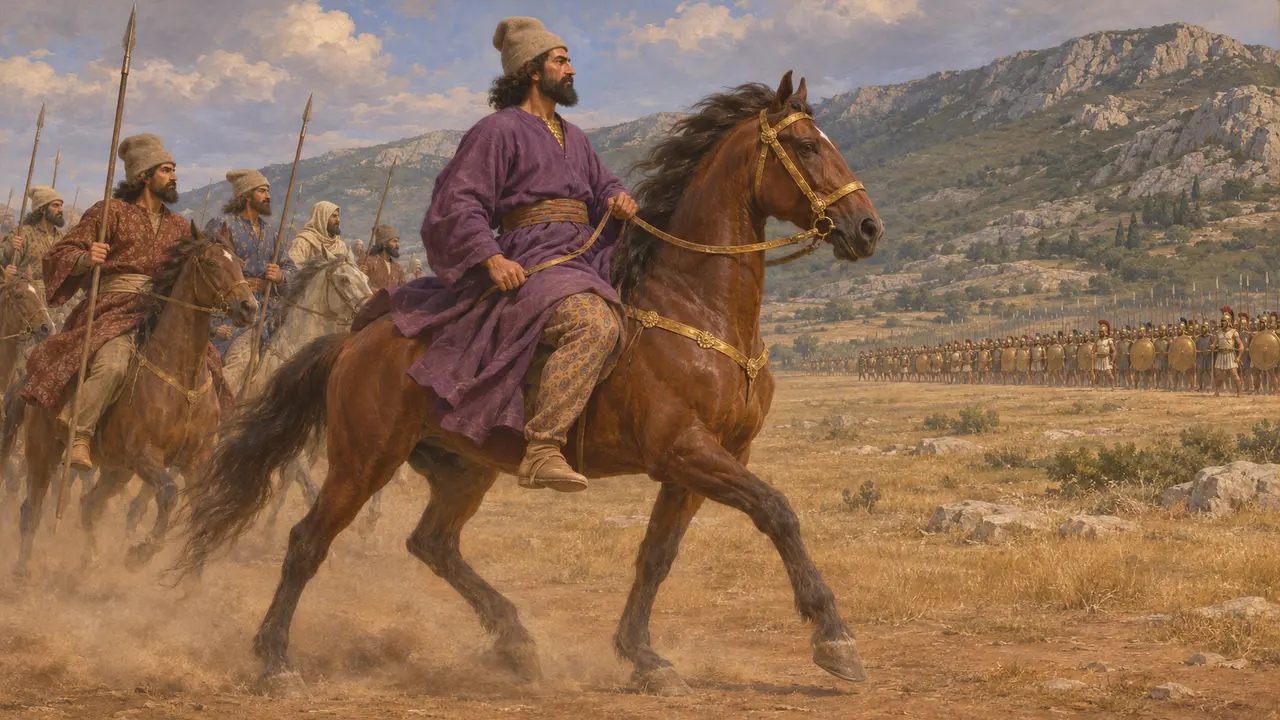
Ancient accountHerodotus tells how Mardonius sent his cavalry against the Greeks below Cithaeron in 479, led by Masistius on a Nisaean horse with a golden bridle, wearing a golden scale corslet under a purple tunic. His horse was struck by an arrow and threw him, and the Athenians killed him. Later the horsemen raided Greek supply trains in the Cithaeron passes and fouled the Gargaphia spring, forcing the Greeks to move camp.
Herodotus 9.20-25; Herodotus 9.39; Herodotus 9.49-51
Guard cavalry and missing horsemen
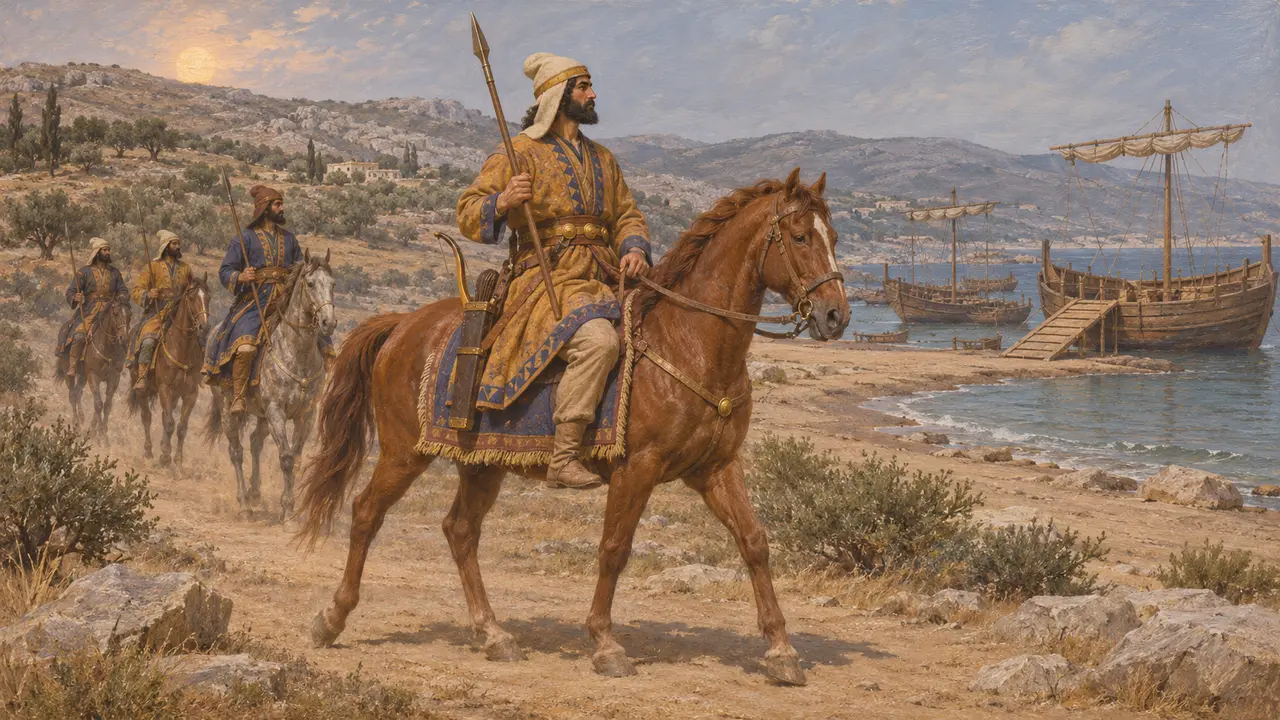
DisputedHistorians debate how the King's cavalry was organised and how large it was. Herodotus's totals for Xerxes' army are generally thought greatly exaggerated, and it is unclear whether his ten thousand Persian horse formed a standing corps. Why cavalry plays no part in his account of Marathon in 490 is also argued. The Suda, a tenth-century Byzantine lexicon, says the horsemen were away, while some modern scholars think they were re-embarking or out of reach.
Herodotus 6.102-117; Suda; P. Briant, From Cyrus to Alexander, 2002
Cyrus and the making of Persian cavalry
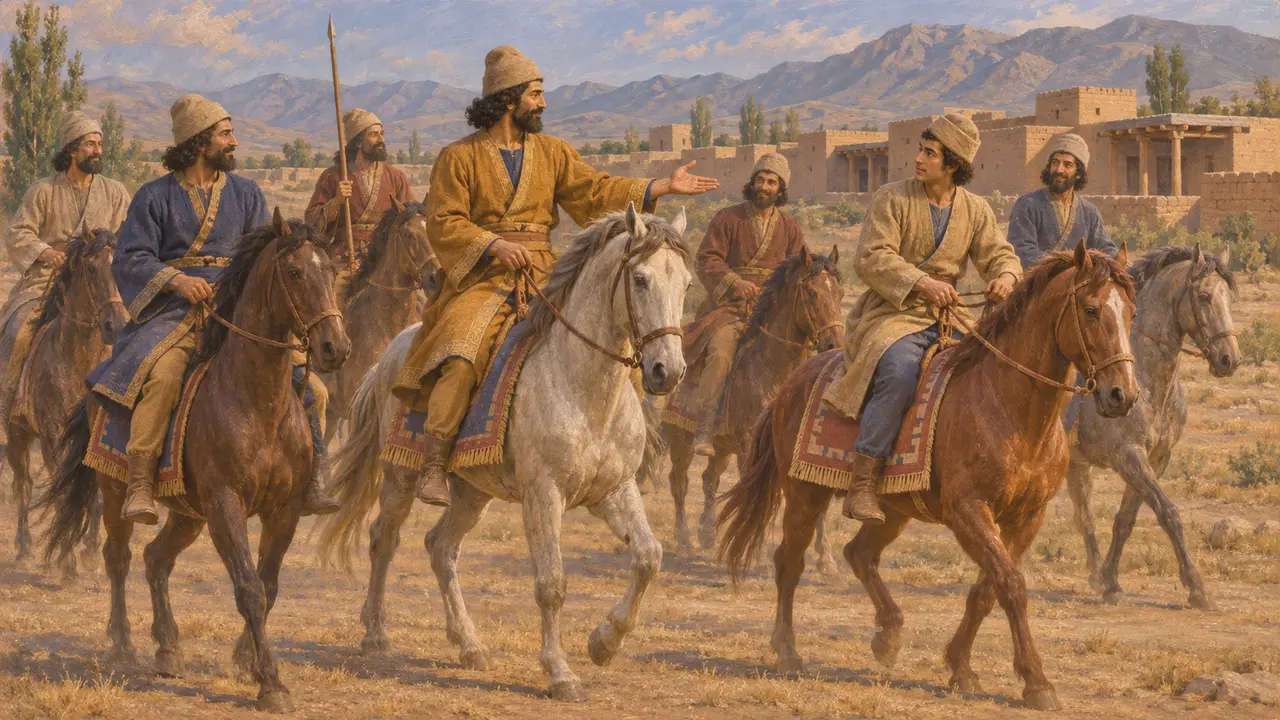
Later legendXenophon's Education of Cyrus says the Persians had no horsemen of their own until Cyrus persuaded his peers to learn to ride and formed them into a cavalry force. The book is an idealised portrait written about a century and a half after Cyrus. Its tale of one wise king inventing Persian cavalry is better read as a moral lesson than as history.
Xenophon, Cyropaedia 4.3
Sources
- Herodotus, Histories 6.102-117, 7.40-41, 7.84, 9.20-25, 9.39, 9.49-51
- DNb
- R. T. Hallock, Persepolis Fortification Tablets, 1969
- P. Briant, From Cyrus to Alexander, 2002
- Xenophon, Cyropaedia 4.3
- Suda