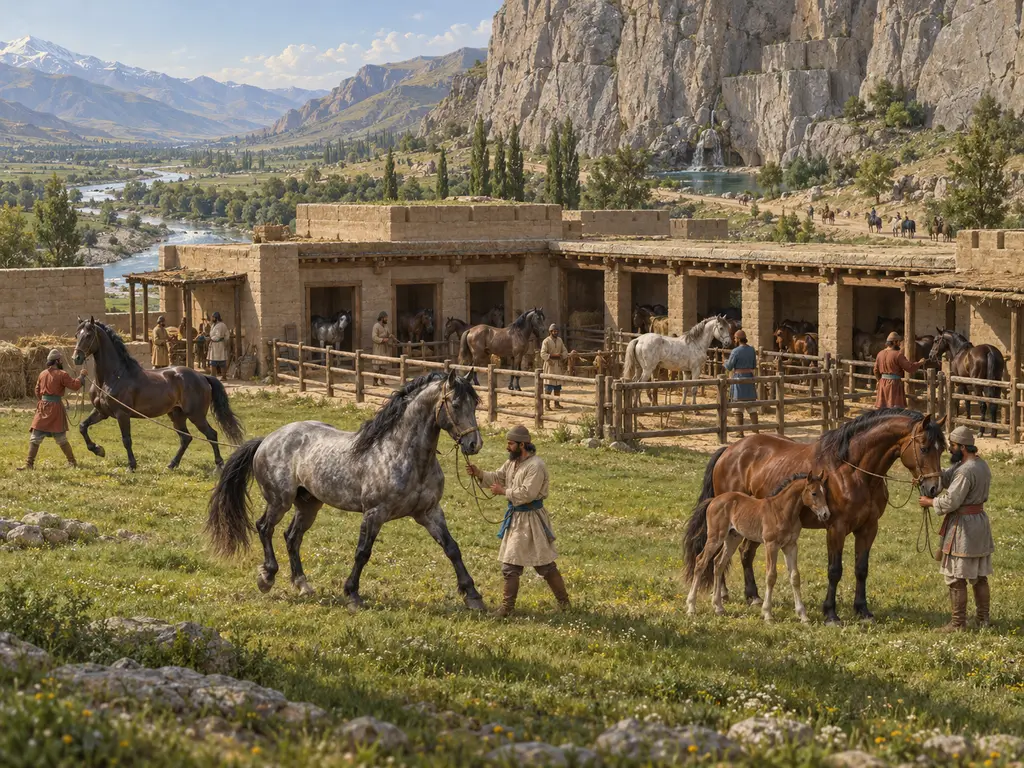
Nisaean Stud
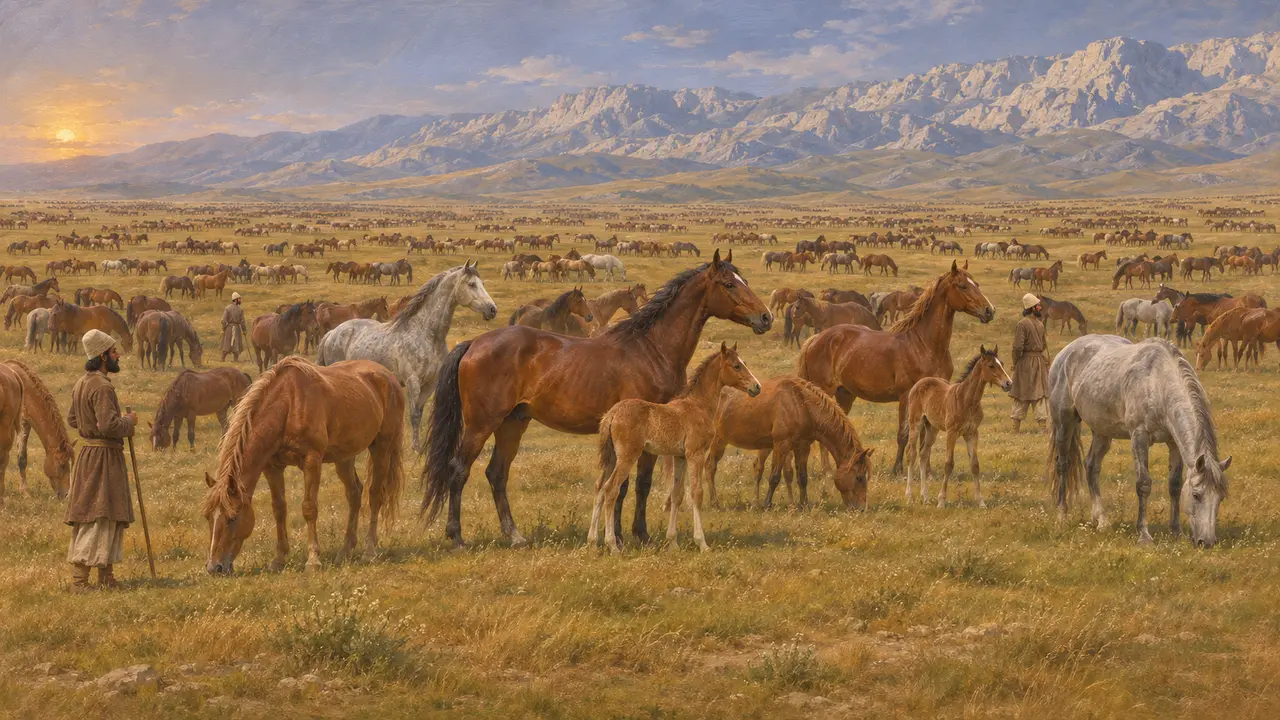
Royal horse pastures on the Nisaean plain in Media, 6th to 5th century BCE
In the game: Level 3: The Lie
The Nisaean plain in Media bred the largest and most valued horses of the Persian empire. Greek writers describe them as mounts of kings and nobles and as sacred horses led before the chariot of the god. The plain is usually placed in the Zagros valleys of Media, perhaps near Bagastana, close to where Darius and a few companions killed the man he called Gaumata in 522.
In the game: Grooms raise horses on fertile meadow at Bagastana, and every horseman the Cavalry Stable trains needs one. This simplifies history: Nisaean horses were prized royal mounts, and cavalry horses also came from other herds and tribute.
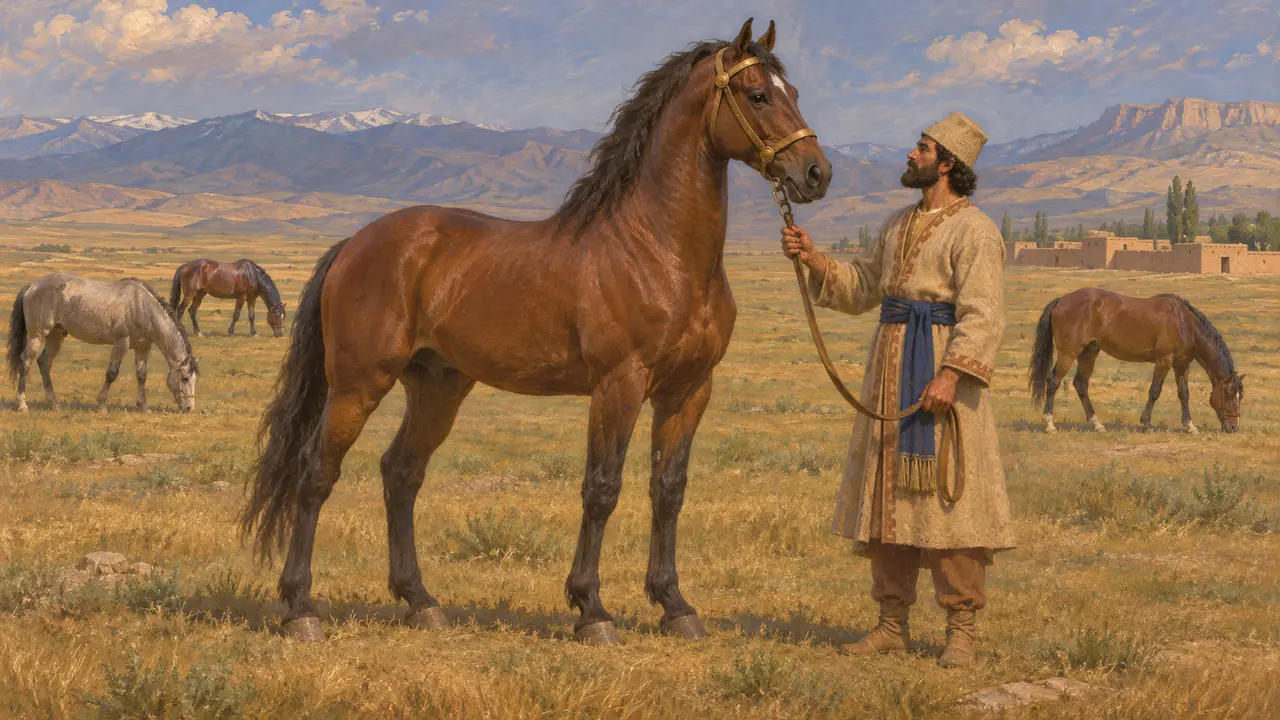
The great horses of Media
Ancient accountHerodotus says the Nisaean horses took their name from a wide plain in Media that bred very large horses. In Xerxes' march of 480 he places ten sacred Nisaean horses ahead of the chariot of Zeus, with Xerxes following in a chariot drawn by Nisaean horses. He also ranks them above the horses of India, and says the Persian cavalry commander Masistius rode a Nisaean horse with a golden bridle at Plataea.
Herodotus 7.40; Herodotus 3.106; Herodotus 9.20
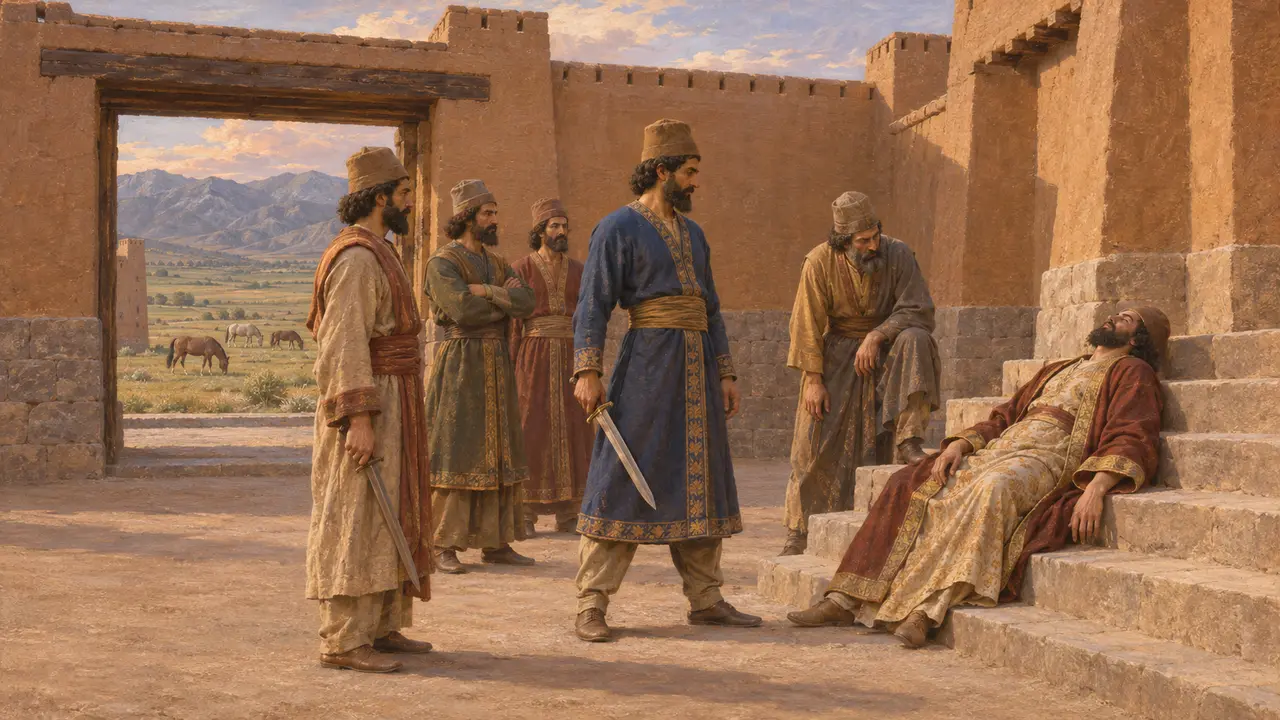
Nisaya in the King's own words
In the recordIn the Behistun inscription Darius says that he and a few men killed Gaumata at the fortress of Sikayauvati, in the district called Nisaya in Media. Many historians link this district with the Nisaean plain of the Greek writers. If they are right, the royal horse country lay close to the scene of Darius's seizure of power.
DB §13
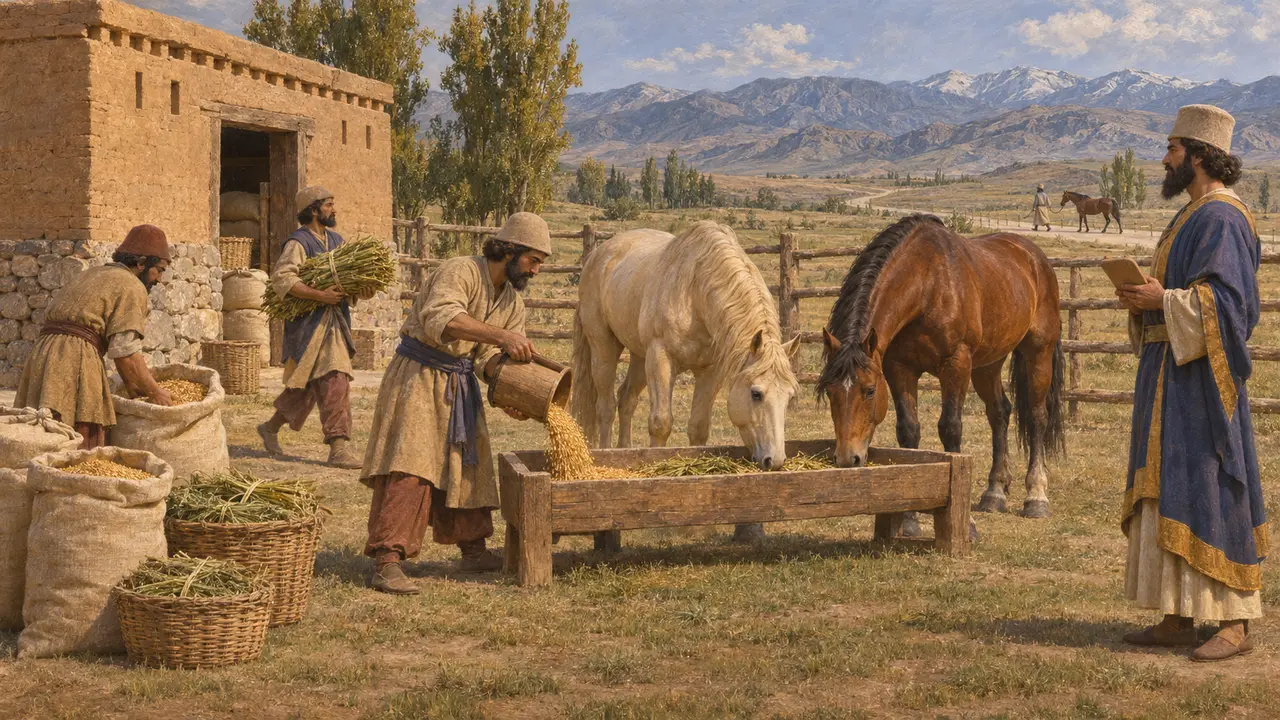
Feeding the King's horses
In the recordThe Persepolis Fortification tablets were written in Elamite between about 509 and 493. They record rations of grain and fodder issued to horses, including animals belonging to the king and horses used by travellers on the royal roads. They show that horses were a regular charge on the stores of the royal economy, issued and accounted for by named officials.
R. Hallock, Persepolis Fortification Tablets, 1969; P. Briant, From Cyrus to Alexander, 2002
Where the plain lay and how large the herds
DisputedLater writers give huge herd sizes. Arrian says Alexander found little more than 50,000 mares on the Nisaean plain, where once there had been about 150,000. Diodorus, writing of pastures near Bagistane, gives 160,000 once and 60,000 in Alexander's day. Strabo notes that some traced the breed to Armenia. Historians still debate where the plain lay and treat these numbers with caution.
Arrian, Anabasis 7.13; Diodorus 17.110; Strabo 11.13.7
Darius and the neighing horse
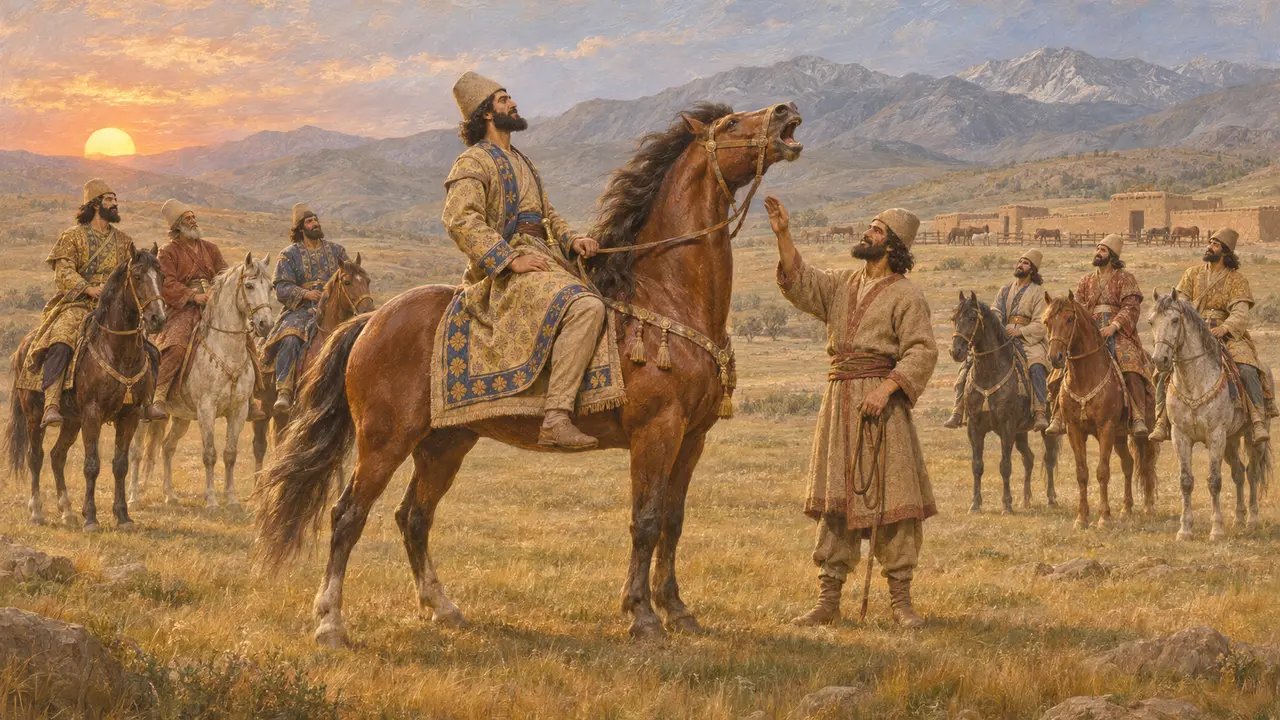
Later legendHerodotus tells how the seven conspirators agreed that the man whose horse neighed first at sunrise would be king. Darius's groom Oebares used a trick to make his master's stallion neigh, and Herodotus gives two versions of how he did it. The story is a Greek tale about cunning, not a record of how Darius became king, and the Behistun inscription says nothing of it.
Herodotus 3.84-87
Sources
- Herodotus, Histories 3.84-87, 3.106, 7.40, 9.20
- Darius, Behistun inscription (DB §13)
- R. Hallock, Persepolis Fortification Tablets, 1969
- Arrian, Anabasis 7.13; Diodorus 17.110
- Strabo, Geography 11.13.7
- P. Briant, From Cyrus to Alexander, 2002