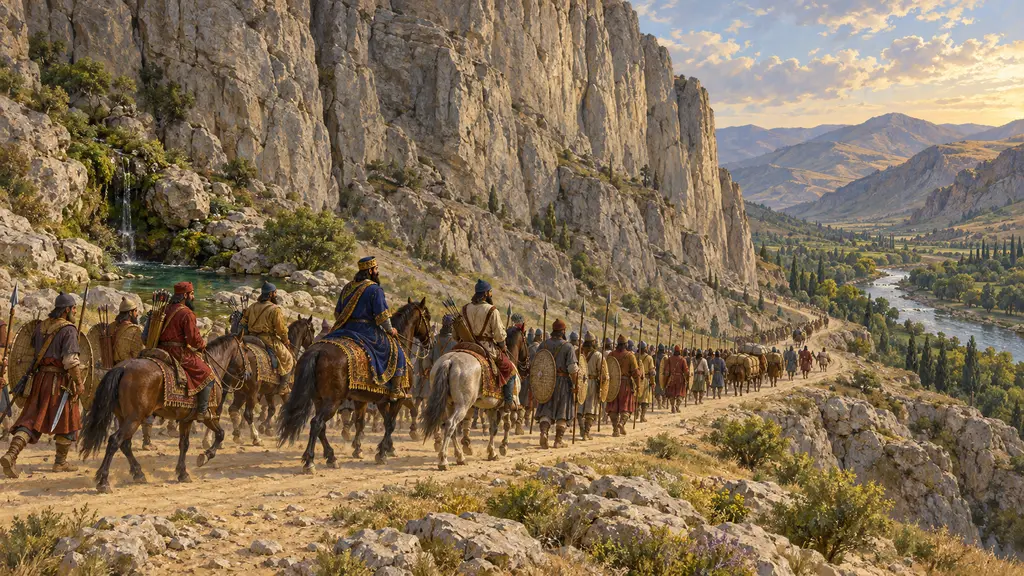
Bagastana (Behistun)
Sacred cliff on the road from Babylon to Ecbatana, carved by Darius, about 520-518 BCE
In the game: Level 3: The Lie
Bagastana, modern Bisitun in western Iran, is a limestone cliff above a spring on the main road from Mesopotamia to Ecbatana. There Darius had his victory over Gaumata and the rebel kings carved in a relief with a long inscription in three languages. It is the fullest Persian account of how he took the throne, and in modern times it became the key to reading cuneiform.
In the game: Level 3 presents Bagastana as the place where the King's relief is cut into the cliff. The level is set in 522-521 BCE, but the carving probably began only after the victories, about 520 BCE, and was extended over the next few years.
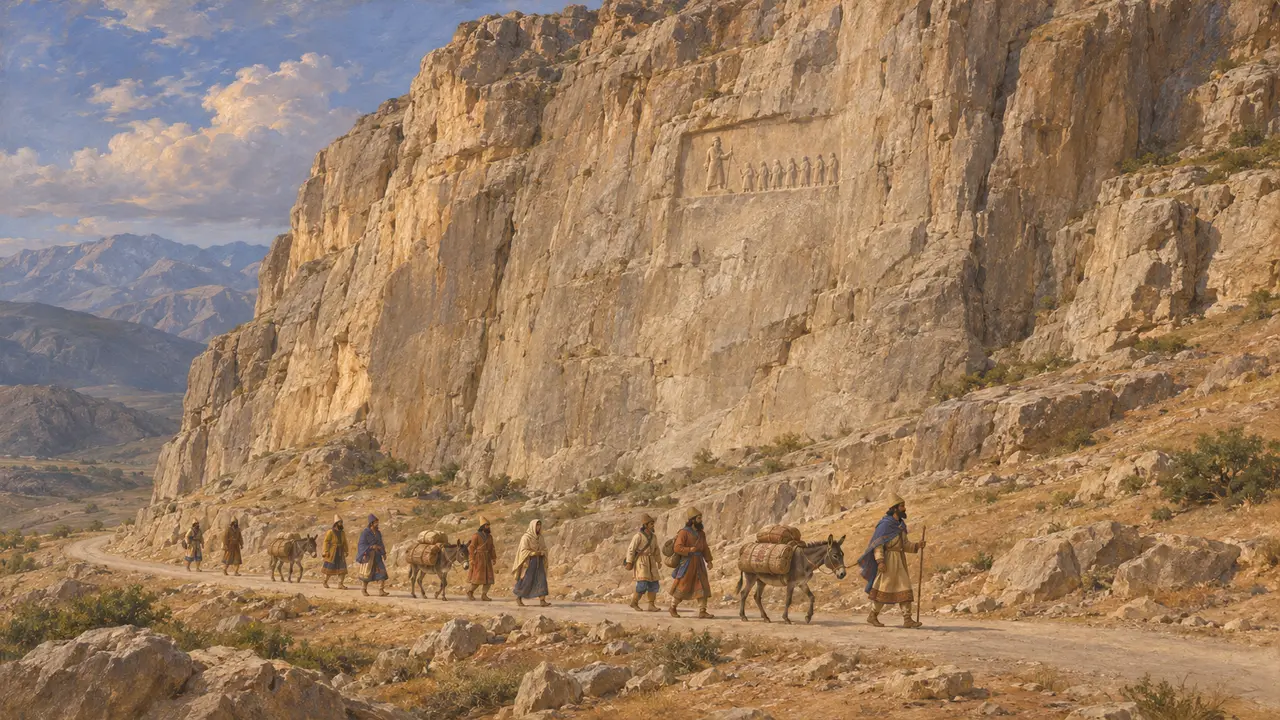
A place of the gods on the royal road
Ancient accountThe name probably comes from a reconstructed Old Persian baga-stana, place of the gods. Diodorus, drawing on Ctesias, calls the mountain Bagistanon and says it was sacred to Zeus, the Greek name for a great sky god. The cliff stood on the busy route between Babylon and the Median capital Ecbatana, so travellers on that road would see the monument, at least from below.
Diodorus 2.13
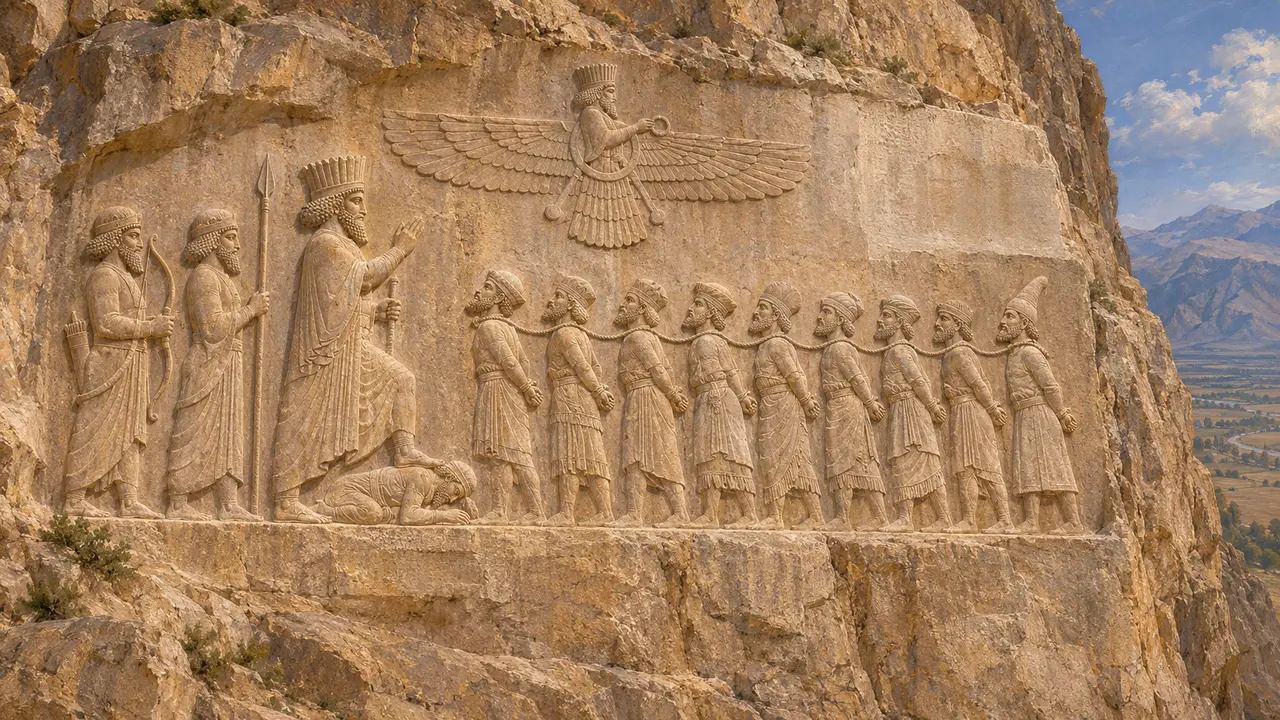
The relief of Darius and the bound kings
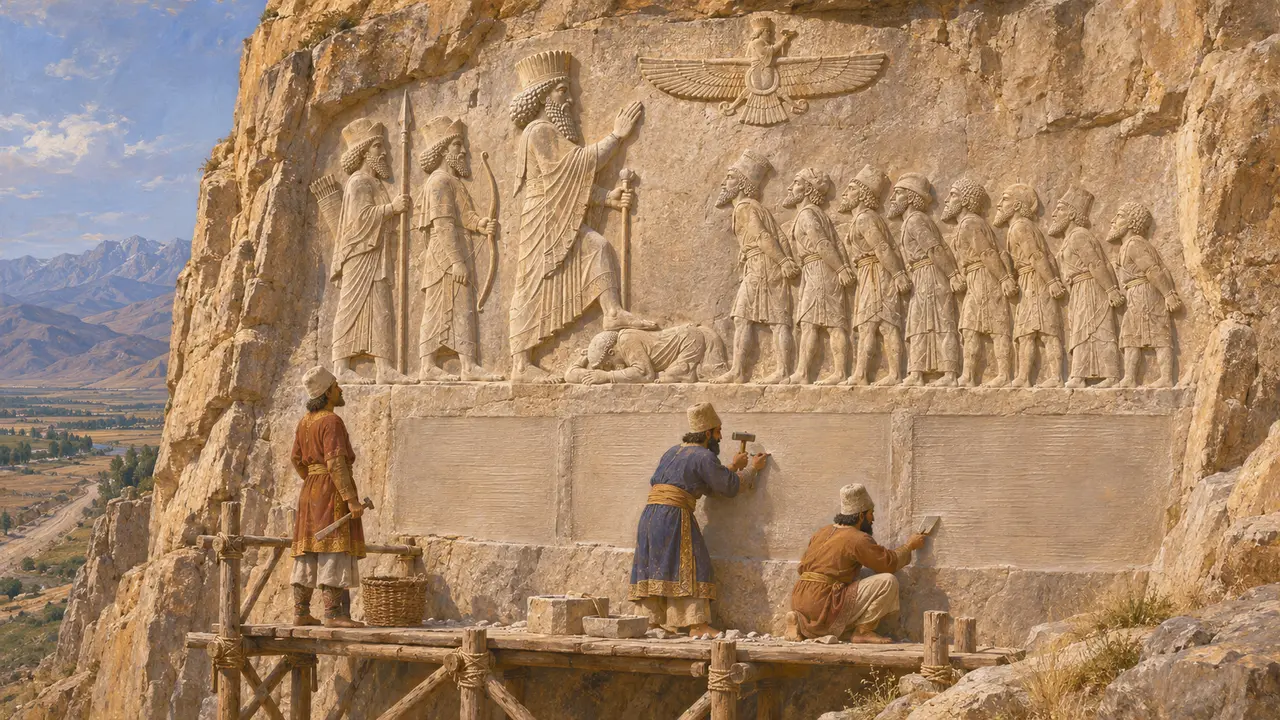
In the recordThe relief, about 60 metres above the plain, shows Darius with his foot on the fallen Gaumata, followed by two attendants with bow and spear. Eight captive rebel kings stand before him, roped at the neck, and a winged figure hovers above. A ninth standing captive, Skunkha the Saka, was added after the Saka campaign of about 519 BCE. Carving his figure destroyed part of the first Elamite text, which was cut again nearby.
DB; R. Schmitt, The Bisitun Inscriptions of Darius the Great: Old Persian Text, 1991
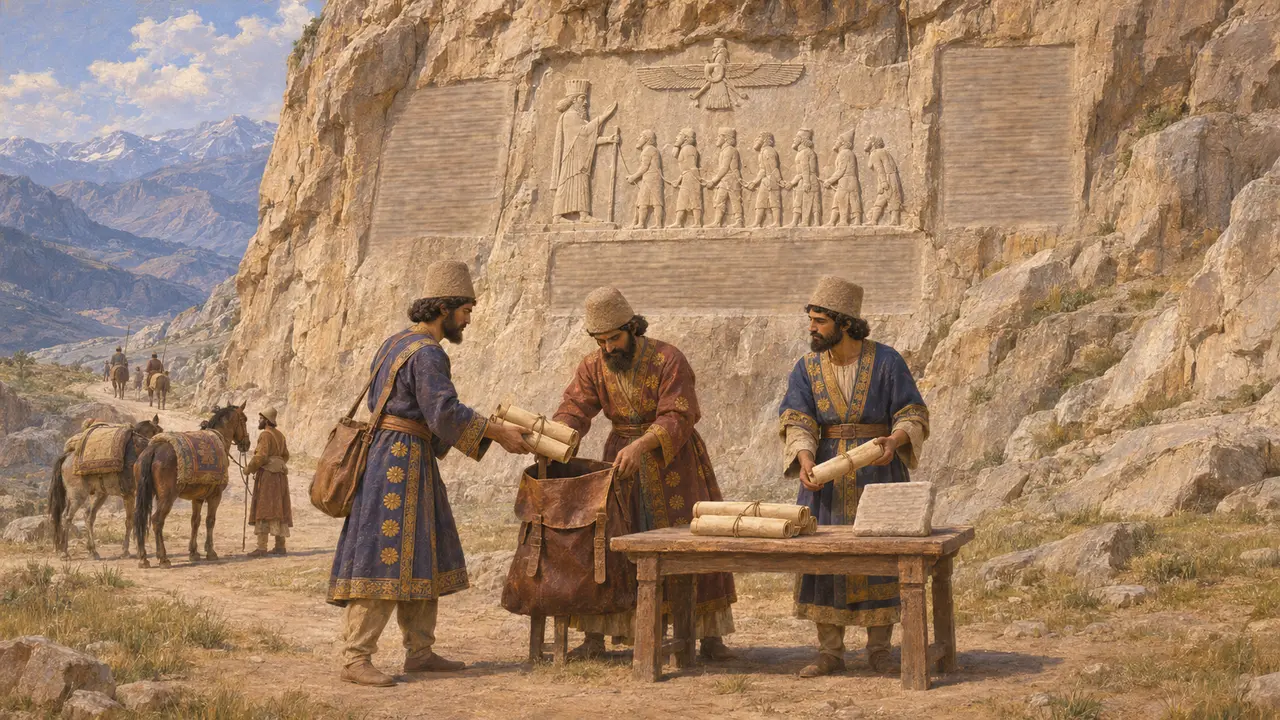
Three languages and copies across the empire
In the recordThe inscription survives in Elamite, Babylonian and Old Persian. It tells how Darius killed Gaumata and, by his own count, defeated nine liar kings, Gaumata among them, in a single year. In §70 he says he sent the text out to the provinces, and pieces of a Babylonian copy on stone were found at Babylon, while an Aramaic version on papyrus survives from Elephantine. Henry Rawlinson copied the cliff text between 1835 and 1847, which helped scholars decipher cuneiform.
DB §70; J. Greenfield and B. Porten, The Bisitun Inscription of Darius the Great: Aramaic Version, 1982
Arguments over the script and the story
DisputedIn DB §70 Darius says he made a new form of writing. Many take this to mean Old Persian cuneiform was devised for this monument, as its text was added after the Elamite and Babylonian versions, but others disagree. Darius and Herodotus both call the man he killed a magus who posed as Cyrus's son Bardiya, whom Herodotus names Smerdis. Some historians think he was the real Bardiya, which would make the inscription a defence of a seized throne.
DB §70; Herodotus 3.61; P. Briant, From Cyrus to Alexander, 2002
Semiramis at the mountain
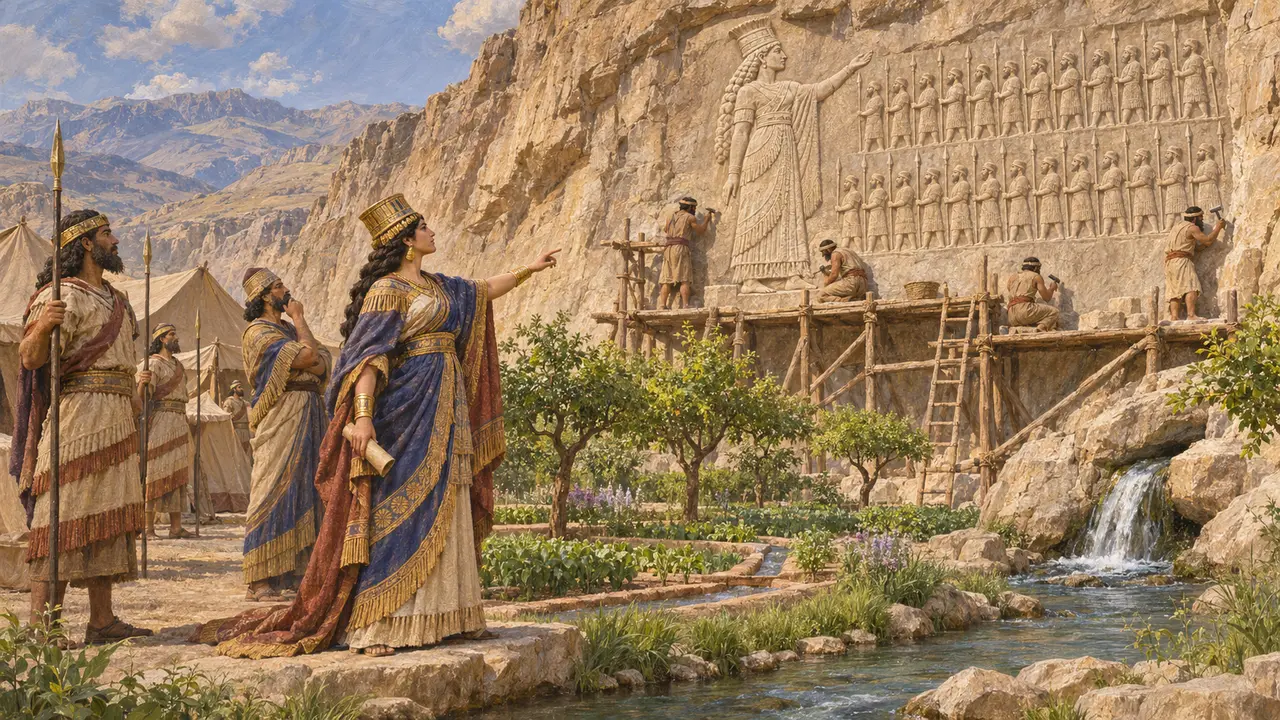
Later legendDiodorus, following Ctesias, says that the Assyrian queen Semiramis camped below the mountain, laid out a park by the spring, and had her own image carved on the cliff with a hundred of her guards. The tale belongs to Greek stories of a half-mythical eastern queen and is not reliable history. It suggests that by about 400 BCE, when Ctesias wrote, Greek writers or their informants no longer linked the relief with Darius.
Diodorus 2.13
Sources
- Darius I, Behistun inscription (DB)
- R. Schmitt, The Bisitun Inscriptions of Darius the Great: Old Persian Text, 1991
- J. Greenfield and B. Porten, The Bisitun Inscription of Darius the Great: Aramaic Version, 1982
- A. Kuhrt, The Persian Empire: A Corpus of Sources from the Achaemenid Period, 2007
- P. Briant, From Cyrus to Alexander, 2002
- Diodorus 2.13; Herodotus 3.61