The King's Relief
Darius I's carved relief and inscription in three languages, Bagastana, about 520 BCE
In the game: Level 3: The Lie
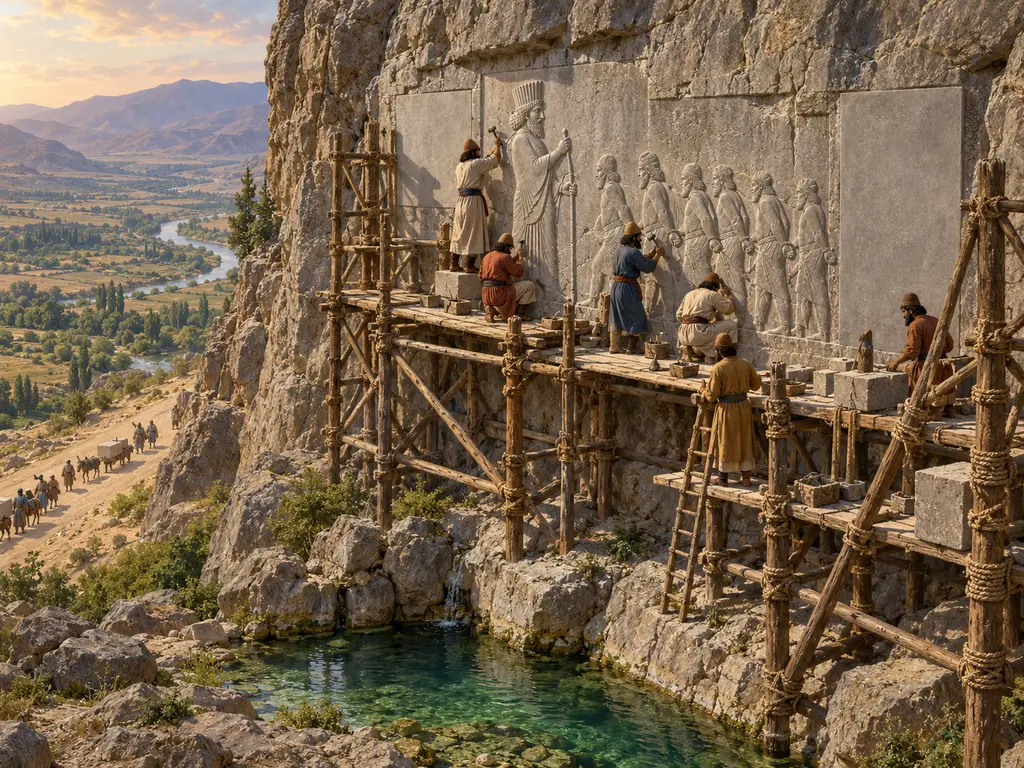
The King's Relief is the monument Darius I had carved on the cliff of Bagastana, modern Bisotun in western Iran, above the road from Babylon to Ecbatana. A sculpted panel shows the King standing over the rebels he defeated in 522-521, and beside it runs his account in Old Persian, Elamite and Babylonian. It is the longest royal inscription of the empire and Darius's own version of how he won the throne.
In the game: In the Bagastana level the relief is raised part by part against the rock above the road, with limestone for each part and timber for scaffolds every third part. The game dates it 521; the carving probably began about 520 and was extended later.
The carved panel
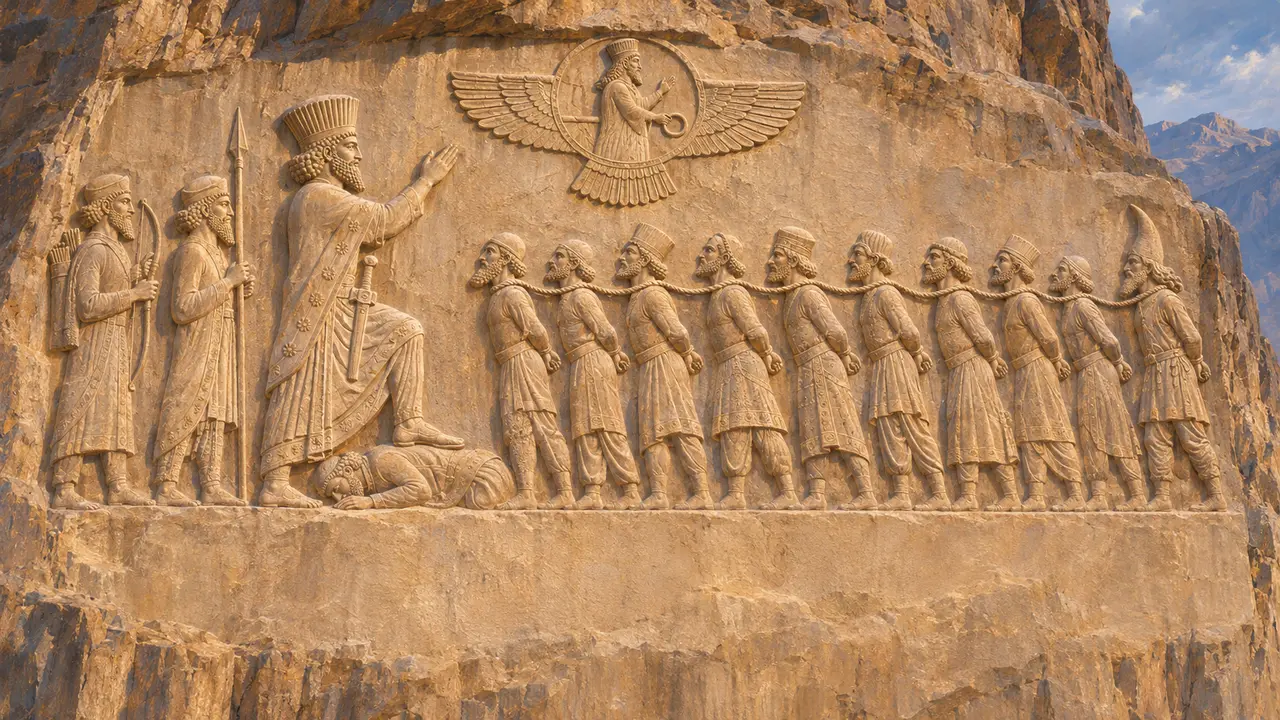
In the recordThe relief sits some 60 metres up the cliff, and Darius, larger than the other figures, rests his foot on the fallen magus Gaumata. He raises a hand towards a winged figure in a disc, while two attendants with bow and spear stand behind him. Before him eight rebel kings wait, bound at the hands and roped together by the neck. A ninth figure, Skunkha the Saka in his pointed cap, was squeezed in at the end of the line after a later campaign.
Behistun relief; R. Schmitt, The Bisitun Inscriptions of Darius the Great, 1991
What the King's text says
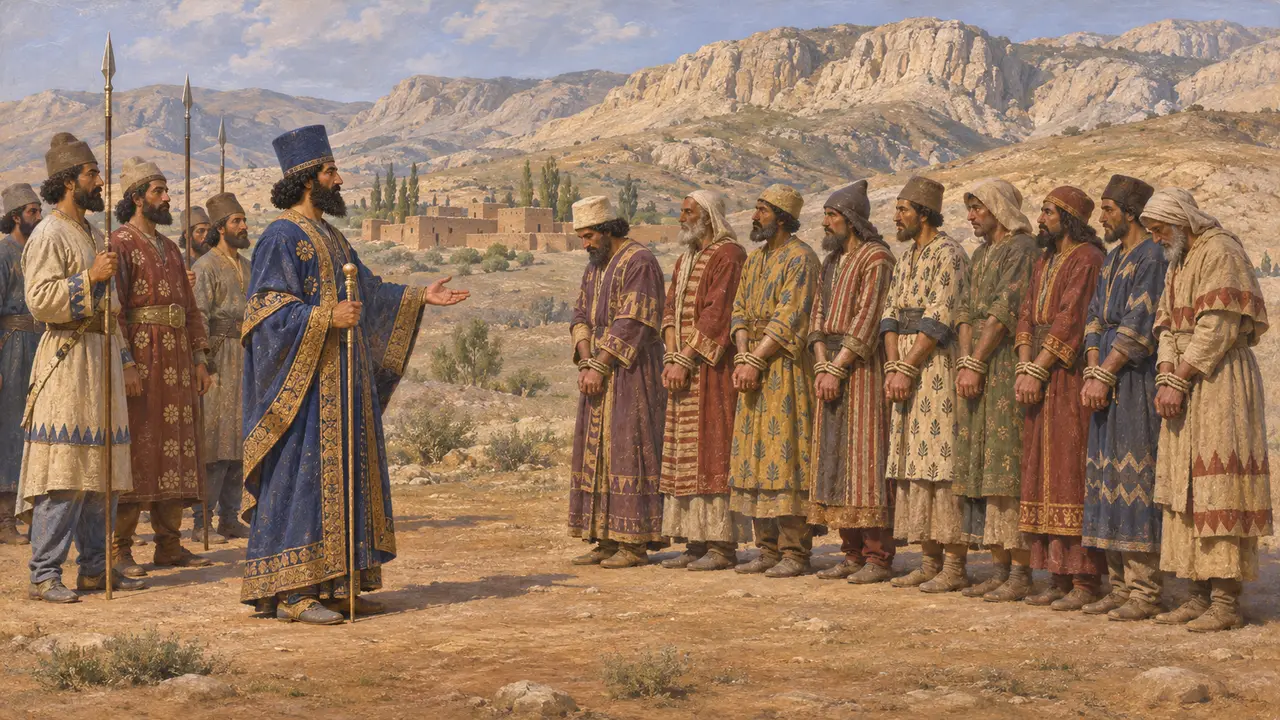
In the recordDarius says that Cambyses secretly killed his brother Bardiya, and that in 522 the magus Gaumata claimed to be Bardiya and took the kingship. Darius and six helpers killed him in Media (DB §§10-13, §68). Revolts then broke out in Elam, Babylon, Media, Persis, Margiana and elsewhere, and Darius claims nineteen battles and nine captured kings within one year (DB §52). A fifth column, added later, tells of campaigns against Elam and the Saka.
DB §§10-13, §52, §68
Three languages and many copies
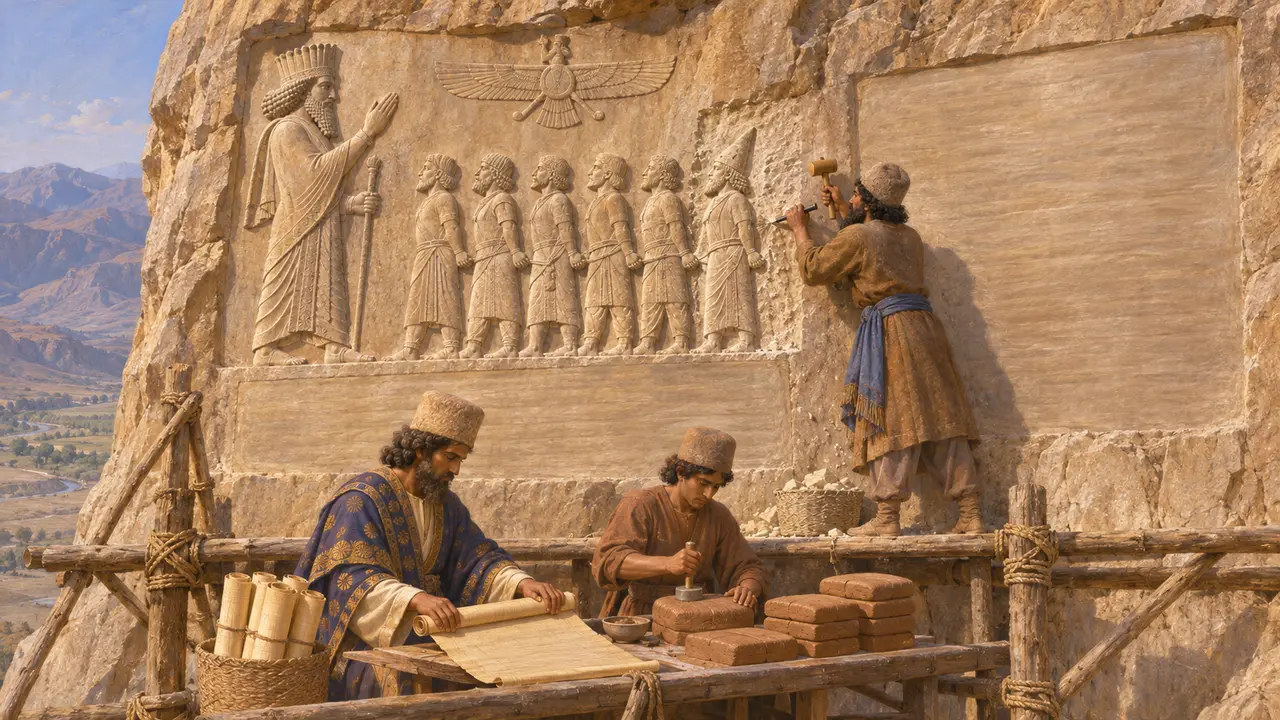
In the recordThe text was probably carved first in Elamite, then in Babylonian, with the Old Persian added last; when Skunkha was inserted, part of the first Elamite text was cut away and a second Elamite copy was made. In DB §70 Darius says he made the inscription in a new way, in Aryan, and sent it to every land, which many scholars read as the creation of the Old Persian script. A Babylonian copy survives in fragments from Babylon, and an Aramaic version on papyrus from Elephantine.
DB §70; J. C. Greenfield and B. Porten, The Bisitun Inscription of Darius the Great: Aramaic Version, 1982
Impostor or true prince
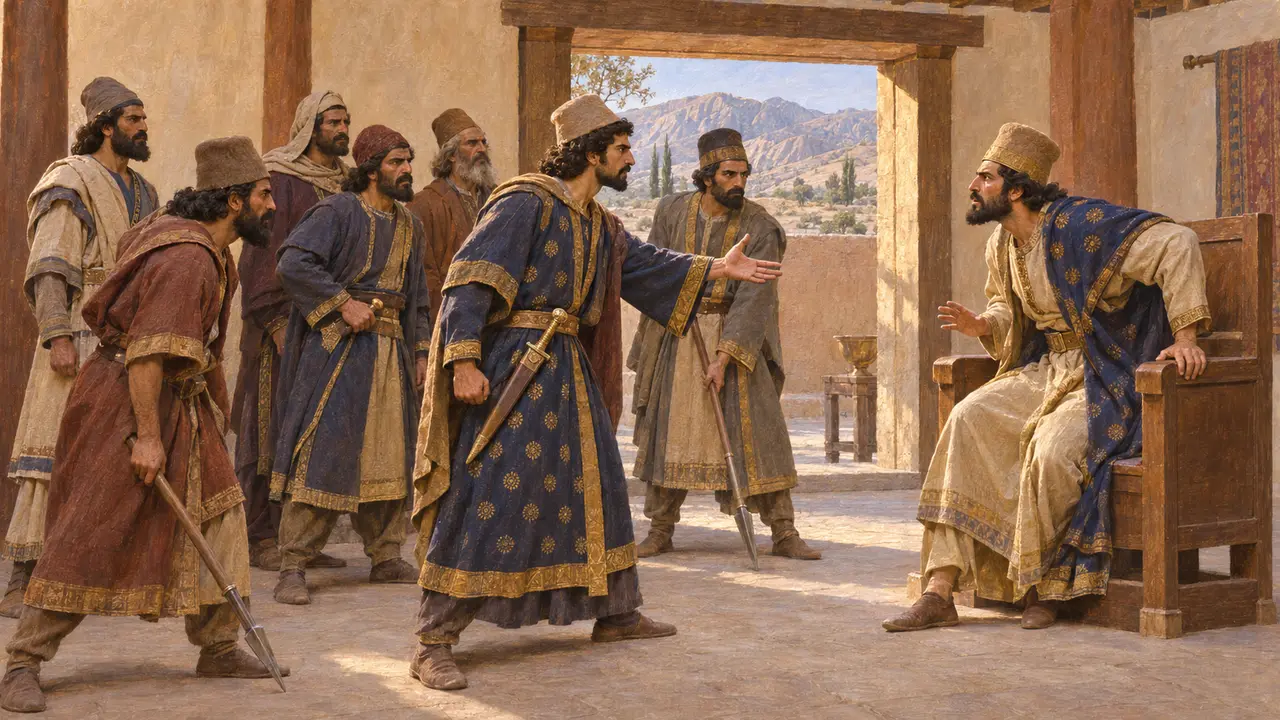
DisputedHerodotus tells a similar story, calling the false king Smerdis and listing seven conspirators, though one of his names, Aspathines, differs from the Ardumanish named by Darius. Both versions may go back to the same court tradition, so nothing independent confirms the impostor tale. Some historians think Darius killed the real Bardiya and invented the magus to justify taking the throne, while others accept the King's account. The question remains open.
Herodotus 3.61-88; P. Briant, From Cyrus to Alexander, 2002
A queen's monument in Greek legend
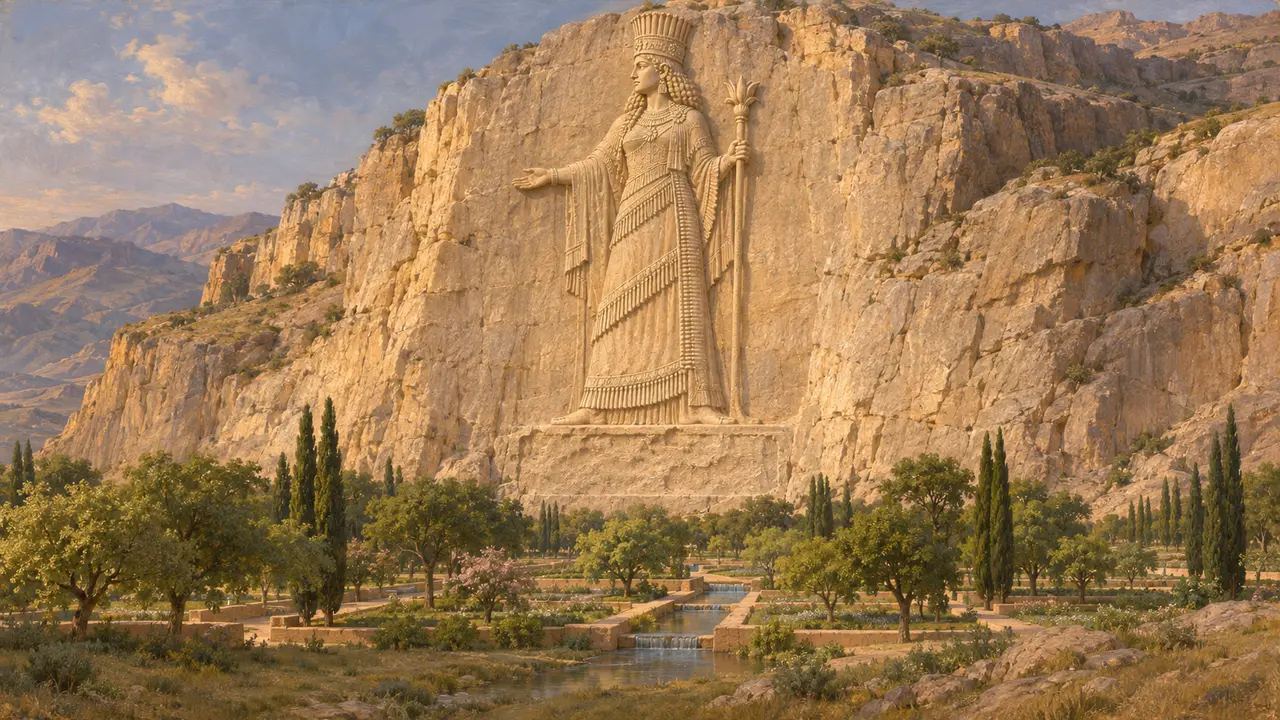
Later legendSome Greek writers credited the relief to someone other than Darius. Ctesias, as used by Diodorus, said the Assyrian queen Semiramis laid out a park at Bagistanon and had her own image carved on the cliff with an inscription in Syrian letters. The story belongs to the tales told about Semiramis and has nothing to do with the real monument, which names Darius throughout.
Diodorus 2.13
Sources
- Behistun inscription, DB (Old Persian, Elamite and Babylonian versions)
- R. Schmitt, The Bisitun Inscriptions of Darius the Great: Old Persian Text, 1991
- A. Kuhrt, The Persian Empire: A Corpus of Sources from the Achaemenid Period, 2007
- Herodotus 3.61-88
- P. Briant, From Cyrus to Alexander, 2002
- Diodorus 2.13