Skunkha
Saka chief captured by Darius and added to the Behistun relief, probably after 520 BCE
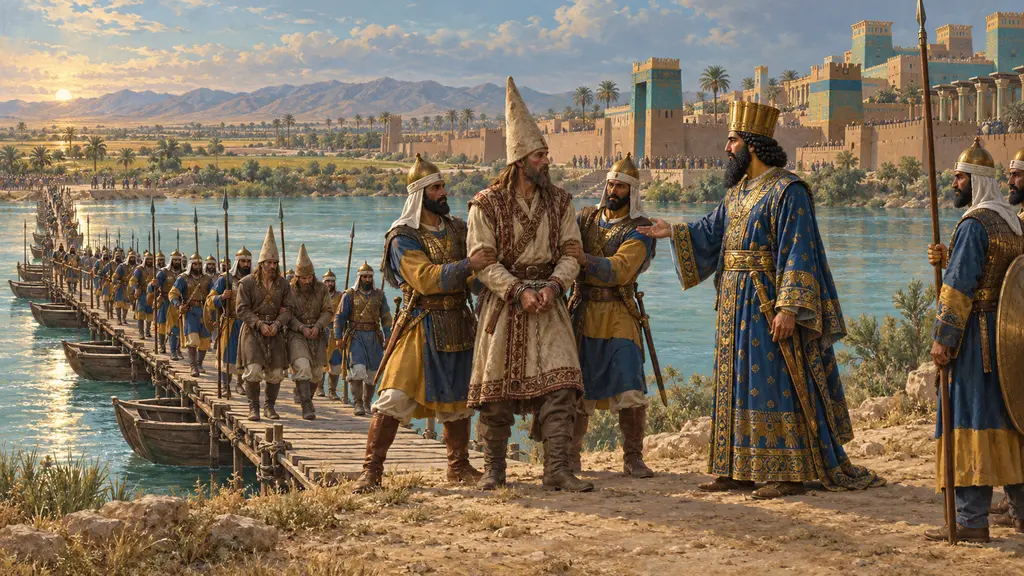
Skunkha was a chief of the pointed-hat Saka whom Darius says he captured after crossing a sea. He is the last figure carved on the Behistun relief, added to it after the first design. Only Darius's own inscription names him, and it leaves his lands and the date uncertain.
In the game: Skunkha is named only in the Encyclopedia's event articles, chiefly the campaign against Skunkha, and has no mechanic of his own.
What Darius says
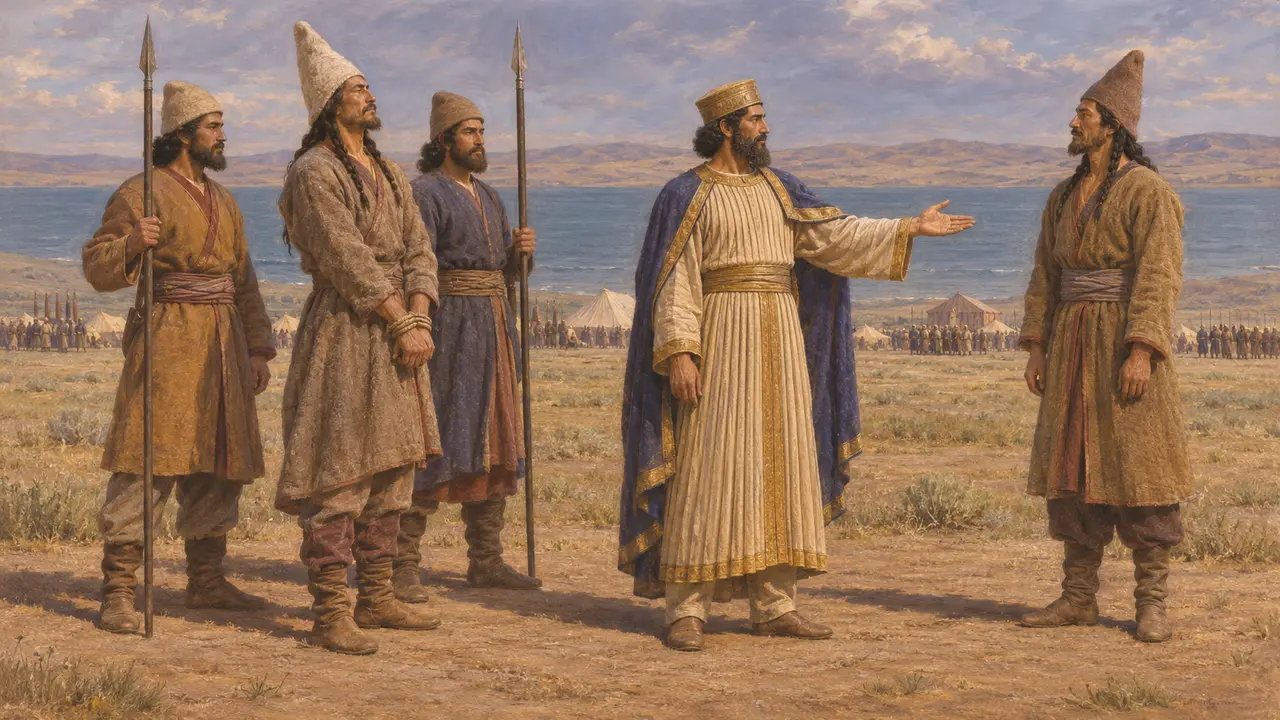
In the recordIn DB §74 Darius says he marched against the Saka who wear pointed caps and crossed a sea with his army. He says he defeated them heavily. Skunkha, named as their chief, was seized and brought to him. Darius then says he set another man over them as he wished.
DB §74
The figure on the rock
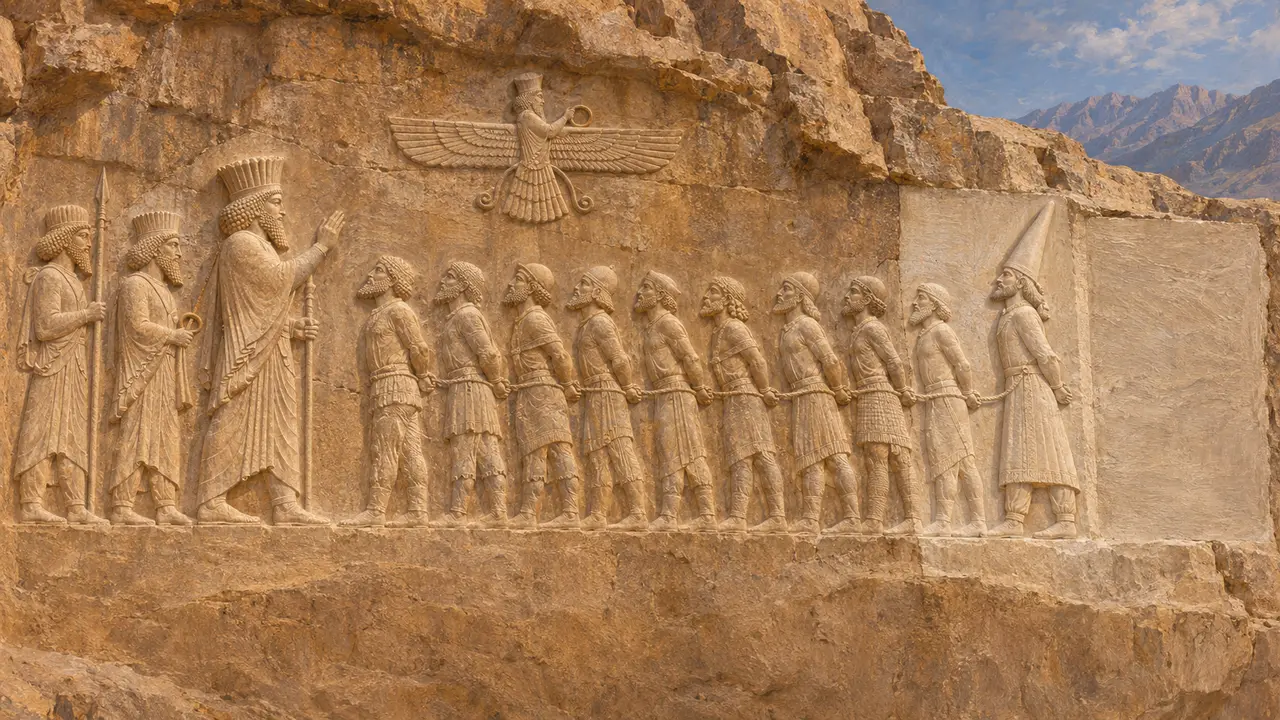
In the recordSkunkha stands at the end of the line of bound rebels before Darius, in a tall pointed cap. He was not part of the original design. The relief was extended to fit him, and the added inscription in column V was cut later. The monument was therefore updated after the first carving.
DB §74
A later campaign
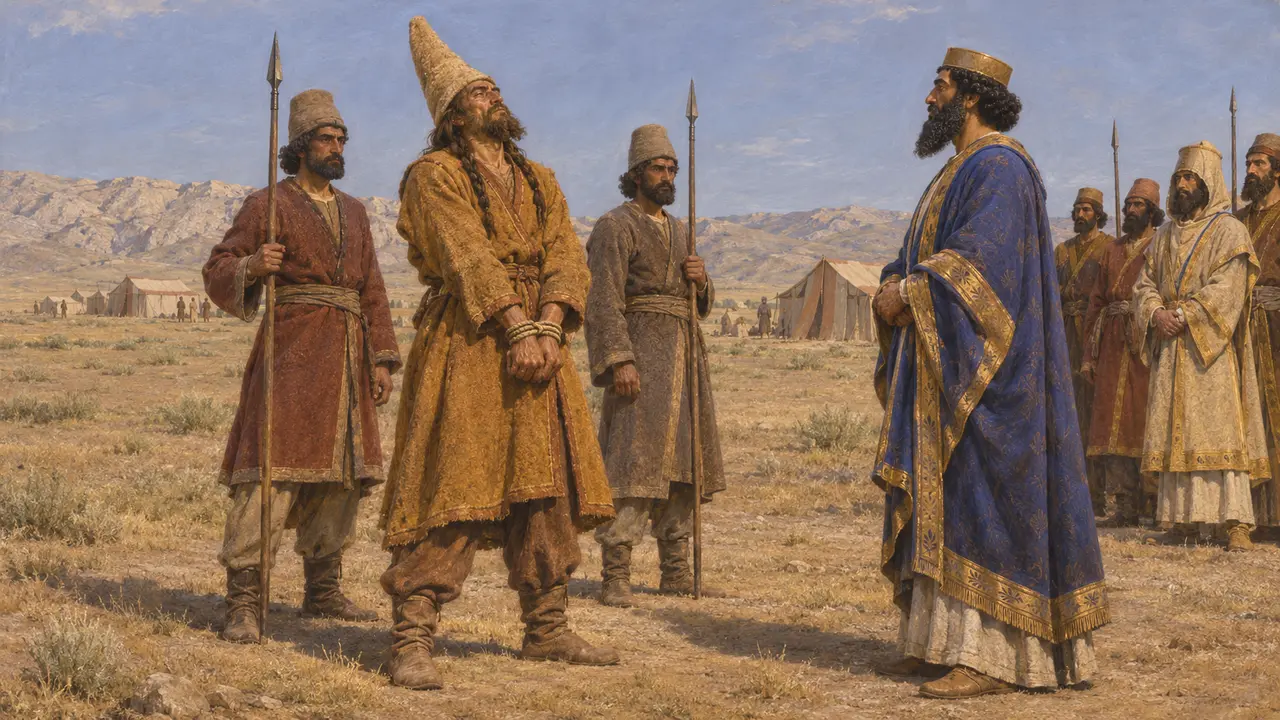
In the recordThe other bound figures at Behistun are men who rose against Darius in 522 and 521, told in the first four columns. Skunkha belongs to the added fifth column, which describes a later campaign. There Darius calls these Saka faithless and says they did not worship Auramazda, but he tells their war apart from the revolts of his first year.
DB §74
Which Saka, and which sea
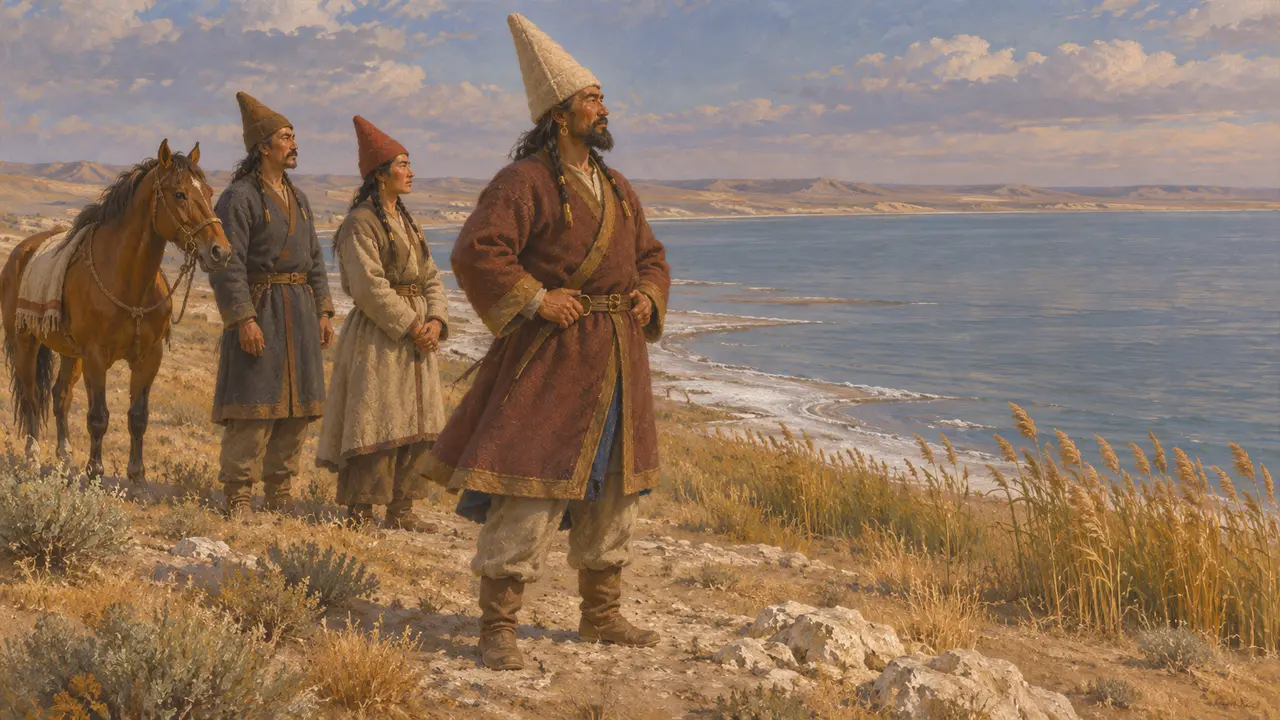
DisputedDarius's royal inscriptions name several groups of Saka, and the pointed-hat group is one of them. Historians disagree on where they lived and which sea Darius crossed. Proposed answers include the Aral and Caspian regions, and the date is also open, though the campaign probably came a year or more after the first carving.
P. Briant, From Cyrus to Alexander, 2002
Greek writers and the Saka
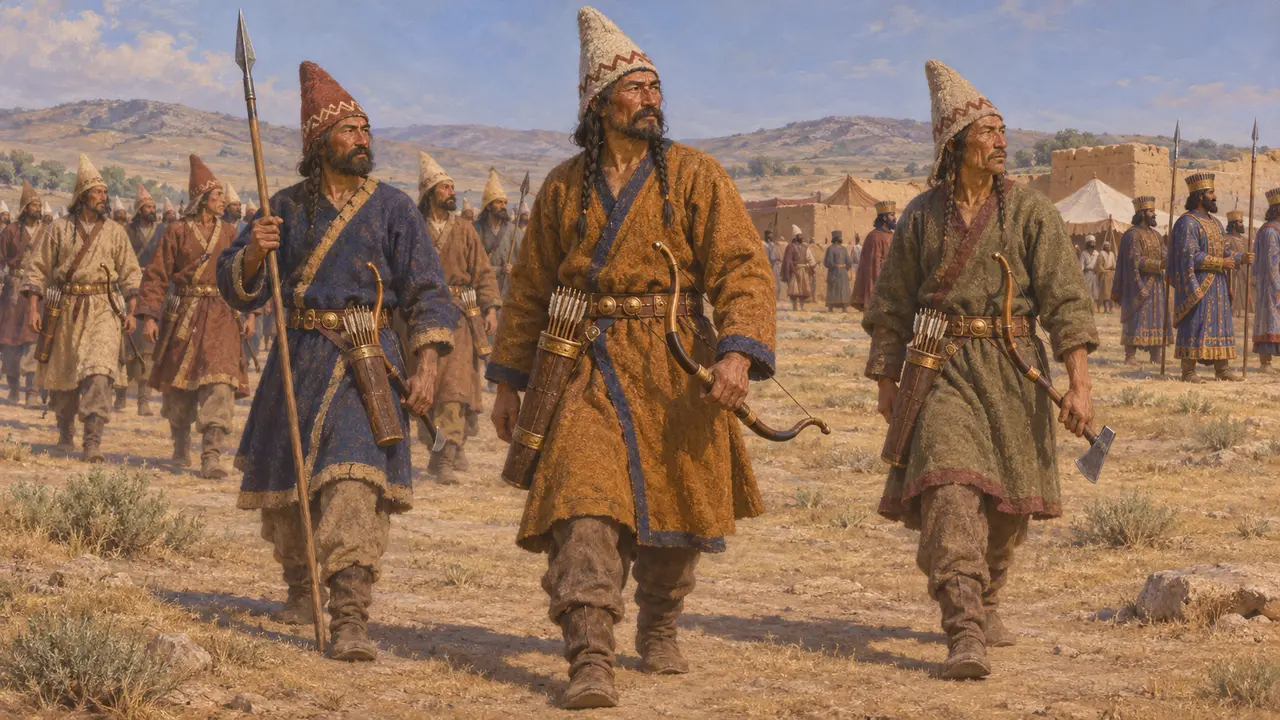
Ancient accountHerodotus never names Skunkha. He lists the Saka and Caspians together in one tribute district, and he describes the Amyrgian Saka among the troops of Xerxes. Skunkha therefore comes only from the Persian side, with no Greek story about him.
Herodotus 3.93; Herodotus 7.64
Sources
- DB §74
- Herodotus 3.93
- Herodotus 7.64
- P. Briant, From Cyrus to Alexander, 2002