Encyclopedia › Battles and events
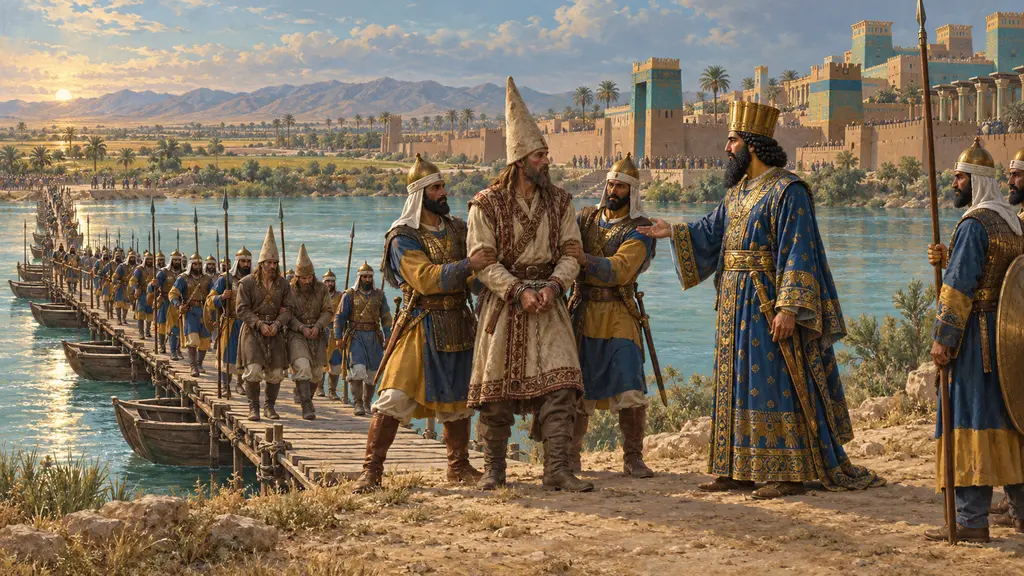
Darius's campaign against Skunkha
Darius's war on the pointed-cap Saka of Central Asia, about 519 BCE
In the game: Level 5: The Charter
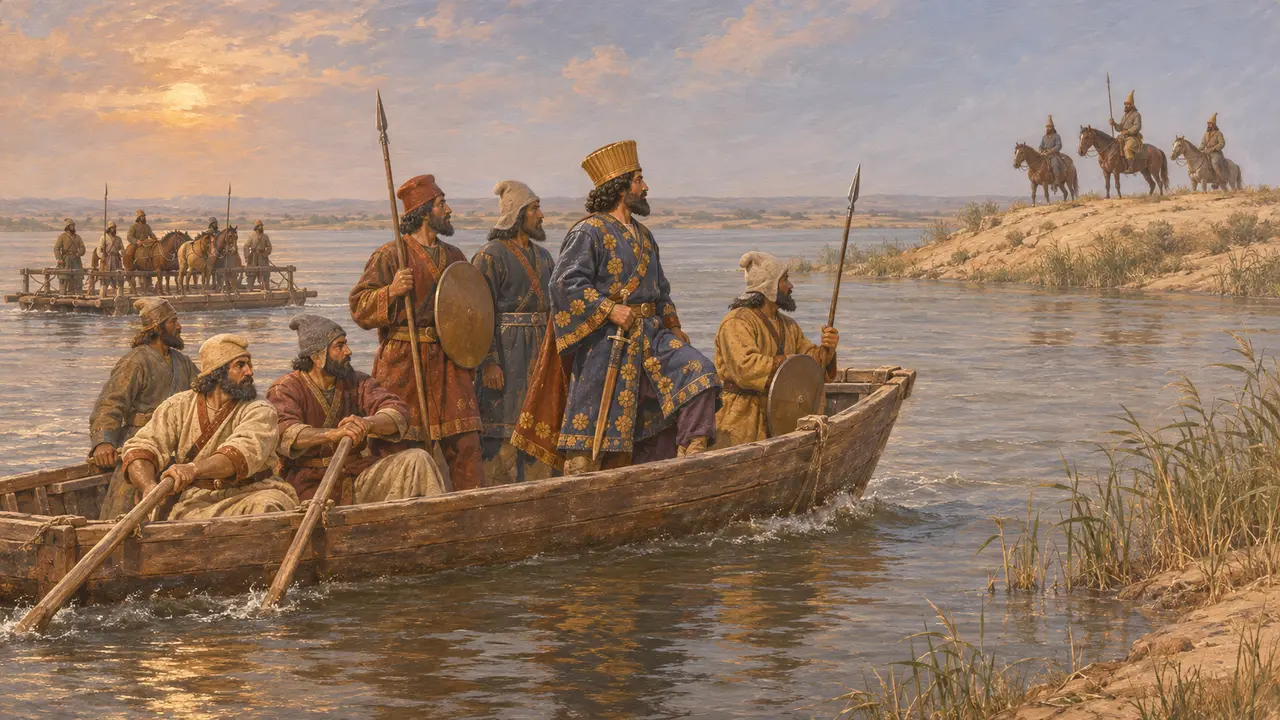
In about 519, Darius led an army against the Saka who wore the pointed cap, crossed a sea or great water to reach them and took their chief Skunkha prisoner. The campaign is known almost only from the fifth column of the Behistun inscription, and Skunkha was carved as the last captive in the row before the King. It carried Darius's power onto the steppe frontier where, Herodotus says, Cyrus had died.
In the game: The game shows Darius marching out, crossing the water and capturing Skunkha, as Behistun tells it. Its date of about 519-518 fits Darius's third regnal year; the inscription itself gives no exact day or month for the campaign.
What the Behistun inscription says
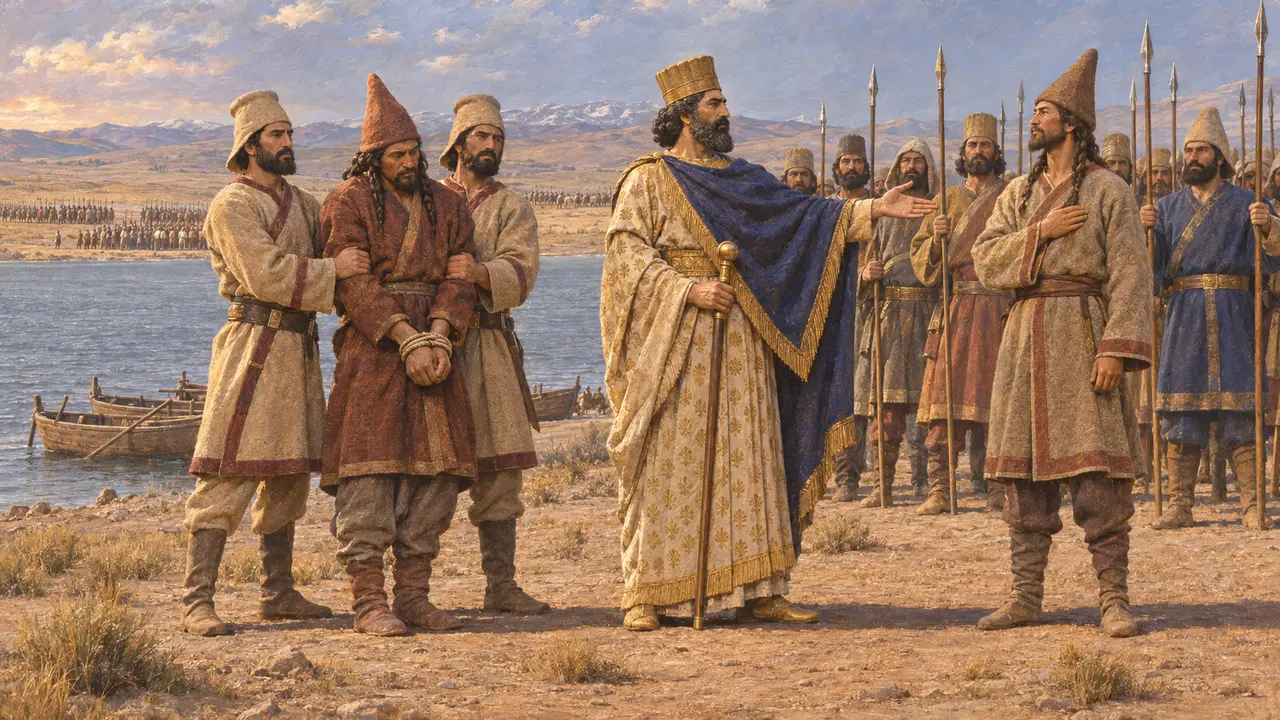
In the recordThe fifth column of the Behistun inscription was carved in Old Persian only and added after the main text. It groups the campaign with deeds of Darius's second and third years. Darius went with an army against the Saka who wear the pointed cap, reached the sea, crossed it with his army and defeated them. Their chief Skunkha was seized and led to him, and Darius made another man chief in his place.
DB §71, §74
A religious reason given
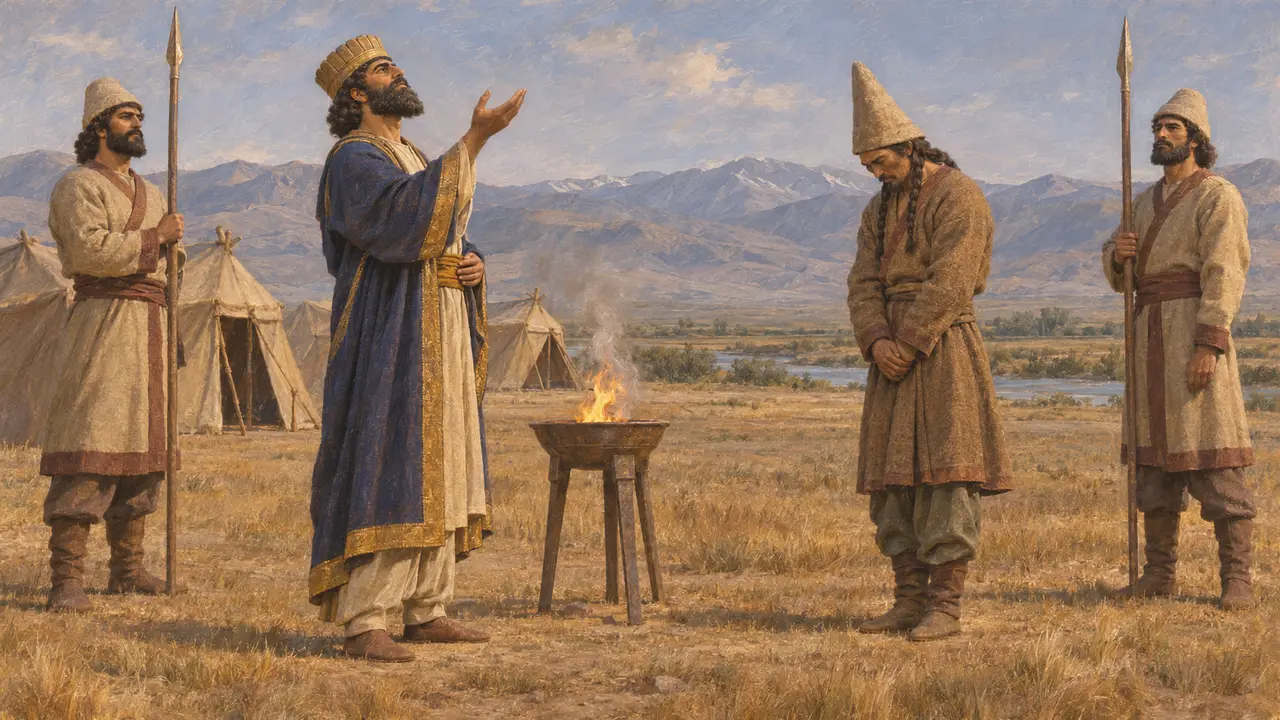
In the recordThe same column calls these Saka faithless and says they did not worship Auramazda, while Darius did. By the god's favour he therefore dealt with them as he wished. The text ends with a lesson that whoever worships Auramazda will be blessed in life and after death. The campaign was thus presented as a sign of divine support, like the earlier victories over the rebels of 522-521.
DB §75-76
Skunkha added to the relief
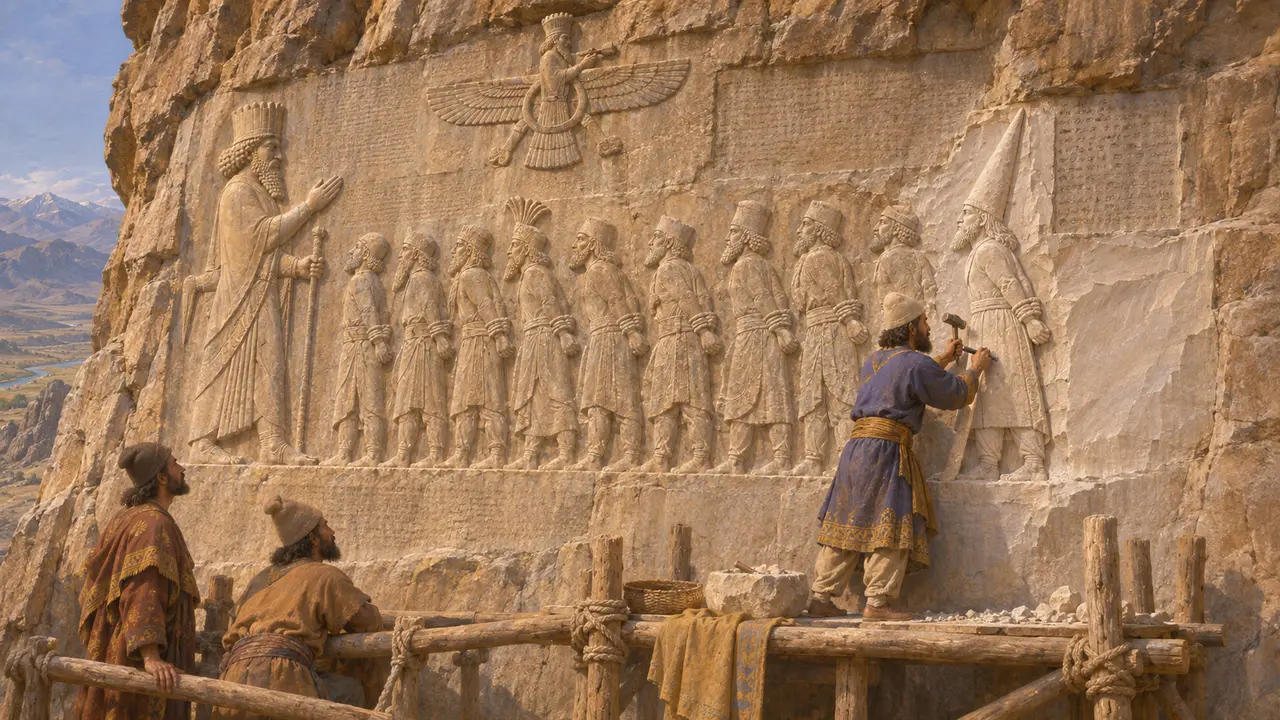
In the recordA figure of Skunkha, wearing a tall pointed cap, was cut at the end of the row of bound rebel kings facing Darius on the cliff. Making room for him destroyed part of the first Elamite version of the text, which was then carved again nearby. The later addition shows that the monument was updated as the reign went on, rather than finished in a single campaign of work.
R. Schmitt, The Bisitun Inscriptions of Darius the Great: Old Persian Text, 1991
Which water, and which Saka
DisputedThe Old Persian word for the water Darius crossed, draya, normally means sea, though some read a great river here, and the text names no place. Most historians place the pointed-cap Saka east of the Caspian in Central Asia. They think of the Caspian itself, the Aral Sea, or a great river such as the Oxus or Jaxartes. The year is also argued; most settle on about 519, in Darius's third regnal year.
P. Briant, From Cyrus to Alexander, 2002
The pointed-cap Saka in Greek writing
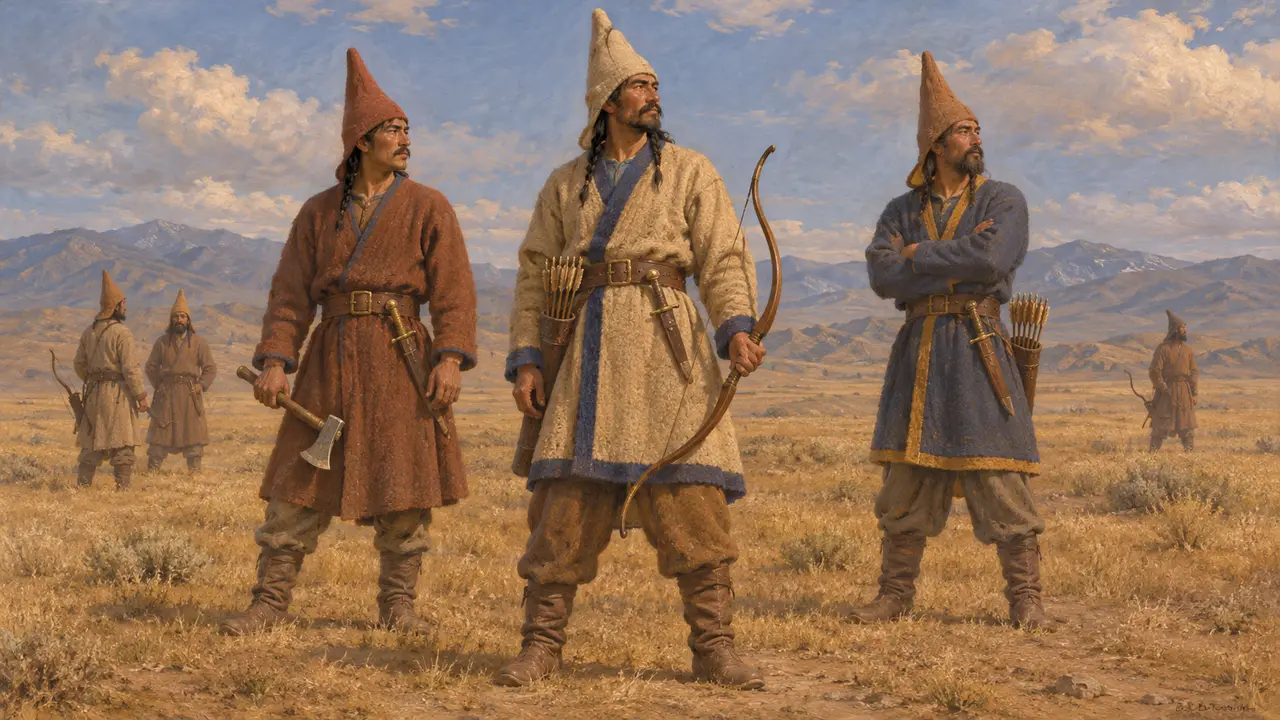
Ancient accountHerodotus does not mention this campaign; his Scythian war of Darius is the later crossing of the Ister in Europe. He describes Saka in Xerxes' army with tall stiff pointed caps, bows, daggers and axes, and calls them Amyrgian Scythians. Persian lists, however, keep the Amyrgian (haumavarga) Saka apart from the pointed-cap Saka. Royal lists such as DNa name the pointed-cap Saka among the King's subject peoples.
Herodotus 7.64
Sources
- DB §71-76
- R. Schmitt, The Bisitun Inscriptions of Darius the Great: Old Persian Text, 1991
- P. Briant, From Cyrus to Alexander, 2002
- A. Kuhrt, The Persian Empire: A Corpus of Sources from the Achaemenid Period, 2007
- Herodotus 7.64