The Saka
Nomad peoples of Central Asia who served the Persian kings, about 540-479 BCE
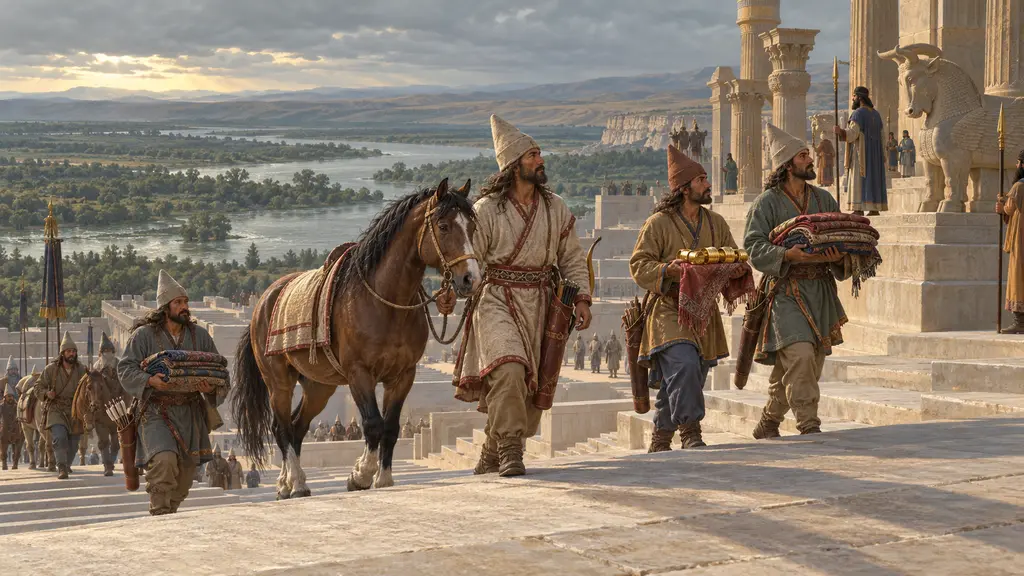
The Saka were horse-riding, mostly pastoral peoples of the steppes and mountains north and east of Bactria. They spoke Iranian languages related to Persian. Darius's inscriptions list several Saka groups among his lands, and Herodotus records Saka fighting for the King at Marathon and judges their horsemen the best on the Persian side at Plataea.
In the game: The game presents the Saka as archers in the King's army, which matches Herodotus's account of Saka bowmen. History also remembers them as horsemen, and Herodotus judged them the best on the Persian side at Plataea.
Saka in the King's lists
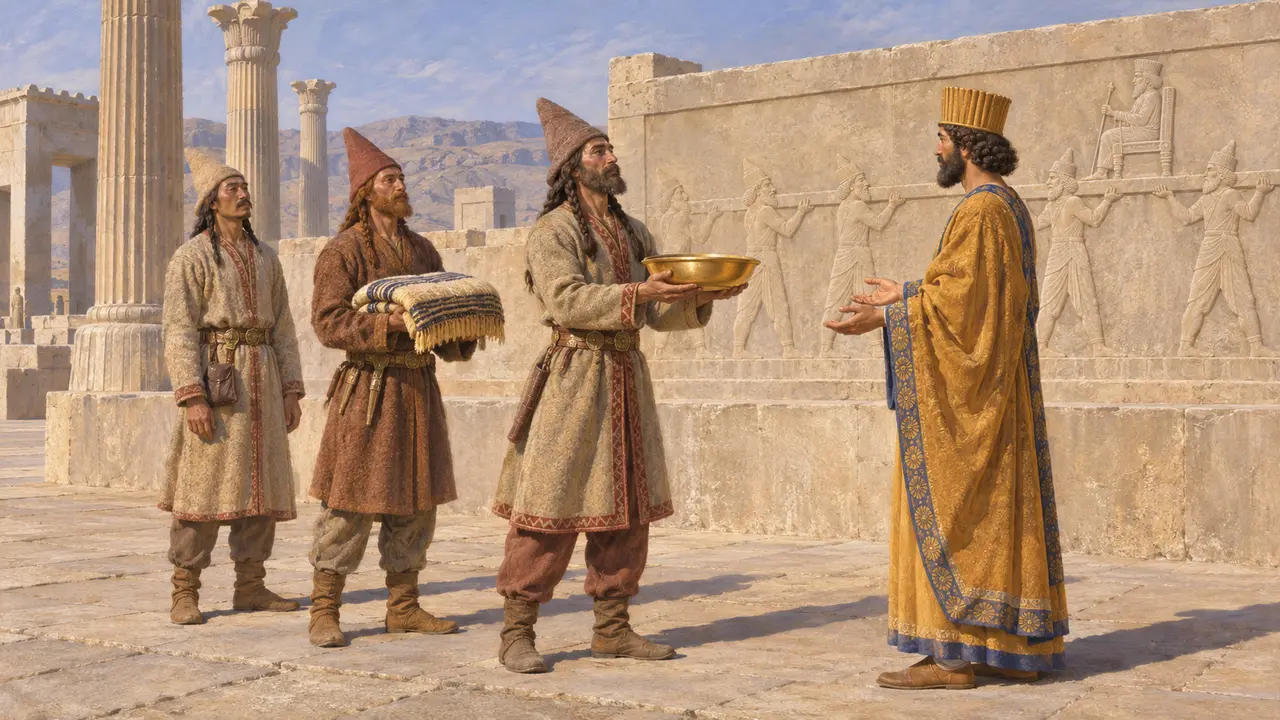
In the recordThe Behistun inscription names the Saka among the lands that came to Darius in 522. Later lists, such as the one on his tomb at Naqsh-e Rostam, divide them into three groups: the haoma-drinking Saka, the Saka with pointed caps and the Saka beyond the sea. On the tomb façades and at Persepolis, Saka figures wear tall pointed caps, belted coats and trousers. They are shown holding up the King's throne or bringing gifts.
DB §6; DNa §3
Darius and Skunkha
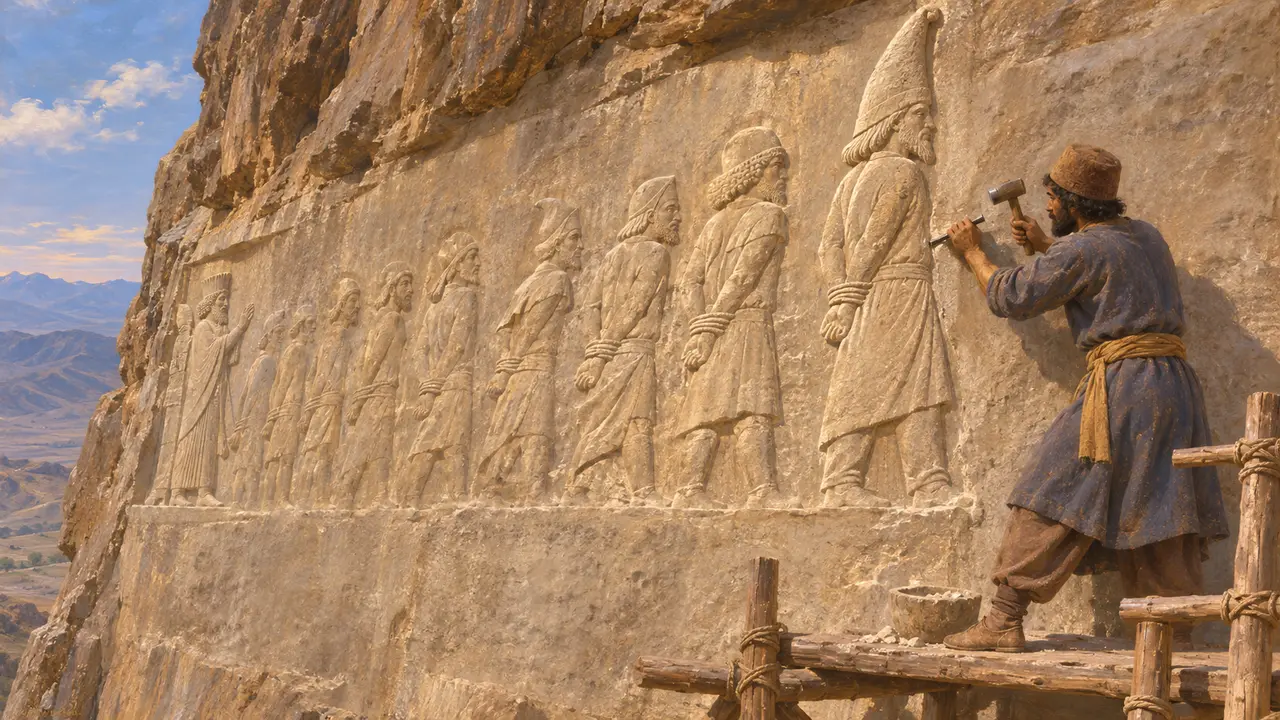
In the recordA fifth column was added to the Behistun inscription. In its damaged text Darius says he marched against the Saka, most likely those with pointed caps, defeated them and captured their chief Skunkha, and that he put another man in his place. The campaign probably took place in about 519. A figure of Skunkha in a tall pointed cap was carved at the end of the line of captive rebels, fitted in after the relief was first finished.
DB col. V
In the armies of Darius and Xerxes
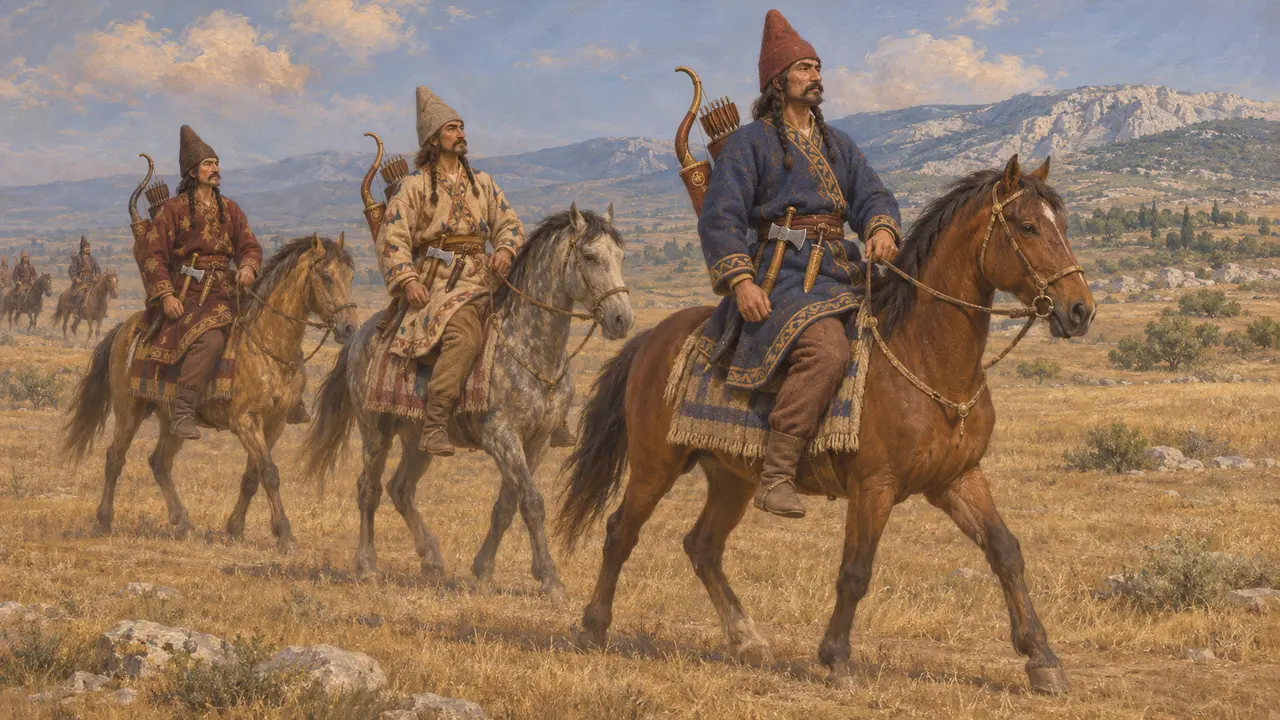
Ancient accountHerodotus describes the Saka in Xerxes' army of 480. They wore tall pointed caps and trousers and carried bows, daggers and axes, and they served with the Bactrians under Hystaspes, a son of Darius. Saka also served as marines on the fleet. Herodotus says the Persians and Saka broke the Athenian centre at Marathon in 490, and at Plataea in 479 he judges the Saka the best horsemen on the Persian side.
Herodotus 7.64; 7.184; 6.113; 9.71
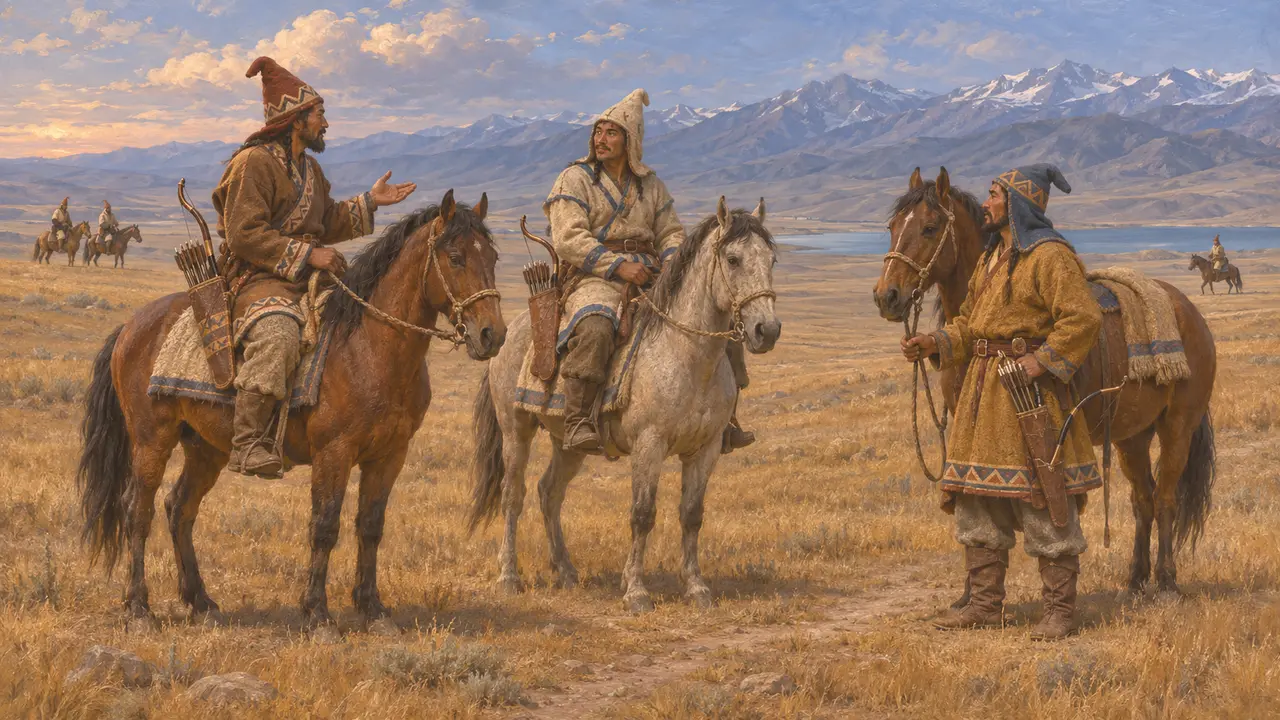
Who counted as Saka
DisputedHerodotus says the Persians called all Scythians Saka, so the Greek and Persian names do not line up neatly. Historians still argue over where each Saka group lived: the haoma-drinkers are often placed in the Pamir and Ferghana region and the pointed-cap Saka near the Aral Sea or the Tian Shan. The Saka beyond the sea are placed either north of the Black Sea or across the Caspian. How firmly the King controlled these steppe peoples is also debated.
Herodotus 7.64; P. Briant, From Cyrus to Alexander, 2002
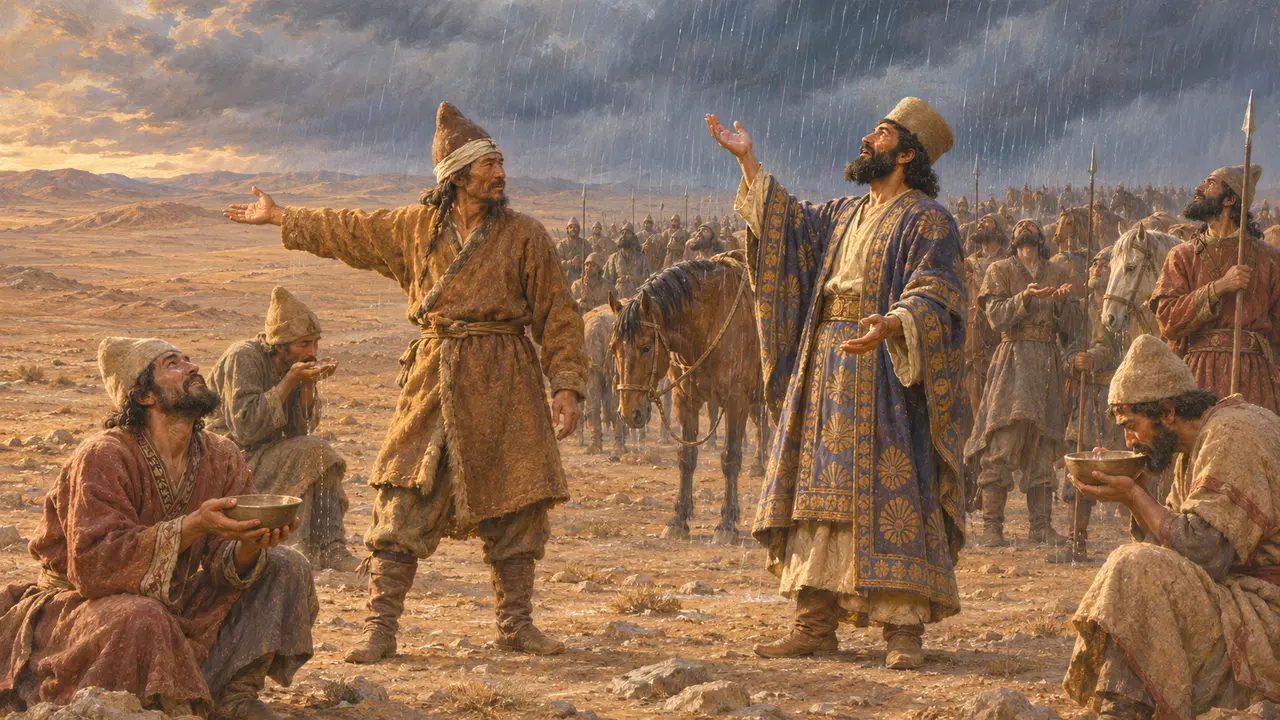
The self-maimed herdsman
Later legendPolyaenus, writing in the 2nd century CE, tells of a Saka herdsman who maimed himself and came to Darius as a deserter. He then led the Persian army into a waterless desert, and the King was saved only by rain. The tale echoes Herodotus's story of Zopyrus at Babylon, and no Persian text confirms it. The story of Cyrus dying against Queen Tomyris concerns the Massagetae, a people later writers sometimes counted among the Saka.
Polyaenus, Stratagems; Herodotus 1.214
Sources
- Darius, Behistun inscription (DB §6, col. V)
- Darius, tomb inscription at Naqsh-e Rostam (DNa §3)
- Herodotus 3.93; 6.113; 7.64; 7.184; 9.71
- P. Briant, From Cyrus to Alexander, 2002
- A. Kuhrt, The Persian Empire, 2007
- Polyaenus, Stratagems