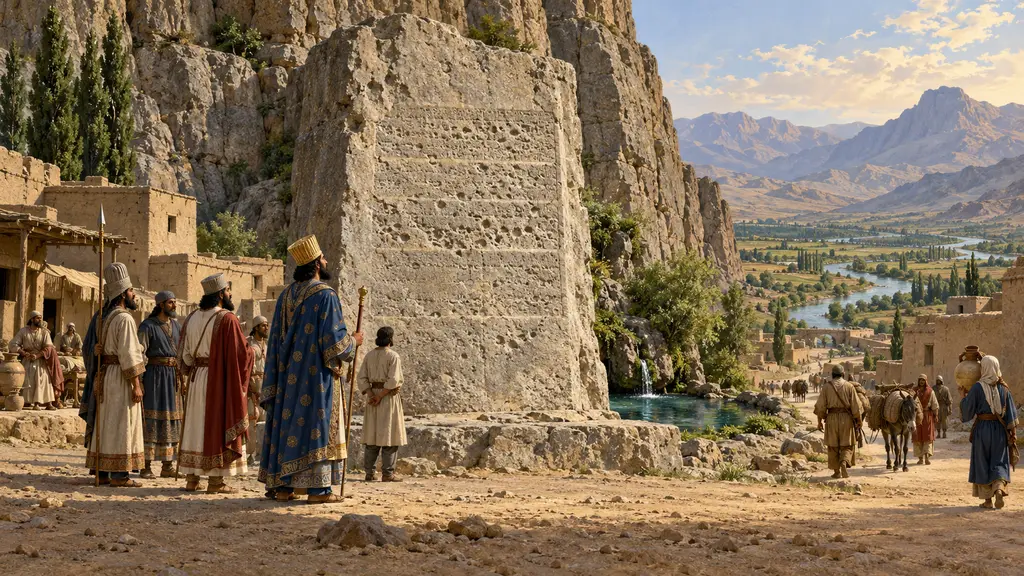
Inscribed Stone
Royal inscriptions in Old Persian, Elamite and Babylonian, about 520-480 BCE
The Achaemenid kings had their words cut in stone, usually in three languages and three forms of cuneiform. These texts named the king, his ancestry, his god Auramazda and his deeds. They are the main surviving voice of the kings themselves, set beside the Greek accounts of Herodotus and others.
In the game: The game lists the Inscribed Stone among its housing buildings and presents it as the King's words in three languages. Its note that kings spoke through inscriptions rather than statues overstates the case: a statue of Darius survives from Susa.
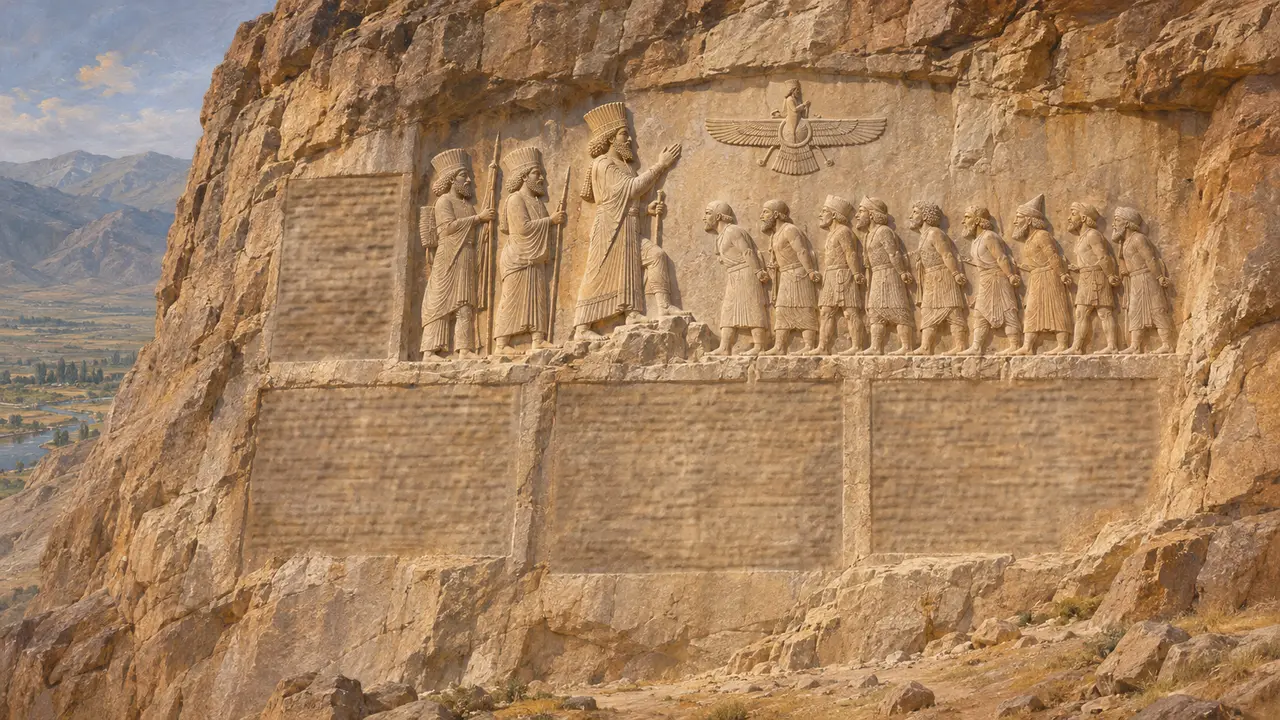
Three scripts on one stone
In the recordDarius's long inscription at Behistun was cut in Old Persian, Elamite and Babylonian, each in its own form of cuneiform. His foundation charter for the palace at Susa survives in the same three languages. Elamite was also the working language of the Persepolis Fortification tablets, so the choice probably reflected the scribes the court employed. Xerxes kept the pattern, as in his inscription on the suppression of the daiva.
DB; DSf; XPh
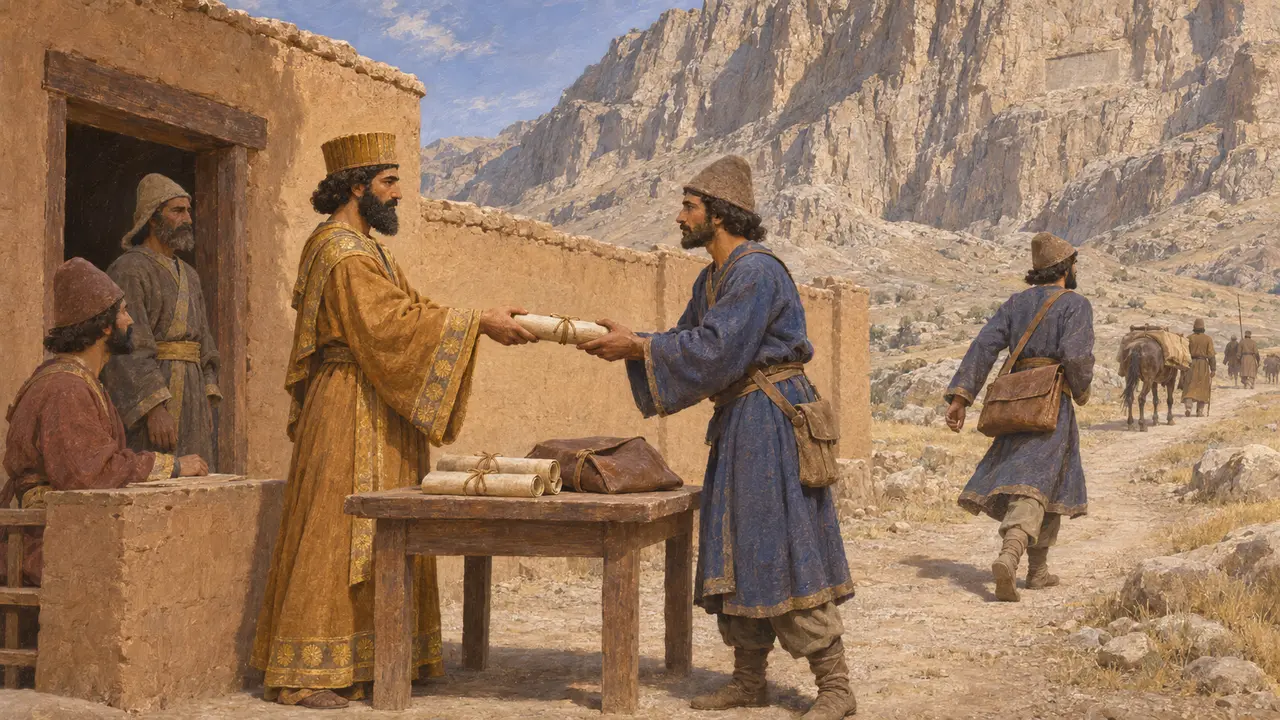
Copies sent to all the lands
In the recordThe Behistun text says that the King sent copies of it out among the lands of the empire. A Babylonian version survives on a stone fragment from Babylon. An Aramaic version was copied on papyrus at Elephantine nearly a century later. The King's words travelled further as copies than on the rock itself, which stood high above the road.
DB §70; Elephantine papyri
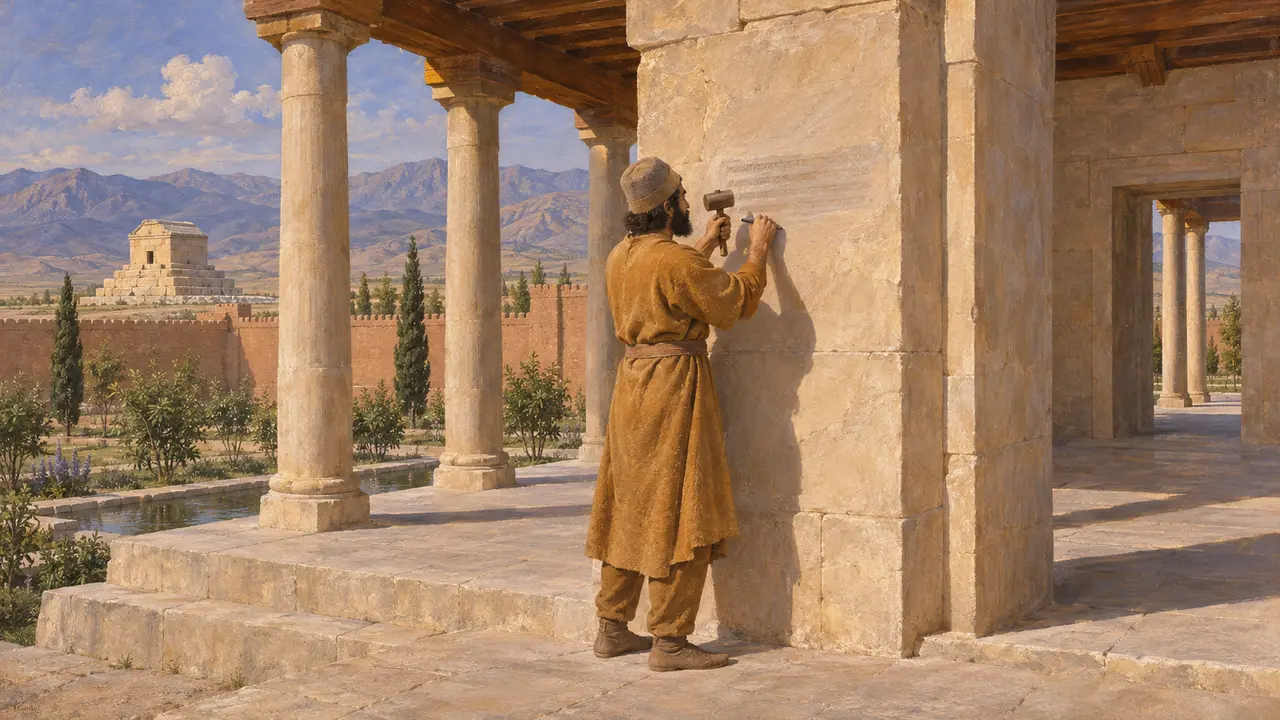
A new script for Persian
DisputedAt Pasargadae, short texts in the three languages name Cyrus the king, an Achaemenid. Many scholars hold that Old Persian cuneiform was devised under Darius, and they read a passage at Behistun as his claim to a new form of writing. On that view the Cyrus texts were added later by Darius. Others argue that the script existed before him, and the question remains open.
CMa; DB §70; R. Schmitt, The Bisitun Inscriptions of Darius the Great, 1991
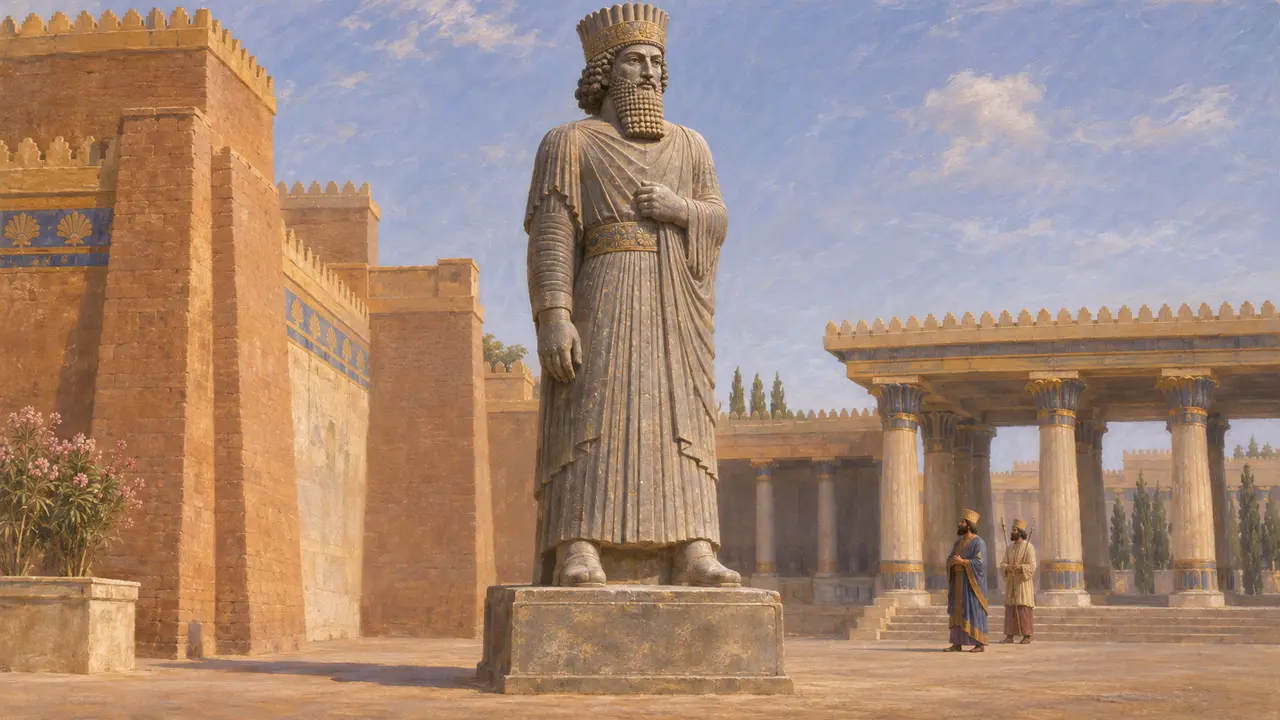
Statues and reliefs as well
In the recordPersian kings did not rely on inscriptions alone. A statue of Darius, carved in Egypt and found at Susa in 1972, is now headless but was probably larger than life. It carries texts in Egyptian hieroglyphs and in the three cuneiform languages. Kings also appeared in relief on rock faces and tombs, with inscriptions beside the image, as at Behistun and Naqsh-e Rostam.
Susa statue of Darius (DSab); DNa; A. Kuhrt, The Persian Empire, 2007
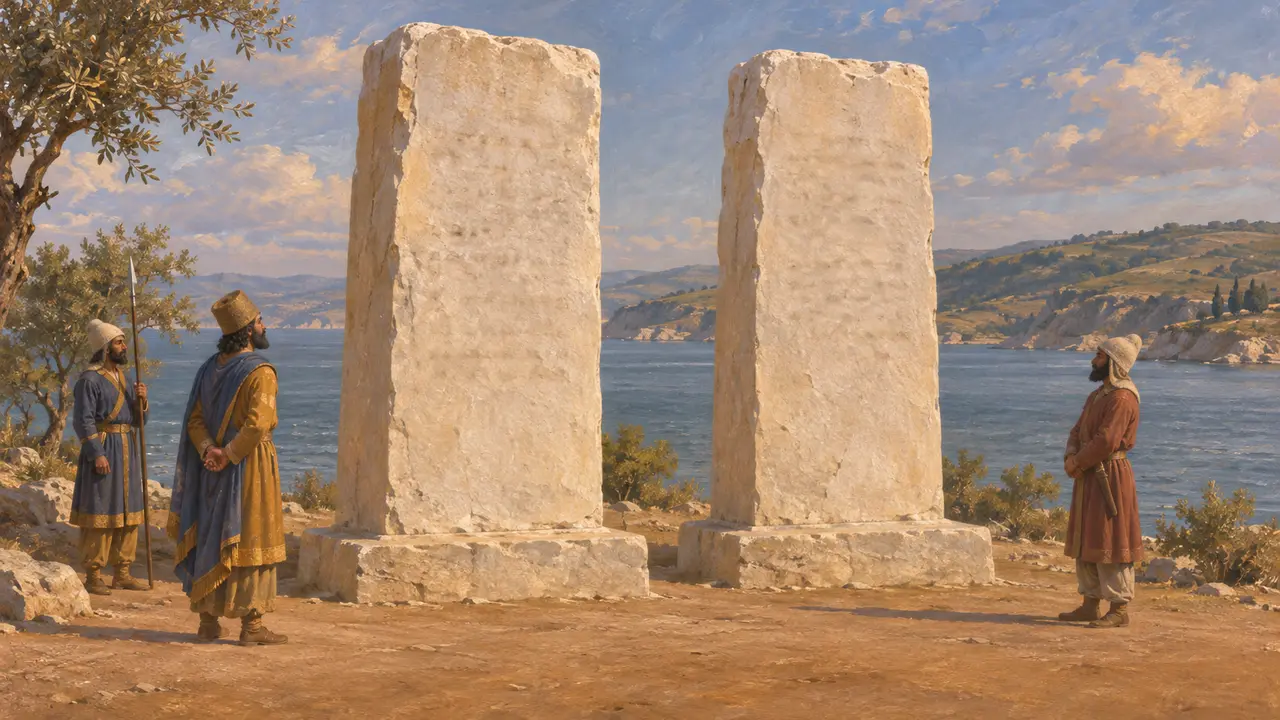
Pillars at the Bosporus
Ancient accountHerodotus says that Darius, crossing into Europe about 513, set up two pillars of white stone at the Bosporus. They listed the peoples of his army, one in Assyrian letters and one in Greek. Herodotus also reports a pillar at the springs of the Tearus in Thrace praising the river and the King. Neither stone has been found, but Persian practice elsewhere makes the story plausible.
Herodotus 4.87; Herodotus 4.91
Sources
- Darius, Behistun inscription (DB)
- Darius, Susa foundation charter (DSf)
- Herodotus 4.87, 4.91
- R. Schmitt, The Bisitun Inscriptions of Darius the Great: Old Persian Text, 1991
- A. Kuhrt, The Persian Empire: A Corpus of Sources from the Achaemenid Period, 2007
- P. Briant, From Cyrus to Alexander, 2002