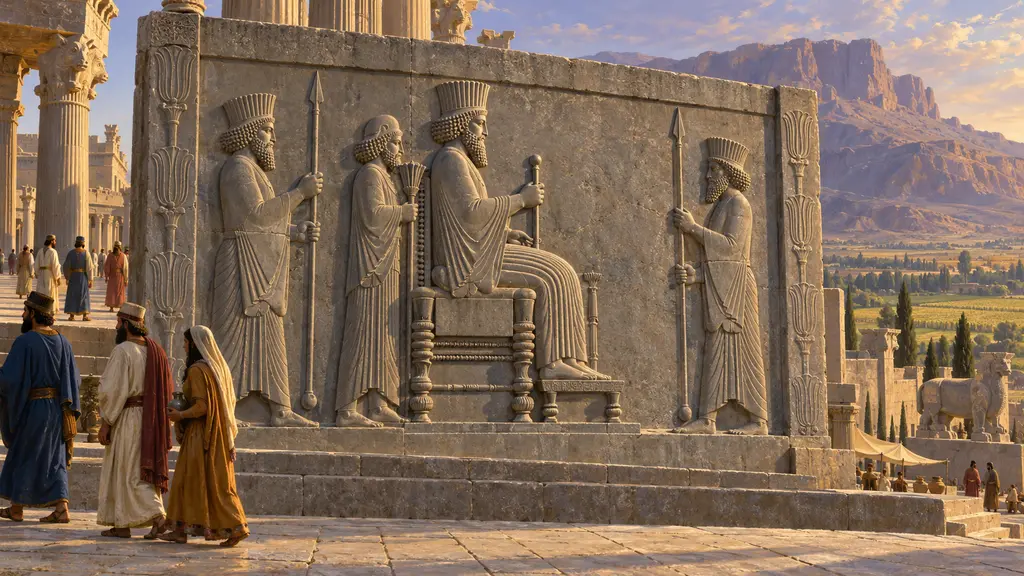
Royal Relief
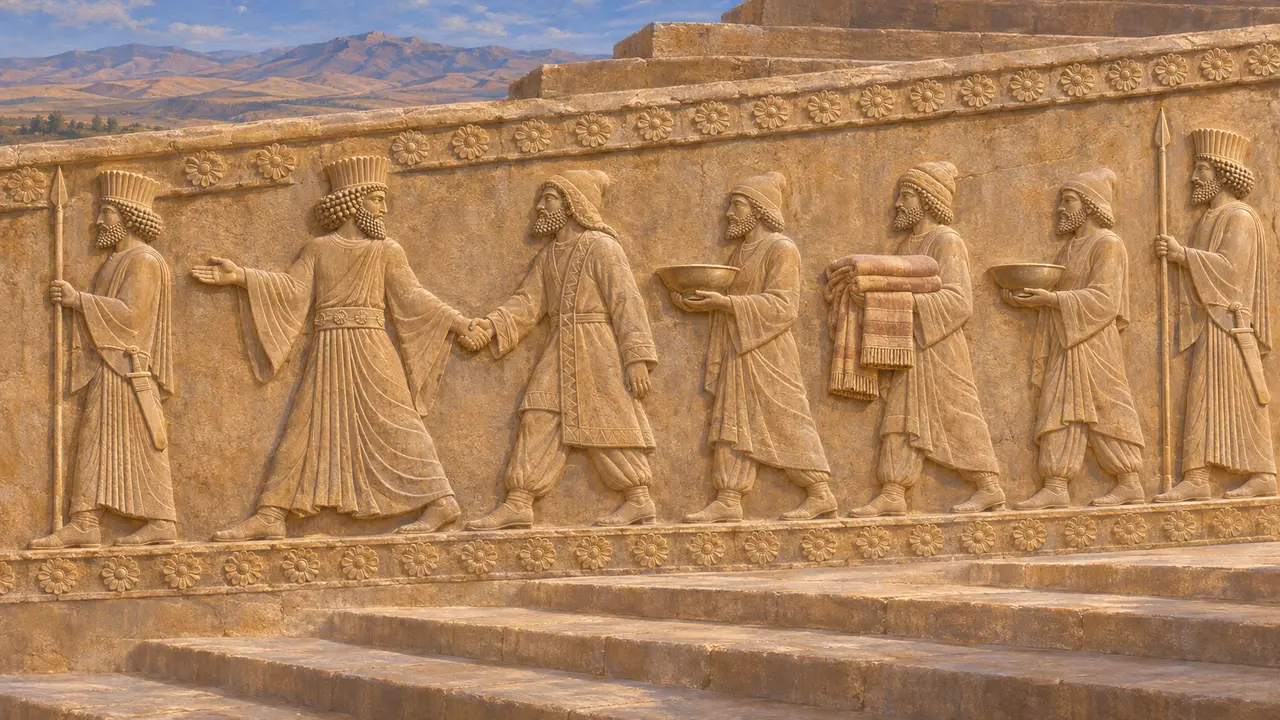
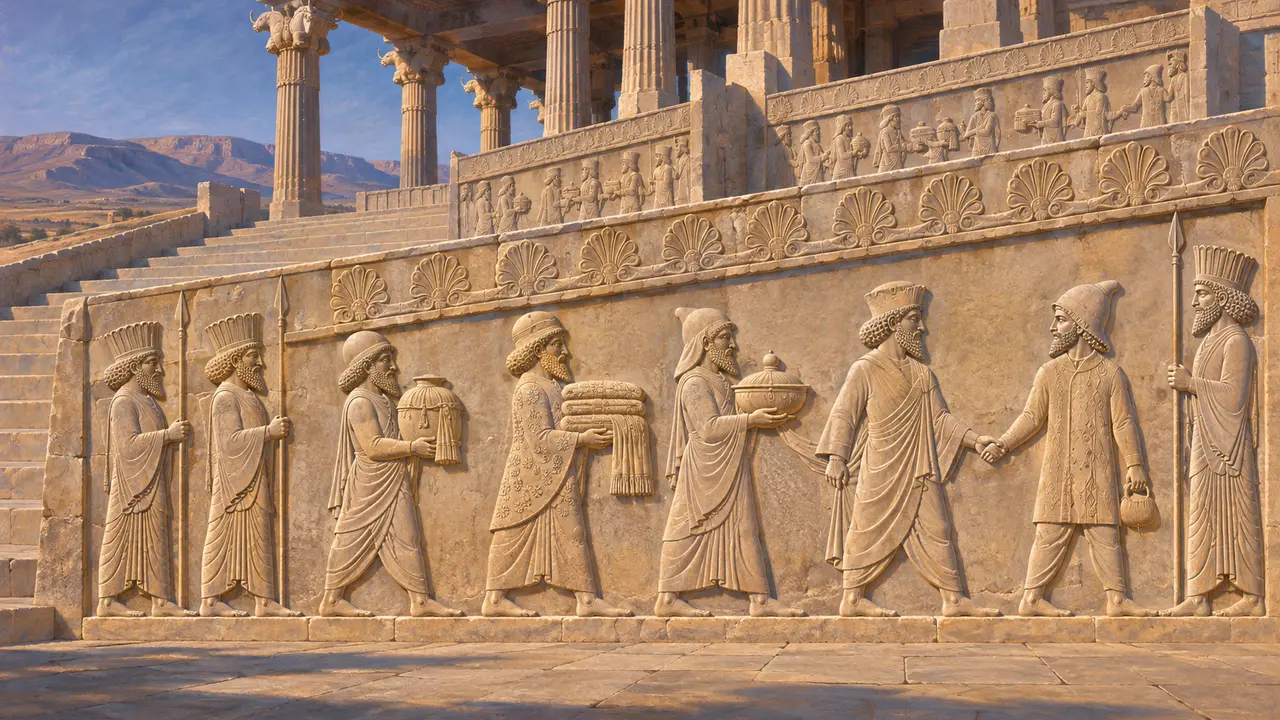
Carved stone stair panels of gift-bearers and guards, Persepolis, about 515-480 BCE
The great reliefs of Persepolis lined the stairways of the Apadana, the audience hall begun by Darius and finished under Xerxes. They show twenty-three delegations from the King's lands bringing gifts, with ranks of Persian and Median nobles and guards. Together they presented the empire as an orderly gathering of peoples around the throne.
In the game: The game lists the Royal Relief as housing: panels of tribute-bearers from every nation and the King's guards. The real reliefs lined a royal hall's stairs and show twenty-three delegations, not every people.
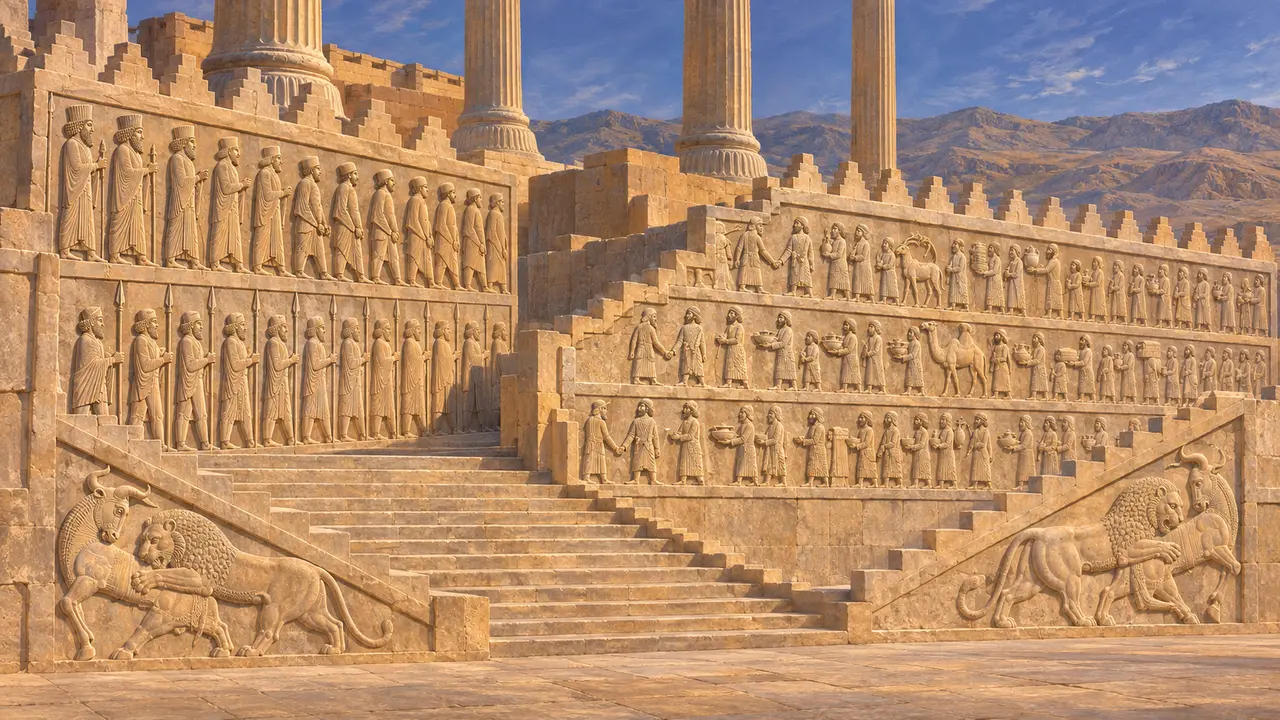
The stairs of the Apadana
In the recordExcavations at Persepolis uncovered matching relief programmes on the north and east stairways of the Apadana; the east stair, long buried under debris, survives best. On one wing, files of nobles in Persian and Median dress stand in rows with armed guards. On the other, twenty-three delegations climb towards the centre, each led by an usher who takes the leader by the hand. Scenes of a lion attacking a bull fill the triangular corners.
E. F. Schmidt, Persepolis I, 1953
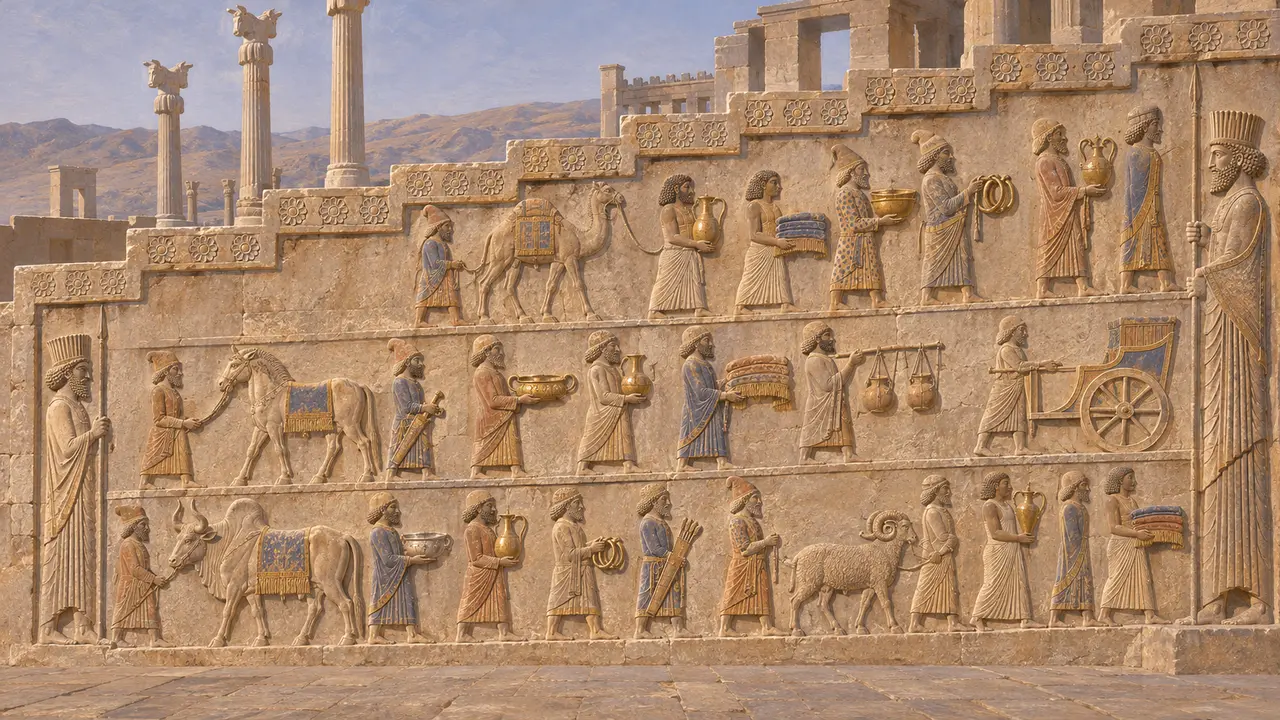
Gifts from the provinces
In the recordEach delegation wears its own dress and carries its own goods: garments, metal vessels, weapons, jewellery and animals such as horses, camels, humped cattle and rams. Some bring chariots, and one group carries small jars on a yoke that may hold gold dust. Scholars identify many groups by comparing their dress with the labelled throne-bearers on the royal tombs, and traces of pigment show the panels were once painted.
G. Walser, Die Völkerschaften auf den Reliefs von Persepolis, 1966
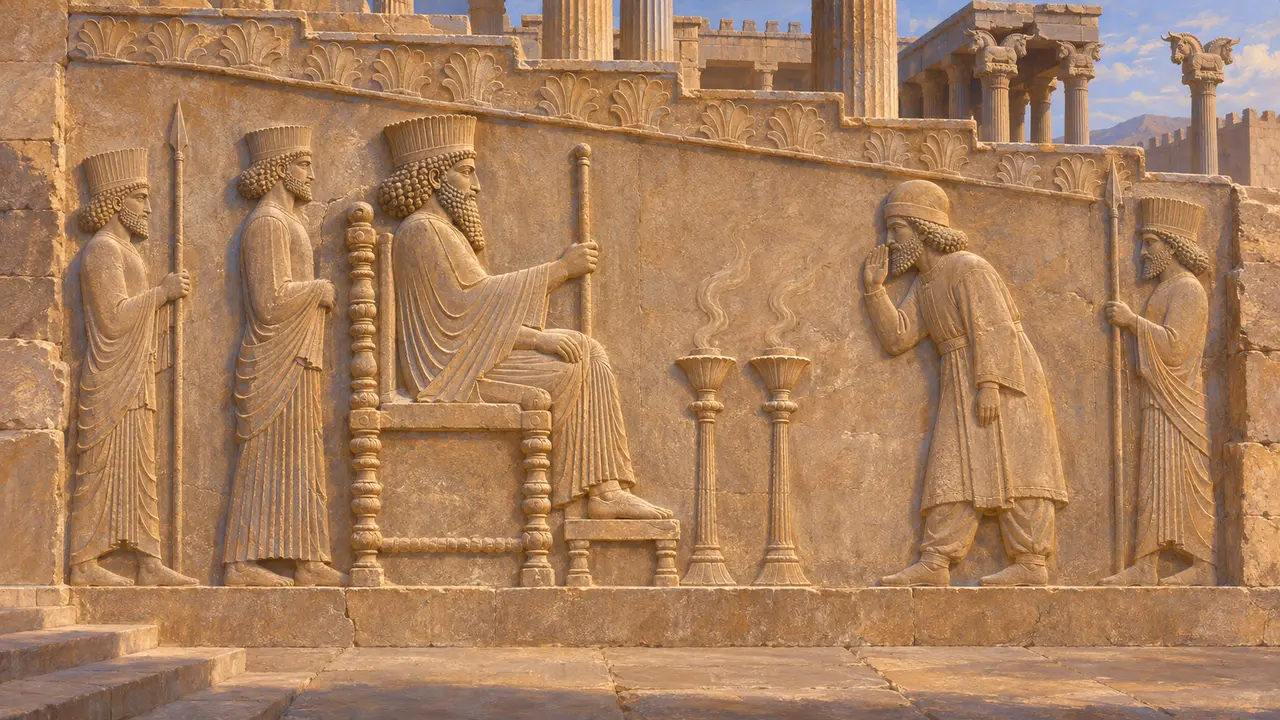
The lost centrepiece
In the recordTwo large panels found in the Treasury show a seated king receiving an official who raises his hand to his mouth, with the crown prince behind the throne. Later study showed they first stood at the centre of the Apadana stairs and were moved, probably under Artaxerxes I, when new central panels replaced them. The official is often identified as the hazarapatish, and the king as Darius or Xerxes.
A. B. Tilia, Studies and Restorations at Persepolis and Other Sites of Fars, 1972
Tribute or gifts
Ancient accountHerodotus lists the yearly tribute of the provinces in silver and goods, and he says some peoples, such as the Arabs and the Ethiopians, sent gifts instead of fixed tribute. The reliefs never label what is carried. Many historians therefore call the figures gift-bearers rather than tribute-bearers, since the scene stresses willing service rather than a tax payment.
Herodotus 3.89-97
A real festival or an ideal
DisputedSome scholars have read the procession as a record of a yearly ceremony, often linked to a New Year festival held at Persepolis. Others, notably M. C. Root, argue there is no evidence for such a festival and that the reliefs show a timeless picture of imperial harmony. The question remains open, as no text from the site describes the event.
M. C. Root, The King and Kingship in Achaemenid Art, 1979
Sources
- E. F. Schmidt, Persepolis I, 1953
- M. C. Root, The King and Kingship in Achaemenid Art, 1979
- G. Walser, Die Völkerschaften auf den Reliefs von Persepolis, 1966
- A. B. Tilia, Studies and Restorations at Persepolis and Other Sites of Fars, 1972
- Herodotus 3.89-97
- P. Briant, From Cyrus to Alexander, 2002