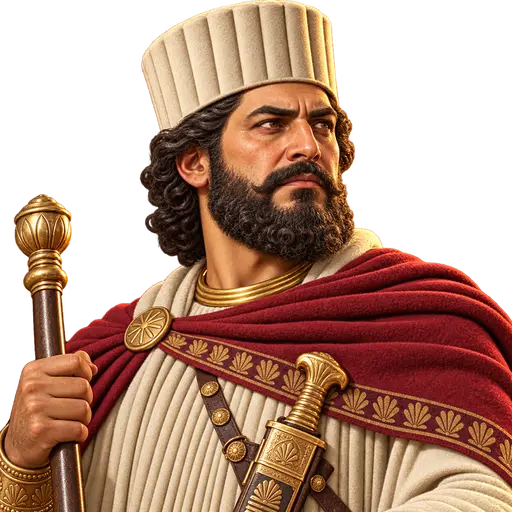
The hazarapatish
Persian 'commander of the thousand', guard officer and court official, Achaemenid BCE
The hazarapatish, or chiliarch to the Greeks, was the 'commander of the thousand'. The title probably began in the decimal ranks of the Persian army and was later tied to the King's own guard and his audiences. How powerful the post was, and when it became a high court office, is still argued, because most of the evidence comes from Greek writers.
In the game: The game makes the hazarapatish a battlefield commander unit. The literal meaning is right, but the best-known holders appear in Greek sources as court officers controlling access to the King, not as field generals.
A rank in a decimal army
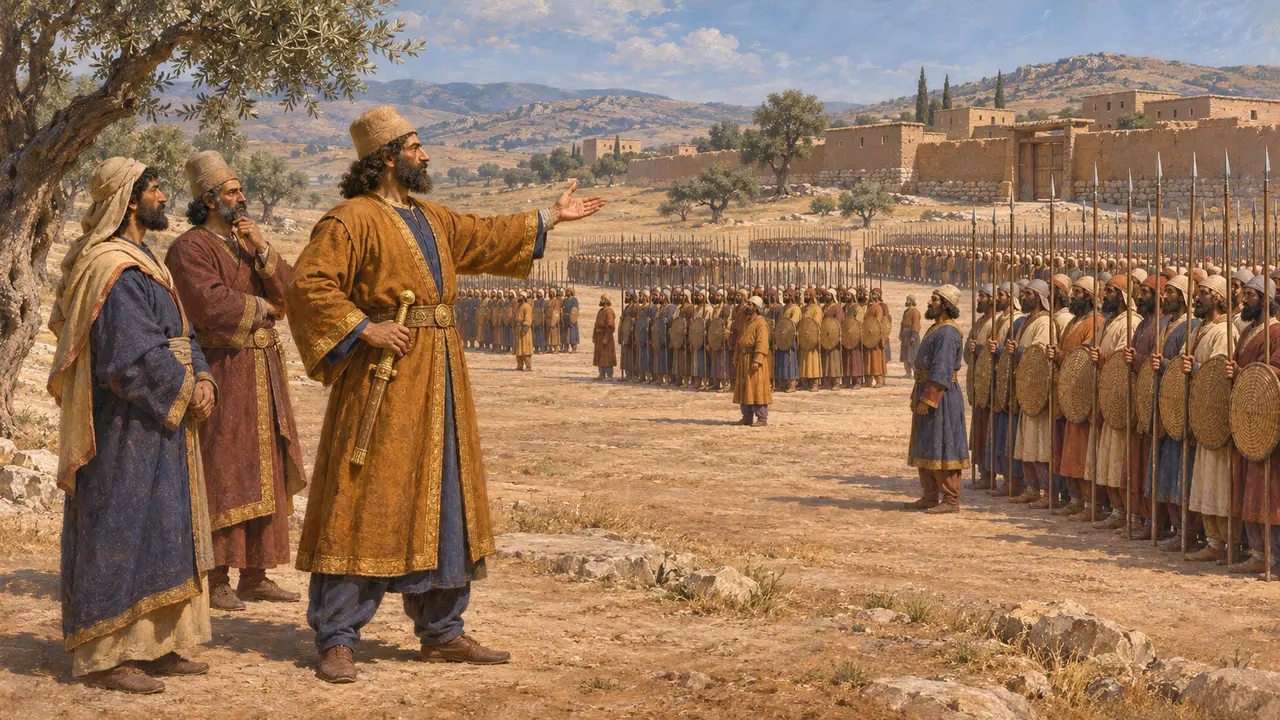
Ancient accountHerodotus describes Xerxes' army of 480 as organised in tens, hundreds, thousands and ten thousands, each with its own officer. In Greek the commander of a thousand was a chiliarch. Modern scholars take this as a rendering of an Old Persian title, reconstructed as hazarapatish, meaning 'master of a thousand'.
Herodotus 7.81
The thousand beside the King
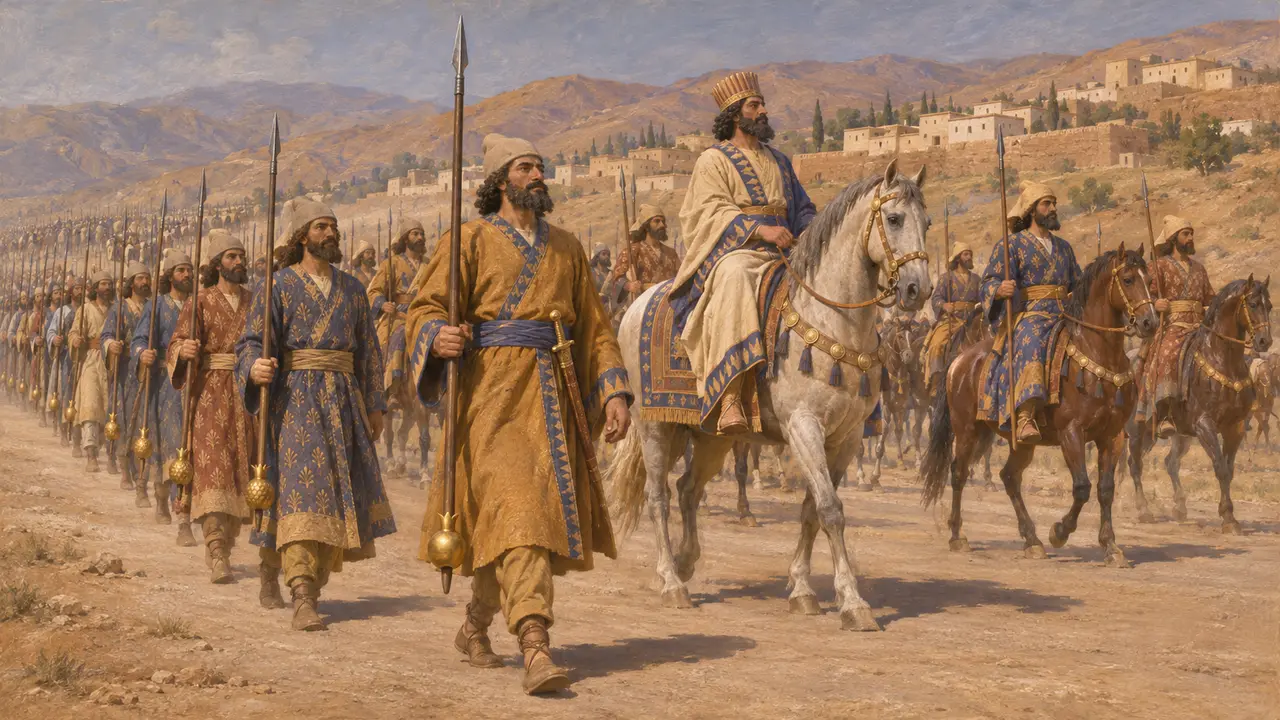
Ancient accountHerodotus says that on the march Xerxes was escorted by a thousand picked Persian spearmen and a thousand picked horsemen. He adds that some guard units carried spears ending in golden pomegranates, and that the men nearest the King had golden apples. Many historians think the commander of such an elite thousand became the officer closest to the King's person.
Herodotus 7.40-41
Keeper of the royal audience
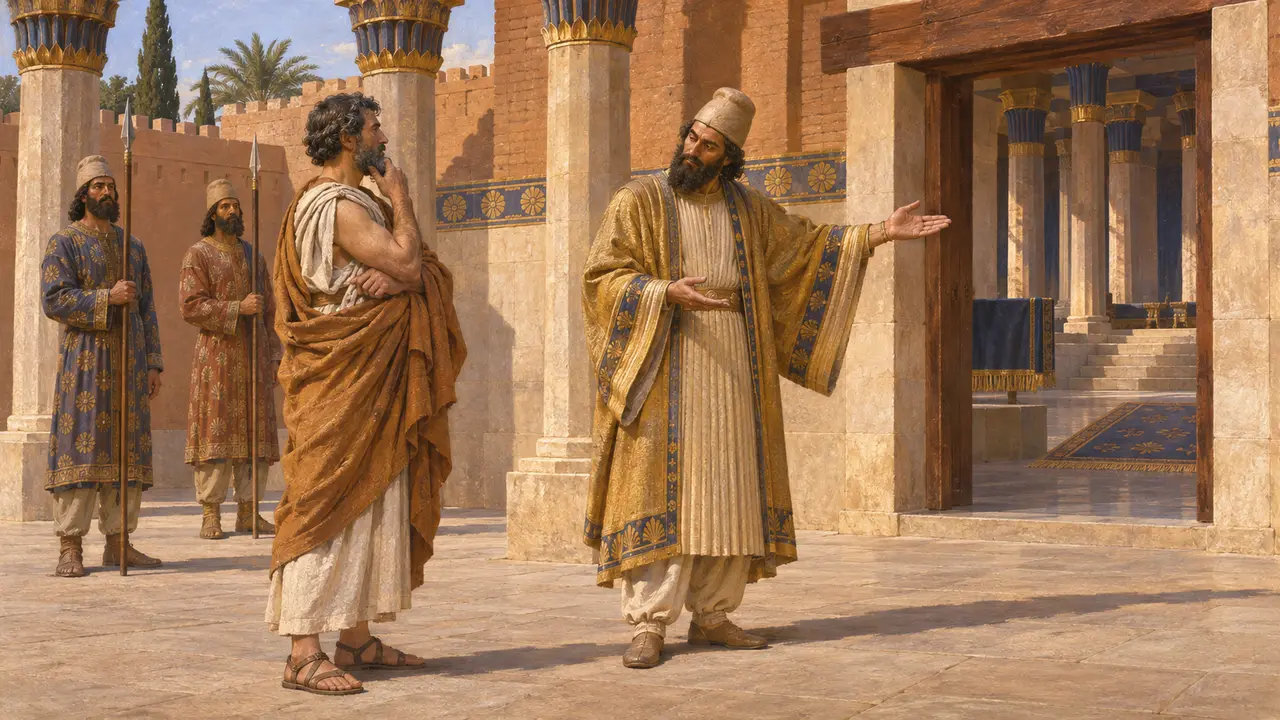
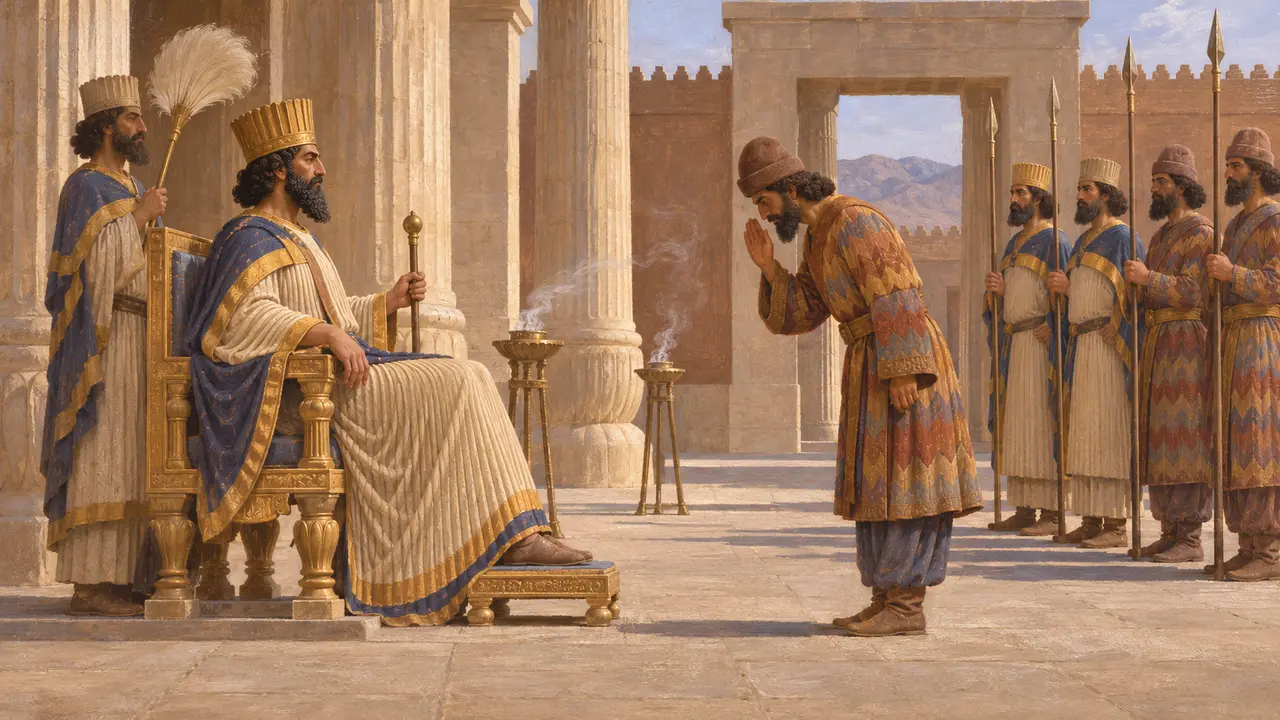
Ancient accountPlutarch tells how Themistocles, arriving at the Persian court around 465, was received first by the chiliarch Artabanus, who explained that visitors must bow before the King. Cornelius Nepos says the chiliarch Tithraustes told Conon he would have to bow in the same way, so Conon chose to deal with the King by letter. Both writers lived centuries after the events they describe.
Plutarch, Themistocles 27; Nepos, Conon 3
The audience reliefs at Parsa
In the recordReliefs found in the Treasury at Persepolis show the seated King receiving a dignitary in Median dress, who raises his hand to his mouth in greeting while guards stand behind. The scene shows how a royal audience was staged. Some scholars identify the dignitary as the hazarapatish, but no inscription names him and the identification is debated.
E. Schmidt, Persepolis I, 1953
Guard captain or grand vizier
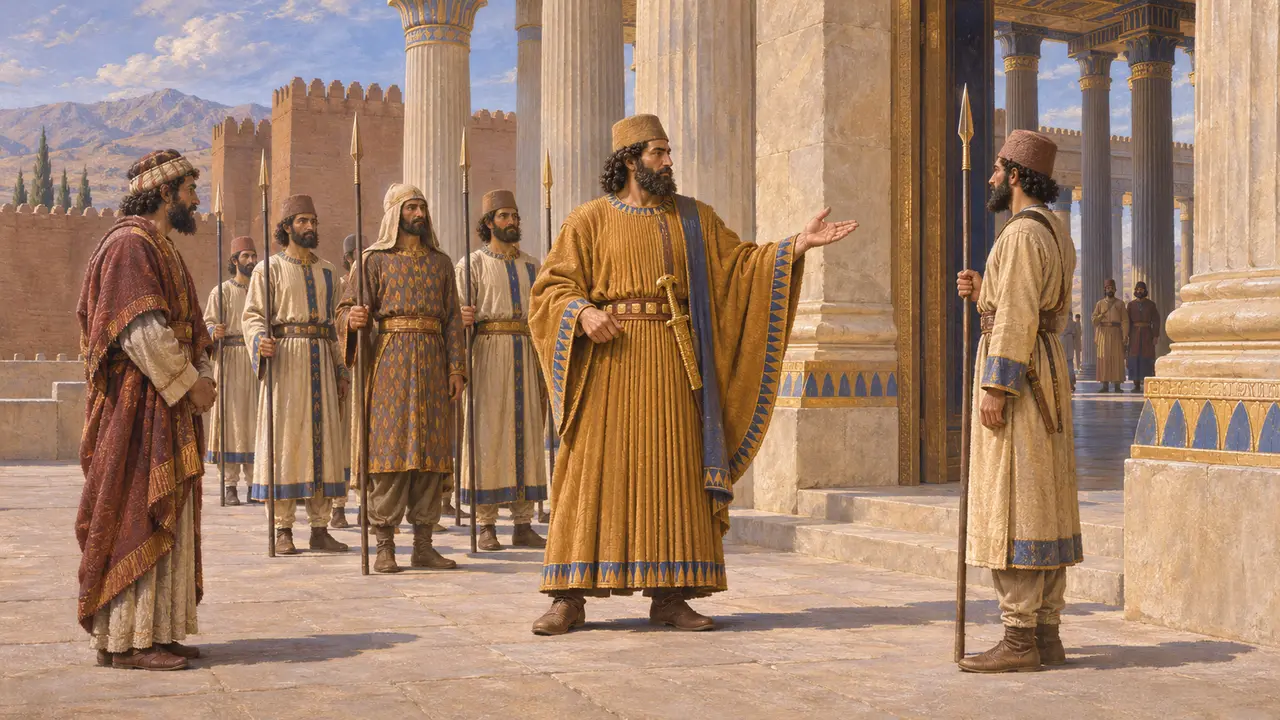
DisputedNo Old Persian royal inscription names the office, so its powers are reconstructed largely from Greek texts. Diodorus calls Artabanus, who killed Xerxes in 465, commander of the royal bodyguard. He later says the Persian kings first made the chiliarch's post an honour, and that Alexander gave it to Hephaestion. Some historians see a chief minister; others, including Briant, think Greek writers inflated a guard and protocol post.
Diodorus 11.69, 18.48; P. Briant, From Cyrus to Alexander, 2002
Sources
- Herodotus 7.40-41, 7.81
- Plutarch, Themistocles 27
- Cornelius Nepos, Conon 3
- Diodorus 11.69, 18.48
- P. Briant, From Cyrus to Alexander, 2002
- E. Schmidt, Persepolis I, 1953