Encyclopedia › Soldiers and ships
Hazarapatish
Persian 'commander of a thousand', officer rank and court office, 6th-5th century BCE
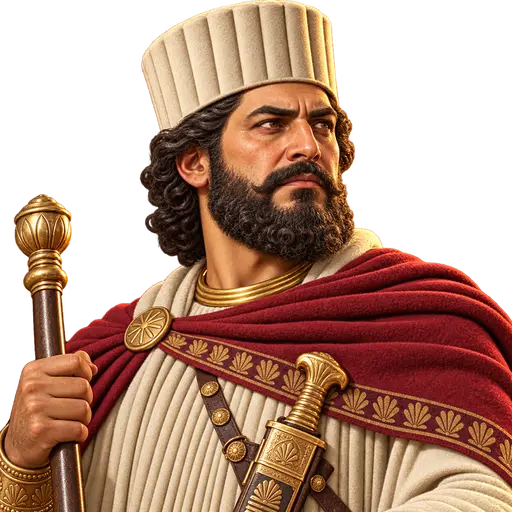
The hazarapatish was the Persian 'chief of a thousand', called chiliarch by the Greeks. The title named officers of thousand-strong units in the King's army and, at court, the commander of the royal guard who controlled access to the King. The evidence is thin and mostly Greek, so how powerful the court office was is still debated.
In the game: The game shows the hazarapatish as a shield unit whose presence makes men within 10 cells strike 15% harder and take blows better; that bonus is a game abstraction. Historically the title also named the King's chief guard and court officer.
A rank in a decimal army
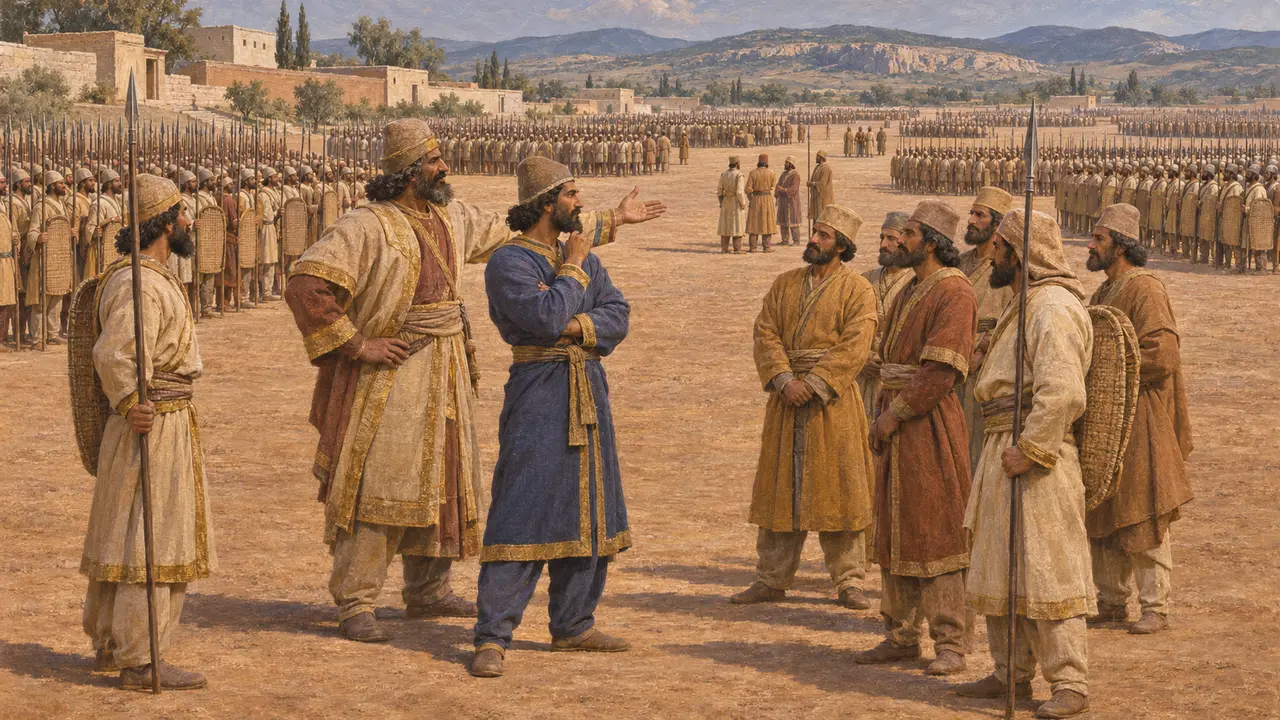
Ancient accountHerodotus says that the army Xerxes led in 480 was organised in units of ten, a hundred, a thousand and ten thousand. The commanders who mustered each contingent appointed the commanders of thousands and of ten thousands. The commanders of ten thousand then appointed the captains of hundreds and of tens. In this scheme the commander of a thousand stood between the captains of hundreds and the commanders of ten thousand, and a large army had many of them.
Herodotus 7.81
The thousand closest to the King
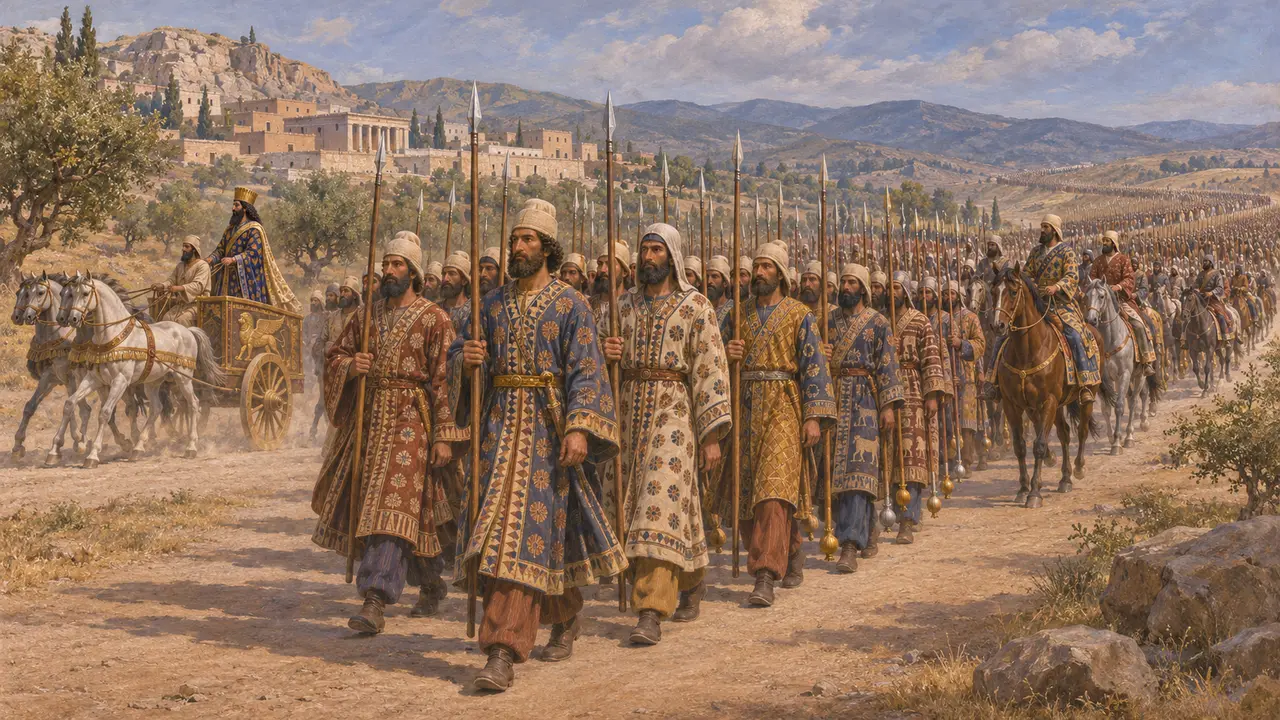
Ancient accountDescribing Xerxes' march from Sardis, Herodotus places a thousand picked Persian spearmen directly behind the King, followed by a thousand horsemen and then ten thousand foot. A thousand of these ten thousand had golden pomegranates on their spear butts, and the rest had silver ones. Herodotus names no chiliarch here. The link between this guard and the court office is a modern inference.
Herodotus 7.41
Keeper of the King's door
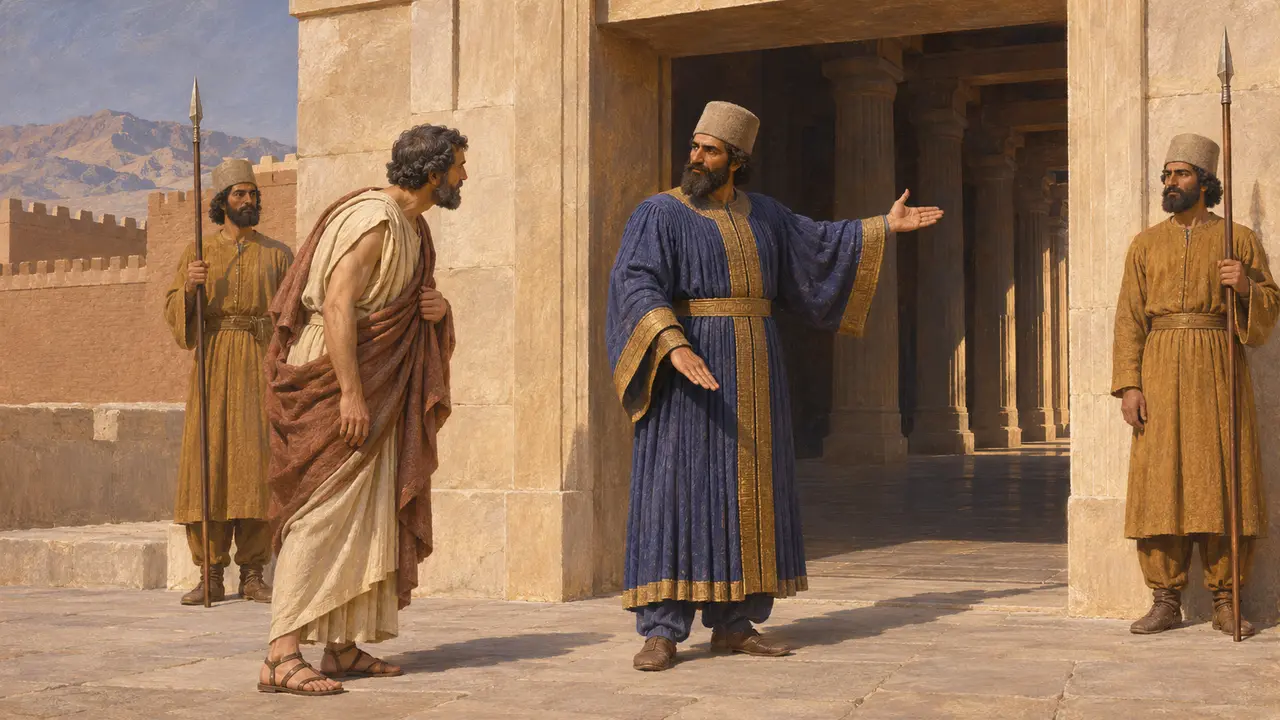
Ancient accountPlutarch, writing more than five centuries later, tells how the exiled Themistocles, around 465, first went to the chiliarch Artabanus, who explained that anyone seeking an audience had to bow before the King. In this story the chiliarch manages who reaches the King and how they behave. The episode falls after the period of the game and comes through a late writer, so it shows the later office rather than its origins.
Plutarch, Themistocles 27
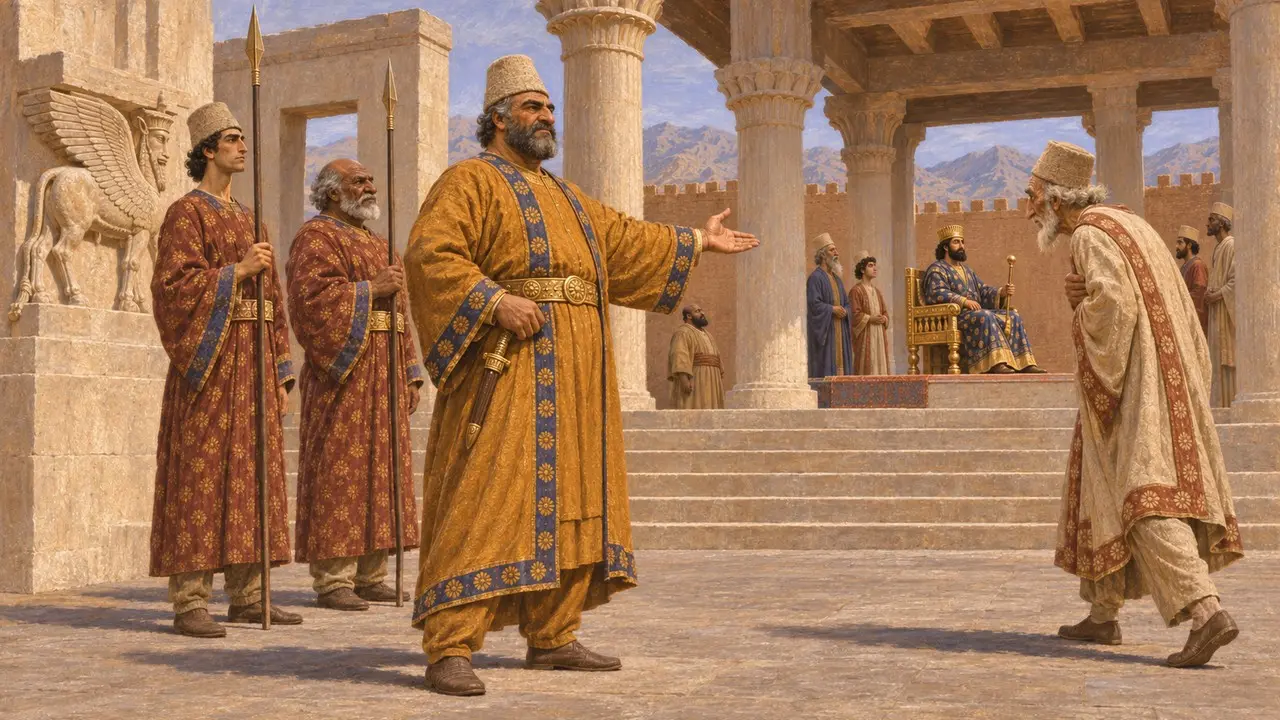
Guard commander or grand vizier
DisputedThe Old Persian word hazarapatish is reconstructed from renderings in other languages and does not appear in the royal inscriptions. Some historians saw the chiliarch as a chief minister second only to the King. Others, Briant among them, read the Greek evidence as showing a guard commander and master of audiences. Diodorus says the rank was first honoured by the Persian kings and was later held under Alexander, when Hephaestion had it.
P. Briant, From Cyrus to Alexander, 2002; Diodorus 18.48; Arrian, Anabasis 7.14
Sources
- Herodotus 7.81
- Herodotus 7.41
- Plutarch, Themistocles 27
- P. Briant, From Cyrus to Alexander, 2002
- Diodorus 18.48
- Arrian, Anabasis 7.14