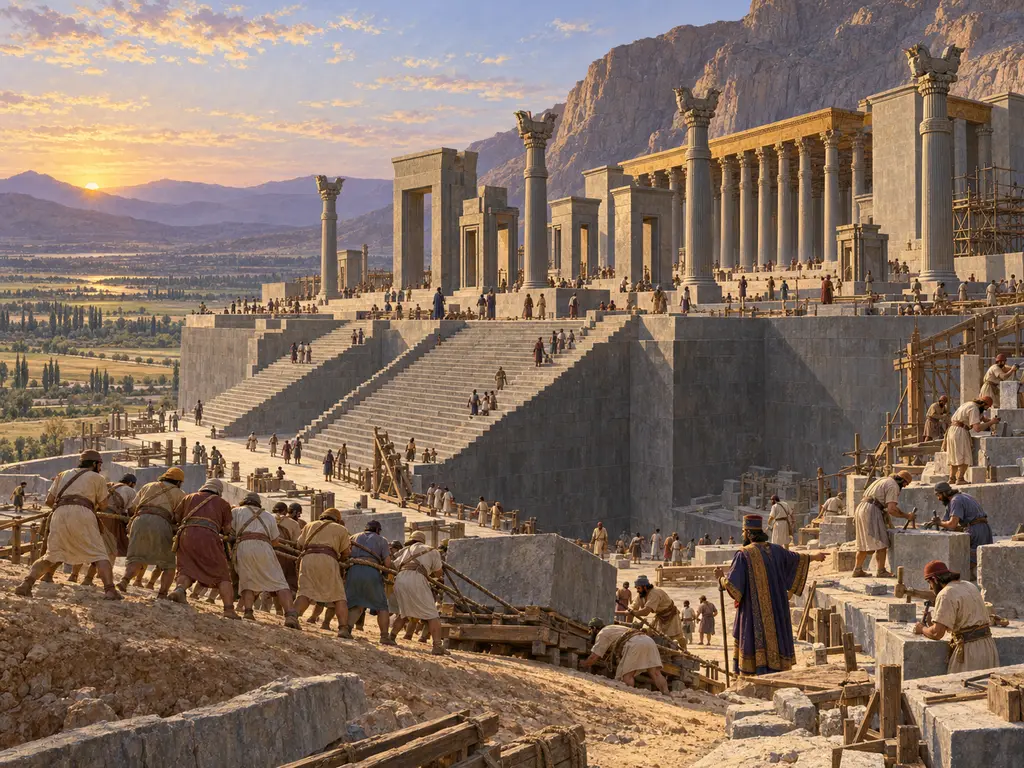
Royal Terrace
Stone platform of Darius's palace city at Parsa (Persepolis), begun about 518 BCE
In the game: Level 4: The Terrace
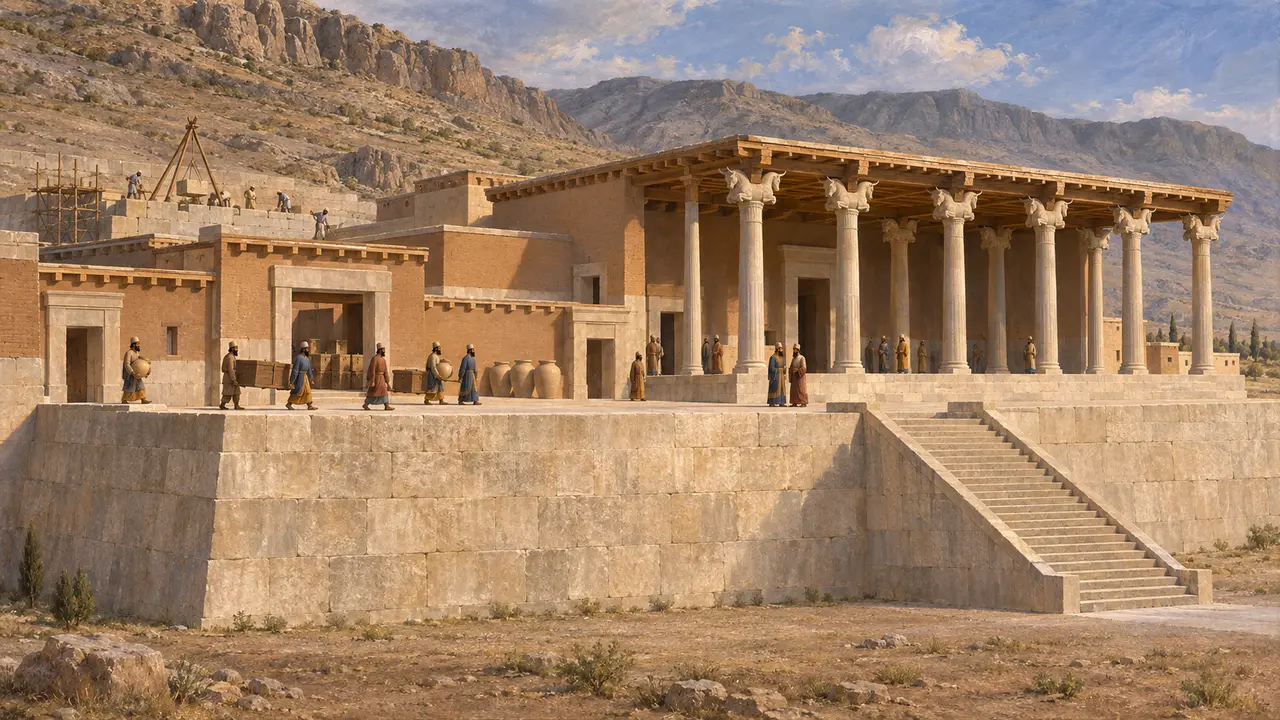
The Royal Terrace is the great stone platform on which the palaces of Parsa stood, set against the Kuh-e Rahmat with its back to the rock. Darius began it, probably about 518, and his successors built on it for over a century. It raised the King's halls above the plain of the Pulvar and gave the empire a ceremonial and administrative centre in the Persian homeland.
In the game: The game builds the terrace in the Parsa level, dated 521 to 509; real work probably began about 518 and went on under Xerxes and Artaxerxes I. The barley and wine costs simplify the ration system of the Fortification tablets.
A platform against the mountain
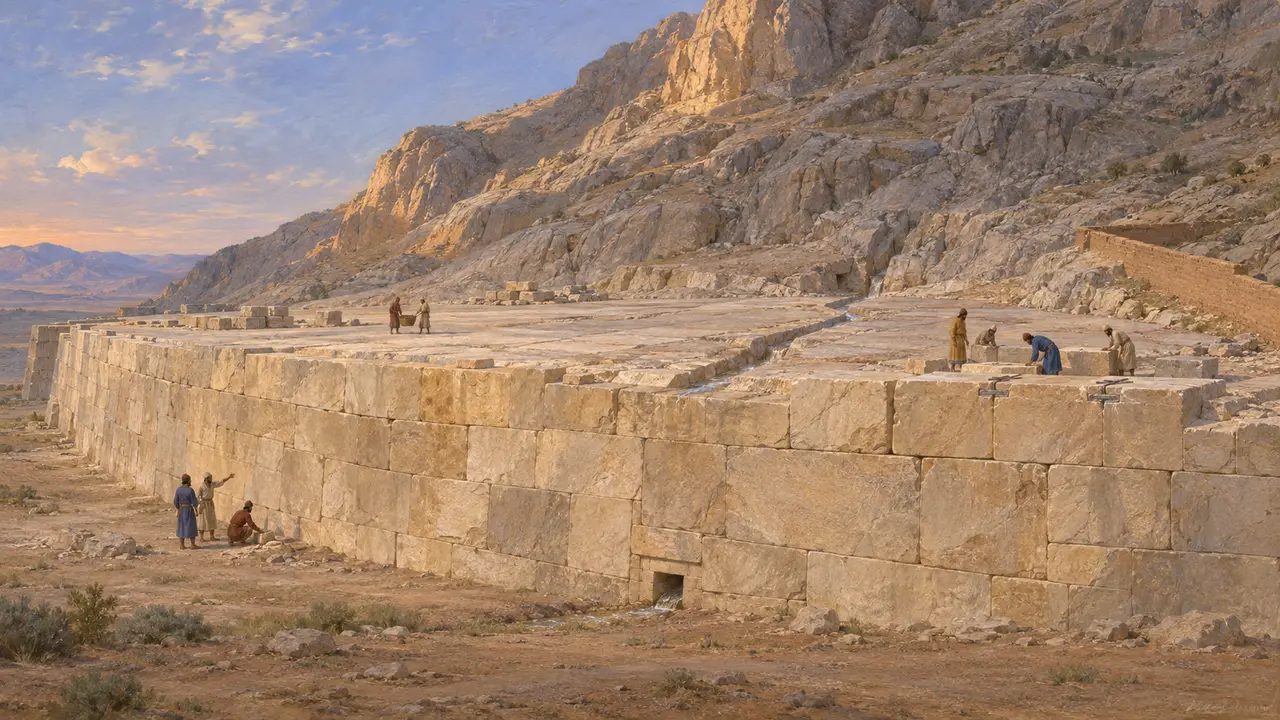
In the recordExcavation shows a platform of roughly 455 by 300 metres, partly levelled from bedrock and partly built up with large limestone blocks. The blocks were fitted without mortar and held by iron clamps set in lead. On the west its face rose more than 10 metres above the plain in places, and a mudbrick wall ran along the eastern side up the slope. Drains cut in the rock carried rainwater away beneath the buildings.
E. F. Schmidt, Persepolis I, 1953
Darius's words on the south wall
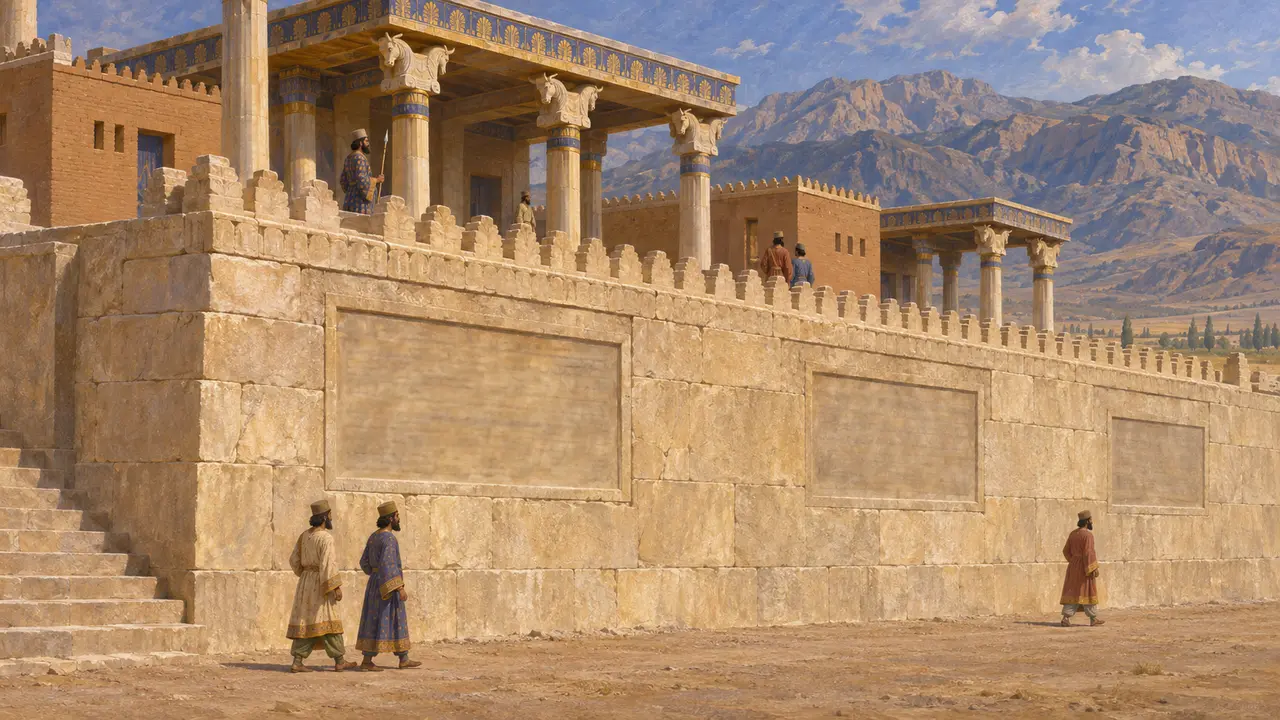
In the recordDarius set inscriptions in Old Persian, Elamite and Akkadian into the south face of the terrace. In the Elamite text he says that no fortress had stood on this spot before, and that by the favour of Auramazda he built one, secure and fine. Another text asks the god to protect the land from hostile armies, famine and the Lie.
DPf; DPd
The kurtash who built it
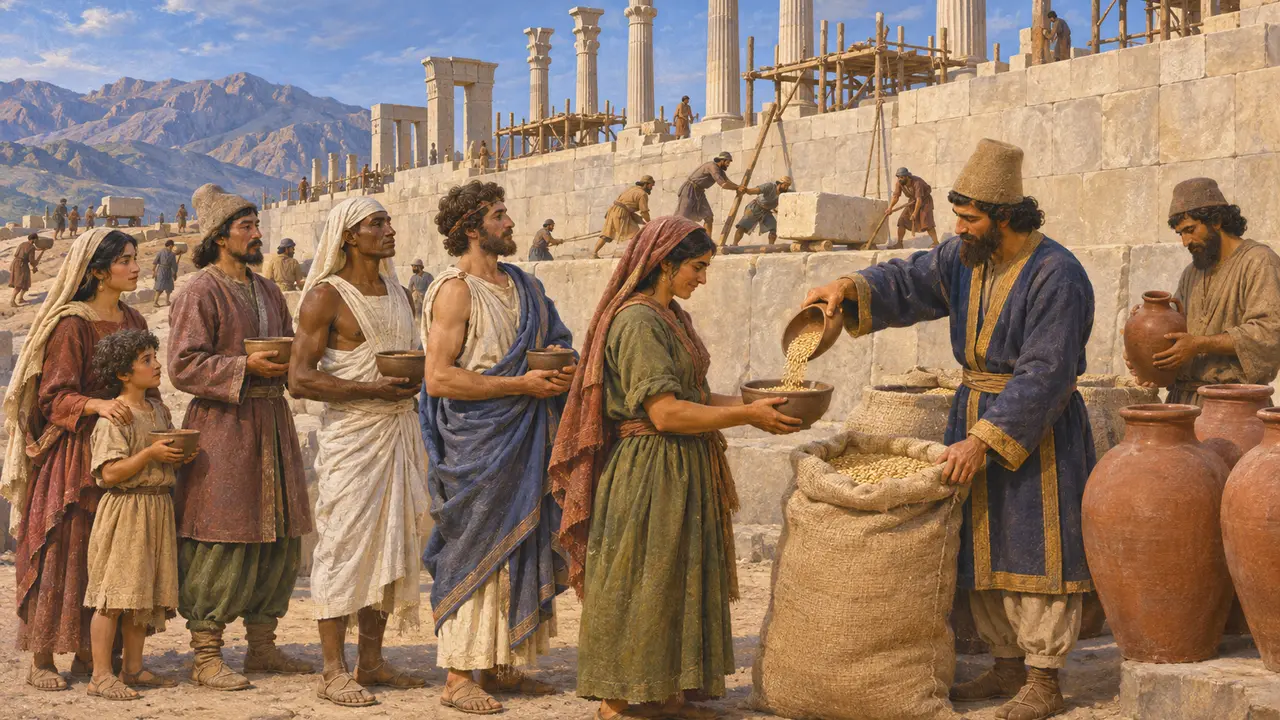
In the recordThe Persepolis Fortification tablets, written mostly in Elamite between 509 and 493, record rations of barley, wine and other goods to workers called kurtash. Men, women and children of many peoples, including Lydians, Ionians, Egyptians and Bactrians, appear in them. The later Treasury tablets show some workmen at Parsa paid partly in silver.
R. T. Hallock, Persepolis Fortification Tablets, 1969; G. G. Cameron, Persepolis Treasury Tablets, 1948
When it began and what it was for
DisputedNo text gives the founding year, so the start is dated from the inscriptions, the archives and the building sequence, usually to about 518 or a little later. Historians also argue over the purpose of the complex. Some see it mainly as a stage for royal ceremony, even a New Year festival, which no ancient source describes; others stress its role as a treasury, residence and centre of the royal economy.
P. Briant, From Cyrus to Alexander, 2002
The burning of 330
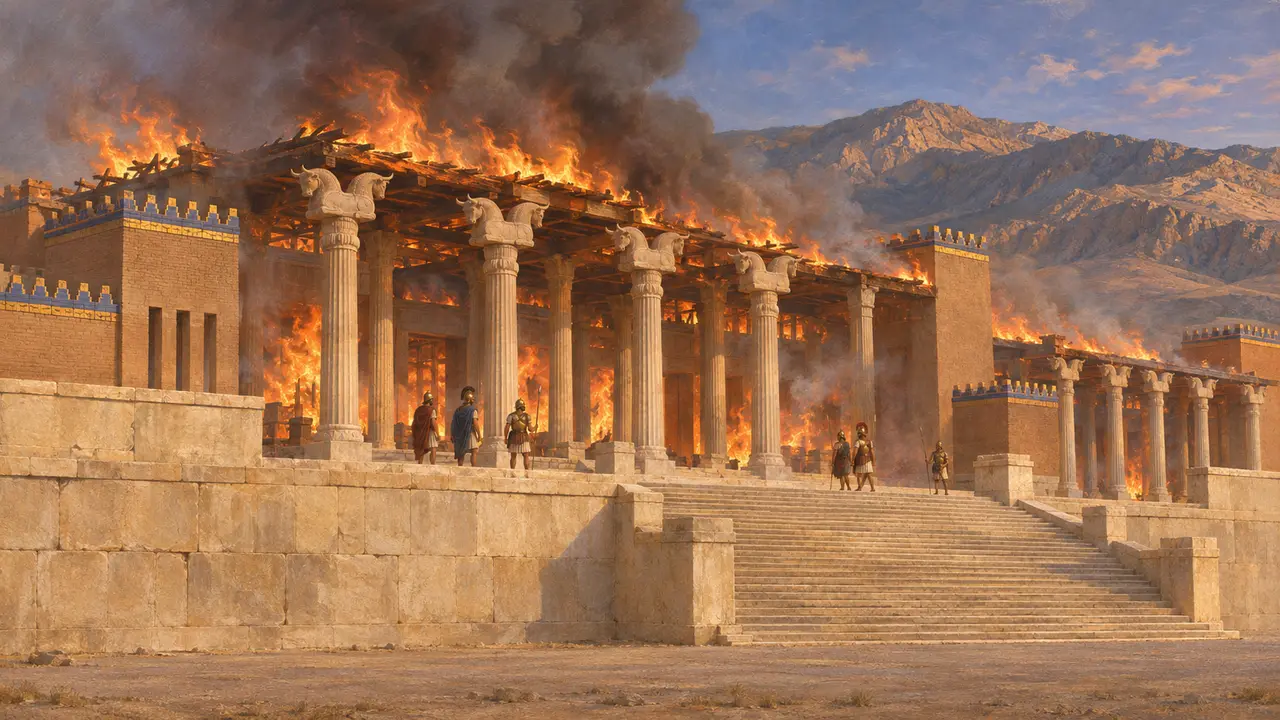
Ancient accountGreek writers of the Roman period describe the end of the terrace palaces. Diodorus describes the citadel and its walls before telling how Alexander burned the palaces. Arrian says Alexander did so as revenge for the Persian burning of Greek temples in 480. Diodorus and Plutarch add the story that the courtesan Thais urged the fire at a drinking party, a tale many historians doubt.
Diodorus 17.71-72; Arrian, Anabasis 3.18.11-12; Plutarch, Alexander 38
Sources
- E. F. Schmidt, Persepolis I, 1953
- DPf; DPd
- R. T. Hallock, Persepolis Fortification Tablets, 1969
- G. G. Cameron, Persepolis Treasury Tablets, 1948
- P. Briant, From Cyrus to Alexander, 2002
- Diodorus 17.71-72