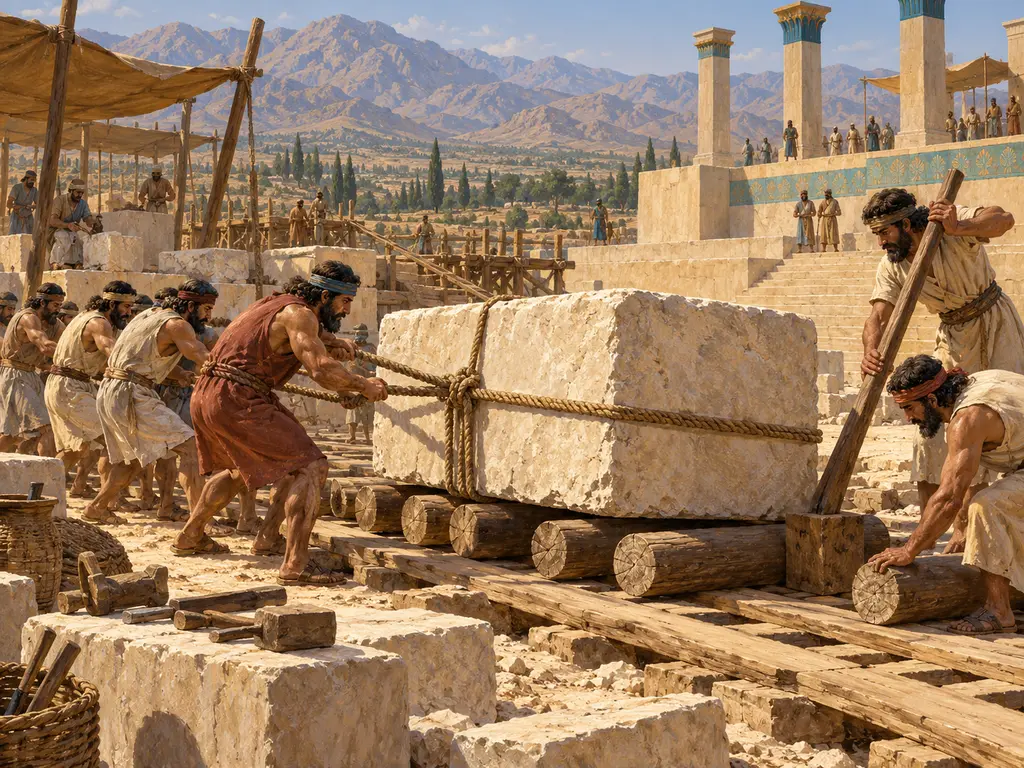
Masons' Camp
Stoneworkers who built the royal residences of Persis and Elam, about 550-480 BCE
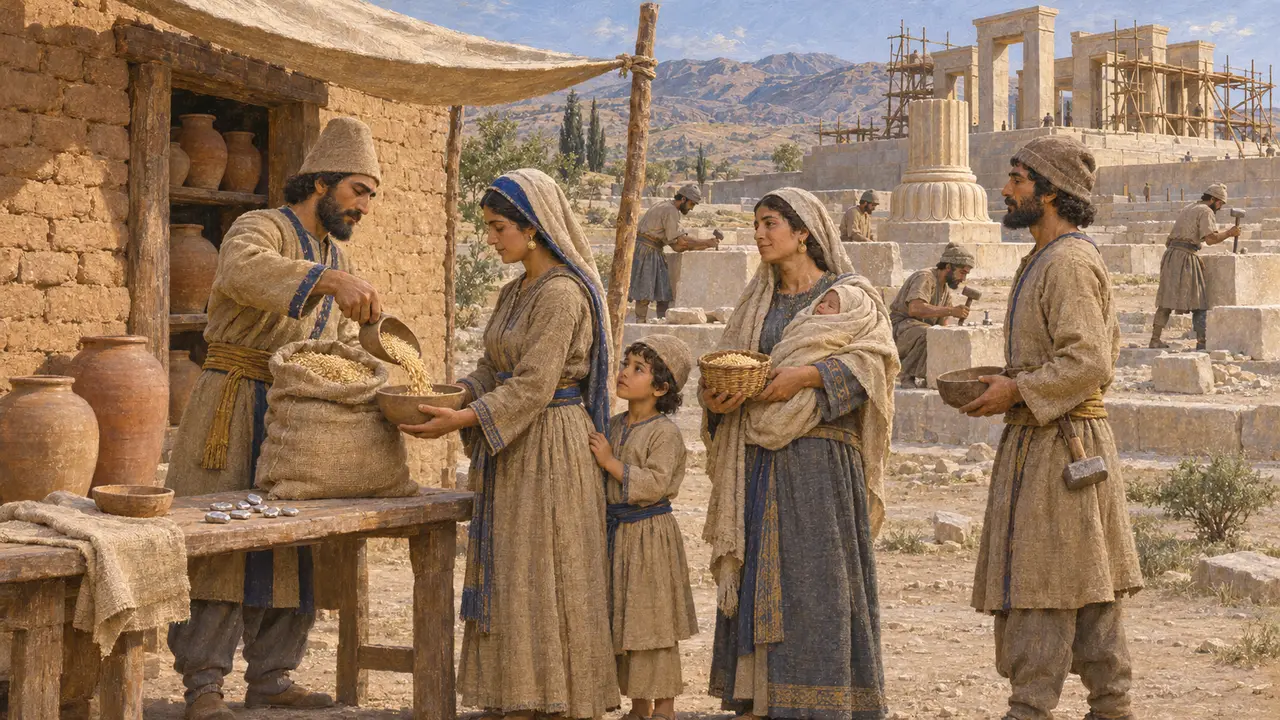
The palaces, terraces and tombs of the Achaemenid kings were cut and laid by large workforces of masons and labourers. They came from many lands and were fed from royal stores. Darius's own building texts and the clay tablets of Persepolis show these workers far more clearly than any Greek writer does.
In the game: The game gathers masons in one camp that serves every site, with up to 36 masons per site. This is a simplification: real royal works drew on large rationed workforces of many peoples, organised by the royal administration.
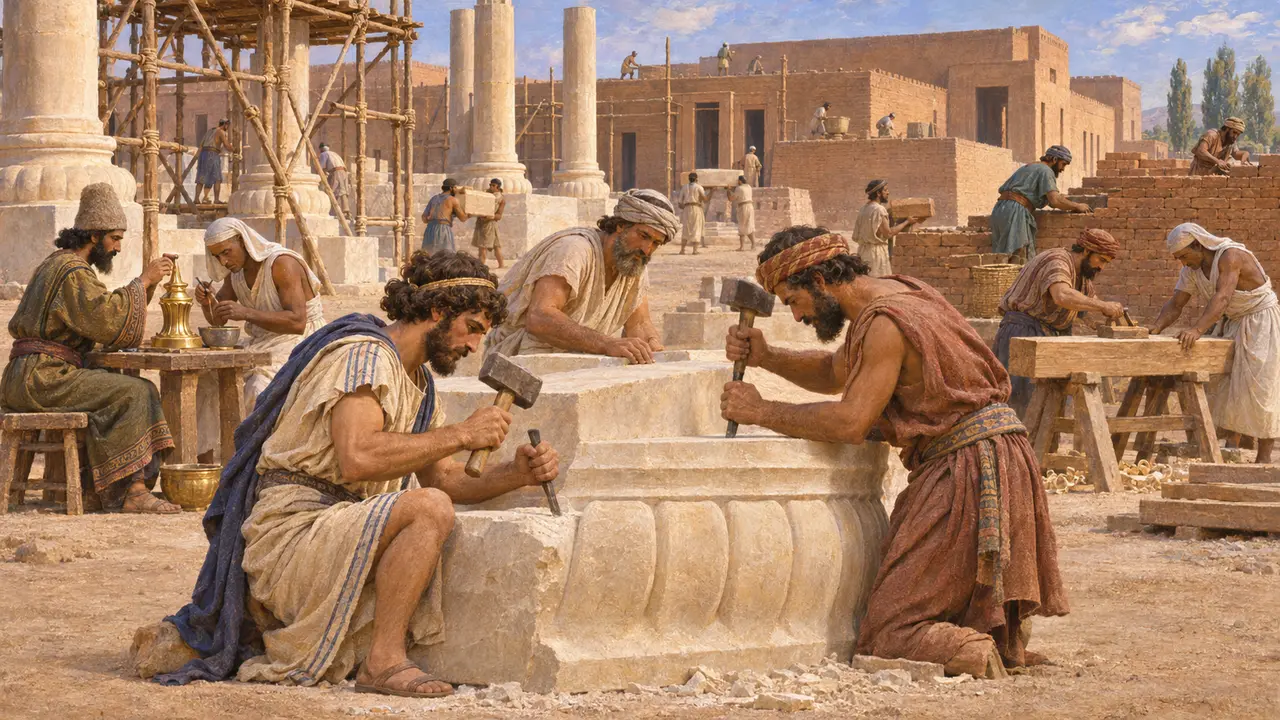
Craftsmen from many lands at Susa
In the recordIn his foundation charter for the palace at Susa, Darius listed where his materials and workers came from. He said the stonecutters were Ionians and Sardians. Medes and Egyptians worked the gold, Sardians and Egyptians the wood, and Babylonians the baked brick. The text presents the building as the work of the whole empire, so it carries a political message as well as a record of labour.
DSf; DSz
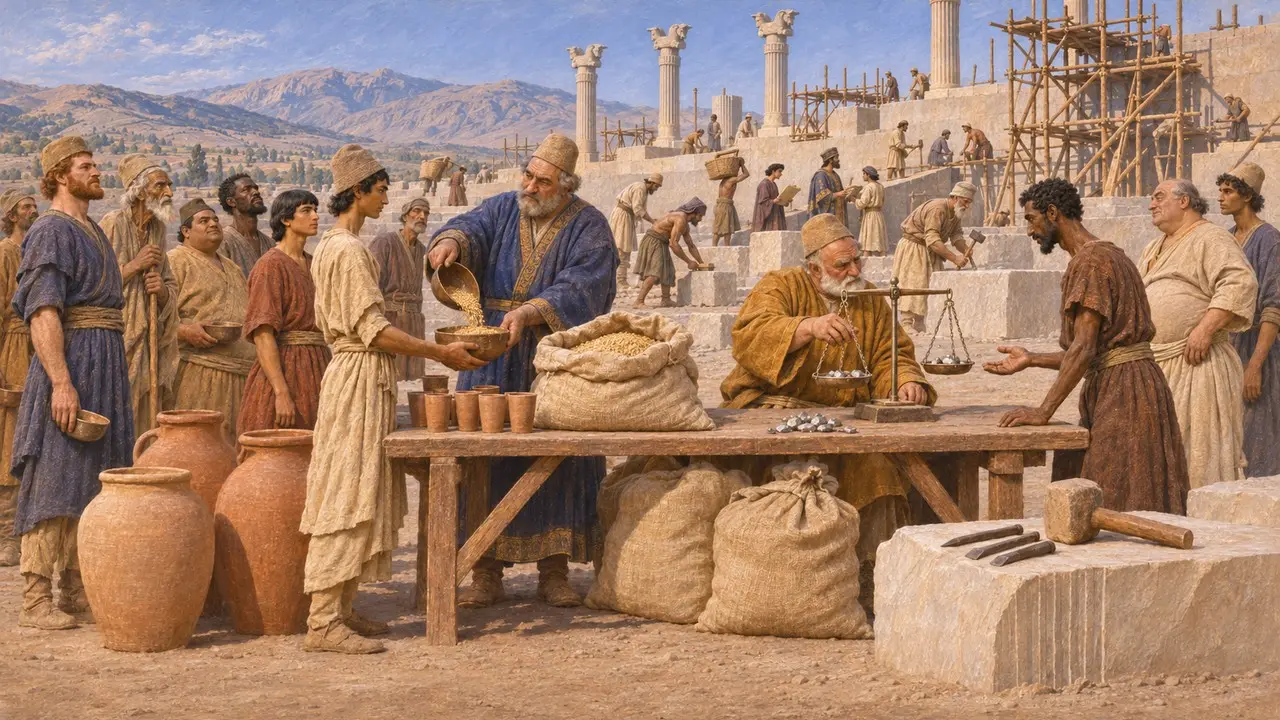
Workers on the ration lists
In the recordThe Persepolis Fortification tablets record monthly rations of grain, wine and beer issued to workers called kurtaš in Elamite. Many work groups were large, and the tablets name stoneworkers and other craftsmen, sometimes by origin. The Treasury tablets from Persepolis record payments in silver, made in place of part of the rations, to craftsmen working on the terrace under Darius and Xerxes.
R. Hallock, Persepolis Fortification Tablets, 1969; G. Cameron, Persepolis Treasury Tablets, 1948
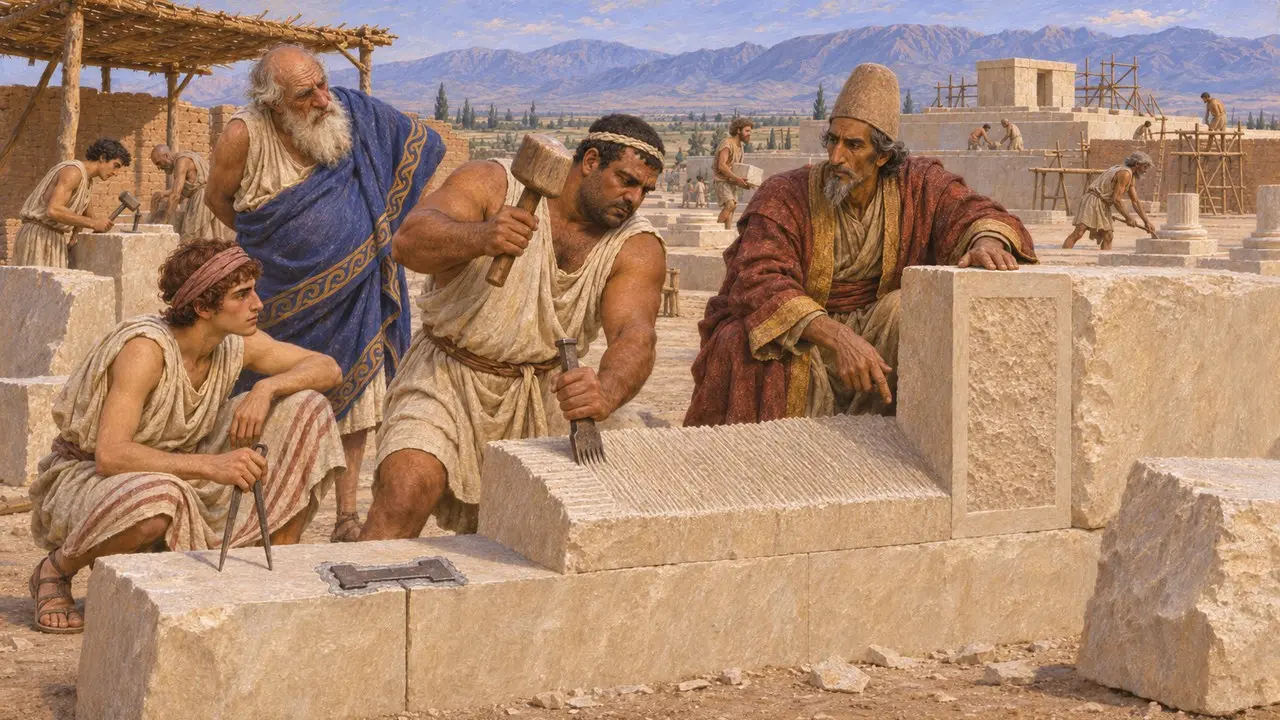
Ionian and Lydian methods at Pasargadae
In the recordThe stonework of Cyrus's Pasargadae shows techniques known from Lydia and Ionia. Masons used the toothed claw chisel and smoothed joints only at the edges, a method called anathyrosis. Blocks were tied with dovetail iron clamps set in lead. Scholars take this as evidence that western craftsmen probably came east after Cyrus took Sardis, and unfinished surfaces show the stages of their work.
C. Nylander, Ionians in Pasargadae, 1970; D. Stronach, Pasargadae, 1978
Free workers or forced labour
DisputedGreek writers tended to picture Persian subjects as the King's slaves, and some modern accounts followed them. The tablets give a more varied picture. Men, women and children received graded rations, and some workers drew silver pay, or extra rations for women after childbirth. Historians still argue over how many kurtaš were deportees, conscripts or hired craftsmen, and over how free any of them were.
P. Briant, From Cyrus to Alexander, 2002; M. Brosius, Women in Ancient Persia, 1996
Sources
- DSf
- R. Hallock, Persepolis Fortification Tablets, 1969
- G. Cameron, Persepolis Treasury Tablets, 1948
- C. Nylander, Ionians in Pasargadae, 1970
- D. Stronach, Pasargadae, 1978
- P. Briant, From Cyrus to Alexander, 2002