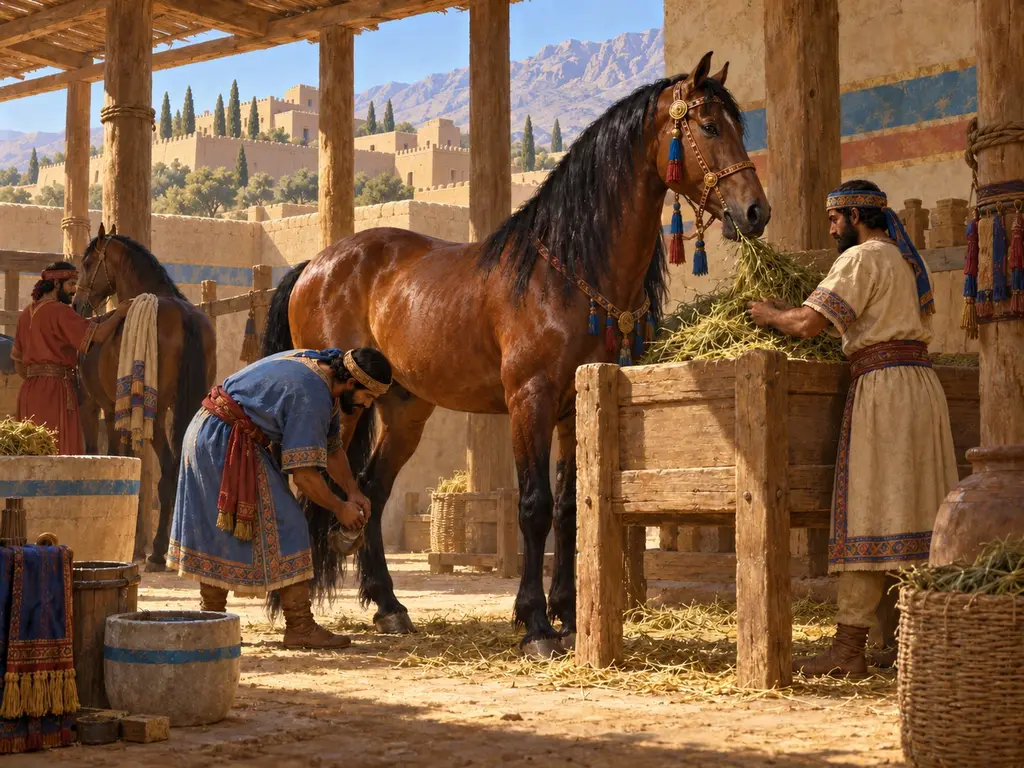
Cavalry Stable
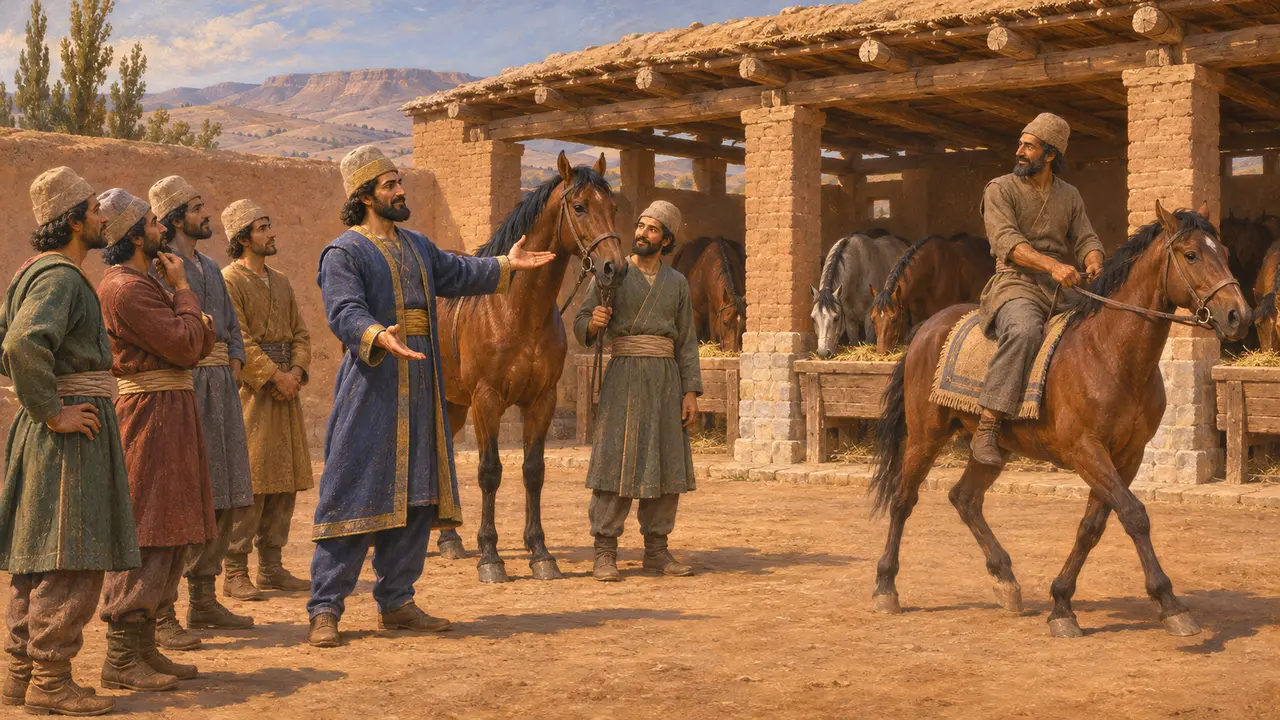
Housing and feeding horses for the King's cavalry, Persian empire, 6th-5th century BCE
In the game: Level 1: The Founder's Tomb
Horsemen were among the most valued troops of the Achaemenid kings, and horses needed steady feeding, grooming and handling. The Persepolis tablets show officials issuing grain to horses, and Babylonian archives show land granted in return for cavalry service. No stable compound of this period has been securely excavated, so how horses were housed is less clear than how they were fed.
In the game: In the game, grooms and riding-masters train Persian horsemen and carts bring arms and barley, as fodder issues in the tablets suggest. One training stable is a simplification: many riders learned as boys or served from granted land.
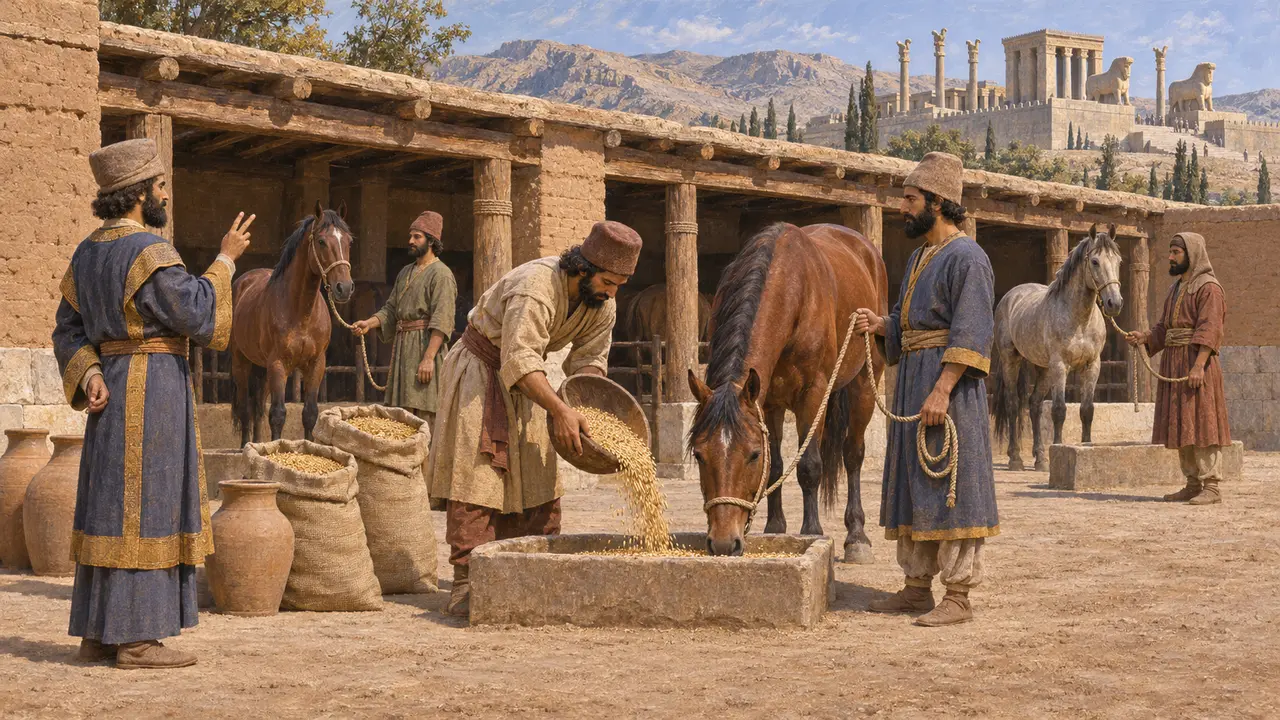
Grain rations for horses
In the recordThe Persepolis Fortification tablets, written in Elamite in about 509-493, record grain issued as fodder for horses. Some went to royal horses and some to the mounts of travellers and messengers on the roads. Officials counted the animals and set a ration for each, just as they did for workers. This careful accounting shows that keeping horses was part of the regular business of the royal economy in Persis.
R. Hallock, Persepolis Fortification Tablets, 1969
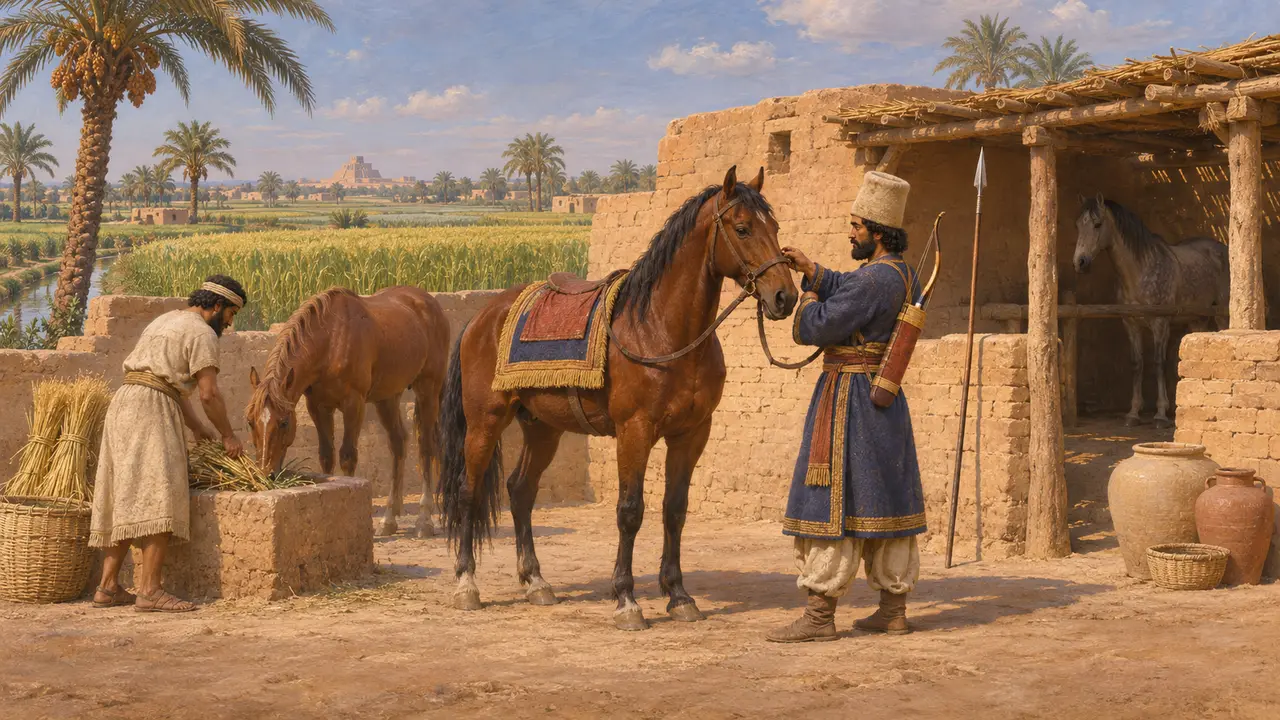
Horse land in Babylonia
In the recordBusiness archives from Nippur, above all the Murashu texts of the later 5th century, mention estates called horse land. Holders of such land owed the crown a mounted soldier with his equipment, and they could sometimes pay silver instead. These texts date from after the game's period, but they show one way the empire raised horsemen without keeping them all in royal stables.
M. Stolper, Entrepreneurs and Empire, 1985
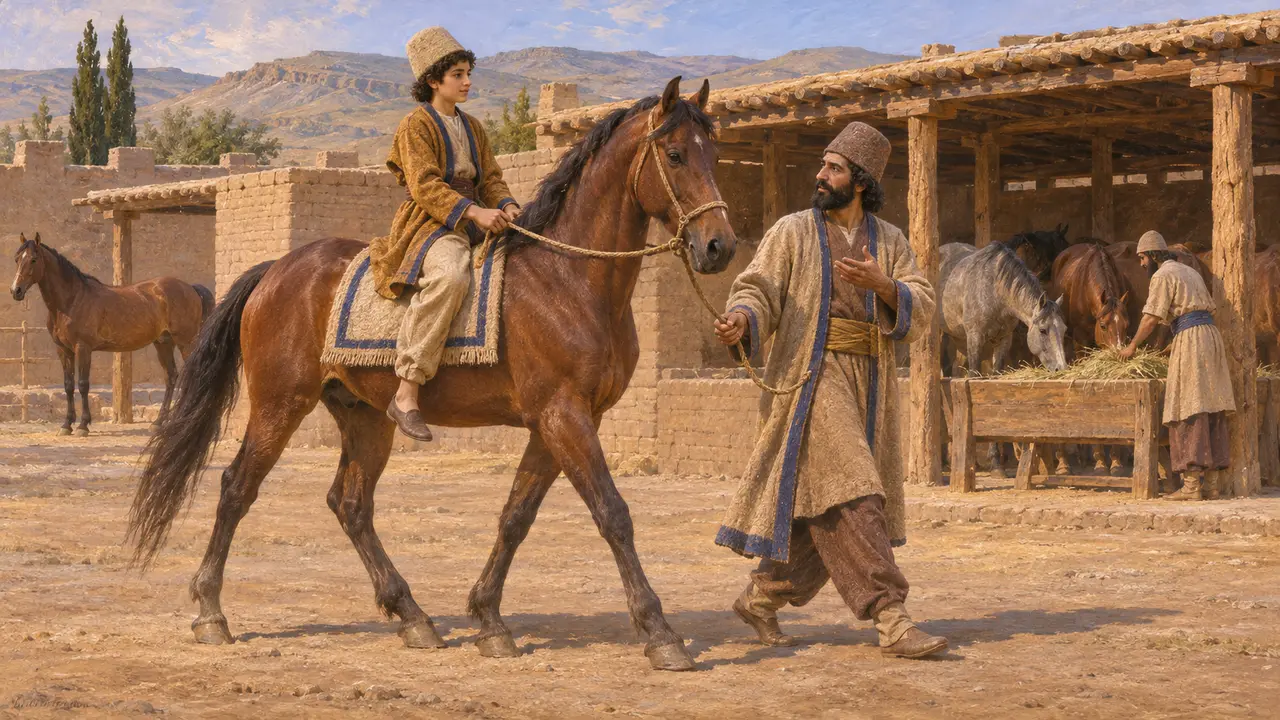
Riding learned from boyhood
Ancient accountHerodotus says that Persian boys were taught three things between the ages of five and twenty: to ride, to shoot the bow and to tell the truth. He also writes that a governor of Babylon in his own day kept a huge stud of stallions and mares. He describes the great Nisaean horses that marched with Xerxes in 480. On his account, horsemanship was a skill of the Persian nobility as much as a trade for grooms.
Herodotus 1.136; Herodotus 1.192; Herodotus 7.40
Xenophon's Cyrus makes the Persians riders
Later legendIn the Cyropaedia, written more than a century and a half after Cyrus, Xenophon has Cyrus persuade the Persians, then mostly foot soldiers, to become horsemen. The work is an idealised portrait of a model ruler, not a history. It may reflect a real memory that Persian cavalry grew under Cyrus, but its scenes and speeches cannot be taken as fact.
Xenophon, Cyropaedia 4.3
Where the horses were kept
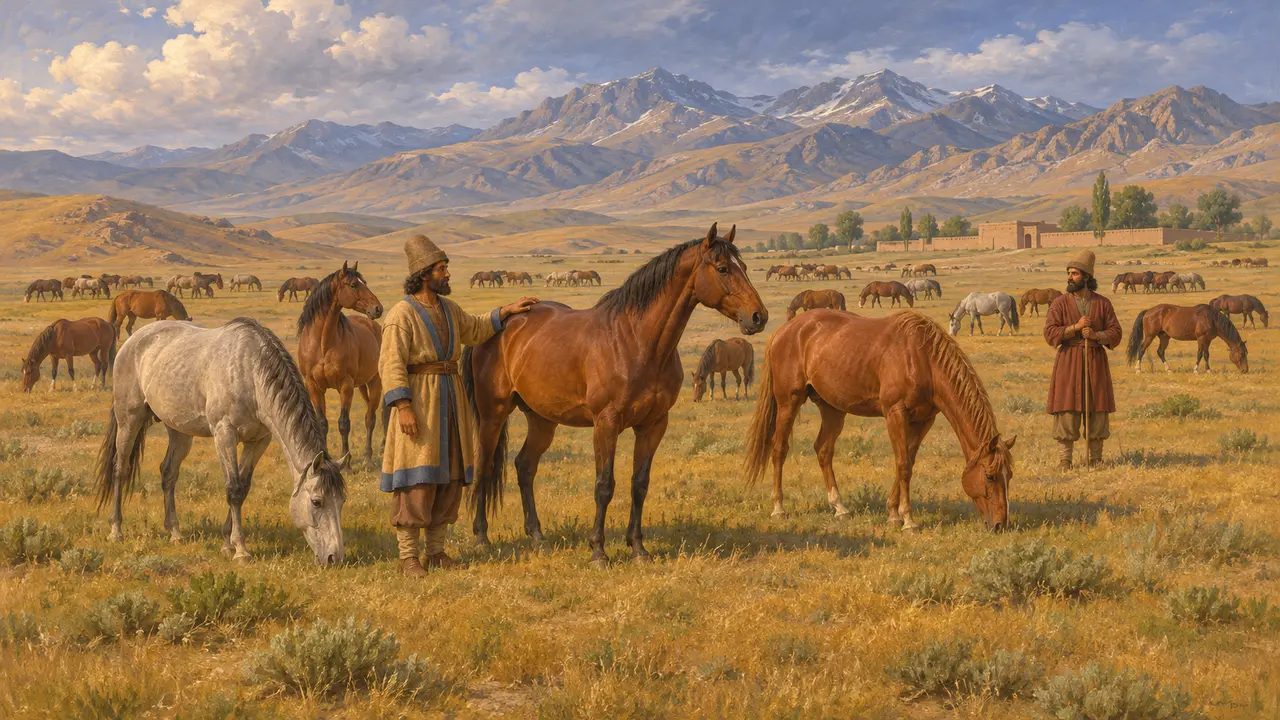
DisputedArchaeologists have not securely identified an Achaemenid stable building at Persepolis, Susa or Pasargadae. Greek writers stress great herds grazing on the pastures of Media, which suggests that many horses lived on open land and estates rather than in stalls. Historians still debate how large a standing royal cavalry was, compared with horsemen raised from land grants and from subject peoples.
P. Briant, From Cyrus to Alexander, 2002
Sources
- R. Hallock, Persepolis Fortification Tablets, 1969
- M. Stolper, Entrepreneurs and Empire, 1985
- Herodotus 1.136; 1.192; 7.40
- P. Briant, From Cyrus to Alexander, 2002
- Xenophon, Cyropaedia 4.3