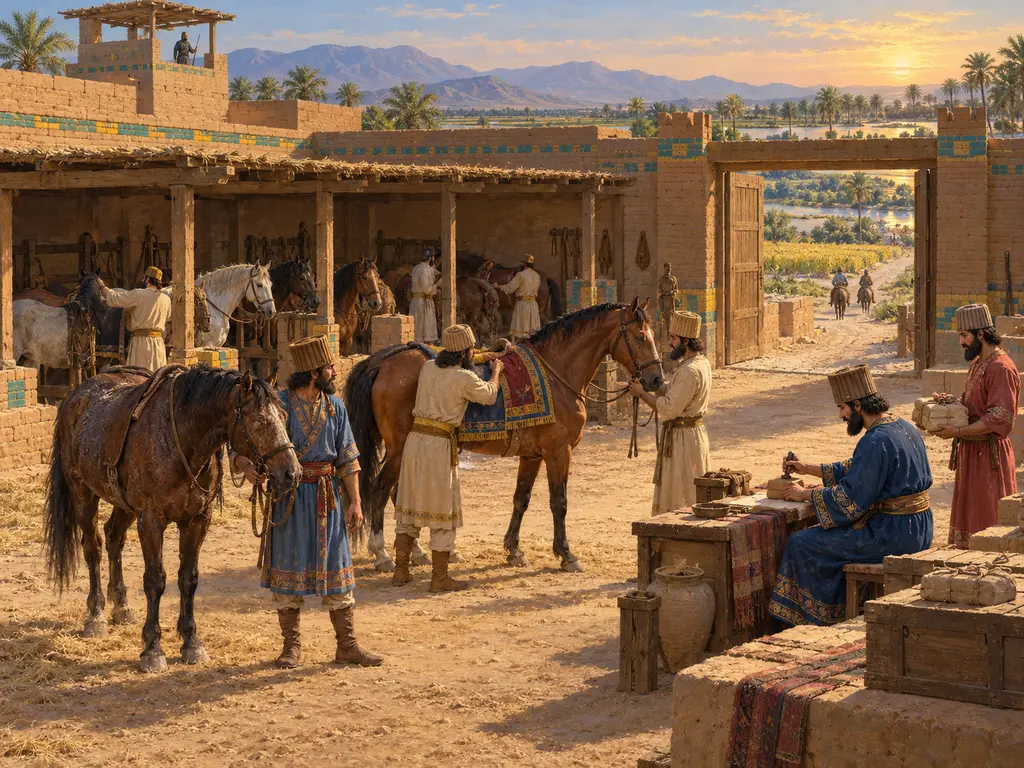
Road Station
Waystation on the King's roads for officials, couriers and troops, about 500 BCE
In the game: Level 5: The Charter
Road stations were posts set along the main routes of the Persian empire, where travellers on the King's business received food, fodder and fresh animals. They let messages, officials and work gangs cross the empire at speed, and they tied the provinces to the courts at Susa and Persepolis.
In the game: Built only in the Susa level, a staffed station speeds charter caravans and its riders spot raiders. Historically stations fed state travellers carrying sealed passes; serving merchant caravans is the game's simplification.
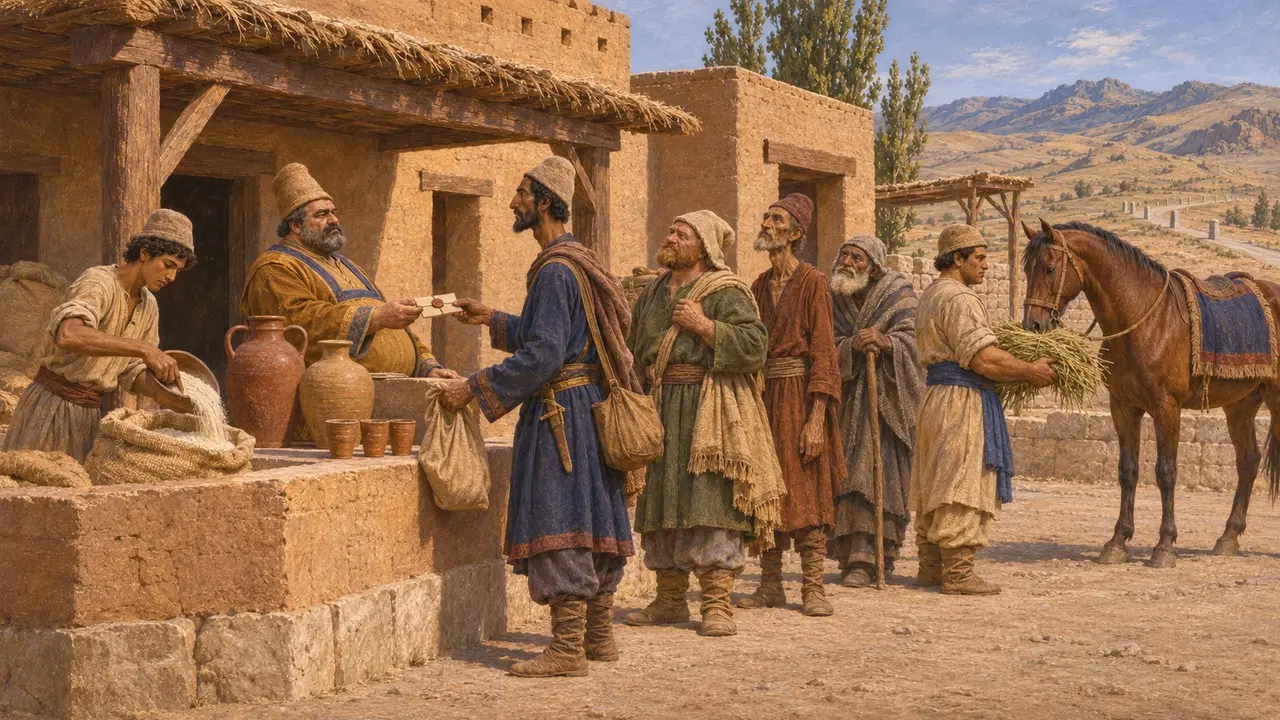
Rations for travellers in the tablets
In the recordThe Persepolis Fortification tablets, written in Elamite between about 509 and 493, record flour, beer, wine and fodder issued to people on the road. Travellers carried a sealed document, called halmi, naming who had authorised the journey. Recipients include express messengers (pirradaziš), officials and groups of workers moving between Persis, Susa, Kandahar, India and Sardis.
R. T. Hallock, Persepolis Fortification Tablets, 1969
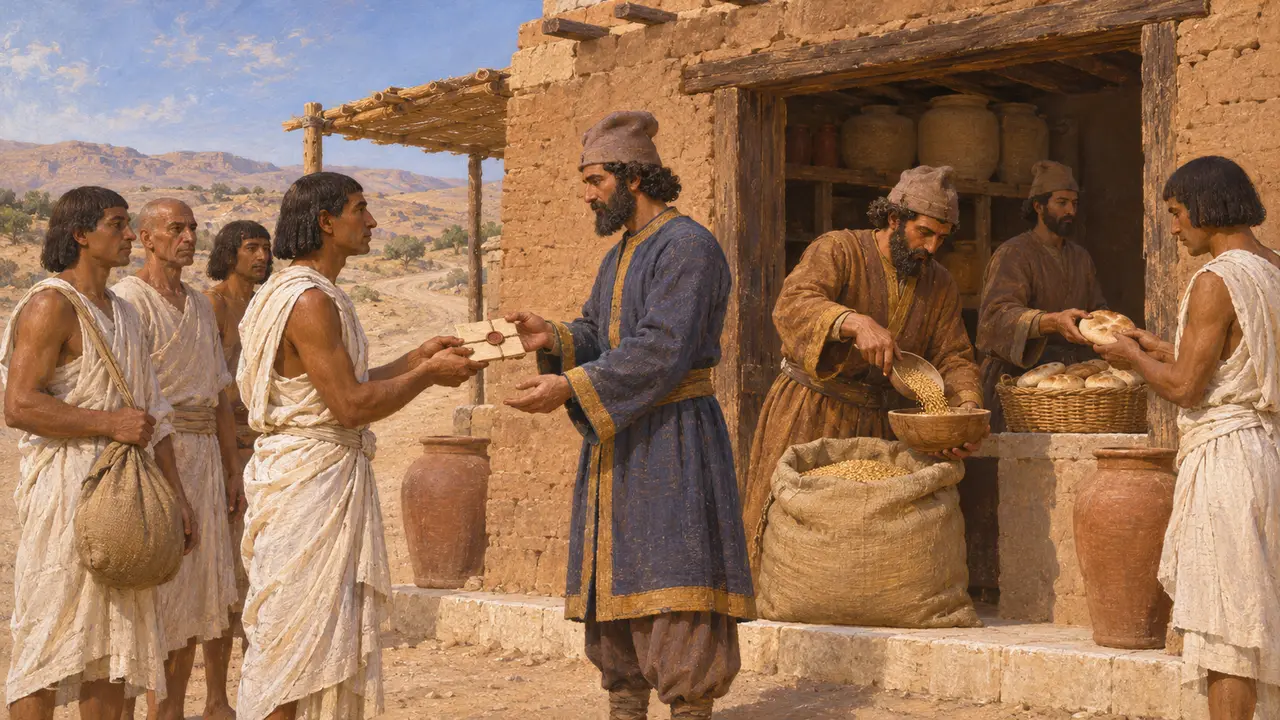
A later travel pass from Egypt's satrap
In the recordAn Aramaic letter of Arshama, satrap of Egypt in the late fifth century, orders his officials at a list of places along the route to give his steward Nehtihor and his men set daily rations on their way to Egypt. It shows the same system still working long after Darius. A great man issued a sealed order, and stores along the route honoured it.
Arshama letter (TADAE A6.9)
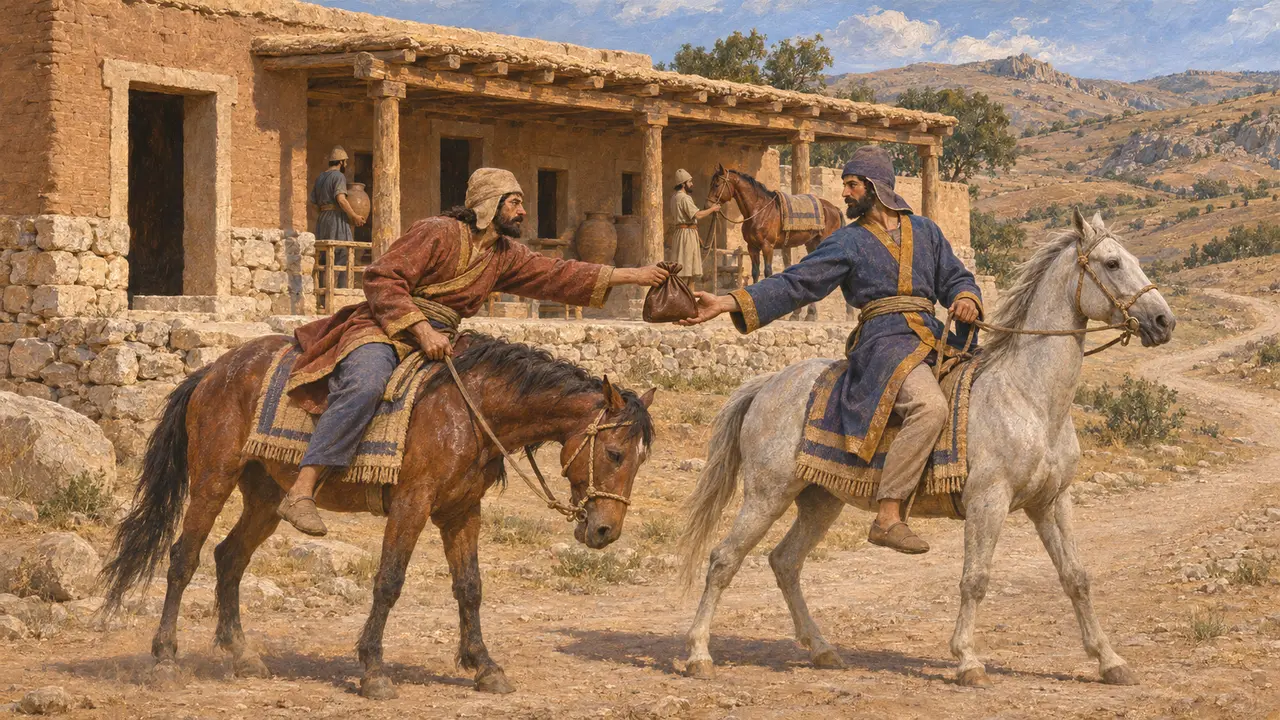
Herodotus on the road and its couriers
Ancient accountHerodotus describes the road from Sardis to Susa with royal stations and fine inns along its length, counting 111 stations and about three months of travel on foot. Elsewhere he describes the relay of mounted messengers, with a fresh man and horse posted for each day's stage, so that a message passed from rider to rider without stopping.
Herodotus 5.52-54; Herodotus 8.98
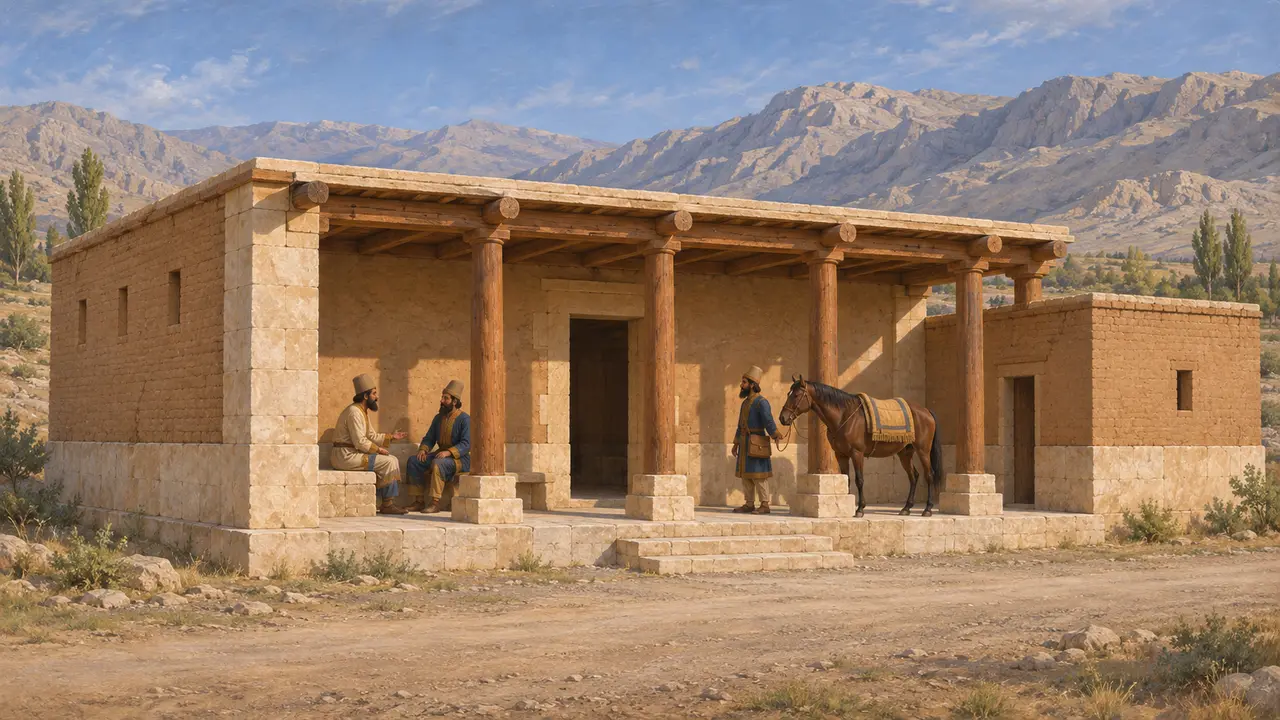
Finding the stations on the ground
DisputedFew stations have been firmly identified. A pillared building at Qaleh Kali in Fars, of Achaemenid date, has been proposed as a waystation on the road between Susa and Persepolis, but its purpose is still argued. Historians also debate how far Darius created the network and how far he reorganised older Assyrian and Median roads.
P. Briant, From Cyrus to Alexander, 2002; D. Graf, The Persian Royal Road System, 1994
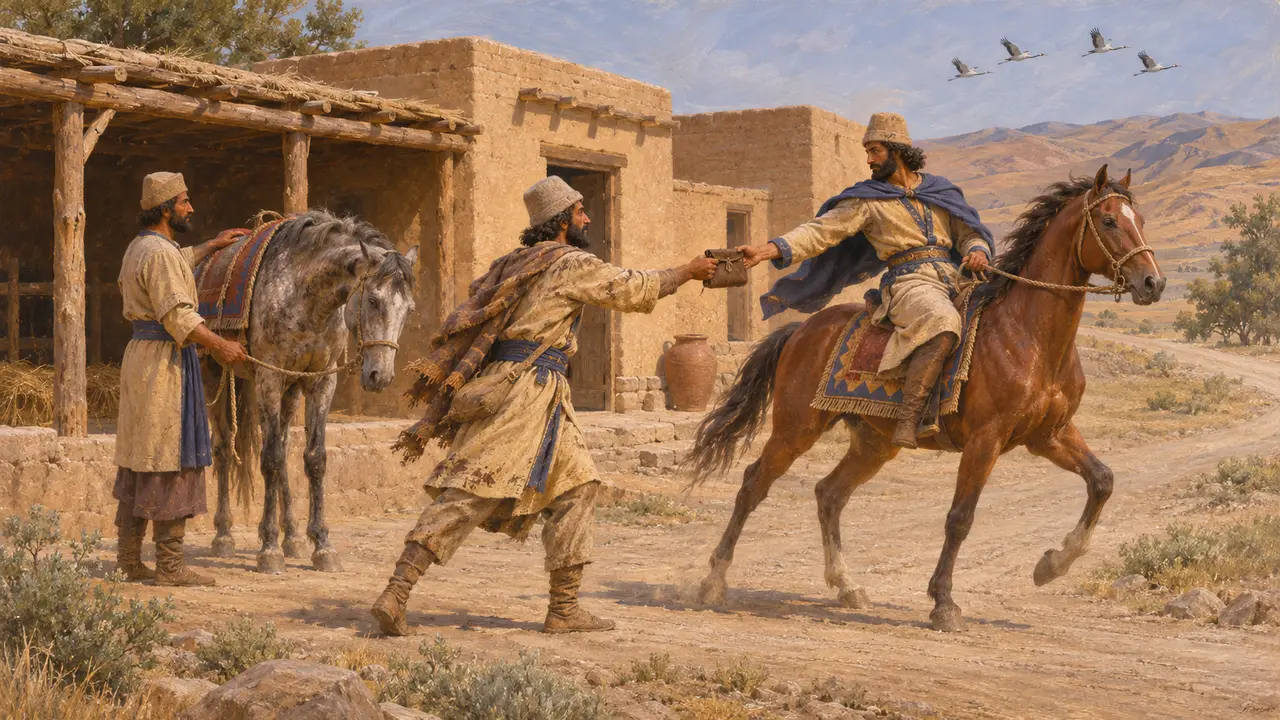
Swifter than cranes
Later legendXenophon credits Cyrus the Great with inventing the relay, after testing how far a horse could go in a day. He reports that some claimed the couriers outflew cranes, though he doubts it himself. His Cyropaedia is a moral portrait of an ideal king, and the earliest firm evidence for the system comes from the tablets of Darius's reign.
Xenophon, Cyropaedia 8.6.17-18
Sources
- R. T. Hallock, Persepolis Fortification Tablets, 1969
- Herodotus 5.52-54; 8.98
- P. Briant, From Cyrus to Alexander, 2002
- D. Graf, The Persian Royal Road System, 1994
- Arshama letter (TADAE A6.9)
- Xenophon, Cyropaedia 8.6.17-18