The King's couriers
Royal messengers and the relay posts of the Achaemenid roads, about 530-479 BCE
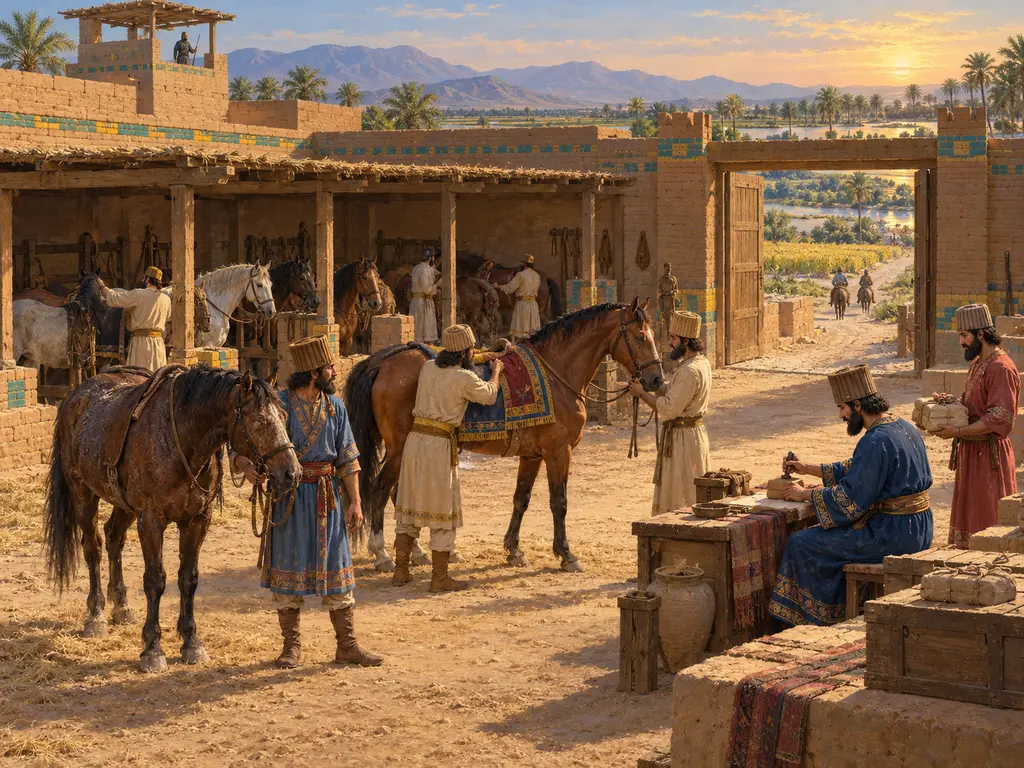
The Persian kings governed lands from the Aegean to the Indus and depended on messengers who carried sealed orders and reports along guarded roads. Herodotus admired the speed of the mounted relay, which he says the Persians called angareion. The Persepolis tablets show the plainer side of the system: rations, travel documents and officials on the move.
In the game: The game shows the couriers through the Road Station building, the Royal Road and the angaros system. Historically the stations supplied all travellers carrying sealed authorisations, and the Sardis road was one route among many.
A relay of horsemen
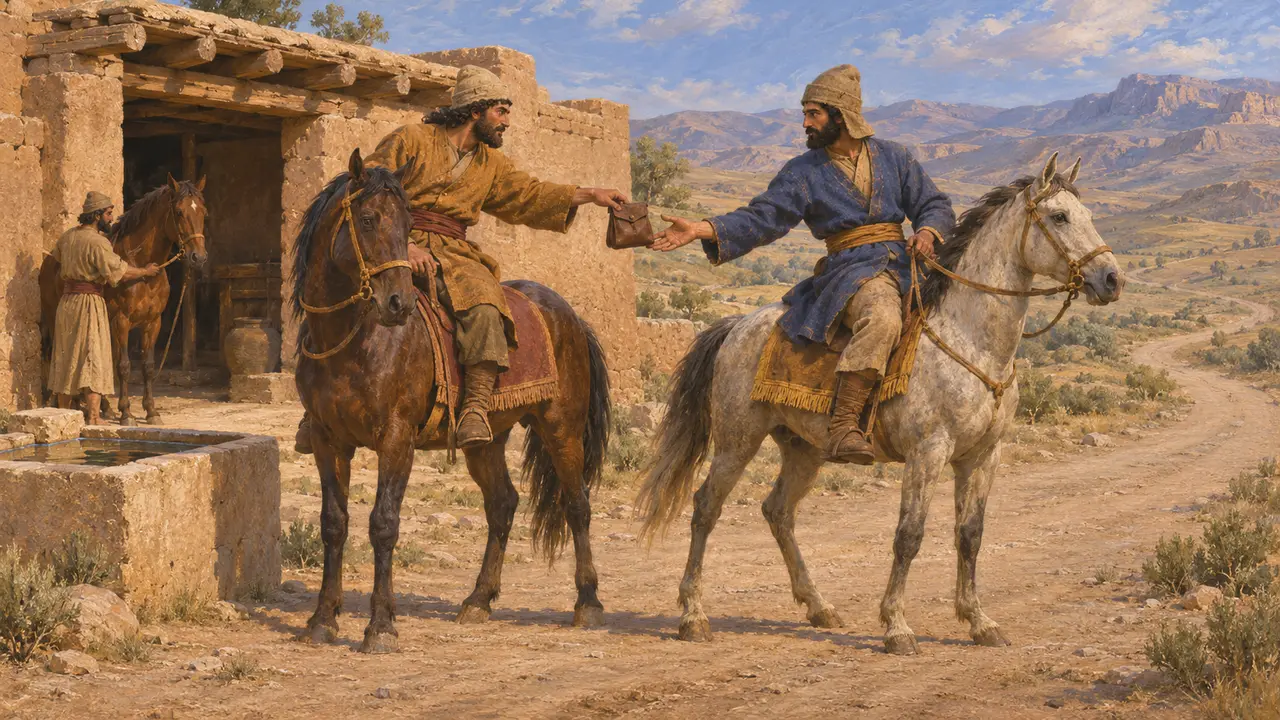
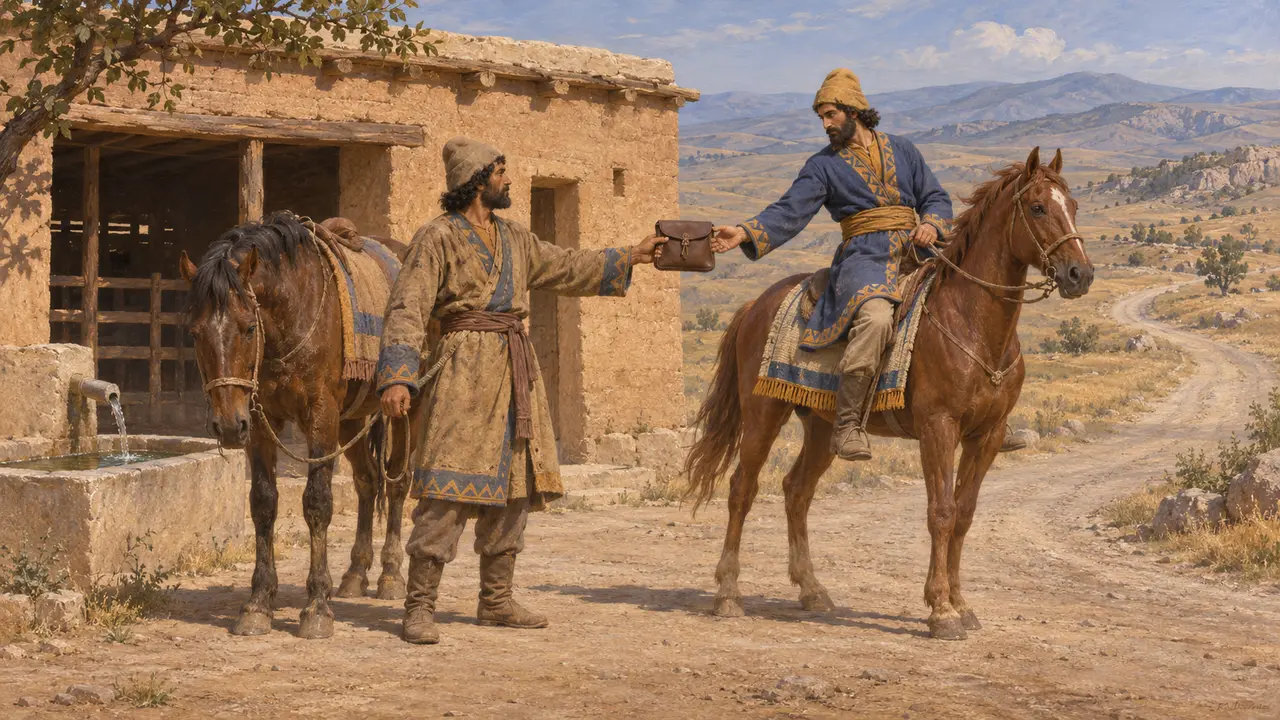
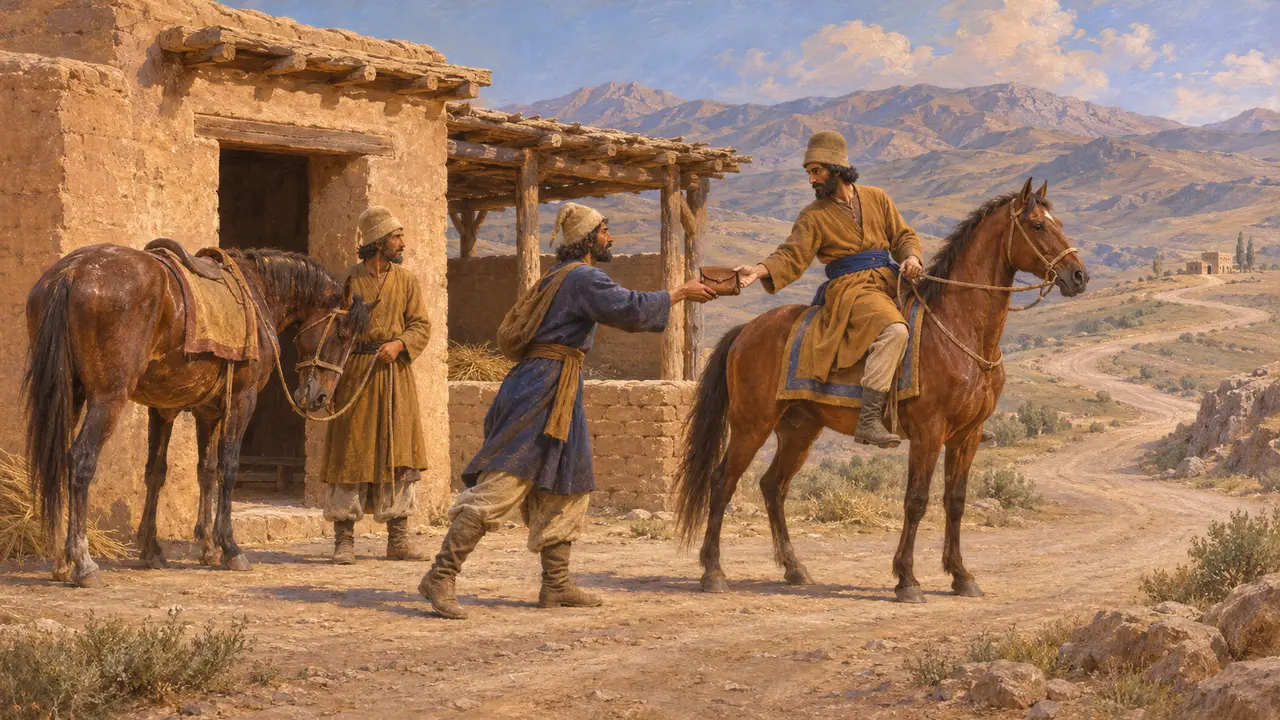
Ancient accountHerodotus describes how news of Salamis was sent from Greece to Persia in 480. Men and horses were stationed along the road a day's journey apart, and each rider handed the message to the next, as Greek torch-runners passed on a torch. He says that neither snow, rain, heat nor darkness stopped them, and that the Persians called this relay angareion. The Greek word angaros, for such a courier, probably came from a Near Eastern or Iranian term.
Herodotus 8.98
Stations along the road
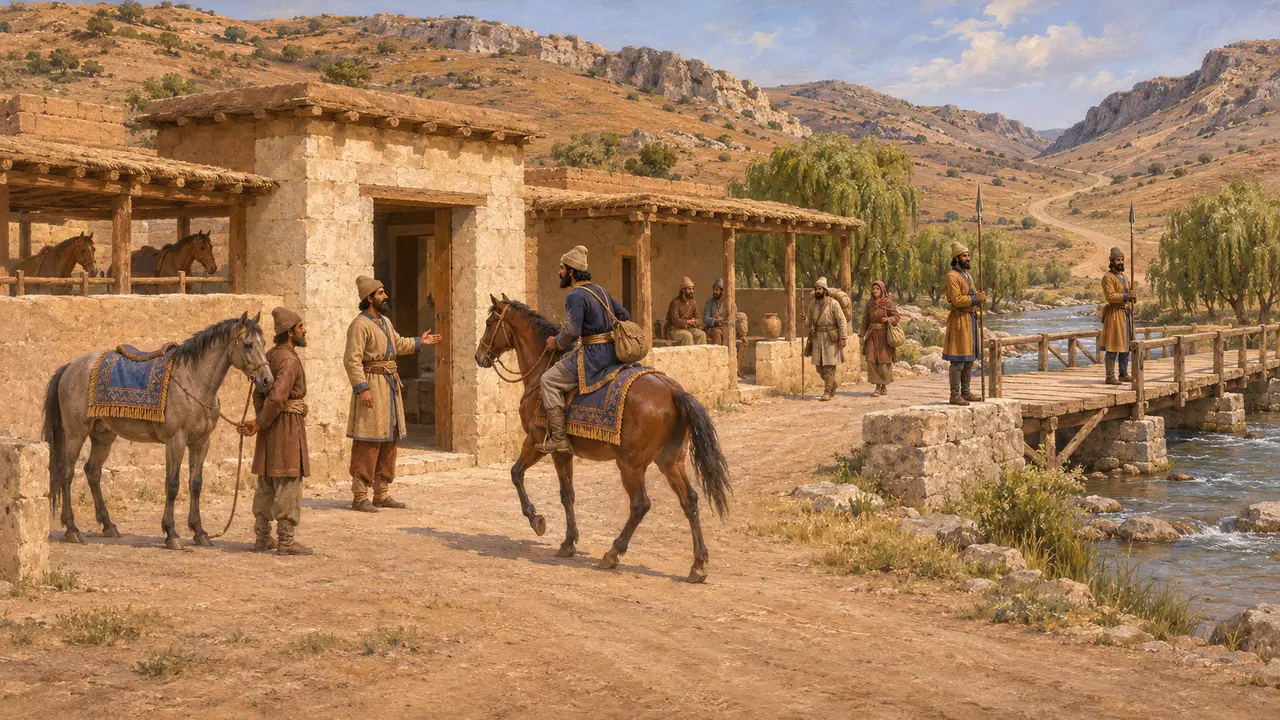
Ancient accountHerodotus describes the road from Sardis to Susa as lined with royal stations and good lodgings, with guarded crossings at rivers and passes. He counts 111 stations and reckons the journey at about ninety days for a traveller covering 150 stades a day. His figures describe ordinary travel, not the speed of royal messages.
Herodotus 5.52-54
What the Persepolis tablets show
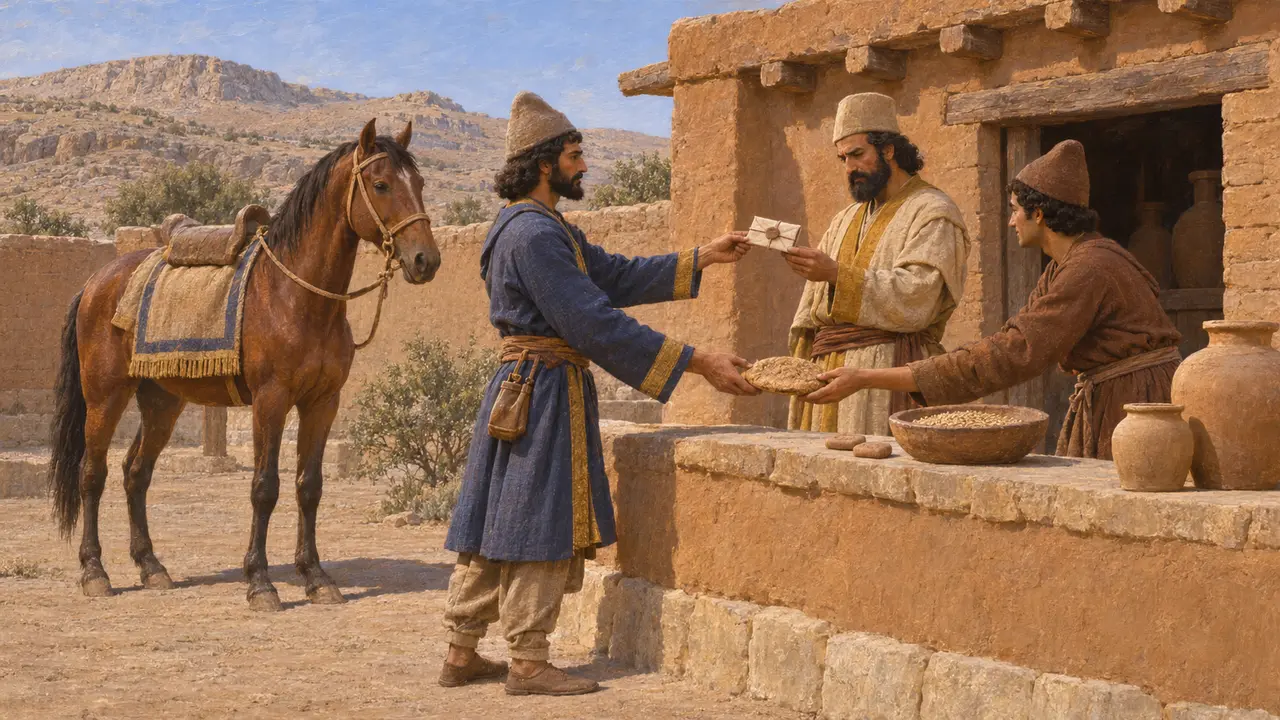
In the recordThe Persepolis Fortification tablets, written mostly in Elamite between about 509 and 493, record rations issued to travellers at stations in Persis and Elam. Many travellers carried a sealed document from the King, a satrap or a senior official authorising their journey and supplies. Among them the tablets name express messengers, called pirradaziš in Elamite.
R. T. Hallock, Persepolis Fortification Tablets, 1969
Speed, route and purpose
DisputedHistorians debate how fast royal messages really travelled. Modern estimates for a relay from Sardis to Susa run from about one to two weeks, against Herodotus's ninety days of ordinary travel. The exact course of his Royal Road, through Cappadocia or through Cilicia, is also argued over. Scholars further discuss whether the express couriers formed a separate service or were the fastest users of the general station system.
P. Briant, From Cyrus to Alexander, 2002
Cyrus as inventor of the post
Later legendXenophon credits Cyrus with inventing the relay. In his telling, Cyrus found out how far a horse could go in a day and set up posts at that interval, with men to keep fresh horses ready. The Cyropaedia is an idealised portrait of a model ruler, so this story shows how Greeks imagined Persian order rather than recording who founded the system.
Xenophon, Cyropaedia 8.6.17-18
Sources
- Herodotus 8.98
- Herodotus 5.52-54
- R. T. Hallock, Persepolis Fortification Tablets, 1969
- P. Briant, From Cyrus to Alexander, 2002
- A. Kuhrt, The Persian Empire, 2007
- Xenophon, Cyropaedia 8.6.17-18