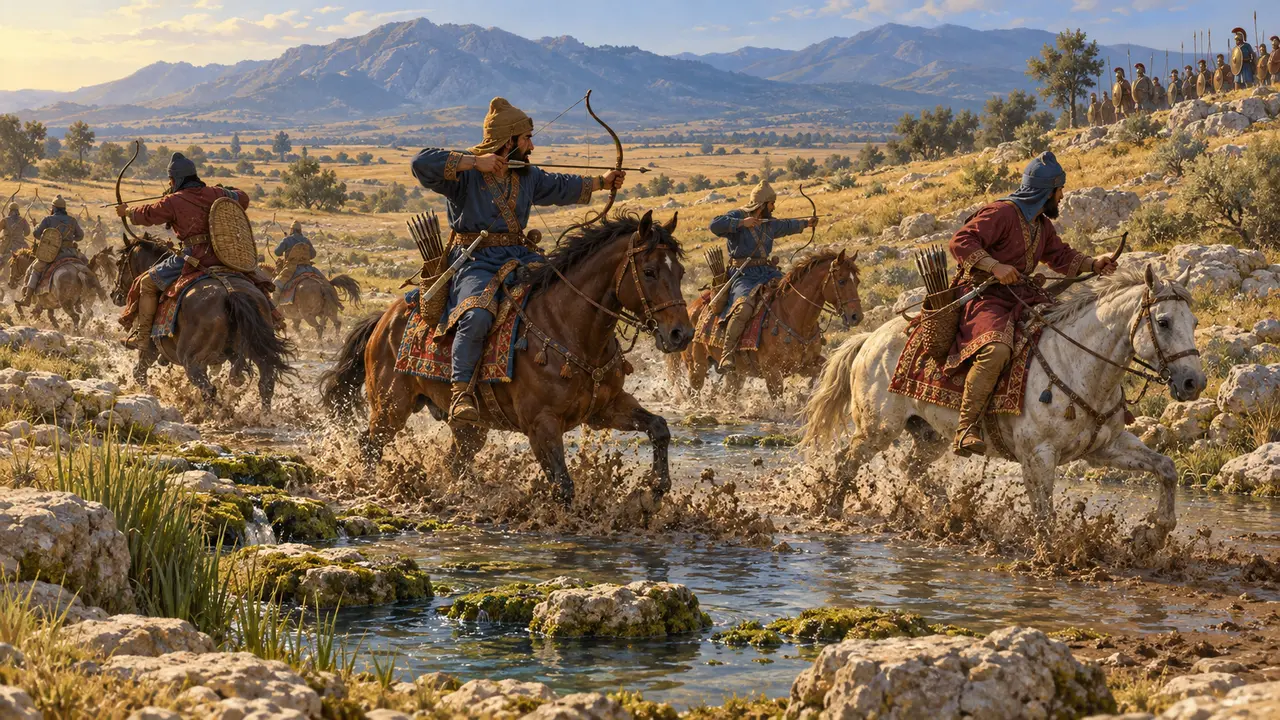
The spring of Gargaphia
The spring that watered the Greek army before Plataea, fouled by the King's horse, 479 BCE
In the game: Level 11: The Finale
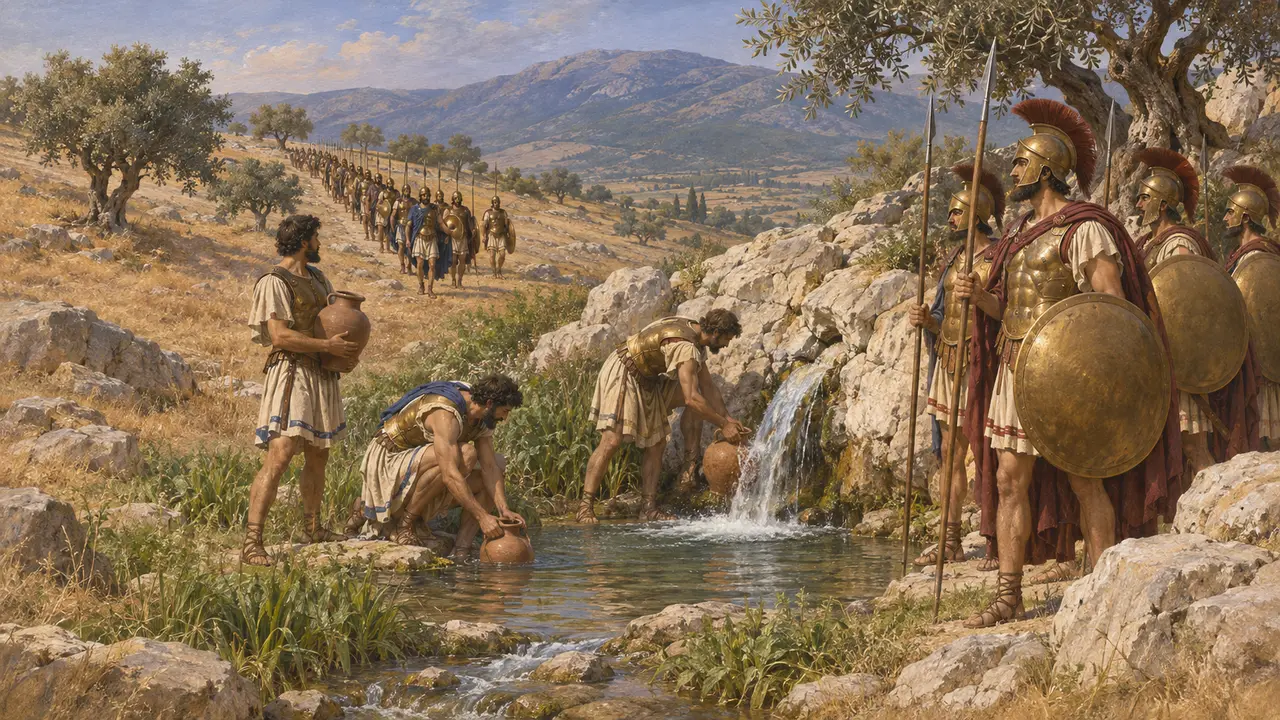
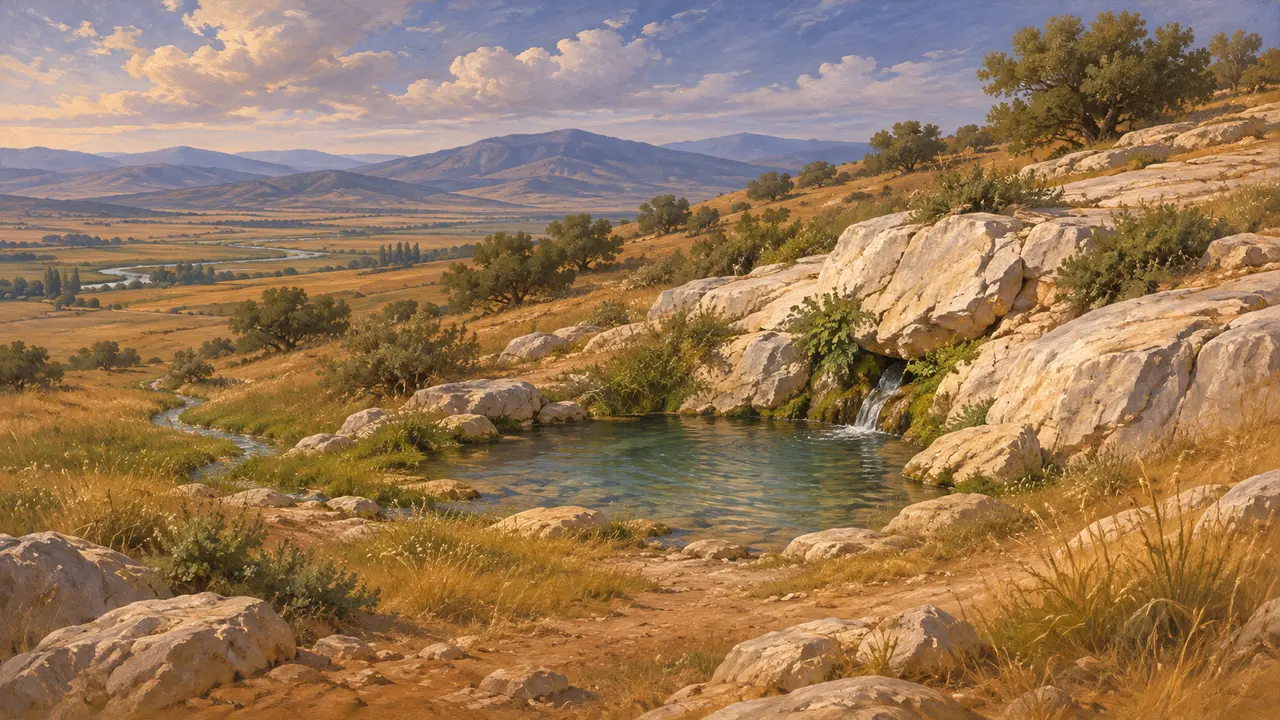
Gargaphia was a spring in the land of Plataea, below the slopes of Cithaeron. In 479 the Greek army camped by it and drew its water there, since the King's archers kept them from the Asopus. Mardonius's horsemen choked and fouled the spring, and the Greeks had to move by night.
In the game: Gargaphia is named in the Plataea level's Chronicle, field briefing and chatter, as the spring the King's horse fouled.
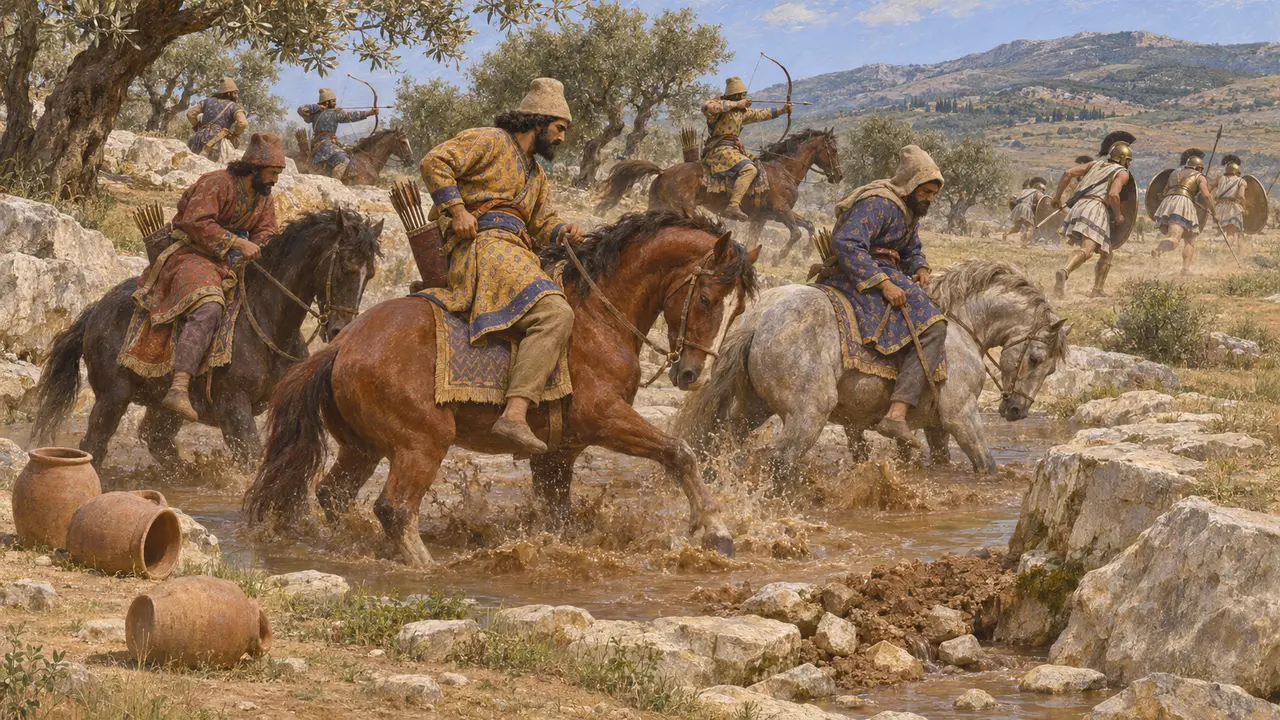
The horse at the water
Ancient accountHerodotus says the Persian horsemen and their archers kept the Greeks from the Asopus, so the whole army drew water from Gargaphia. Then the horse rode in, choked and fouled the spring, and harassed the Greeks so that they could not hold their posts.
Herodotus 9.49
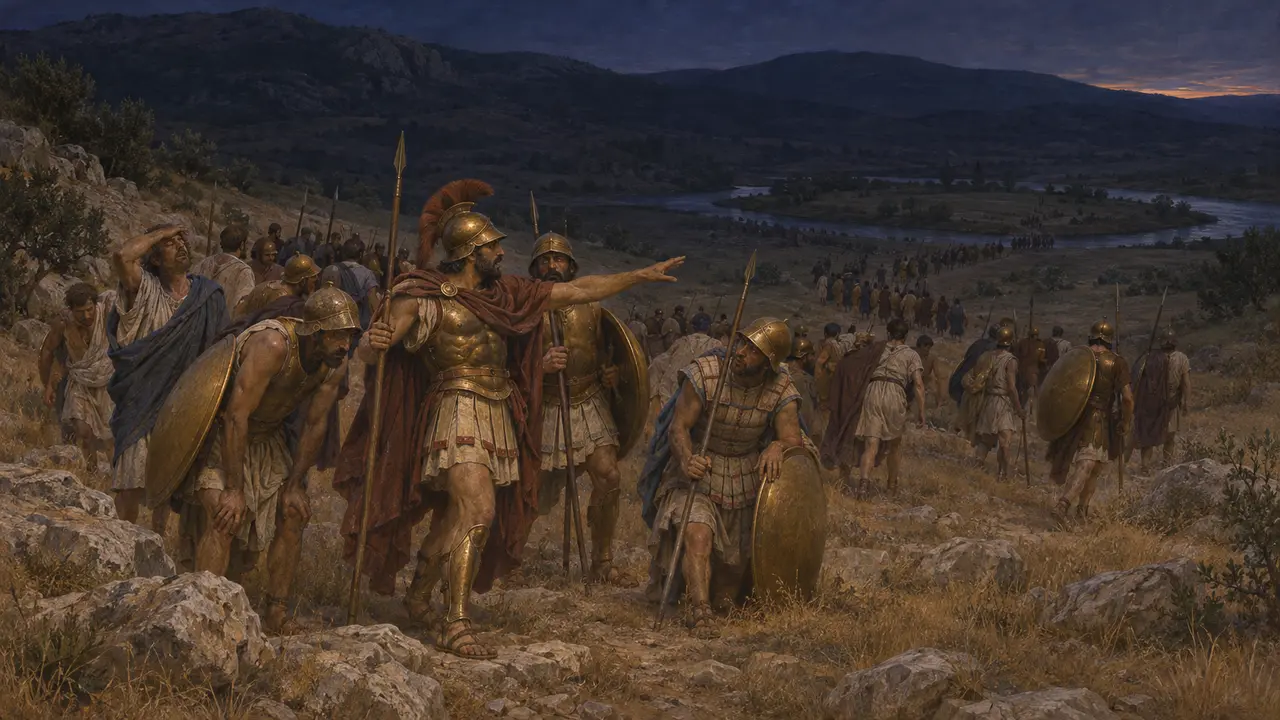
The night march
Ancient accountWithout water or food, the Greek generals decided to move to the Island, ten furlongs from the Asopus and the spring, where the river divided. The march by night fell into disorder, and the battle of Plataea followed the next day when Mardonius attacked.
Herodotus 9.50-57
Where was it?
DisputedThe spring cannot be placed for certain. Travellers since the nineteenth century have proposed several springs on the slopes north-east of Plataea, and the course of the Asopus and its feeders has shifted. Pausanias, who visited the battlefield, does not settle it.
W. K. Pritchett, Studies in Ancient Greek Topography 1, 1965
Sources
- Herodotus 9.25, 9.49-57
- W. K. Pritchett, Studies in Ancient Greek Topography 1, 1965