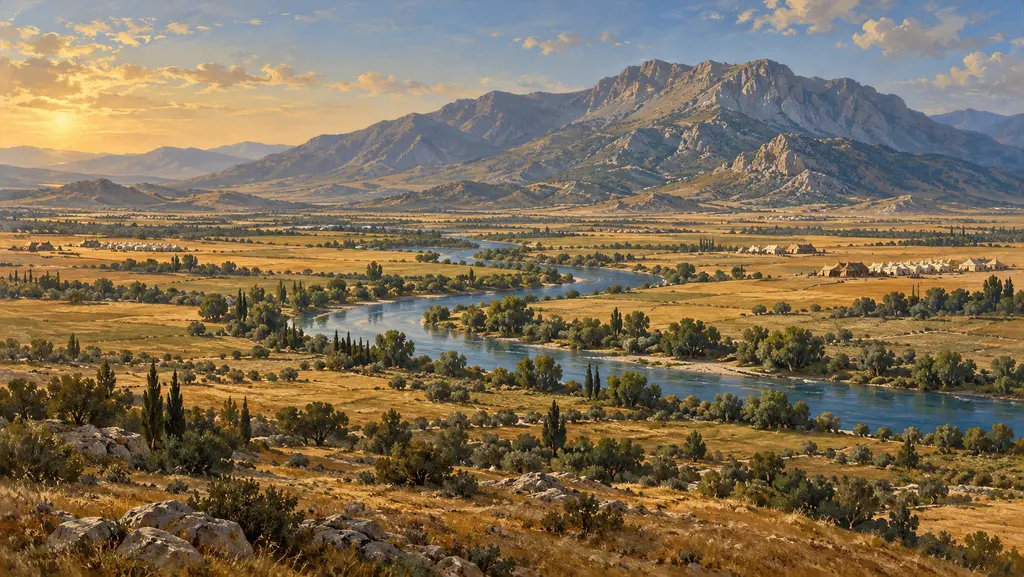
Mount Cithaeron and the Asopus
Mountain and river on the Boeotian border, ground of the battle of Plataea, 479 BCE
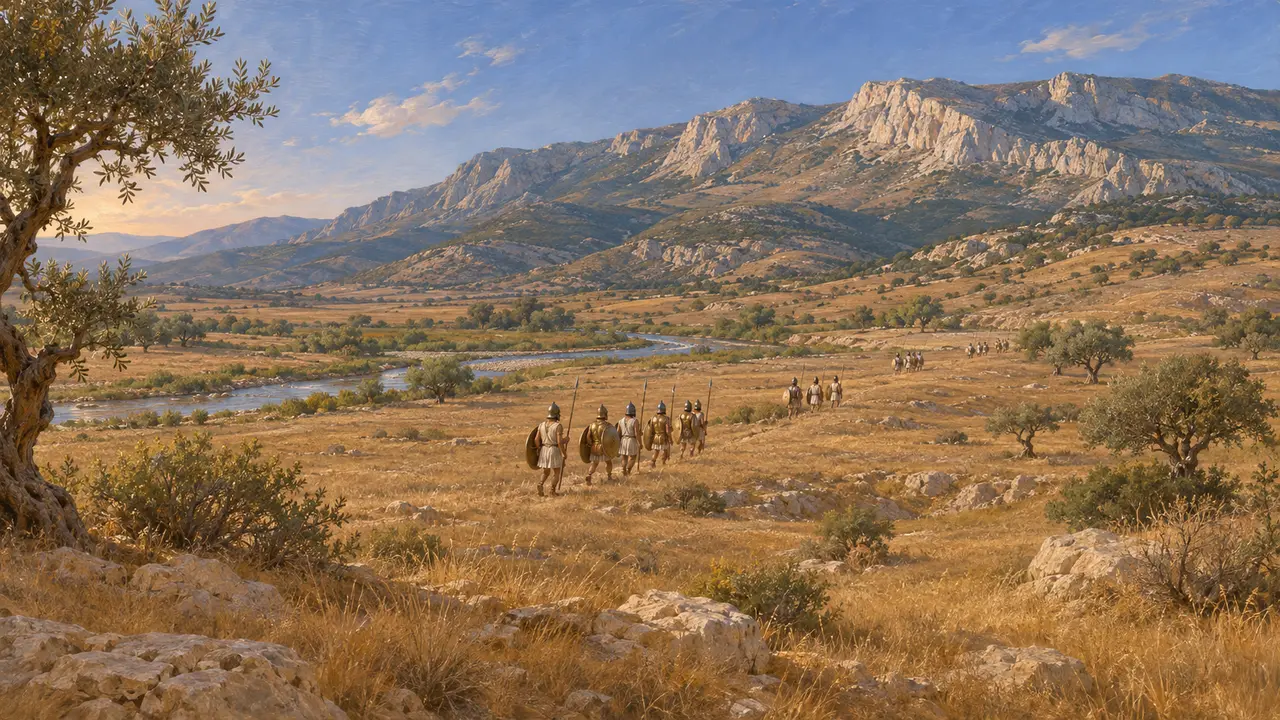
Cithaeron is the mountain range that divides Boeotia from Attica and the Megarid, and the Asopus is the small river that runs east across the plain beneath its northern slopes. In 479 the army of Mardonius and the allied Greek army faced each other across this ground for more than ten days, by Herodotus's count, before the battle of Plataea, and the passes, springs and ridges of the area shaped how that battle was fought.
In the game: The game presents this as the ground of Plataea, the setting of its Plataea level. That matches history: the armies of 479 camped and fought on the Asopus plain below Cithaeron, near the town of Plataea.
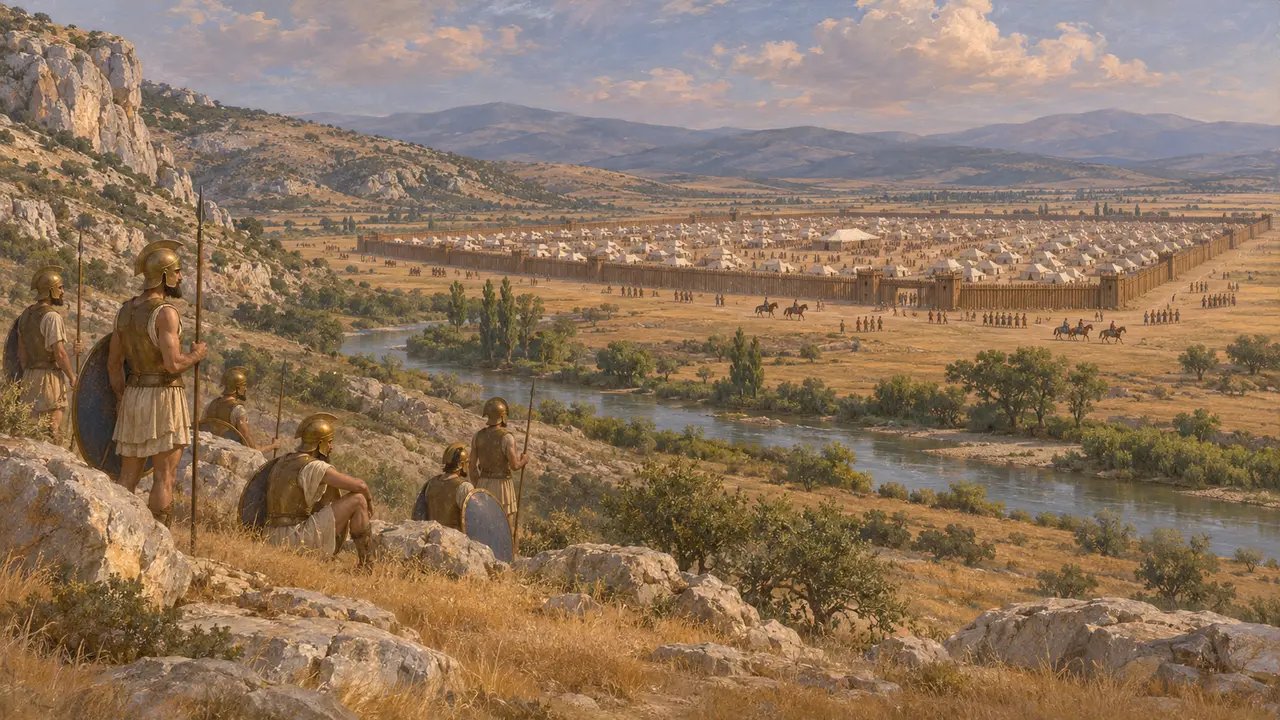
Mountain, river and camps
Ancient accountHerodotus says Mardonius left Attica for Boeotia and camped along the Asopus, his line running from Erythrae past Hysiae into Plataean land. There he built a fortified enclosure of timber, about ten stades on each side. The Greeks came over Cithaeron and first took position on its foothills near Erythrae, where the slopes protected them from the Persian cavalry.
Herodotus 9.15; Herodotus 9.19
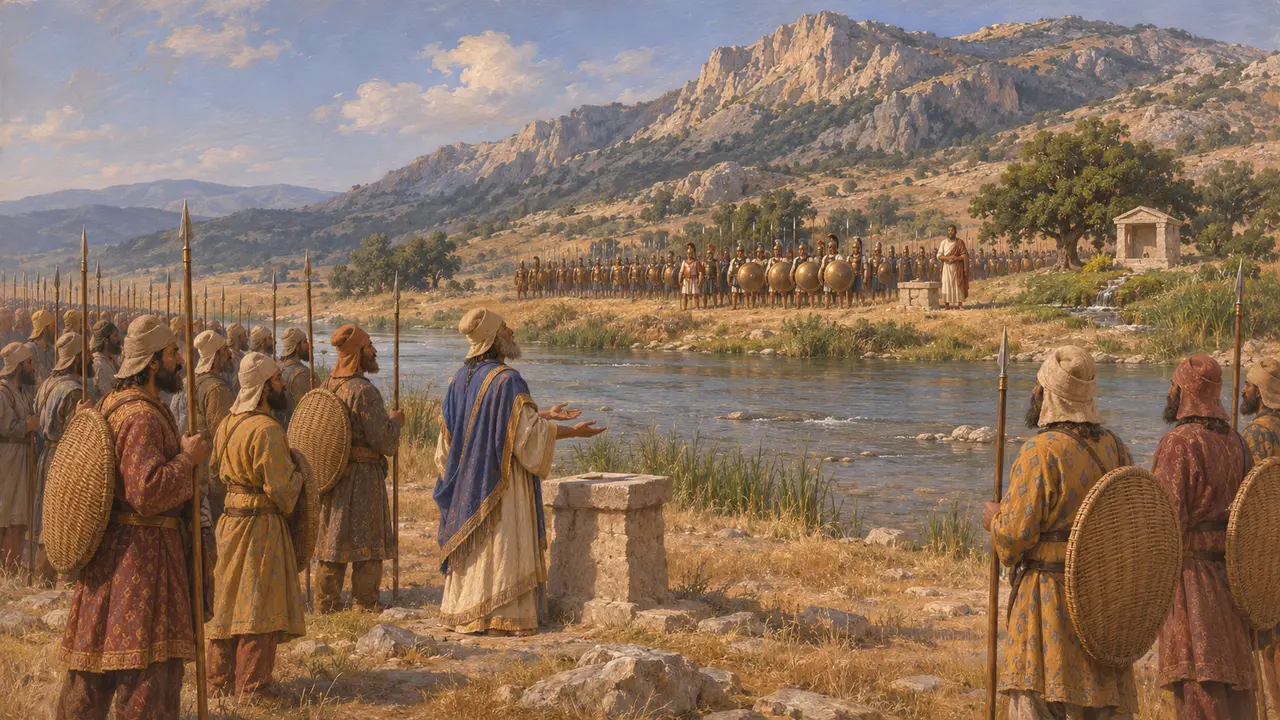
Waiting on either bank
Ancient accountHerodotus says that after an early clash near Erythrae, in which the Persian cavalry commander Masistius was killed, the Greeks moved down towards Plataea, near the spring of Gargaphia and the shrine of the hero Androcrates. There the seers on both sides, Tisamenus for the Greeks and Hegesistratus for Mardonius, found the omens good only for defence, so neither army crossed the Asopus to attack.
Herodotus 9.20-25; Herodotus 9.33-37
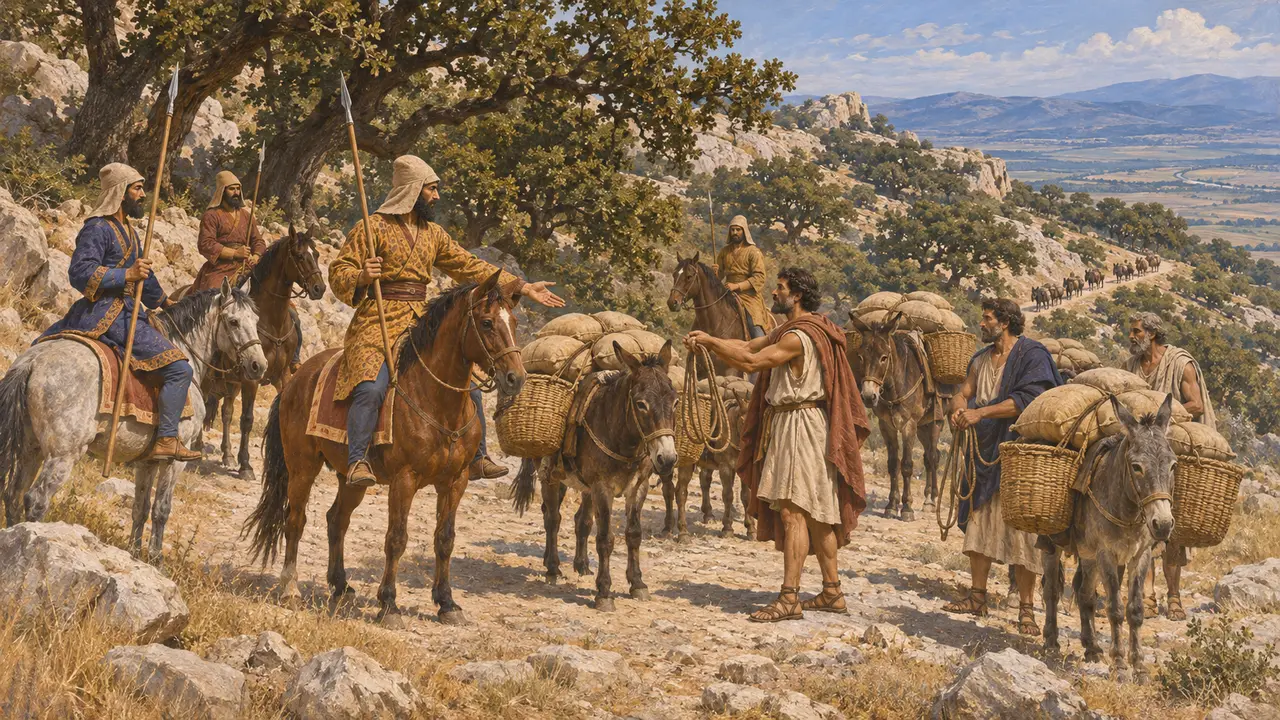
Passes and springs
Ancient accountThe Greek army drew supplies and men over the Cithaeron passes. Herodotus says a Theban, Timagenidas, advised Mardonius to watch the pass called the Oak-heads, and Persian horsemen there captured some 500 pack animals bringing food from the Peloponnese. Later the cavalry drove the Greeks from the Asopus and fouled the Gargaphia spring, which pushed the Greeks into a night withdrawal towards a place called the Island, in front of Plataea.
Herodotus 9.38-39; Herodotus 9.49-51
Locating the battlefield
DisputedHerodotus gives names and distances but no map, and the ground has changed since antiquity. Modern scholars disagree over where Gargaphia, the Island and the sanctuary of Demeter lay, and so over how far each Greek contingent moved in the night retreat. They also debate whether that retreat was a confused breakdown, as Herodotus tells it, or a planned move. His figure of 300,000 for Mardonius's army is generally thought much too high.
W. K. Pritchett, Studies in Ancient Greek Topography, 1965; J. F. Lazenby, The Defence of Greece 490-479 BC, 1993
The mountain in myth and oracle
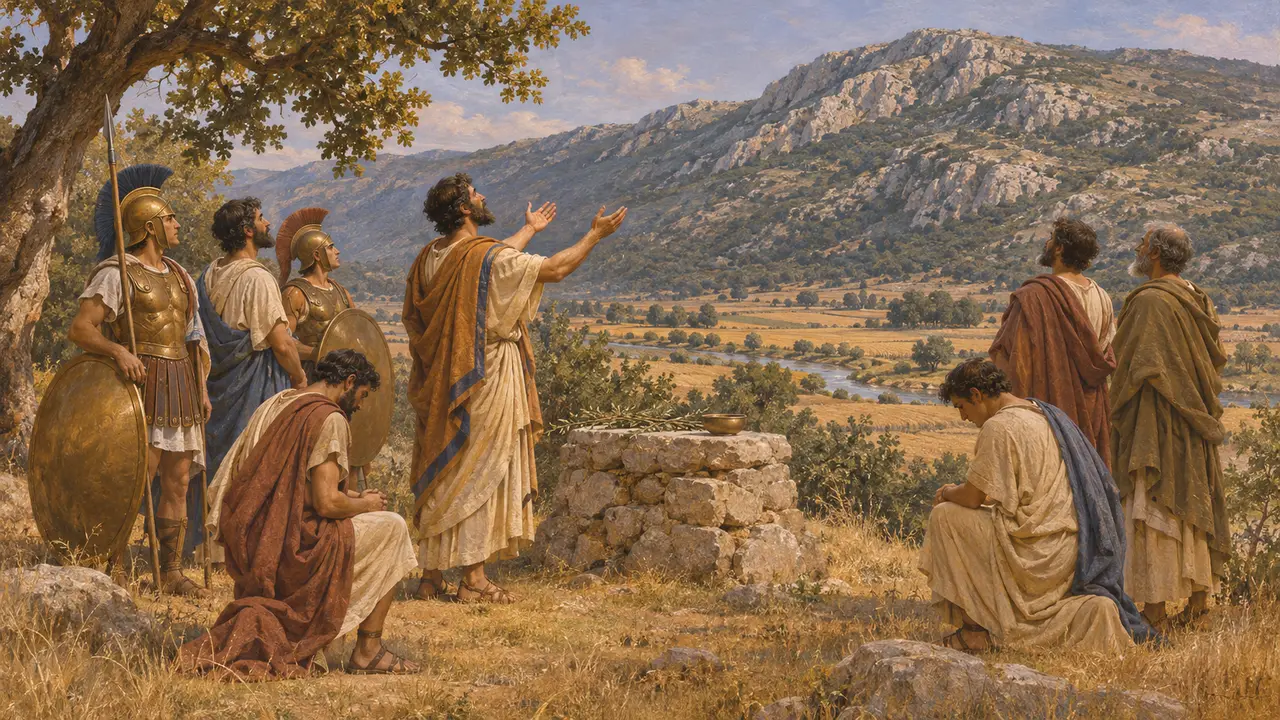
Later legendIn Greek tradition Cithaeron was a wild place sacred to Dionysus, where Pentheus was torn apart and the infant Oedipus was left to die. Plutarch, writing centuries after the battle, tells that an oracle told the Athenians to pray to the gods of Cithaeron and fight on the plain of Demeter, and that the Plataeans gave up their land to Athens to fulfil it. These stories show how the place was remembered, not how the campaign was planned.
Euripides, Bacchae; Sophocles, Oedipus Tyrannus; Plutarch, Aristides 11
Sources
- Herodotus, Histories, book 9
- W. K. Pritchett, Studies in Ancient Greek Topography, 1965
- J. F. Lazenby, The Defence of Greece 490-479 BC, 1993
- Plutarch, Aristides 11
- Pausanias, Description of Greece, book 9
- P. Briant, From Cyrus to Alexander, 2002