Mardonius's Fort
Persian timber stronghold beside the Asopus river in Boeotia, 479 BCE
In the game: Level 11: The Finale
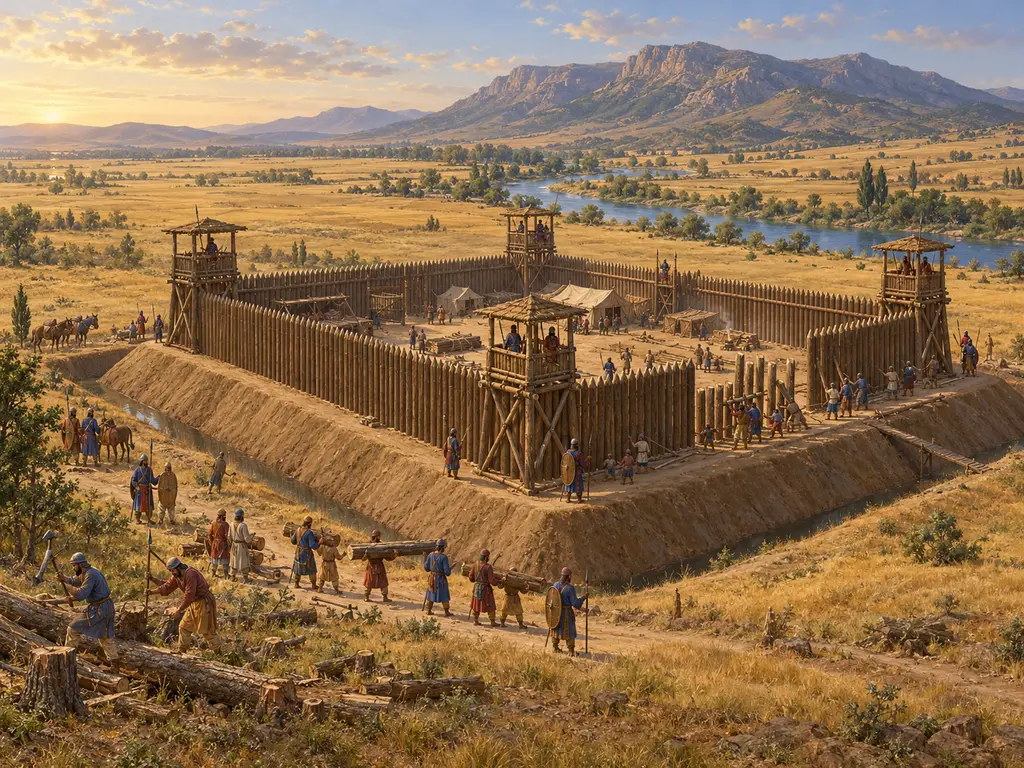
Before the battle of Plataea, the Persian commander Mardonius built a square wooden fort in Theban territory beside the Asopus as a refuge for his army. Herodotus says it measured about ten stades on each side. After Mardonius fell, his beaten troops fled inside, and its storming by the Greeks ended the last Persian land campaign in mainland Greece.
In the game: The game sets it within four cells of the Asopus and builds it from barley, timber and limestone. Herodotus mentions only a wooden wall, built in 479; the rampart, ditch, towers and limestone gates are the game's reconstruction.
A wooden wall in Theban country
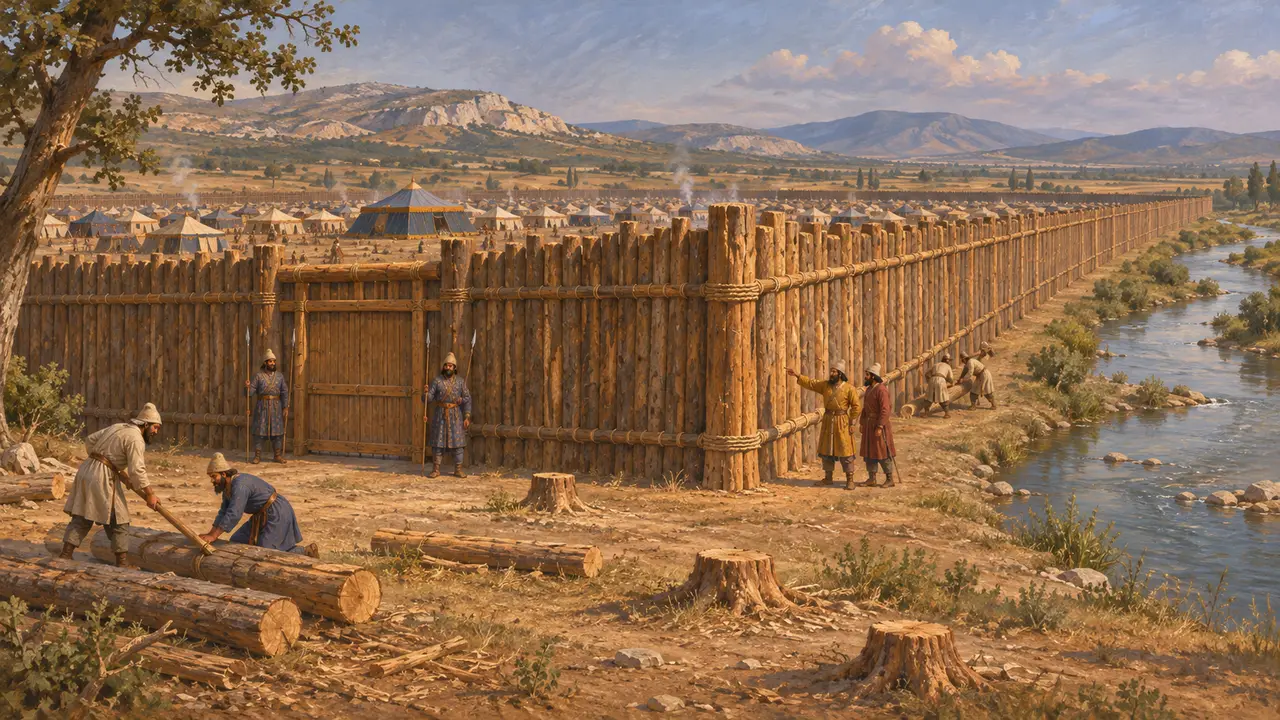
Ancient accountHerodotus says that in 479 Mardonius withdrew from Attica into Boeotia and camped along the Asopus, from Erythrae past Hysiae into Plataean land. He had the trees of the district felled to build a wooden wall, even though the Thebans were his allies. The fort was meant as a refuge if the battle went badly. Herodotus gives its size as about ten stades a side, roughly 1.8 kilometres.
Herodotus 9.15
Where it stood and how big it was
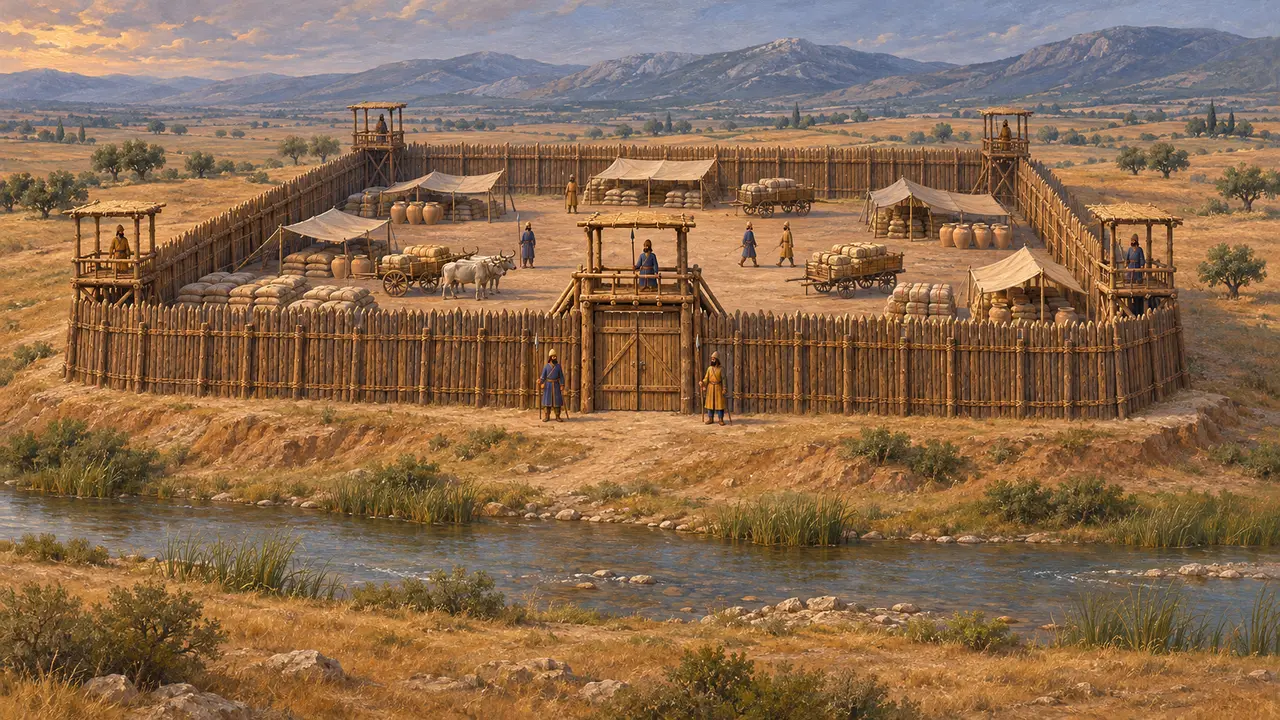
DisputedNo trace of the fort has been found and no Persian text mentions it, so its exact site north of the Asopus is still argued over. A square of ten stades could not have held the 300,000 men Herodotus gives Mardonius, a figure most historians think greatly exaggerated. Many scholars therefore see the fort as a guarded base for baggage, supplies and a garrison rather than a camp for the whole army.
J. F. Lazenby, The Defence of Greece 490-479 BC, 1993; P. Green, The Greco-Persian Wars, 1996
The storming of the fort
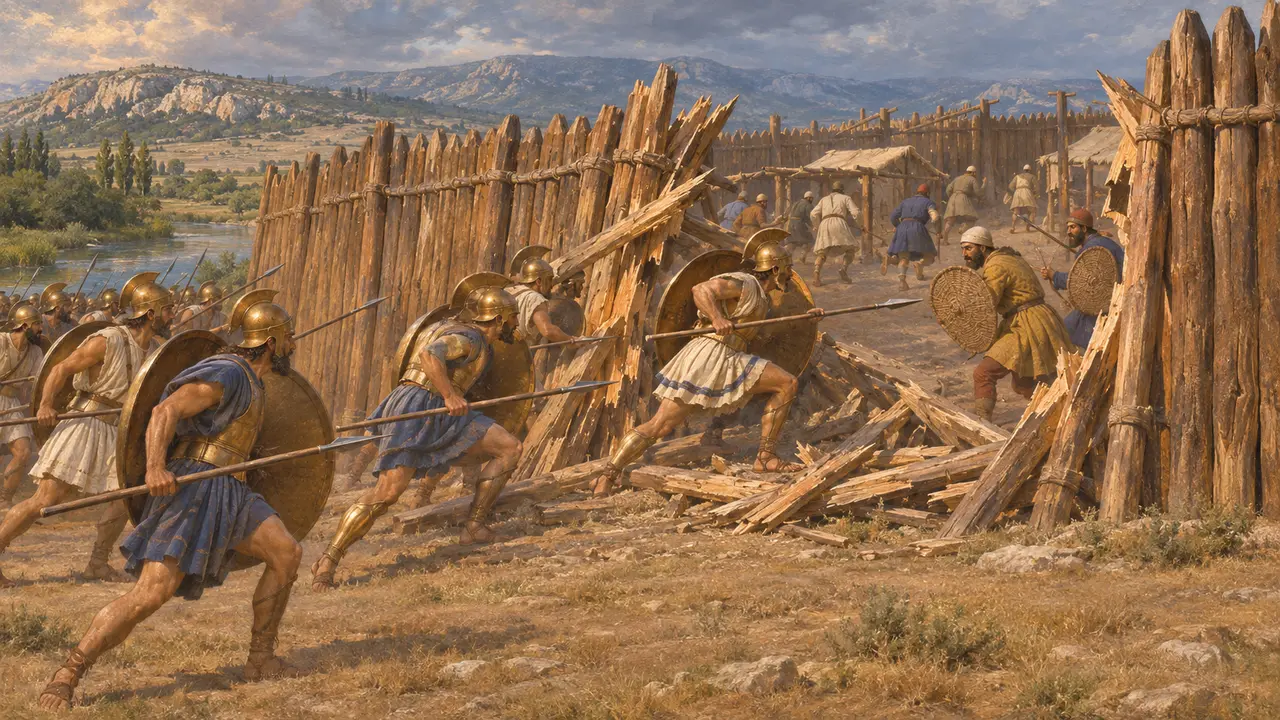
Ancient accountAfter Mardonius was killed, Herodotus says, the Persians ran back to the wooden wall and held it against the Spartans, who had little skill in attacking walls. When the Athenians came up they made a breach, the Tegeans entered first, and a slaughter followed. Herodotus claims that fewer than 3,000 survived apart from the 40,000 led away by Artabazus, numbers modern historians treat with caution.
Herodotus 9.65; Herodotus 9.66; Herodotus 9.70
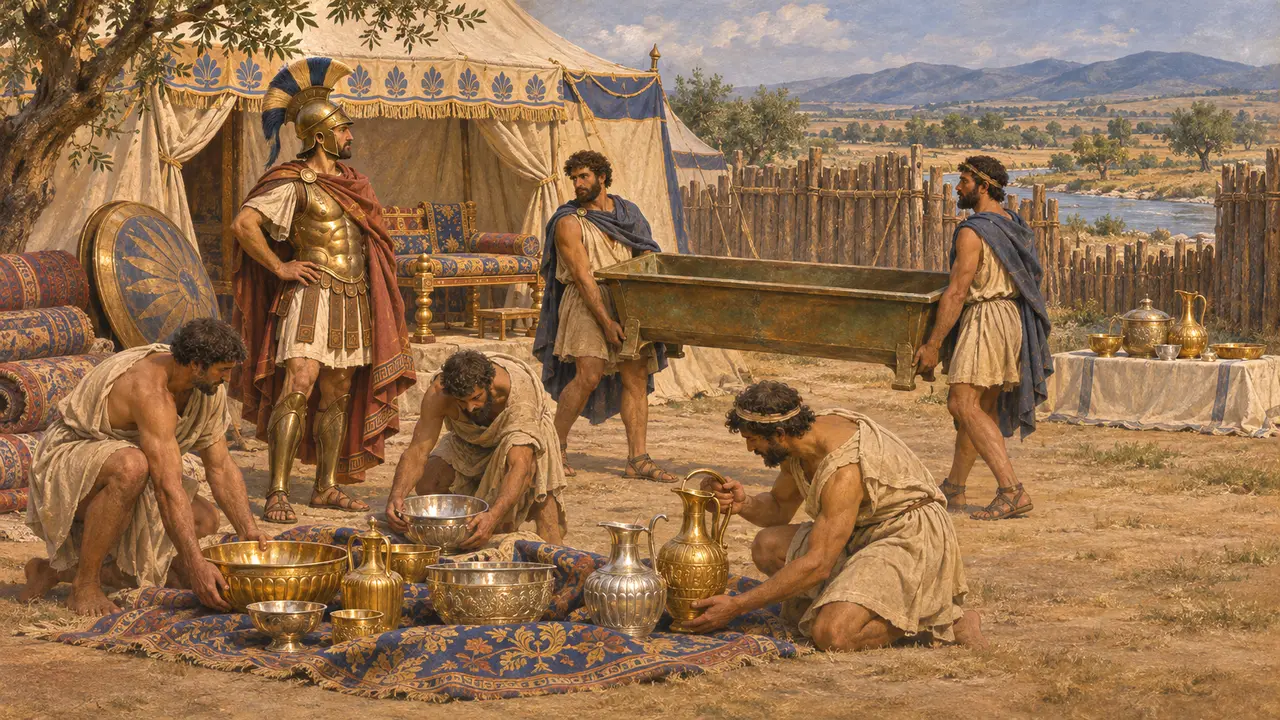
The spoils of the camp
Ancient accountHerodotus describes gold and silver vessels, rich tents and furnishings taken from the Persian camp. The Tegeans carried off a bronze manger from Mardonius's horses and dedicated it to Athena Alea. Pausanias had the spoil gathered by helots, and a tenth was set aside for the gods at Delphi, Olympia and the Isthmus.
Herodotus 9.70; Herodotus 9.80-81
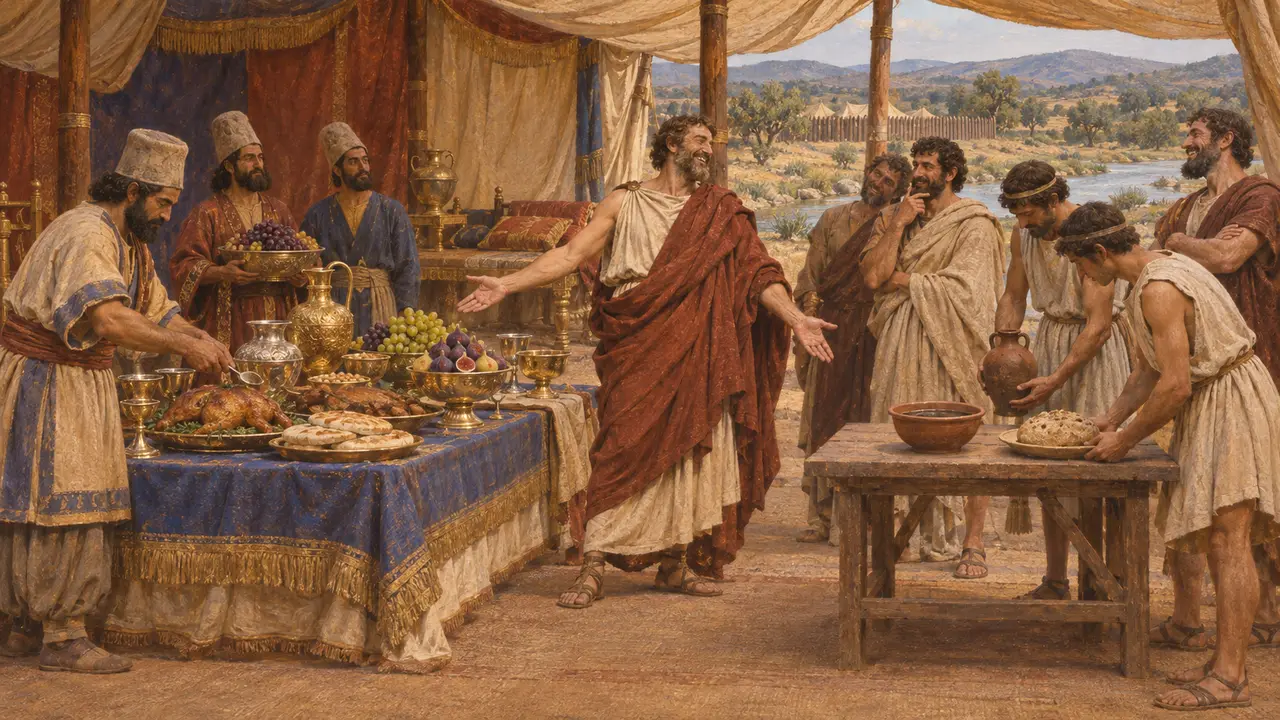
Two dinners in Mardonius's tent
Later legendHerodotus tells that Pausanias, finding the tent Xerxes had left to Mardonius, ordered the Persian cooks to prepare a royal banquet and his own servants a plain Spartan meal beside it. He then laughed at the folly of a man who lived so richly yet came to rob the Greeks of their poor fare. The story is shaped as a moral tale about wealth and simplicity.
Herodotus 9.82
Sources
- Herodotus, Histories, book 9
- J. F. Lazenby, The Defence of Greece 490-479 BC, 1993
- P. Green, The Greco-Persian Wars, 1996
- Diodorus, Library 11
- P. Briant, From Cyrus to Alexander, 2002